 Sudden Valley Roofing
 Why Silver Beach Siding Has to Work Harder Than the Catalog Says
Homes around Silver Beach sit in one of the more demanding microclimates in Whatcom County. You've got moisture-laden marine air moving through most of the year, driving rain that hits siding sideways during fall and winter storms, and a moss season that can stretch from October well into spring on shaded, north-facing walls near the tree line. That combination doesn't just make a house look tired faster — it actively works against siding that isn't built to shed water and resist sustained dampness. A product that performs fine in a drier inland climate can fail years early here, and we see the difference on every tear-off.
Siding replacement in this pocket of the county isn't a cosmetic upgrade project. It's a moisture-management project that happens to also make the house look better. That's the lens we use on every Silver Beach estimate.
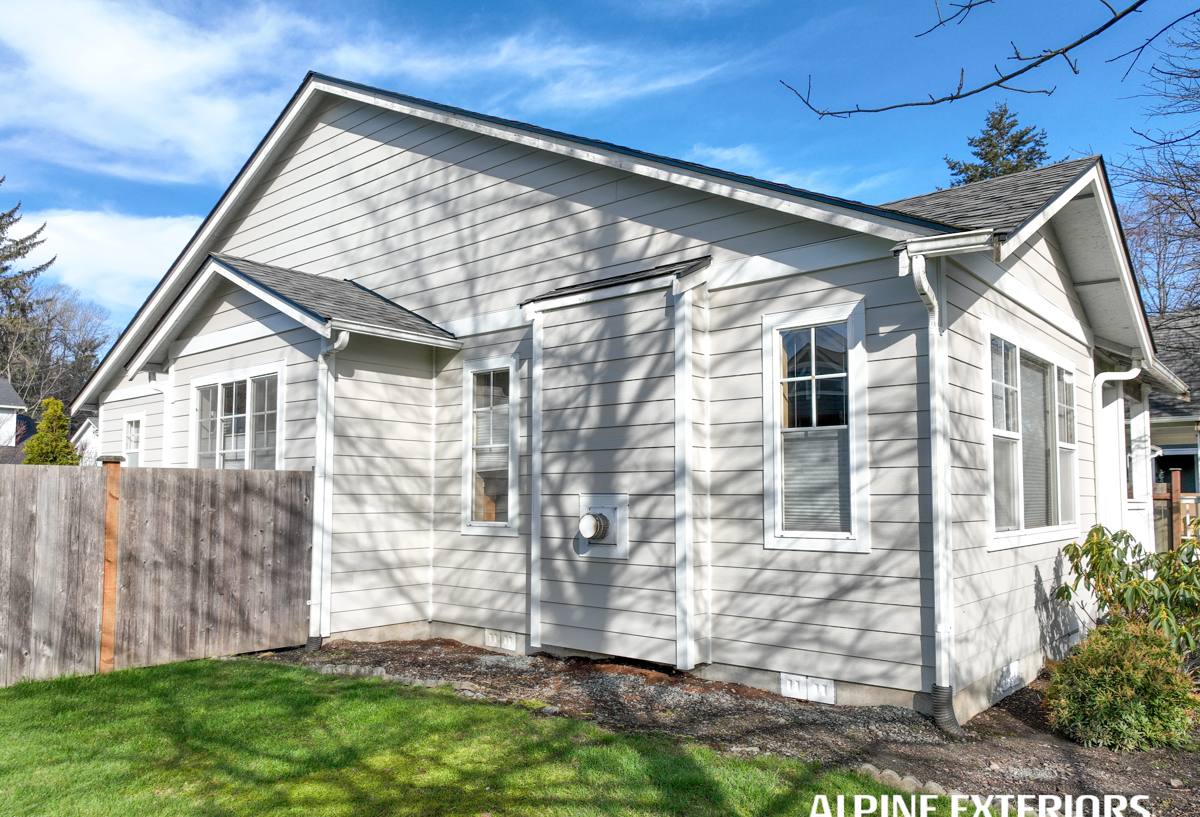
What Constant Moisture and Moss Exposure Do to the Wrong Siding
Before we talk about the fix, it helps to understand what's actually failing. On tear-offs around this area, the damage pattern is consistent:
- Wood-based products (cedar, primed spruce) swell and check as they absorb and release moisture cycle after cycle, opening up hairline cracks that let water behind the cladding.
- Vinyl siding doesn't rot, but it doesn't stop moss and mildew either — grime sits on the surface, panels bow with temperature swings, and the seams are a weak point for wind-driven rain.
- Engineered wood products like LP SmartSide hold up better than raw wood but are still a wood-strand composite at heart — edge swelling at cut ends and butt joints is the recurring failure point once caulking ages out.
- Any product installed without correct clearances — siding tight to grade, decks, or roof lines — traps moisture against the wall regardless of what the siding itself is made of.
Moss compounds all of it. Once spores take hold on a damp, shaded wall, moss holds water against the surface almost constantly, which accelerates whatever degradation was already happening underneath.
Why We Install Only James Hardie Fiber Cement Here
We standardized on James Hardie fiber cement siding for every home we work on, and Silver Beach is exactly the kind of property that shows why. Fiber cement is cement, sand, and cellulose fiber — it doesn't rot, it doesn't feed moss the way wood fiber can, and it doesn't swell and contract with moisture the way wood-based products do. It's also non-combustible, which matters anywhere in Washington with wildfire smoke and ember exposure in late summer.
Hardie's HZ5 product line is engineered specifically for climates like ours — freeze-thaw cycling, sustained damp, and driving rain. The factory-applied ColorPlus finish is baked on under controlled conditions, so it resists fading and chalking far better than field-applied paint, and it means touch-up and repainting isn't a five-year chore. The warranty is transferable, which matters to Silver Beach owners who may sell in the years ahead — a documented, factory-backed warranty on the siding is a real selling point, not paperwork nobody reads.
We get asked why we don't offer vinyl or LP SmartSide as a "budget option." The honest answer: we've seen how those materials age in this specific climate, and we'd rather turn down a job than install something we know will need premature attention. That's a standard we hold company-wide, not just a Silver Beach rule.
What Correct Installation Actually Involves
Fiber cement siding is only as good as the install behind it. The material itself resists moisture, but the assembly still has to manage water correctly, or you've just put an expensive skin over the same underlying problem. A correct job includes:
- A weather-resistive barrier installed and lapped correctly over the sheathing, with any gaps or damage from the old siding repaired before the new material goes on.
- Proper flashing at every penetration — windows, doors, hose bibs, light fixtures, and anywhere trim meets the wall plane.
- Correct clearances: siding held up off roofing, decks, and grade per Hardie's published specs, so water has somewhere to go instead of wicking into the bottom edge of the boards.
- Fastener pattern and spacing per manufacturer specification — over-driven or under-driven nails are one of the most common defects we find on other contractors' work.
- Field-cut edges sealed per Hardie's instructions, since an unsealed cut end is the one place fiber cement can take on moisture.
Skip any one of these steps and you can void the manufacturer warranty even though the siding itself is rated for the job. This is the part of the trade that separates a crew that "installs siding" from a crew that installs it correctly.
Our Silver Beach Siding Replacement Process
The process is the same discipline on every home, adjusted for what we find once the old siding comes off:
- On-site inspection. We walk the exterior, check for soft sheathing, moss buildup, past water intrusion, and note trouble spots — deck ledgers, chimney chases, window heads — before we ever write a number.
- Tear-off and sheathing assessment. Old siding comes off, and we inspect the sheathing underneath. Any rot or damage gets addressed before new material goes up — this is where hidden problems surface, and we walk you through what we find.
- Weather barrier and flashing. New house wrap or building paper, correctly lapped, with flashing installed at every penetration and transition.
- Hardie installation. Panels or planks installed to manufacturer spec — correct fastener spacing, correct clearances, correct joint treatment.
- Trim, caulking, and paint touch-up at cut edges and any field-applied trim, per Hardie's finishing requirements.
- Final walkthrough. We go around the house with you, point out what changed, and answer questions before we call it done.
Cost Factors for Silver Beach Siding Replacement
Every home is different, but the variables that move the number are consistent. We don't quote fake per-square-foot prices here — too much depends on what we find once we start — but this is what actually drives cost up or down:
| Factor | Why It Matters |
|---|---|
| Sheathing condition | Rot or water damage found during tear-off adds repair scope before new siding can go on |
| Home size and wall complexity | More corners, gables, and trim detail means more labor and material cutting |
| Siding profile (lap vs. shingle vs. panel) | Shingle and specialty profiles run higher in material and install time than standard lap |
| Story height and access | Two-story walls and steep or wooded lots near the lake require more scaffolding and staging time |
| Trim and accessory scope | Fascia, soffit, and window trim replaced alongside siding adds to the job but avoids mismatched materials later |
| Existing moss and moisture damage | Heavier moss growth often signals underlying moisture issues that need addressing, not just cosmetic cleanup |
Signs a Silver Beach Home Needs Siding Replacement Now
Not every issue means full replacement, but these are the signs we take seriously on an inspection:
- Soft or spongy spots when you press on the siding, especially near the bottom courses or under windows
- Persistent moss or dark streaking that comes back within a season of cleaning
- Visible cracking, warping, or delamination on wood-based or engineered wood siding
- Paint that's failing faster than a normal repaint cycle would explain — a sign moisture is moving through the material
- Bubbling, staining, or musty smell on interior walls that back up to exterior siding
- Siding installed tight to a deck, patio, or grade with no visible clearance gap
Why a Crew That Already Works Silver Beach Matters
A siding job here isn't identical to a siding job in a drier part of the state, and it isn't identical to a job three miles away on a sun-exposed lot with no tree cover. Crews who work this area regularly already know which wall orientations hold moisture longest, where moss tends to establish first, and what past decades of construction in the area typically hid behind the old siding. That local pattern recognition shortens the surprises during tear-off and means the flashing and clearance details get handled correctly the first time, not corrected on a callback.
It also means we're not learning Whatcom County's permitting and inspection expectations on your project — that's already routine for us.
After the Job: Living With Fiber Cement Through Moss Season
One advantage homeowners notice after switching to Hardie: maintenance drops off significantly. There's no repainting cycle to plan around, no annual caulk-and-touch-up routine to keep water out of swollen wood joints. A periodic rinse to keep organic growth from establishing on shaded walls is still worth doing, same as with any siding, but you're maintaining the surface, not fighting the material itself.
If your Silver Beach home is showing any of the signs above, or you just want a straight answer on what your current siding will and won't hold up to, we're happy to walk the exterior with you and give you an honest read. Request a free, no-pressure estimate below and we'll take it from there.