 Sudden Valley Roofing
 Why South Hill's Climate Wears Out Decks Faster Than You'd Think
South Hill sits inside one of the wettest, shadiest pockets of Sudden Valley, and that combination is hard on any outdoor structure. Whatcom County gets a long stretch of low-intensity, all-day rain rather than short heavy storms, which means deck surfaces stay damp for hours or days at a time instead of drying out between showers. Add the tree cover common around this part of the valley and you get less direct sun hitting deck boards, which slows drying even further and extends what most homeowners think of as a short "rainy season" into something closer to nine or ten months a year.
That extended dampness is exactly what moss, algae, and mildew need to take hold. On a wood deck, trapped moisture also feeds rot in framing members you can't see from the surface. Composite decking doesn't feed fungal growth the way untreated wood does, but it isn't immune to the climate either — moss and algae can still grow on any damp, shaded surface, composite included, and standing water against fasteners or under boards causes its own problems over time. The point of building for this climate isn't picking a material and walking away; it's designing drainage, airflow, and fastening around the reality that a South Hill deck spends most of the year wet.
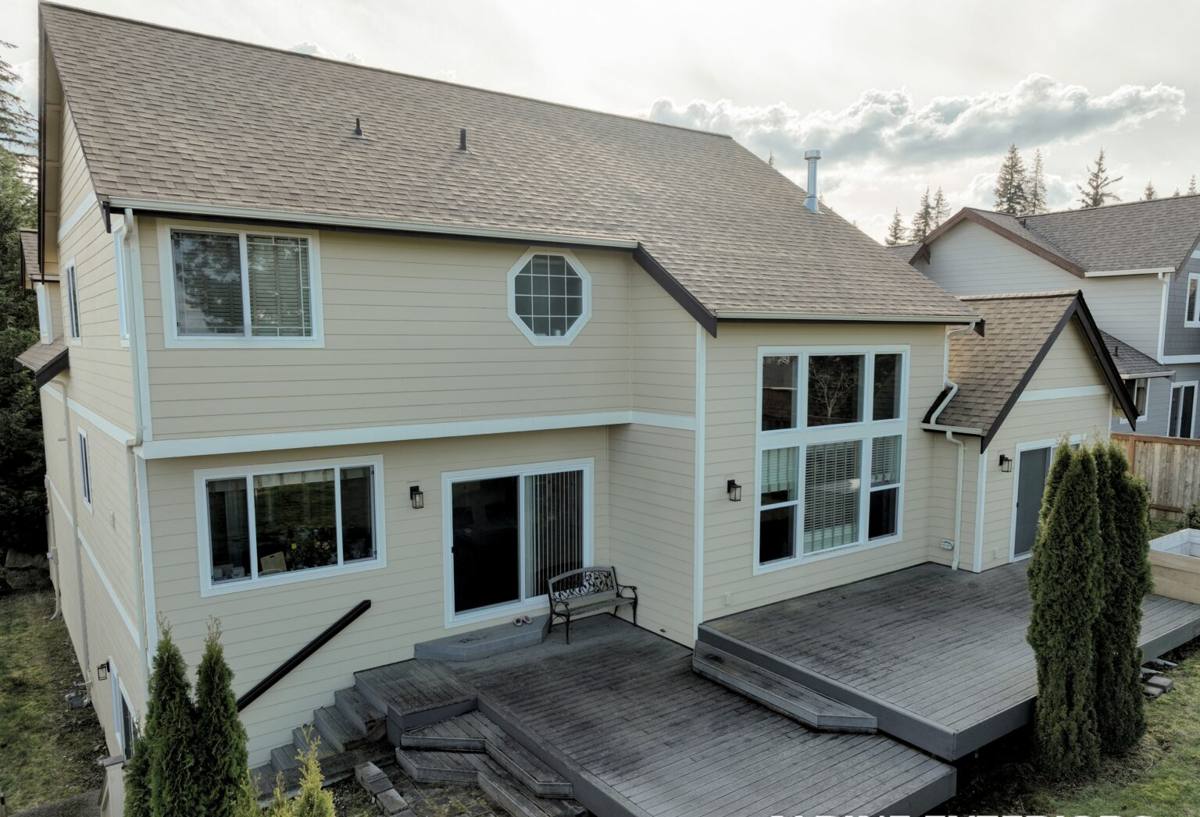
What a Correctly Built Composite Deck Actually Includes
The framing underneath is what fails first
Composite boards get most of the attention, but the substructure is where a wet-climate deck actually succeeds or fails. Ledger boards need proper flashing so water is directed away from the house rim joist, not trapped behind it. Joists should be either naturally resistant or treated lumber, spaced correctly for the specific composite product being installed (composite spans differently than solid wood and manufacturers publish exact joist spacing for a reason), and protected with joist tape or a similar barrier so fasteners don't sit in a pocket of trapped moisture. Skipping any of this doesn't show up on day one — it shows up in year four or five as soft spots, sagging, or a deck that feels different underfoot after a wet winter.
Fastening, spacing, and airflow
Composite boards expand and contract with temperature and moisture more than people expect, so gapping between boards has to be set correctly at install — too tight and boards buckle later, too wide and they look sloppy and collect debris. Hidden fastener systems are worth using on a South Hill deck specifically because face-screwed boards create small punctures where water can work its way in around the screw head over years of freeze-thaw and constant damp. Underneath, the deck needs enough clearance and airflow to let ground moisture escape rather than pool under the structure — low clearance combined with heavy tree cover is a common reason decks in shaded, low-lying yards stay damp longer than an identical deck built in an open, sunnier yard.
Composite vs. Wood vs. PVC: What Makes Sense for a South Hill Yard
There isn't one right answer for every property — it depends on how much shade the deck gets, how much maintenance you want to do, and your budget. Here's an honest comparison based on how these materials actually behave in a wet, shaded Pacific Northwest yard:
| Material | Moisture behavior | Maintenance | Typical lifespan |
|---|---|---|---|
| Pressure-treated wood | Absorbs water; prone to warping, splintering, and rot at fastener points over time | Annual cleaning, periodic staining/sealing | 10-15 years before major repair or replacement |
| Capped composite (e.g. Trex, TimberTech, Fiberon) | Cap layer sheds surface moisture well; core doesn't rot but can still host surface moss/algae if left dirty | Periodic washing; no staining or sealing needed | 25-30 year manufacturer warranty is typical |
| Uncapped composite (older-generation) | More porous surface, absorbs moisture more readily than capped boards | More frequent cleaning to prevent staining and mold | Shorter service life than capped composite |
| PVC decking | Fully synthetic, sheds water well, no organic content for fungus to feed on | Low; occasional washing | Comparable or longer than capped composite, generally at a higher material cost |
Our standard for South Hill installs is capped composite in most cases — it strikes the best balance of moisture resistance, low upkeep, and cost for a yard that stays damp much of the year. Uncapped composite and untreated wood are the two products we're most cautious about recommending here specifically because of how much time this climate keeps a deck surface wet, not because either product is inherently bad in a drier region.
How We Build a Composite Deck in South Hill, Step by Step
- Site visit and grading check. We look at drainage around the footprint, existing shade, and how water currently moves across the yard before we design anything.
- Design and material selection. Board profile, color, and railing system get chosen based on the site conditions, not just what looks good in a showroom.
- Permitting. We handle the permit application with the relevant local authority so the structure is inspected and documented correctly.
- Demo of the old structure, if applicable. Old ledger boards, footings, and framing get inspected as they come out — this is often where hidden rot or undersized footings turn up.
- Framing and flashing. Ledger flashing, joist protection, and correct spacing go in before a single composite board is laid.
- Composite board installation. Boards go down with a hidden fastener system and manufacturer-specified gapping for expansion.
- Railings, stairs, and trim. Fascia and trim boards are fitted to fully box in exposed framing edges.
- Final walkthrough and inspection. We review the finished deck with you and confirm it passes any required local inspection.
Keeping a South Hill Deck Clear of Moss and Mildew
Composite decking is low-maintenance, not no-maintenance. In a yard that gets extended shade and a long wet season, a little seasonal upkeep goes a long way toward keeping the surface looking good and staying safe underfoot.
- Sweep leaves and needles off the deck regularly in fall — trapped organic debris under damp conditions is the single biggest driver of moss and algae growth on composite surfaces.
- Wash the deck at least once or twice a year with a soft-bristle brush, mild soap, and water; avoid pressure washing at close range, which can damage the cap layer on composite boards.
- Keep gutters and downspouts near the deck clear so runoff isn't dumping extra water directly onto or under the structure.
- Trim back overhanging branches where practical to let more light and air reach the deck surface.
- Check railing posts and stair stringers annually for movement — framing issues show up here before they show up in the decking itself.
Permits, Setbacks, and Sudden Valley Community Considerations
Most deck construction and reconstruction work requires a permit through Whatcom County, and setback rules from property lines or the lake can affect how large a deck can be or where it can sit. If your South Hill property is part of the Sudden Valley Community Association, it's worth checking whatever architectural or covenant review process applies to exterior construction before finalizing a design — HOA-style requirements are separate from county permitting and both need to be satisfied. We build the permit step into our process rather than treating it as optional, because a deck built without the required approval can become a real problem when you go to sell the home.
What a Composite Deck Costs in South Hill — and What Changes the Price
Composite decking generally costs more upfront than pressure-treated wood and less than premium PVC, but the real cost swings on a given project come from site conditions and scope more than the board material itself.
| Cost factor | Why it matters |
|---|---|
| Deck size and shape | Square footage and the number of angles, cutouts, or stairs directly drive labor and material |
| Height off grade | Taller decks need more substantial footings and railings, which adds cost |
| Existing framing condition | Rotted joists or undersized footings found during demo add repair cost that's hard to estimate until the old structure is opened up |
| Board tier and brand | Composite lines range from entry-level to premium multi-color or specialty profiles |
| Railing system | Composite or aluminum railing costs more than basic wood but requires far less upkeep |
| Site access | Steep or tree-covered lots common around the lake can slow material staging and increase labor time |
A written quote worth signing should spell out board brand and line, fastener type, framing scope, permit handling, and warranty terms in plain language — not just a single lump-sum number.
- Exact composite product line and color being installed
- Whether hidden fasteners or face screws are being used
- What happens if rotted framing is found during demo, and how that's priced
- Who pulls and pays for the permit
- What's covered under workmanship warranty versus manufacturer warranty
Why a Crew That Already Works South Hill Matters
A deck built in South Hill needs to account for this specific yard's shade pattern, this specific soil's drainage, and this specific stretch of Sudden Valley's weather — not a generic set of assumptions about the Pacific Northwest. A crew that's already worked properties in this neighborhood has a working sense of which lots hold water longer, which slopes need extra footing attention, and how the Sudden Valley Community Association process typically runs, so there are fewer surprises mid-project. That local familiarity doesn't replace good workmanship, but paired with it, it means a deck that's designed for the yard it's actually sitting in rather than a textbook version of it.
If you're weighing a composite deck for a South Hill property, we're glad to come take a look, walk the site with you, and put together a straightforward, no-pressure estimate — just fill out the form below to get started.