 Sudden Valley Roofing
 Storm Damage Roof Repair for Yew Street Homes
When wind and rain move through Sudden Valley, Yew Street homes take it on the chin. The mix of mature tree cover, exposure to wind funneling off Lake Whatcom, and the sheer number of wet weeks each year means roofs here get tested in ways that drier climates never see. A storm doesn't have to be dramatic to cause real damage — a few hours of sideways rain and gusty wind is often enough to lift shingles, drive water under flashing, or knock debris loose that opens a path for leaks weeks later.
This page is about one thing: storm damage roof repair for homes on and around Yew Street, done by a crew that already works this part of Sudden Valley. We're not going to give you a generic rundown of storm repair — we want to walk through what actually happens to roofs in this specific pocket of Whatcom County, what a correct repair looks like, and why local experience changes the outcome.
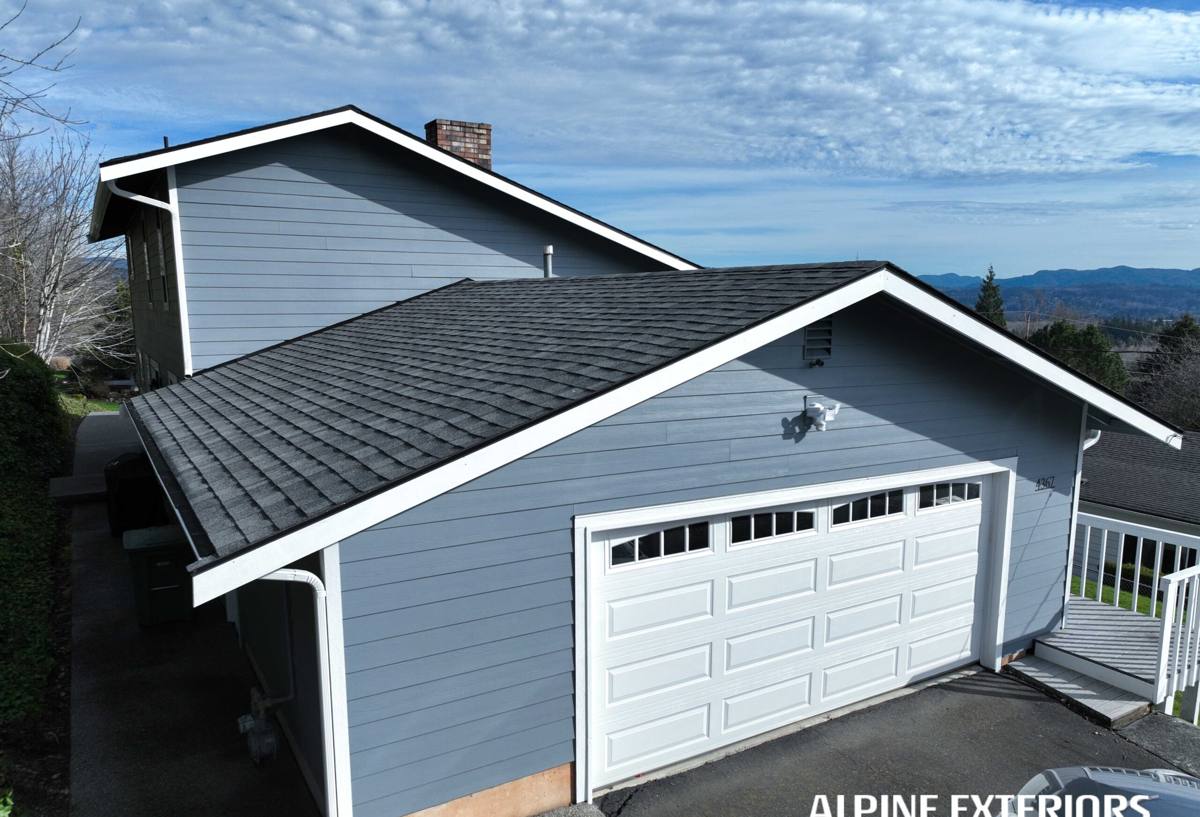
Why Yew Street Roofs Take Extra Punishment
Whatcom County weather isn't the harshest in the country, but it's relentless. Sudden Valley sits in a spot where a few climate factors stack on top of each other instead of taking turns.
Driving Rain and Wind Direction
Storms that move across the lake pick up speed and hit hillside homes at an angle rather than straight down. Driving rain finds every weak seam, every lifted shingle tab, and every spot where flashing has started to separate. A roof that would shed a straight-down rain just fine can still leak under wind-driven rain because water is being pushed uphill, sideways, and under laps instead of running off downhill the way the roof was designed for.
Long Moss Season
Western Washington's moss season isn't a few weeks — it's most of the year. Moss holds moisture against the roofing material, works its way under shingle edges, and lifts tabs just enough for wind to finish the job during the next storm. Roofs with shade from tree cover, which describes a lot of Sudden Valley lots, hold onto moss and moisture longer than roofs in open sun.
Salt-Tinged Air
Proximity to Puget Sound air currents means Whatcom County roofs deal with more airborne salt and moisture than inland regions far from the coast. Salt-influenced air accelerates corrosion on exposed metal — flashing, fasteners, gutter hardware — which is often the first thing to fail in a storm, not the shingles themselves.
None of these factors cause damage on their own overnight. They wear a roof down over years, and then a storm finds the weak point they created.
What Storm Damage Actually Looks Like Here
Most storm calls we get from this area fall into a handful of categories. Knowing which one you're dealing with matters, because the fix — and the cost — is very different for each.
- Wind-lifted or torn shingles — tabs creased, cracked, or missing outright, usually on the side of the roof that faced the wind.
- Flashing separation — around chimneys, skylights, and roof-to-wall junctions, where sealant has aged out and wind pried the metal loose.
- Moss-related rot — soft or spongy decking discovered once shingles are pulled back, from long-term moisture trapped under moss mats.
- Debris impact — branch strikes or fallen limbs that puncture shingles or crack ridge caps.
- Gutter and downspout failure — overflow during heavy rain that backs water up under the roof edge instead of carrying it away.
- Fastener and metal corrosion — nails backing out or rusting through, especially near the coast-influenced side of the county.
A homeowner usually notices one symptom — a stain on the ceiling, a shingle in the yard — but the underlying cause is often a combination of two or three of these working together.
What a Correct Storm Repair Actually Involves
Storm repair done right isn't just "replace what's missing." It's a sequence, and skipping steps is exactly how a repair fails again in the next storm.
1. Full Roof Inspection, Not Just the Damaged Spot
Wind damage rarely stays contained to one area. We check the whole roof plane, not just where the visible damage is, because storm force often loosens shingles nearby that haven't blown off yet but will in the next round of weather.
2. Deck Inspection Underneath
Once damaged shingles are pulled back, we check the decking underneath for soft spots, staining, or rot — especially in areas that have had moss sitting on them for a while. Repairing shingles over compromised decking just delays a bigger, more expensive fix.
3. Flashing and Fastener Check
Since flashing and fasteners are often the actual failure point rather than the shingles themselves, we check these separately, not as an afterthought. Corroded or loosened metal gets replaced, not just resealed.
4. Matching Materials
Repairs should match the existing roofing as closely as possible in profile and, where possible, color. A patch that doesn't match the surrounding material sheds water differently and stands out visually, which matters if you're planning to sell the home down the road.
5. Weatherproofing the Repair Itself
Every repair gets sealed and secured for the specific way wind hits this area — driving rain from the direction storms typically travel across the valley — not installed as if it only ever rains straight down.
Repair vs. Replace: How We Help You Decide
Not every storm-damaged roof needs full replacement, and not every roof can be responsibly patched. Here's how we think through it with homeowners.
| Factor | Leans Toward Repair | Leans Toward Replacement |
|---|---|---|
| Age of roof | Under 12-15 years, otherwise healthy | Near or past manufacturer's expected service life |
| Extent of damage | Isolated to one section or slope | Spread across multiple planes or the whole roof |
| Decking condition | Solid, dry decking under damaged shingles | Soft, rotted, or repeatedly wet decking found |
| Moss/moisture history | Minimal long-term moss buildup | Years of moss growth with trapped moisture |
| Insurance scope | Adjuster approves targeted repair | Adjuster's scope covers full replacement |
We'll always tell you honestly which side of this table your roof falls on. A repair that's going to fail again in a year isn't a favor to you — it's a second bill.
Our Process, Start to Finish
- Call or request an estimate. Tell us what you're seeing — a leak, missing shingles, storm damage visible from the ground.
- On-site inspection. We walk the roof (weather permitting) or use a safe alternate method to assess damage, decking condition, and flashing.
- Written scope and estimate. You get a clear explanation of what's damaged, what needs to happen, and an honest cost range — no pressure to upgrade beyond what the roof actually needs.
- Temporary protection if needed. If there's an active leak or exposed decking, we tarp or dry-in the area to stop further water intrusion before the full repair is scheduled.
- Repair work. Matching materials, proper flashing, and fastener replacement where corrosion or wind has compromised the originals.
- Final walkthrough. We show you what was done and what to watch for going forward.
Insurance and Documentation
Most storm damage claims move faster and more smoothly when the roof has been documented properly before repairs start. We take photos of the damage as we find it — including anything under shingles or flashing that wasn't visible from the ground — so you have a clear record to hand to your insurance adjuster. We're happy to walk an adjuster through what we found on-site, but we work for you, not the insurance company, and our scope reflects what the roof actually needs rather than what's easiest to approve.
One honest note: not every storm event rises to the level of an insurance claim, and filing unnecessary claims can affect future premiums. Part of our job is telling you plainly when a repair is a straightforward out-of-pocket fix versus when it's worth involving your carrier.
Why a Crew That Already Works Yew Street Matters
There's a real difference between a contractor who shows up once and one who already knows this stretch of Sudden Valley. Local roofs here share common patterns — the tree cover that feeds moss growth, the wind exposure on certain lots, the age of roofing installed during past building phases in the neighborhood. A crew that's worked here before recognizes those patterns faster instead of treating every inspection like a blank slate.
There's also a practical side: after a widespread storm, response time matters. A local crew doesn't have to drive in from across the county to tarp a roof before the next round of rain hits. Familiarity with Whatcom County permitting and typical roofing materials used in this area also keeps repairs moving without unnecessary delays.
Reducing Future Storm Damage: A Homeowner Checklist
Between storms, a little maintenance goes a long way toward keeping small issues from becoming emergency repairs.
- Clear moss buildup before it spreads across a full slope, not after.
- Keep gutters and downspouts clear so heavy rain has somewhere to go.
- Trim back branches that hang over the roofline, especially ones that could break loose in wind.
- Have flashing around chimneys and skylights checked every couple of years, since sealant ages even when shingles look fine.
- After any significant windstorm, do a visual check from the ground for missing or lifted shingles.
- Don't ignore small ceiling stains — they usually mean water has already been getting in for a while.
None of this replaces a professional inspection after a real storm, but it reduces how often you need one.
Get a Straight Answer on Your Roof
If a recent storm has left you with missing shingles, a new leak, or just a nagging feeling that your roof took a hit, it's worth getting a second set of eyes on it before the next system rolls through. We'll give you a clear, no-pressure estimate and tell you honestly whether you're looking at a simple repair or something bigger — use the form below to get started.