 Sudden Valley Roofing
 Composite Decking Built for Sunnyland's Climate
Sunnyland sits close enough to Lake Whatcom and the marine air moving off the Sound that decks here take a beating most inland homeowners never have to think about. Between salt-tinged air, driving rain that comes in sideways during fall and winter storms, and a moss season that can stretch from October into May, a deck built from the wrong material starts showing problems within a few years, not a few decades. Composite decking, installed correctly, is one of the few products that holds up to all three at once — but "installed correctly" is doing a lot of work in that sentence, and it's where most of the complaints we hear about composite decking actually trace back to.
This page covers what we specifically do for composite decking in the Sunnyland area: what the climate demands, what a correct install looks like, how our process runs, and what to expect for upkeep and lifespan once the project is done.
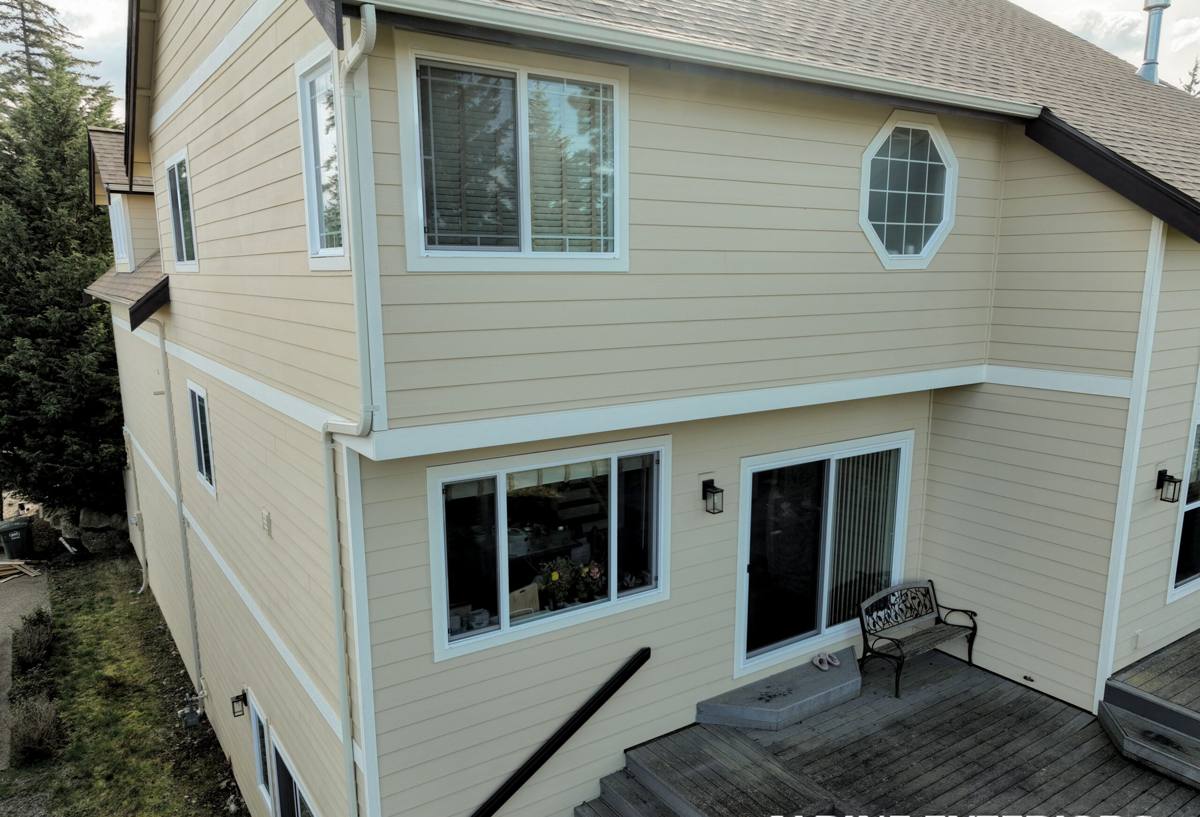
What Whatcom County Weather Actually Does to a Deck
Moisture that never really lets up
Whatcom County doesn't get the kind of single dramatic storm that damages a deck overnight. It gets months of steady, low-grade dampness — morning dew, afternoon drizzle, overnight fog off the lake — that seeps into any joint, fastener hole, or ledger connection that wasn't sealed properly. Wood decking swells and shrinks with every wet-dry cycle; over years that movement loosens fasteners and opens gaps where water collects.
Moss, algae, and shade
A lot of Sunnyland lots carry mature trees and partial shade, which is great for the yard and rough on a deck surface. Moss and algae need moisture and low light to establish, and once they take hold on a decking board they hold water against the surface long after the rest of the yard has dried out. On wood, that speeds up rot. On the wrong composite product, or a composite deck with poor drainage underneath, it just becomes a slick, slimy surface that's genuinely dangerous to walk on in winter.
Salt-influenced air
You're not oceanfront in Sunnyland, but the air moving through this corridor carries enough salt content to accelerate corrosion on unprotected metal fasteners, brackets, and railing hardware faster than a purely inland climate would. Fastener choice matters more here than the manufacturer's minimum spec sheet usually assumes.
Composite Decking vs. the Alternatives, for This Climate
We install composite because, for most Sunnyland homeowners, it's the best balance of upfront cost, maintenance burden, and moisture performance. That said, it's not automatically the right call for every situation, and we'll tell you honestly if a different material fits your project better.
| Factor | Pressure-Treated Wood | Composite | PVC / Capped Polymer |
|---|---|---|---|
| Moisture resistance | Poor to fair — absorbs water, swells, checks over time | Good — moisture resistant core, doesn't rot | Excellent — fully synthetic, no organic content to rot |
| Moss/algae resistance | Poor — porous surface holds moisture, feeds growth | Good, especially capped boards with a sealed surface | Very good — smoothest surface, least to grip onto |
| Maintenance | Annual staining/sealing to slow decay | Periodic cleaning, no staining or sealing needed | Lowest — occasional wash |
| Upfront cost | Lowest | Mid-range | Highest |
| Typical lifespan (Whatcom conditions) | 10-15 years before major repair or replacement | 25-30 years with correct install | 25-30+ years |
| Feel underfoot / appearance | Natural wood look, but fades and grays quickly | Wood-look, consistent color, some heat retention in direct sun | Most uniform look, can read as less natural |
Composite wins for most Sunnyland projects because it splits the difference: it handles the moisture and moss exposure far better than wood, costs meaningfully less than full PVC systems, and doesn't demand the yearly maintenance cycle that keeps wood decks looking presentable.
What a Correct Composite Deck Install Actually Involves
Composite boards themselves are pretty forgiving. The framing, fastening, and drainage underneath them are where a deck earns its 25-year lifespan or falls short of it. In a climate like this one, we treat these as non-negotiable:
Substructure and ledger protection
The framing under composite decking still needs to be pressure-treated lumber or an approved alternative, and every ledger board connection against the house needs proper flashing so water can't track behind the siding. This is the single most common failure point we find on older decks — a ledger that was face-nailed without flashing, quietly rotting the rim joist behind it for years before anyone notices from the surface.
Airflow underneath the deck
Composite boards don't rot, but the joists under them still can if the space underneath stays damp and unventilated. Correct joist spacing, hidden fastener systems that don't trap water in the fastener channel, and enough clearance for airflow underneath all matter more here than they would in a drier climate.
Fastener and hardware grade
Given the salt content in the air, we spec stainless or coated fasteners and hardware rated for coastal-adjacent exposure rather than the minimum galvanized hardware some installs get away with inland. It costs a little more upfront and saves you replacing corroded brackets in eight years instead of twenty-five.
Board spacing and drainage
Boards need consistent gapping to let water shed through rather than pool on the surface, and that gapping has to account for composite's thermal expansion, which is more pronounced than wood's. Too tight and boards buckle in summer heat; too loose and debris that feeds moss collects in the gaps.
Our Process, Start to Finish
- On-site assessment. We look at your existing deck or build site, check the ledger and framing condition if it's a replacement, and talk through how you actually use the space.
- Product and layout selection. We walk through board options, color, and railing systems, and give you an honest read on what fits your budget and how each option will hold up given your lot's sun/shade and drainage.
- Written estimate. A clear scope and price before anything is scheduled — no surprise change orders for things we should have caught during assessment.
- Demolition and substructure work (if needed). Any rotten framing, undersized joists, or unflashed ledger connections get corrected before a single composite board goes down.
- Installation. Framing, fastening, and finish work done to the standards above, not just the manufacturer's bare minimum.
- Final walkthrough. We check board spacing, fastener finish, railing stability, and drainage with you before we consider the job done.
Signs Your Current Deck Needs Composite Replacement
Not every deck problem means a full replacement, but these are the signs we'd want to look at in person before winter weather makes things worse:
- Soft or spongy spots when you walk across the boards
- Persistent green or black staining that pressure washing only removes temporarily
- Visible gaps opening up between the ledger board and the house
- Rusted or badly corroded fasteners, brackets, or railing hardware
- Boards that have cupped, splintered, or separated at the ends
- Railings that flex or feel loose when leaned on
- A deck surface that stays wet or slick well after the rest of the yard has dried
Maintenance Composite Decking Still Needs Here
Composite is low-maintenance, not no-maintenance, and the moss season in this part of Whatcom County means a couple of habits go a long way:
A rinse with a garden hose and stiff (non-metal) brush a few times a year keeps organic buildup from ever getting a foothold, especially on shaded sections of the deck. If moss does establish, a mild deck cleaner formulated for composite — never a wire brush or high-pressure setting aimed straight down at close range — clears it without damaging the board surface or voiding a manufacturer warranty. Keeping gutters and downspouts clear so runoff doesn't dump directly onto or under the deck also matters more here than in drier regions, since it's often the difference between a deck that sheds water and one that's fighting a constant damp spot.
Why Hiring a Crew That Already Works This Area Matters
Composite decking manufacturers publish install specs written for a national average climate. A crew that only references the spec sheet without adjusting for a specific site's sun exposure, drainage, and moisture load is building a deck for somewhere else. Working regularly in and around Sudden Valley and the surrounding Whatcom County neighborhoods means we've seen which framing details actually hold up here and which ones fail early, which fastener grades are worth the upcharge in this air, and how much slope and airflow a given lot actually needs under the deck versus what a generic install guide assumes. That local pattern recognition is the difference between a deck that needs attention again in eight years and one that's still solid at twenty-five.
If you're weighing a repair, a full replacement, or a new deck build in Sunnyland, we're happy to take a look and give you a straight answer — including telling you if composite isn't the right fit for your situation. The estimate is free, there's no pressure, and you can use the form below to get started.