 Sudden Valley Roofing
 Roof Replacement Built for Yew Street's Conditions
Homes along Yew Street in Sudden Valley sit in one of the more demanding stretches of Whatcom County when it comes to roof wear. The combination of salt-tinged coastal air drifting in off the Puget Sound region, long stretches of driving rain through fall and winter, and a moss season that can run eight months or longer means roofs here rarely fail from one dramatic event. They fail from years of small, unaddressed problems compounding under conditions that never really let a roof dry out and reset. A roof replacement done right in this neighborhood accounts for that reality from the first inspection to the final ridge cap, not just for the shingle color the homeowner picks.
This page is about one job, done one way, for one area: full roof replacement for Yew Street homes. Not a general overview of roofing services, and not advice that applies equally well three counties away. What follows is what we actually look at, install, and stand behind when we replace a roof on this street.
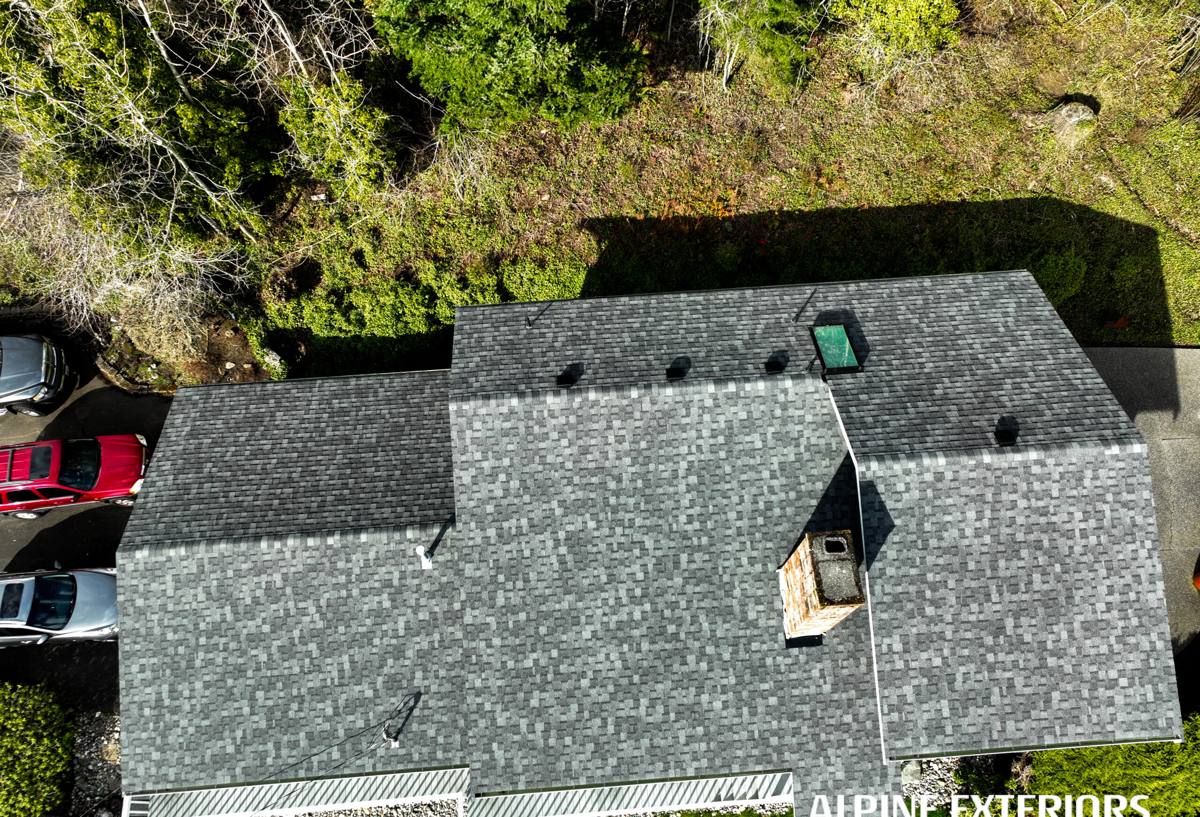
What Local Weather Does to a Roof Over Time
Moss, Moisture, and Shaded Northern Exposures
Whatcom County's damp, mild climate is close to ideal for moss growth, and Yew Street's tree cover only adds to that. Moss doesn't just sit on top of shingles looking unsightly — its root structure lifts granules and shingle edges, holding water against the roof deck long after the rain has stopped. Left alone through a few wet seasons, that trapped moisture works its way under flashing and into the sheathing, which is where a cosmetic problem turns into a structural repair bill.
Wind-Driven Rain
Rain that falls straight down is manageable for almost any roof system. Rain that's pushed sideways by wind is a different problem — it tests every seam, every nail line, and every piece of flashing on the roof, not just the open field of shingles. Homes with valleys, dormers, or multiple roof planes (common in this area) have more of those vulnerable transition points, which is exactly where wind-driven rain finds its way in.
Salt-Influenced Air and Metal Fatigue
Coastal-influenced air in this part of Washington accelerates corrosion on exposed metal — flashing, fasteners, vent boots, and gutter hardware age faster here than they would in a drier inland climate. A roof replacement that reuses old metal components or specs a lower grade of fastener to save a few dollars is setting the homeowner up for a callback in a few years, not a full-life roof.
Signs a Yew Street Roof Has Reached Replacement Age
Repair makes sense when a roof has isolated damage and years of usable life left. Replacement makes sense when the underlying materials are worn out broadly, even if the roof looks fine from the driveway. Here's what we actually check for before recommending one over the other:
- Granule loss heavy enough that you can see bare, shiny patches on multiple slopes, not just one damaged spot
- Shingles that are cupping, curling, or cracking across large sections rather than a few isolated tabs
- Persistent moss regrowth within a season or two of cleaning, which signals the shingle surface itself has degraded
- Soft or spongy spots underfoot on the roof deck, usually found near valleys or eaves
- Daylight visible through the roof deck from inside the attic, or water staining on rafters and sheathing
- Flashing around chimneys, skylights, or roof-to-wall transitions that's rusted, lifted, or was never properly step-flashed to begin with
- A roof approaching or past the manufacturer's expected service life for its material and local exposure
If a roof shows two or three of these across multiple areas, patch repairs tend to become a recurring expense rather than a real fix. That's the point where full replacement is the more honest recommendation, and we'll tell you plainly if that's not yet the case.
What a Correct Roof Replacement Actually Involves
A roof replacement is more than swapping old shingles for new ones. The materials underneath the visible surface do most of the work of keeping a Yew Street home dry through the winter, and they're the parts that get skipped when a job is priced too low to be done right.
Tear-Off and Deck Inspection
Full tear-off to the deck lets us see what's actually happening underneath — soft sheathing, old nail patterns, or trapped moisture that a re-roof over existing layers would simply seal in. Any damaged decking gets replaced before anything new goes down; this isn't optional in a climate that punishes shortcuts.
Underlayment and Ice/Water Protection
Synthetic underlayment across the full roof, with self-adhering ice-and-water membrane at eaves, valleys, and around every penetration, gives the roof a second line of defense for the wind-driven rain this area sees. This layer matters more here than in drier climates because it's the backup when — not if — water gets past the surface material during a hard storm.
Flashing and Metal Components
New flashing at every chimney, skylight, sidewall, and valley, properly step-flashed and integrated with the underlayment rather than just caulked over old metal. Given how coastal-influenced air accelerates corrosion, we spec corrosion-resistant metal and fasteners rather than reusing what's already showing rust.
Ventilation
Balanced intake and exhaust ventilation keeps the attic from becoming a moisture trap, which matters directly for moss prevention and for the long-term health of the new roof deck. A roof can be installed perfectly and still underperform if the attic underneath it can't breathe.
Material Options for Yew Street Homes
There's no single "best" roofing material — the right choice depends on the home's roof pitch, tree exposure, and how the homeowner weighs upfront cost against long-term maintenance. Here's an honest comparison of what we typically install in this area:
| Material | Typical Lifespan | Moss Resistance | Maintenance Level |
|---|---|---|---|
| Architectural asphalt shingle | 25–30 years | Moderate (improves with algae-resistant granules) | Low to moderate |
| Standing seam metal | 40–50+ years | High (little for moss to grip) | Low |
| Synthetic composite shake | 30–40 years | Moderate to high | Low |
| Cedar shake | 20–30 years with upkeep | Low without regular treatment | High |
We don't install every product on this list on every home, and we'll say so directly if a material isn't a good fit for a given roof's pitch or shade exposure. Cedar shake, for example, needs consistent maintenance to resist moss in a climate like this one — that's a real trade-off homeowners should weigh with open eyes, not a knock against the material itself.
Our Roof Replacement Process
- On-site inspection. We walk the roof and attic, document existing damage, and photograph problem areas before quoting anything.
- Written estimate. A clear scope of work and material spec, so there's no ambiguity about what's included — no vague line items.
- Scheduling around weather. Given how much this area's rain windows matter, we plan tear-off days around forecasts rather than pushing through and risking an exposed deck.
- Tear-off and deck repair. Full removal, deck inspection, and any necessary sheathing replacement before new materials go down.
- Underlayment, flashing, and ventilation install. The layers that do the real long-term work, installed to manufacturer spec.
- Final material installation. Shingles, metal, or composite product installed per manufacturer instructions to keep warranty coverage intact.
- Cleanup and final walkthrough. Magnetic sweep for nails, debris removal, and a walkthrough so you can see the finished work before we consider the job done.
Permits, HOA Guidelines, and Site Access
Many properties in Sudden Valley fall under community association guidelines that can include requirements around roofing materials, colors, or contractor documentation. We handle the local building permit process as part of every replacement, and if your property is subject to association review, we'll work with you to get the necessary approvals lined up before work starts rather than after. Yew Street's mix of driveway grades and tree-lined lots also means site access and material staging need to be planned ahead of time — something a crew unfamiliar with the neighborhood often figures out on the day of the job, causing delays.
Cost Factors to Expect
We don't publish blanket per-square-foot pricing because it's misleading — two roofs with the same square footage can cost very differently depending on pitch, layers to remove, and deck condition. What we can tell you is what actually drives the number up or down:
| Factor | Effect on Cost |
|---|---|
| Roof pitch and walkability | Steeper roofs require more safety setup and labor time |
| Number of existing layers | Multiple tear-off layers add disposal and labor cost |
| Deck condition | Rotted or soft sheathing adds material and repair time |
| Roof complexity | More valleys, dormers, and penetrations mean more flashing work |
| Material selection | Asphalt, metal, and composite products carry different material costs |
| Access and staging | Tree cover, driveway grade, and steep lots can affect equipment and labor logistics |
We walk through these factors on-site so the number in your estimate is tied to your actual roof, not a generic average.
Why Hiring a Crew That Already Works This Neighborhood Matters
A roofing crew that has already worked Yew Street and the surrounding Sudden Valley streets knows the tree-cover patterns that drive moss growth on specific slopes, the typical roof pitches and access challenges on this terrain, and what the local permitting and any association review process actually requires — before the first phone call. That's not a marketing point, it's a practical one: it means fewer surprises mid-project, tighter scheduling around this area's rain patterns, and a crew that isn't learning the neighborhood's quirks on your dime.
If your roof is showing wear, or you just want an honest opinion on whether replacement or repair is the right call, we're happy to take a look. Fill out the form below for a free, no-pressure estimate on your Yew Street home.