 Sudden Valley Roofing
 Why Yew Street Homes Put Windows to the Test
Homes along Yew Street sit in a stretch of Whatcom County that gets more than its share of weather. Marine air off the Sound pushes inland through the valley, driving rain comes in sideways more often than most homeowners expect, and the tree cover around Sudden Valley keeps everything damp long after a storm has passed. That combination is hard on windows in ways that don't show up right away — it shows up two, five, ten years later as swollen sashes, fogged glass, and trim that's gone soft.
Moss season is the other piece of this. In a lot of the country, moss is a roof problem. Here, it's a window problem too. Moss and algae get a foothold on north-facing sills, in corner joints, and anywhere water sits instead of draining, and once it's established it holds moisture against wood and vinyl surfaces year-round. A window that's correctly flashed and properly sloped sheds that moisture. One that isn't becomes a slow-motion rot problem hidden behind trim.
None of this means Yew Street needs exotic materials or a different approach than the rest of Whatcom County. It means the installation details that get skipped on an easier job — flashing, sealant, slope, drainage — can't get skipped here. That's the whole difference between a window that lasts twenty-five years and one that needs attention in eight.
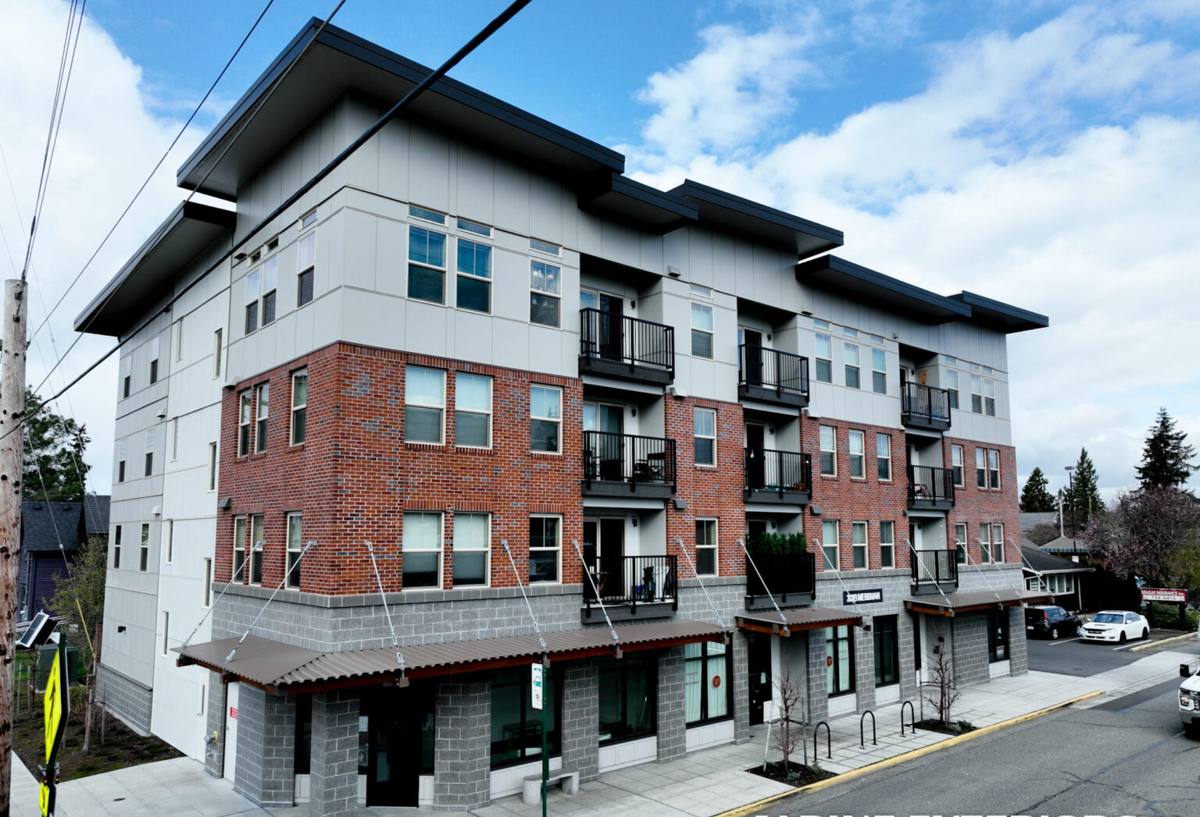
What a Correct Window Installation Actually Involves
Window installation looks simple from the outside: take the old one out, put the new one in. The work that actually determines how long it lasts happens in the rough opening, not in the showroom.
Flashing and Water Management
Every window opening needs a drainage plane that directs any water that gets past the glass and frame back out, not into the wall cavity. That means correctly lapped flashing tape at the sill, jambs, and head — installed in the right order so water always moves downward and outward, never behind the layer below it. On a rainy-climate job like this one, we treat the sill pan as non-negotiable. It's a small detail that's completely invisible once the trim goes back on, and it's the single biggest factor in whether a wall stays dry for the next few decades.
Insulation and Air Sealing
The gap between the window frame and the rough opening needs to be filled with a material that stays flexible and doesn't compress or shrink over time — not stuffed with fiberglass, which settles and leaves gaps that both leak air and let condensation form. Low-expansion window foam or backer rod plus sealant, applied correctly, keeps that gap sealed without bowing the frame.
Fastening and Structural Fit
A window has to be shimmed level, plumb, and square before a single fastener goes in — not just close enough to look right. An out-of-square frame puts stress on the sash, which is why some newer windows start sticking or won't latch cleanly within a year or two. It's also worth checking that the window is fastened through the frame into solid structure, not just through the flange into sheathing, especially on larger picture or slider units that take more wind load.
Signs a Yew Street Home's Windows Need Attention
Most window failures give warning signs well before glass breaks or a frame falls apart. Homeowners in this area should watch for:
- Fogging or a visible haze between panes — the seal on the insulated glass unit has failed and moisture is trapped inside
- Soft or discolored wood trim around the frame, especially on north- or west-facing windows
- Visible moss, algae, or dark streaking on the sill or lower corners of the frame
- Drafts you can feel near the frame edge even with the window fully latched
- Windows that are hard to open, close, or lock, or that have started sagging in the frame
- Paint that's bubbling or peeling specifically around the window opening rather than the wall generally
- A noticeable jump in heating costs without any other obvious cause
Any one of these on its own might just need minor repair. Two or three together, especially on the same window, usually means the unit or its installation has reached the end of useful life.
Choosing the Right Frame Material for This Climate
Frame material matters more here than in a drier part of the state, because whatever you choose is going to spend a lot of its life wet. Here's how the common options actually compare for a home exposed to driving rain and heavy moss growth:
| Frame Material | Moisture Behavior | Maintenance | Typical Lifespan |
|---|---|---|---|
| Vinyl | Doesn't rot or corrode; can warp slightly in sustained heat but rarely an issue here | Low — occasional cleaning | 20–30 years |
| Fiberglass | Excellent — dimensionally stable wet or dry, resists moss and mildew staining well | Low | 30–40+ years |
| Wood (unclad) | Attractive but absorbs moisture; needs a sound paint/finish barrier to prevent rot | High — repainting and sealant checks every few years | Varies widely with upkeep |
| Wood-clad (vinyl or aluminum exterior) | Good — exterior shell protects the wood core if flashing and caulking stay intact | Moderate | 25–35 years |
| Aluminum | Won't rot but conducts cold and can condense/sweat in our damp winters unless thermally broken | Low | 25–30 years |
We don't push one material on every job. A wood-clad window can be the right call for matching an older home's look, as long as the owner understands the maintenance commitment. Where low upkeep and moisture resistance are the priority — which is most of Yew Street — vinyl and fiberglass are usually the more honest recommendation, not because other materials are inferior, but because they demand less from the homeowner in a climate that doesn't let up.
Our Installation Process
- On-site assessment. We look at the existing openings, note any water damage, rot, or settling, and measure for accurate, custom-fit replacements rather than assuming standard sizes.
- Removing the old window carefully. This is when hidden rot or improper original flashing usually shows up. We flag it before proceeding rather than covering it over.
- Repairing the rough opening. Any soft sheathing or framing gets replaced. Installing a new window into a compromised opening just relocates the problem.
- Installing the sill pan and flashing. Correct lap order, sealed corners, and a slight outward slope so water always has somewhere to go.
- Setting, shimming, and fastening the window. Checked for level, plumb, and square before final fastening.
- Insulating and sealing the gap. Low-expansion foam or backer rod and sealant around the full perimeter.
- Interior and exterior trim work. Finished to match the home, with attention to caulking joints that will actually shed water rather than trap it.
- Final walkthrough. Every window opened, closed, and locked to confirm smooth operation before we consider the job done.
Timing and Weather Windows
We schedule Yew Street jobs around actual forecasts, not the calendar. An opening left exposed during a driving rain event is a bad idea anywhere, but it's a worse idea here, and we'd rather move a start date than rush a flashing detail because the sky is closing in.
Why It Matters to Hire a Crew That Already Works This Area
A window contractor who mostly works drier inland climates isn't necessarily going to under-build a job — but they may not think to prioritize the sill pan, the drainage slope, or the moss-resistant material choice, because in their usual jobs those details matter less. A crew that's already worked homes in and around Sudden Valley has seen what actually fails here: which window styles hold up against driving rain, which trim details invite moss, which orientations on a given lot take the worst of the weather. That's not a marketing point, it's a practical one — it shows up in fewer callbacks and windows that are still performing well a decade or two out.
It also means we already understand the housing stock in this part of Whatcom County — the typical construction era, common framing quirks, and what an original builder-grade window installation from a few decades back usually looks like once it's opened up. That saves time on the assessment and avoids surprises mid-project.
Cost Factors Homeowners Should Know
Window installation pricing varies by opening size, frame material, glass package, and how much repair the rough opening needs once the old window comes out — so we won't quote a number without seeing the job. What we can tell you is what tends to move the price:
- Number and size of windows being replaced in the same visit
- Frame material chosen (vinyl is typically the most economical, fiberglass and wood-clad cost more upfront)
- Glass package — standard double-pane versus upgraded low-E or triple-pane glass
- Condition of the existing rough opening and whether rot repair is needed
- Full-frame replacement versus a pocket/insert replacement into the existing frame
- Trim and finish work required to match the home's existing interior and exterior
Full-frame replacement costs more than an insert but is the right call whenever there's any sign of water damage around the opening — an insert installed over a compromised frame just hides the problem instead of fixing it.
Maintenance Tips for a Wet, Mossy Climate
Even a correctly installed window benefits from basic upkeep in this environment. A few habits go a long way:
- Rinse sills and tracks a couple of times a year to clear moss spores and organic buildup before it takes hold
- Check exterior caulking annually, particularly on south- and west-facing units that see the most weather
- Keep gutters and downspouts clear so runoff isn't sheeting directly across window openings
- Trim back vegetation that shades windows and keeps them from drying out between rain events
- Address any soft trim or bubbling paint right away rather than waiting for it to spread
If you're noticing any of the warning signs described above, or you're just planning ahead for a home on Yew Street, we're happy to take a look and talk through honest options — no pressure, no obligation. Fill out the form below and we'll set up a free estimate.