 Sudden Valley Roofing
 Window Replacement Built for Yew Street's Weather
Homes in the Yew Street area of Sudden Valley sit in a corner of Whatcom County that doesn't get a break from the weather. Wind-driven rain off the water, salt-laden air, and long stretches of gray, damp winters put steady pressure on window seals, frames, and glazing. Add in the moss season that runs half the year here, and you've got a climate that finds every weak point in a window system faster than it would somewhere drier. We've replaced windows on homes throughout this neighborhood, and the patterns repeat: failed seals letting in fog between panes, wood frames gone soft at the sill, and vinyl frames that have chalked and warped years before their rated lifespan.
This page is about window replacement specifically for Yew Street homes — what the climate demands, what a correct installation actually involves, and why the details matter more here than they would in a milder part of the state.
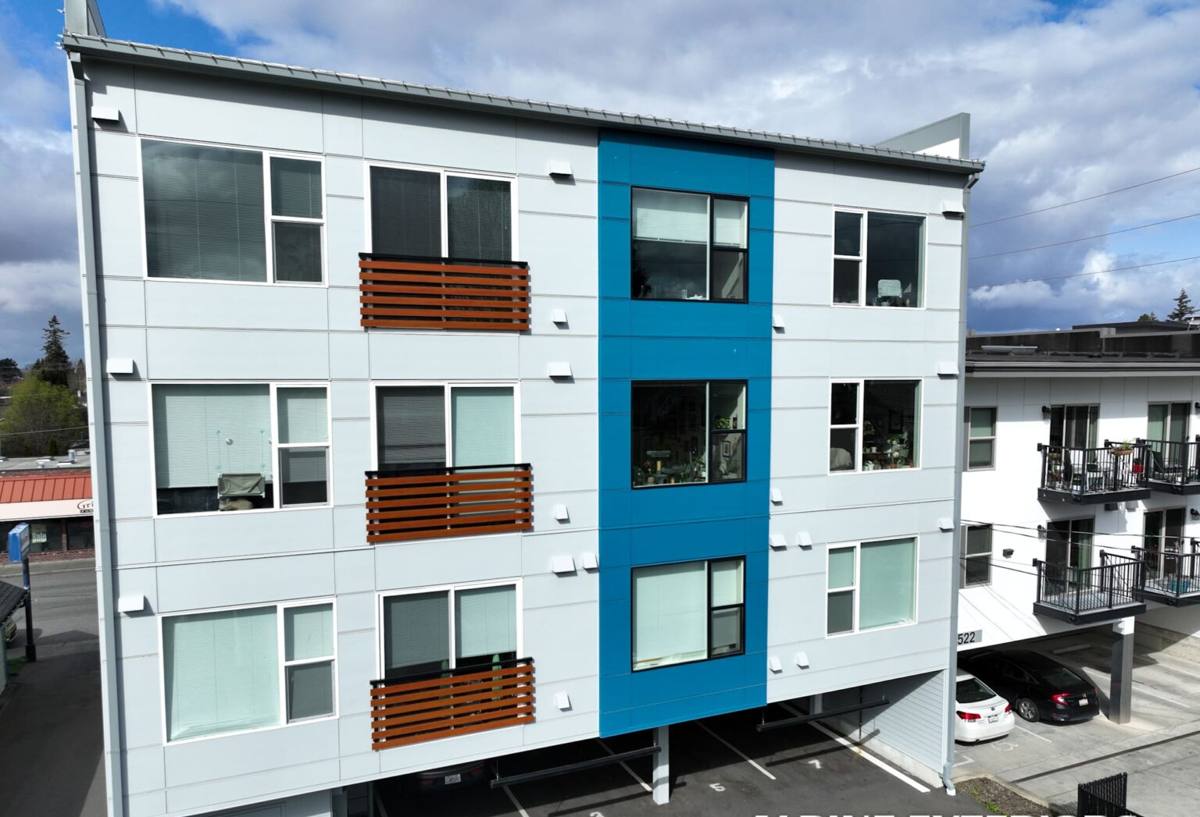
What Whatcom County Weather Does to Windows Over Time
Moisture Intrusion
Sudden Valley gets sustained rain events, not just occasional showers. Wind-driven rain pushes water sideways into gaps that would stay dry in a calmer climate. Once water finds its way behind old flashing or through a cracked sealant bead, it doesn't dry out quickly in our humidity — it sits, and it starts rotting sheathing and framing from the inside.
Salt Air Corrosion
Proximity to the water means airborne salt settles on hardware, screens, and metal window components. Over years, this accelerates corrosion on cheaper hinges, locks, and aluminum spacers inside the glass unit itself — often showing up as a fogged or hazy look between panes long before the frame itself looks bad.
Moss and Organic Growth
Moss doesn't just grow on roofs. It takes hold in window sill grooves, corner joints, and anywhere water sits and shade lingers. Once established, it holds moisture against the frame and finish, which speeds up rot in wood and speeds up sealant breakdown in vinyl and fiberglass units.
Temperature Swings and Condensation
Our mild but persistently cool, wet winters mean interior condensation is a real issue on older or poorly insulated windows. Fogging on the inside of glass, especially in bathrooms and kitchens, is usually a sign the window's insulating performance has dropped below what the home needs.
Signs a Yew Street Home Needs Window Replacement
- Fog or moisture trapped between panes of a double-pane window — the seal has failed and can't be repaired
- Visible rot, soft spots, or discoloration at the sill or lower corners of wood-framed windows
- Windows that are difficult to open, close, or lock — often a sign of a warped or swollen frame
- Noticeable draft or cold spot near the window even when it's fully closed
- Moss or dark staining building up in the frame grooves or exterior trim
- Rising heating bills without any other explanation
- Condensation forming on the inside of the glass regularly during colder months
- Visible gaps between the window frame and the siding or trim
Any one of these on its own isn't necessarily an emergency. Several together, especially on a home that's had the same windows for 20+ years, usually means it's time to plan for replacement before a small problem becomes a structural one.
What a Correct Window Replacement Job Involves
Assessing the Opening, Not Just the Window
Before we talk about which window goes in, we look at what's around it. If there's rot in the framing or sheathing, replacing the window without addressing that just seals moisture damage behind a new frame. On homes in this area, we routinely find some degree of moisture-related damage around older window openings that needs to be dealt with as part of the job, not glossed over.
Flashing and Water Management
This is the step that matters most in a climate like ours and the one that gets rushed most often on lower-quality jobs. Proper flashing — installed in the correct sequence with the house wrap so water sheds outward and down, never inward — is what actually keeps driving rain out of the wall assembly. A window can be top-quality and still leak if the flashing detail underneath it is wrong.
Sealing and Insulating
Gaps around the window frame need to be properly insulated and sealed, not just caulked on the surface. This affects both energy performance and long-term moisture control. Over-filling with the wrong material can bow the frame; under-filling leaves an air and moisture path straight to the interior.
Frame Material Selection
We steer most Yew Street homeowners toward vinyl or fiberglass frames for exposed elevations, simply because of how much lower their moisture-related maintenance burden is compared to wood in this climate. Wood can still be the right call for certain architectural styles or interior-facing sightlines, but it comes with a maintenance schedule — repainting, sealant checks, sill inspections — that has to be kept up with here, or the same rot issues just come back on a longer timeline.
Comparing Frame Materials for This Climate
| Frame Material | Moisture Resistance | Maintenance | Typical Lifespan Here |
|---|---|---|---|
| Vinyl | Very good — won't rot, resists salt air well | Low — occasional cleaning | 20-30 years |
| Fiberglass | Excellent — very stable in wet/dry cycling | Low | 30-40 years |
| Wood (clad or painted) | Fair — vulnerable at joints and sills if maintenance lapses | High — regular painting/sealing | 15-25 years without diligent upkeep |
| Aluminum | Fair — prone to corrosion in salt air over time | Moderate | 15-20 years in coastal exposure |
These are general ranges based on how these materials typically hold up in a marine, high-moisture climate like Whatcom County's — not manufacturer claims. Actual performance depends heavily on installation quality, which is often the bigger variable than the material itself.
Glass Packages Worth Considering
Double-pane, low-E glass with argon gas fill is a reasonable baseline for this area and will outperform older single-pane or basic double-pane units in both comfort and condensation resistance. For homes with more direct wind or water exposure, or rooms where condensation has historically been an issue, a higher-performance glass package can be worth the added cost — we'll talk through the real tradeoff in energy performance versus upfront price rather than push toward the most expensive option by default.
Our Process for a Yew Street Window Replacement
- On-site assessment — we inspect existing windows, framing, and any visible moisture or rot damage before quoting anything
- Honest scope discussion — if we find damage beyond the window itself, we tell you before work starts, not after we've opened up the wall
- Accurate measurement and ordering — correct sizing avoids gaps and shimming problems that create leak points later
- Removal and prep — old windows come out carefully to protect surrounding siding and trim, and any compromised framing gets repaired
- Proper flashing and installation — sequenced so water always sheds away from the opening
- Sealing, insulating, and finish work — interior and exterior trim finished to match the home
- Final walkthrough — we check operation, seals, and finish with you before calling the job done
Why Local Experience on Yew Street Matters
A crew that's worked this specific area knows which elevations take the worst of the wind-driven rain, how far moss and salt exposure typically travel from the water, and what kind of moisture damage tends to show up behind older siding and trim in this neighborhood. That's not something you get from a general contractor passing through the county once. It shows up in fewer surprises during the job and a flashing and sealing approach that's already been proven against this exact weather pattern, not just textbook conditions.
What to Ask Before Hiring Anyone for This Job
- Will you inspect and address any rot or moisture damage found during removal, or just install over it?
- What's your flashing sequence, and can you explain how it manages driving rain specifically?
- What frame and glass options do you recommend for this location, and why?
- Are you licensed and insured to do this work in Washington State?
- What's covered under warranty — the product, the labor, or both — and for how long?
A contractor who answers these clearly and specifically, without dodging into generic sales language, is generally the safer bet on a job where the installation quality matters as much as the product.
Get a Straightforward Estimate
If you're noticing drafts, fogged glass, sticking sashes, or visible wear on your windows, it's worth having them looked at before another wet Whatcom County winter puts more stress on them. We offer free, no-pressure estimates for Yew Street homeowners — just an honest look at your windows and a clear explanation of what we find and what it would take to fix it right. Fill out the form below to get started.