 Sudden Valley Roofing
 Metal Roofing Built for Acme's Conditions, Not a Catalog Photo
Acme sits close enough to Lake Whatcom and the surrounding forest canopy that roofs here take a different kind of beating than roofs twenty minutes away in town. You get moisture that lingers under tree cover, wind-driven rain off the lake and the foothills, and a moss season that runs longer than most homeowners expect. A metal roof can handle all of that better than almost any other material available, but only if it's specified and installed with those specific conditions in mind. That's the difference between a metal roof that looks right on install day and one that still looks right in fifteen years.
This page is about metal roofing specifically for homes in and around Acme — what the local climate actually does to a roof, what a correct installation involves, and how we approach the job when the address is here.
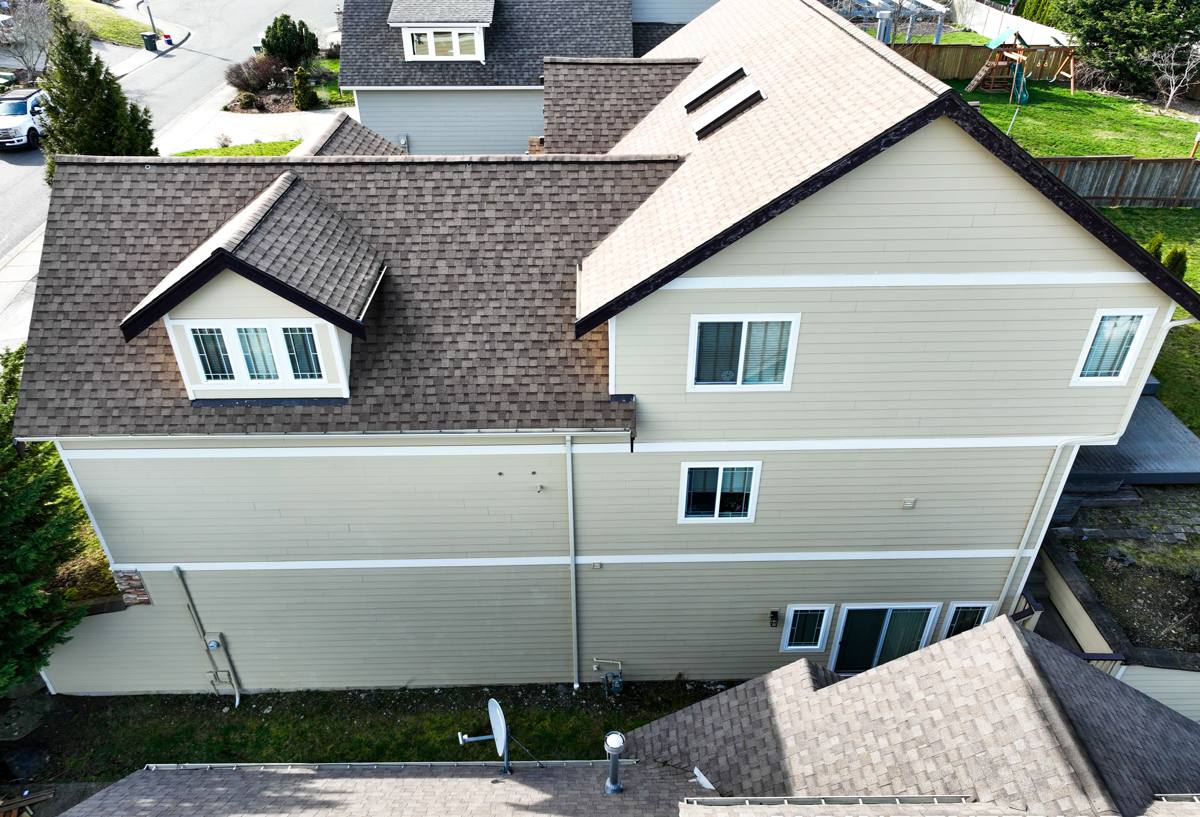
What Acme's Climate Actually Does to a Roof
Three things drive most of the roofing problems we see in this part of Whatcom County, and they compound each other.
Driving Rain
Wind-driven rain doesn't just fall straight down — it pushes sideways and works its way under laps, around fasteners, and through any flashing detail that was cut corners on. A roof that sheds water fine in a light drizzle can still leak in a sideways storm if the underlayment, flashing, and panel overlaps weren't built for wind-driven exposure.
Persistent Moisture and Shade
Tree cover around Acme keeps a lot of roof surfaces shaded and slow to dry out after rain. That constant damp is exactly what moss, moderate algae, and organic buildup need to establish themselves, and it's harder on roofing materials that depend on staying dry to perform — namely traditional composition shingles.
Salt Air
Being close to Bellingham Bay and the broader Puget Sound airshed means homes throughout this part of Whatcom County get some level of salt-laden air, even away from the immediate waterfront. Salt exposure accelerates corrosion on unprotected metal fasteners, flashing, and lower-grade coatings. It's a slow process, but it's a real one, and it's why fastener and coating choice matters more here than in a landlocked climate.
None of these factors are unique to Acme by themselves. What's specific to this area is having all three working on a roof at the same time, year-round.
Why Metal Handles This Combination Well
Metal roofing isn't a cure-all, but it addresses the three problems above directly:
- Steep-profile panels and standing seam systems shed wind-driven rain more reliably than lapped shingle materials, especially at ridges, valleys, and wall intersections.
- A smooth, non-porous metal surface gives moss and algae far less to grip onto than the granulated surface of composition shingles, which slows regrowth even under shaded, damp conditions.
- Correctly specified metal — proper alloy, coating, and fastener hardware — is built to resist corrosion in coastal-influenced air, so long as the system was chosen with that exposure in mind rather than a generic spec sheet.
The trade-off is that metal roofing is less forgiving of installation shortcuts than shingles are. A shingle roof with a minor flashing mistake often leaks slowly and gives you warning. A metal roof with the same mistake can channel water in unexpected directions because it sheds so efficiently. Correct installation matters more with metal, not less.
Choosing the Right Metal System
Not every metal roofing product is the same job. The right choice depends on your roof's pitch, how much of the surface stays shaded, and your budget. Here's how the common options compare for a home in this area:
| System | Best For | Moss/Algae Resistance | Relative Cost |
|---|---|---|---|
| Standing seam (concealed fastener) | Most roof pitches, best long-term weathertightness | Excellent — smooth panel, no exposed fastener heads to trap debris | Higher |
| Exposed-fastener metal panel | Simpler roof lines, garages, outbuildings, budget-conscious upgrades | Good, but fastener washers need periodic inspection | Moderate |
| Stone-coated or metal shingle/shake profile | Homes wanting a traditional shingle or shake look with metal's durability | Good — coated surface sheds moisture better than composition shingles | Moderate to Higher |
For most Acme homes with significant tree cover, we lean toward standing seam or a coated metal shingle profile, since both minimize the horizontal ledges and exposed fasteners where organic debris and moisture like to collect. Exposed-fastener panel is a legitimate, cost-effective option for simpler structures, but it asks for more attentive long-term maintenance in a shaded, damp setting.
What a Correct Metal Roof Installation Involves Here
The panels themselves get most of the attention, but the details underneath and around them are what actually determine whether the roof performs through a wet Whatcom County winter.
Underlayment
Given the driving rain this area sees, we don't treat underlayment as a formality. A high-temp synthetic or self-adhered underlayment at eaves, valleys, and penetrations gives the roof a real second line of defense if wind ever forces water past the panel laps.
Flashing and Penetrations
Chimneys, skylights, plumbing vents, and wall-to-roof transitions are where most leaks actually originate, not the open field of the roof. Each of these needs flashing detailed for metal's thermal movement and for wind-driven exposure, not a generic caulk-and-hope approach.
Fasteners and Hardware
In an area with salt-influenced air, fastener and coating quality is not a place to economize. We use hardware rated for the coastal-influenced conditions common throughout this part of Washington, so corrosion isn't the thing that undermines an otherwise good installation ten years in.
Ventilation
Metal roofs perform best over a properly ventilated attic or roof deck. Poor ventilation traps moisture underneath the panels, which can cause condensation issues regardless of how good the metal itself is. We check attic ventilation as part of any metal roof estimate, not as an afterthought.
Our Process for Acme Metal Roof Projects
The process is straightforward, and we keep it that way on purpose:
- On-site assessment. We look at your existing roof, decking condition, ventilation, and how much shade and moss exposure the roof actually gets before recommending a system.
- Honest system recommendation. We'll tell you whether standing seam, exposed-fastener panel, or a metal shingle profile fits your roof and budget — and why.
- Written estimate. Clear scope, materials, and pricing before any work starts. No pressure to decide on the spot.
- Tear-off and deck inspection. We check the decking for rot or moisture damage once the old roofing is off, since that's the one thing that can't be fully evaluated from a walk-around.
- Installation. Underlayment, flashing, panels, and trim installed to spec, with attention to the wind and moisture details covered above.
- Final walkthrough. We go over the finished roof with you, including basic maintenance expectations, before we consider the job done.
What Drives the Cost of a Metal Roof
Metal roofing costs more upfront than composition shingles, but the range varies a lot based on a few real factors:
| Factor | Why It Matters |
|---|---|
| Panel system chosen | Standing seam runs higher than exposed-fastener panel due to labor and material differences |
| Roof complexity | Valleys, dormers, and multiple roof planes add flashing work and labor time |
| Existing deck condition | Rot or moisture damage found at tear-off may need repair before new roofing goes on |
| Ventilation upgrades | Adding or correcting attic ventilation is sometimes needed for the roof to perform as intended |
| Access and site conditions | Steep pitches, tree cover, and difficult access can affect labor and staging |
We won't quote a number without seeing the roof — anyone who does is guessing. What we can tell you is that a metal roof's higher upfront cost is usually offset by a longer service life and less maintenance than shingles need in this climate, particularly with the moss and moisture load Acme roofs deal with.
Signs Your Current Roof Is Ready for a Metal Upgrade
- Moss returns within a year or two of cleaning, even after treatment
- Shingle granules are visibly washing into gutters or downspouts
- You've had recurring leaks around the same flashing point or penetration
- The roof is nearing or past the typical lifespan for composition shingles in a shaded, wet setting
- You're planning to stay in the home long-term and want to stop re-roofing every couple decades
- Fasteners, flashing, or trim show visible corrosion or staining
None of these on their own means you need a full metal roof tomorrow, but two or three together are usually a sign the current roof is working harder than it should.
Why It Matters That We Already Work in Acme
A roofing crew that's worked other jobs in this specific area already understands how the tree cover, terrain, and weather pattern here behave differently from a roof in open Bellingham or out toward Ferndale. That's not a marketing point — it changes real decisions, like where extra underlayment protection makes sense, how much roof ventilation a shaded structure actually needs, and which flashing details are worth reinforcing given how wind moves through this part of Whatcom County. A crew guessing at those answers from a general spec sheet is more likely to miss something a locally experienced crew catches automatically.
Keeping a Metal Roof Performing Long-Term
Metal roofing is low-maintenance compared to shingles, but "low" isn't "none." A yearly visual check for debris buildup in valleys, clear gutters and downspouts, and prompt attention if a fastener or flashing point ever shows corrosion will keep the system performing for its full service life. We're happy to include a maintenance check as part of the estimate conversation so you know what to expect year to year.
If you're weighing a metal roof for your Acme home, we'll come take an honest look, walk you through what your specific roof needs, and give you a written estimate with no pressure to decide on the spot. Use the form below to request a free estimate.