 Sudden Valley Roofing
 Why Bellingham Siding Wears Differently Than Siding Inland
Homes near Bellingham face a specific combination of stresses that inland Whatcom County properties don't deal with in the same way. Proximity to Bellingham Bay means a steady dose of salt-laden air working on fasteners, trim, and any seam in the siding system. Add the region's long stretch of driving rain off the Sound, plus the shaded, damp conditions that keep moss and algae active for much of the year, and you get a climate that's genuinely tough on exterior materials — not because any one factor is extreme, but because the combination rarely lets siding fully dry out.
We work on homes throughout this area regularly, including Sudden Valley and the surrounding Bellingham neighborhoods, and we see the same failure patterns come up again and again: swelling at butt joints, soft spots low on the wall where splashback collects, and moss establishing itself in north-facing sections that stay shaded most of the day. None of that is unusual for this climate — it's exactly what siding here is up against, which is why the material and the installation details matter more than they would in a drier region.
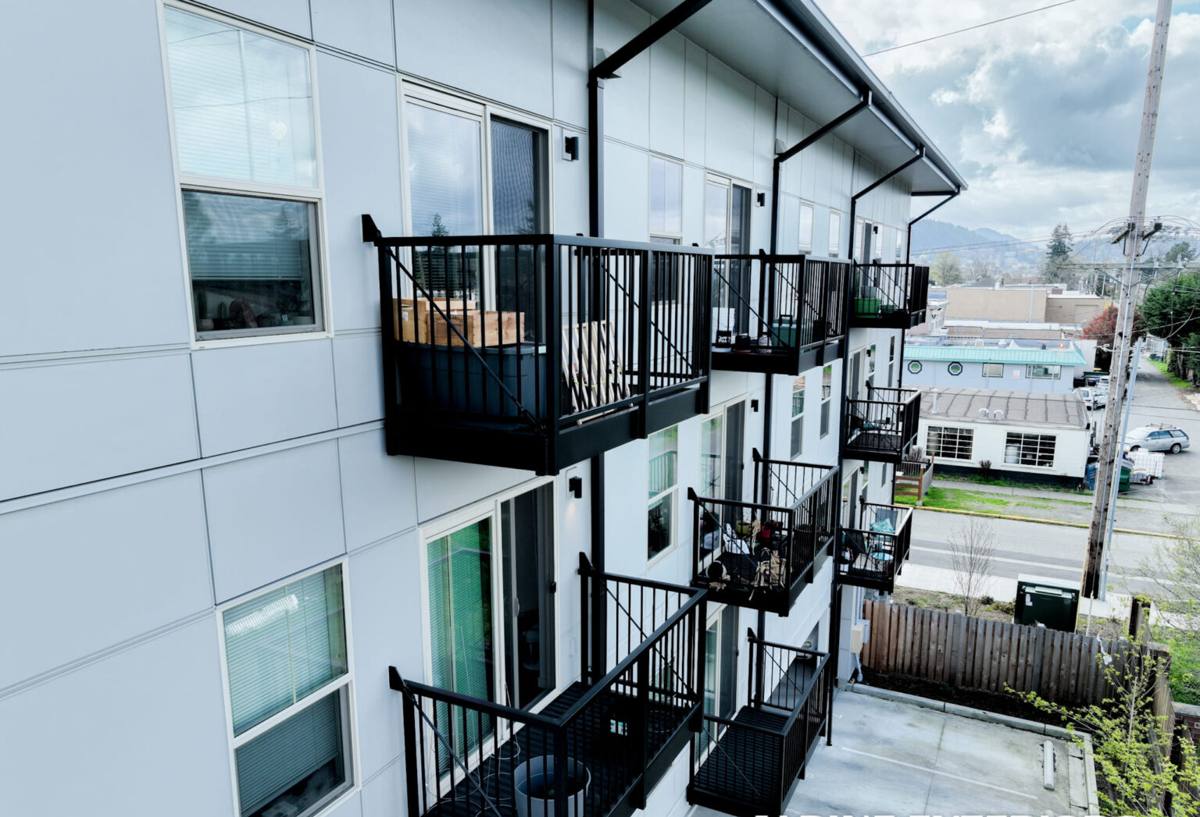
Signs a Bellingham Home Needs Siding Replaced, Not Just Repaired
Not every problem means a full tear-off. But there's a point where patching stops making sense and replacement becomes the more honest recommendation. Here's what we look for during an inspection:
- Soft, spongy, or crumbling siding when pressed near the bottom courses or around window trim
- Persistent moss or dark streaking that returns within a season or two of cleaning
- Visible warping, buckling, or cupping boards, especially on walls that face prevailing wind and rain
- Paint that's failing in patches rather than evenly across the wall — often a sign moisture is trapped behind the surface
- Gaps opening up at seams, corners, or where siding meets trim, letting water track behind the cladding
- A musty smell or visible staining on interior walls that share an exterior wall with damaged siding
- Siding that's original to a home built more than 20-25 years ago in a wood or engineered wood product
One or two of these on their own might be a repair job. Several together, especially combined with an older original install, usually mean the underlying moisture barrier and sheathing need a real look — which only happens once the old siding comes off.
What Correct Siding Replacement Actually Involves
It Starts Underneath, Not With the New Boards
The siding itself is the part homeowners see, but the work that determines whether it lasts happens underneath. A proper replacement means removing the old siding entirely and inspecting the sheathing and weather-resistive barrier before anything new goes up. In a climate that pushes this much moisture at a wall, any soft or compromised sheathing needs to be addressed now — covering it over guarantees a repeat failure, just hidden behind new material.
Flashing and Water Management
Most siding failures we find in this area trace back to flashing details, not the siding material itself: window and door heads without proper drip caps, kick-out flashing missing where a roofline meets a wall, or butt joints that weren't sealed and back-primed correctly. Getting these details right matters more in a driving-rain climate than in most parts of the country, because wind-driven rain finds every gap that a straight-down rain would never reach.
Fastening and Clearances
Fiber cement siding has manufacturer-specified fastening patterns, nail penetration depth, and minimum clearances from grade, roofing, and decks — all of which exist specifically to manage moisture. Skipping or shortcutting these specs is one of the most common causes of premature failure we see on re-inspections of other contractors' work, and it's avoidable with a crew that installs to spec every time rather than by habit.
Material Matters: Why We Install Only James Hardie Fiber Cement
We get asked why we don't offer vinyl, LP SmartSide, or cedar as options. The honest answer is that in this specific climate — salty coastal air, sustained rain, and a moss season that runs much of the year — those materials each carry trade-offs we're not willing to install and then be responsible for.
| Material | Behavior in Salt Air & Driving Rain | Moss & Algae Resistance | Local Longevity Considerations |
|---|---|---|---|
| Vinyl | Can warp or become brittle with UV and temperature swings; seams are a moisture entry point | Traps grime in texture; needs regular washing | Lower upfront cost, but limited color life and seam durability locally |
| Engineered wood (e.g. LP SmartSide) | Wood-based core is moisture-sensitive; edge swelling is a known risk if not maintained | Moderate; factory treatment helps but isn't permanent | Needs consistent caulking and repainting to stay ahead of moisture |
| Cedar / primed spruce | Natural material, absorbs and releases moisture with weather cycles | Prone to moss and mildew without regular treatment | Highest maintenance burden in a wet, shaded climate |
| James Hardie fiber cement | Non-combustible, dimensionally stable; doesn't swell or rot from moisture exposure | Factory-baked ColorPlus finish resists moss staining better than painted wood or vinyl | Engineered HZ product lines are built for high-moisture climates like this one |
Fiber cement isn't immune to this climate — nothing is — but it doesn't have the same moisture-driven failure modes as wood-based or vinyl products, and Hardie's HZ5 line is specifically engineered for wet, freeze-prone regions like ours. That's the standard we've decided to build every job to, rather than offering a cheaper option now that costs more in repairs later.
Our Siding Replacement Process
The process is straightforward, but we don't skip steps to move faster:
- On-site assessment — we walk the exterior, check for the failure signs listed above, and identify any areas where sheathing or flashing may need attention once the old siding is off.
- Written estimate — a clear scope covering material, labor, flashing and trim work, and any sheathing repair allowance, so there are no surprises mid-job.
- Tear-off and inspection — old siding comes off, sheathing and barrier get inspected, and anything compromised is addressed before new material goes up.
- Flashing and moisture barrier correction — this is where most of the long-term performance is decided, and it's the step that gets shortcut most often industry-wide.
- James Hardie installation to manufacturer spec — correct fastening, clearances, and joint treatment throughout.
- Final walkthrough — we go over the finished work with you before calling the job done.
Why Hiring a Crew That Already Works Bellingham Matters
Siding installation isn't identical everywhere, and a crew that mostly works drier inland regions can miss details that matter here. A contractor familiar with this specific stretch of Whatcom County already knows which walls in a given neighborhood take the worst of the wind-driven rain, where moss tends to establish first based on tree cover and sun exposure, and how salt air exposure varies depending on how close a property sits to the water. That local pattern recognition shows up in better flashing decisions and fewer callbacks — not because the work is fundamentally different, but because the judgment calls on a wet coastal job are informed by having made them here before.
There's also a practical side: local permitting familiarity, knowing which product lines actually perform here versus on paper, and being reachable if a question comes up after the job is done. A crew based in Sudden Valley and working Bellingham regularly isn't a convenience add-on — it's part of getting the job done right the first time.
What Affects the Cost of a Siding Replacement
Every home is different, but the main cost drivers on a Bellingham siding replacement are fairly consistent:
| Factor | Why It Matters |
|---|---|
| Condition of sheathing underneath | Rot or moisture damage found during tear-off adds repair scope before new siding can go on |
| Home size and wall complexity | More corners, dormers, and trim details mean more labor and cutting |
| Siding profile and trim selection | Lap width, trim style, and accent details all affect material and labor cost |
| Access and site conditions | Slopes, tight side yards, or landscaping near the walls can add setup time |
| Flashing and detail work required | Homes with more window/door openings and roof-to-wall transitions need more flashing labor |
We give a firm written estimate after the on-site assessment, not a rough number over the phone — sheathing condition especially can't be judged accurately without seeing the walls in person.
Keeping New Siding Performing Once It's Installed
Even the right material installed correctly benefits from basic upkeep in this climate. Rinsing off accumulated grime and moss growth once or twice a year, keeping gutters clear so water isn't sheeting down the wall, and trimming back vegetation that keeps a wall shaded and damp all extend the life of the finish. None of this is heavy maintenance — it's the kind of thing that takes an afternoon and saves you from an early repaint or premature repair down the line.
If you're seeing signs of siding failure on a Bellingham home, or your siding is simply old enough that it's worth a second opinion, we're happy to take a look. The estimate is free, there's no pressure, and you'll get a straight answer about what your home actually needs — use the form below to get started.