 Sudden Valley Roofing
 Deck Repair Built for Fairhaven's Climate
Decks in the Fairhaven area of Whatcom County take a different kind of beating than decks inland. The combination of salt-laden air coming off the water, frequent driving rain, and a moss season that can stretch from fall through spring puts constant stress on wood, fasteners, and finishes. A deck that looks fine from a distance can be hiding soft framing, corroded hardware, or trapped moisture underneath a perfectly clean-looking surface board.
We repair decks for homeowners throughout Sudden Valley and the surrounding Whatcom County communities, and Fairhaven's proximity to the water means we see certain failure patterns here more often than we do a few miles inland. This page covers what actually goes wrong with decks in this specific setting, what a correct repair looks like, and how we handle the job from first look to final walk-through.
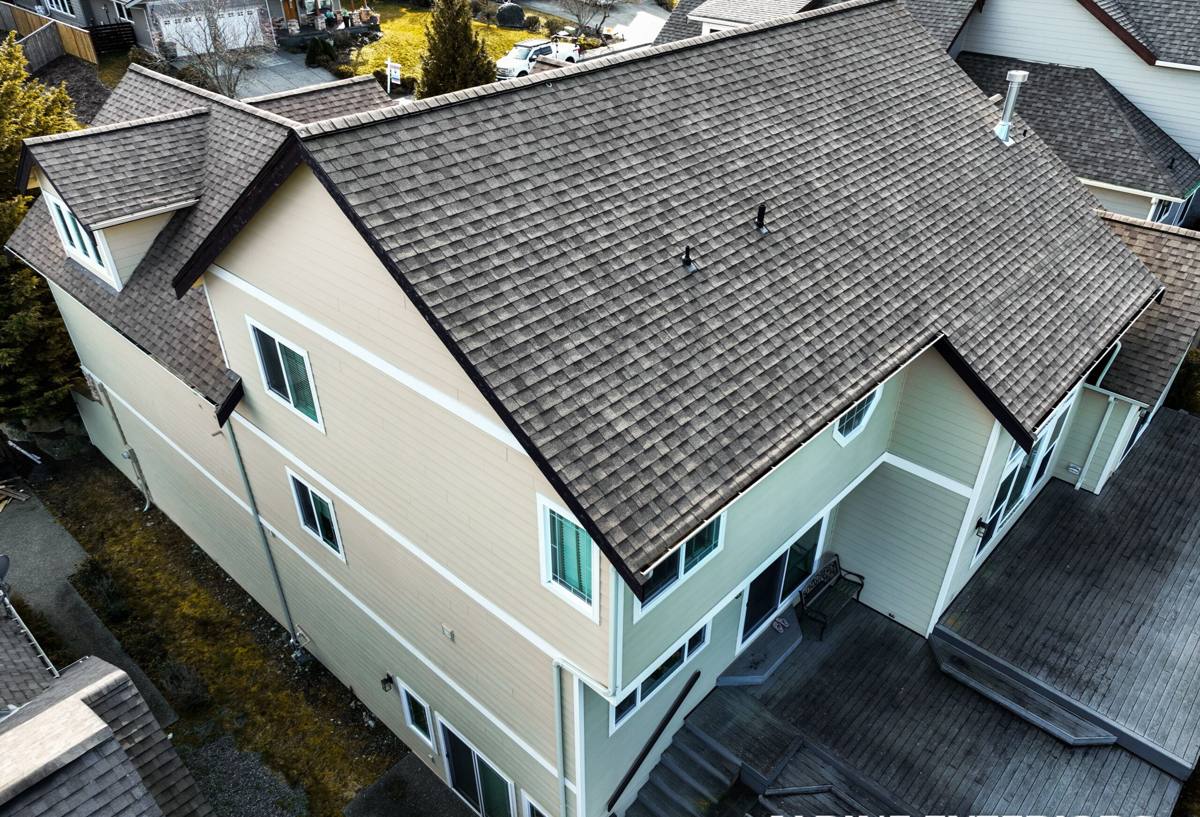
Why Fairhaven Decks Wear Differently
Salt Air and Metal Fatigue
Salt air accelerates corrosion on anything metal — nails, screws, joist hangers, structural bolts, and railing hardware. Once a fastener starts to corrode, it loses holding strength long before the rust becomes visible from the top of the deck. This is one of the main reasons a deck can feel solid underfoot right up until it isn't.
Driving Rain and Water Intrusion
Wind-driven rain doesn't just fall on a deck, it gets pushed sideways into seams, gaps, and any spot where flashing or caulking has failed. Water that gets behind ledger boards or under railing posts tends to sit there, because those areas dry out slowly compared to the open deck surface.
A Long Moss Season
Moss and algae thrive in the shaded, damp conditions common to this part of Washington. Beyond making a deck slippery, moss holds moisture against the wood surface for extended periods, which speeds up rot in boards that would otherwise dry out between rain events.
Signs Your Deck Needs Repair, Not Just Cleaning
Some deck problems are cosmetic and some are structural, and it's important not to confuse the two. A pressure wash can fix a dirty, moss-stained deck. It won't fix a soft board or a loose post.
- Boards that feel spongy, bounce, or flex more than nearby boards when you walk on them
- Visible gaps opening up between decking boards or around the ledger board where the deck meets the house
- Railings or posts that wiggle or rock when pushed
- Rust staining bleeding out around screw or nail heads
- Stairs that feel less solid than they used to, especially at the stringers
- Persistent dark or green staining that comes back quickly after cleaning
- Any wood that a screwdriver tip sinks into easily, which usually means active rot
If you're seeing more than one of these at once, that's usually a sign the issue has moved past the surface and into the framing.
What a Correct Deck Repair Actually Involves
A repair that only replaces the boards you can see, without checking what's underneath, tends to fail again within a season or two in a climate like this one. We approach deck repair in layers, from the structure out to the finish.
Structural Framing
This includes the ledger board (where the deck attaches to the house), the rim joists, the support posts, and the joists themselves. Any rot or fastener failure here gets addressed first, because everything else is fastened to this structure.
Fasteners and Connectors
Corroded nails, screws, and joist hangers get replaced with hardware rated for exterior and coastal-adjacent exposure. Reusing questionable fasteners is one of the most common shortcuts that leads to repeat repairs.
Decking Surface
Damaged or worn boards are replaced, matched as closely as possible to the surrounding material, and properly gapped and fastened so water can shed rather than pool.
Railings and Guards
Loose posts and railings are a safety issue, not just a cosmetic one. Post connections are checked for both surface condition and how securely they're anchored into the framing below.
Common Problem Areas on Fairhaven Decks
Based on the repair calls we get in this area, a handful of spots account for most of the trouble.
| Area | What Typically Goes Wrong | Why It Happens Here |
|---|---|---|
| Ledger board | Hidden rot where deck meets the house | Driving rain pushes water behind flashing over time |
| Fasteners & hangers | Corrosion and reduced holding strength | Salt air speeds up oxidation on exposed metal |
| Shaded decking boards | Persistent moss and slow-drying wood | Long moss season keeps surfaces damp for extended stretches |
| Railing posts | Loosening at the base connection | Repeated wet-dry cycling works fasteners loose over time |
| Stair stringers | Softening near ground contact | Splash-back moisture and limited airflow underneath |
Repair vs. Replace: How We Decide
Not every deck problem calls for a full rebuild, and not every deck is worth patching indefinitely. We look at a few honest factors before recommending either path.
| Factor | Favors Repair | Favors Replacement |
|---|---|---|
| Extent of rot | Isolated to a few boards or one framing member | Widespread through multiple structural members |
| Age of the deck | Newer deck with a localized issue | Older deck already near end of typical service life |
| Framing condition | Posts and joists still sound | Ledger, posts, or joists compromised in multiple spots |
| Fastener condition | Hardware mostly sound, isolated corrosion | Corrosion spread across most connectors |
| Budget goals | Targeted fix extends usable life affordably | Recurring repairs are starting to add up to rebuild cost |
We'll always tell you plainly which category your deck falls into, and why, rather than defaulting to the more expensive option.
Our Deck Repair Process
- On-site inspection. We check the decking surface, framing, ledger connection, posts, railings, and stairs, probing any wood that looks or feels questionable.
- Written scope and estimate. You get a clear breakdown of what needs to be fixed, what it involves, and what it costs — no vague allowances.
- Repair work. We address structural issues first, then fasteners, then surface boards and railings, in that order.
- Final check. Before we consider the job done, we walk the deck with you, checking for flex, loose connections, and proper drainage.
Materials We Use and Why
Material choice matters more here than in drier inland climates. For framing repairs, we use pressure-treated lumber rated for ground contact where appropriate, since it holds up better against the moisture cycling this area sees. For fasteners and connectors, we use stainless or coated hardware rated for coastal-adjacent exposure — standard interior-grade hardware corrodes too quickly this close to salt air to be a good long-term choice.
For decking surfaces, we'll talk through both wood and composite options honestly. Wood offers a lower upfront cost and a traditional look but needs more regular maintenance in this climate. Composite costs more initially but resists moss and moisture absorption better, which can mean less upkeep over time. Neither is automatically "right" — it depends on your budget, how much maintenance you want to do, and the look you're after. We'll walk through the trade-offs rather than push one option.
Maintenance Checklist to Extend Your Repair's Life
A well-done repair still needs some basic upkeep to get its full lifespan out of this climate. A few habits go a long way:
- Sweep off leaves and debris regularly, especially in shaded corners where moss takes hold first
- Clean moss and algae buildup before it has a chance to sit through a whole wet season
- Check railings and stair posts once or twice a year for any looseness
- Look over fasteners periodically for early rust staining
- Keep gutters and downspouts clear so runoff isn't dumping extra water onto the deck
- Reapply sealant or finish on wood decking on the schedule the product recommends
Why Hire a Crew That Already Works Fairhaven
A contractor who works regularly in this part of Whatcom County already knows which failure patterns to check for first, instead of treating every deck as a blank slate. That familiarity with local conditions — salt exposure, driving rain, and a long moss season — shortens the diagnostic part of the job and helps make sure the repair addresses the actual cause, not just the visible symptom. It also means the materials and fasteners we recommend are chosen with this specific environment in mind, not a generic inland standard.
If your deck has soft spots, loose railings, recurring moss problems, or you just want an honest read on its condition, we're happy to take a look. Reach out for a free, no-pressure estimate using the form below, and we'll give you a straightforward assessment of what your deck needs.