 Sudden Valley Roofing
 Windows Built for Columbia's Corner of Sudden Valley
Homes in the Columbia area sit close enough to the lake and the surrounding tree cover that windows here take a different kind of beating than windows in a typical inland neighborhood. You get salt-tinged air moving in off the water, long stretches of driving rain through the fall and winter, and a moss season that seems to start earlier and last longer every year. None of that is dramatic on its own, but stacked up year after year, it's exactly the combination that finds every weak seam, every soft spot in old wood trim, and every window that was installed a little too casually the first time around.
Sudden Valley Roofing Co works on homes throughout Whatcom County, and Columbia is one of the areas we know well — the lot orientations, the shade patterns, the way moisture tends to collect on north-facing walls and under eaves. When we talk about window installation here, we're not talking about a generic product swap. We're talking about matching the right window and the right installation detail to what this specific stretch of Sudden Valley actually deals with.
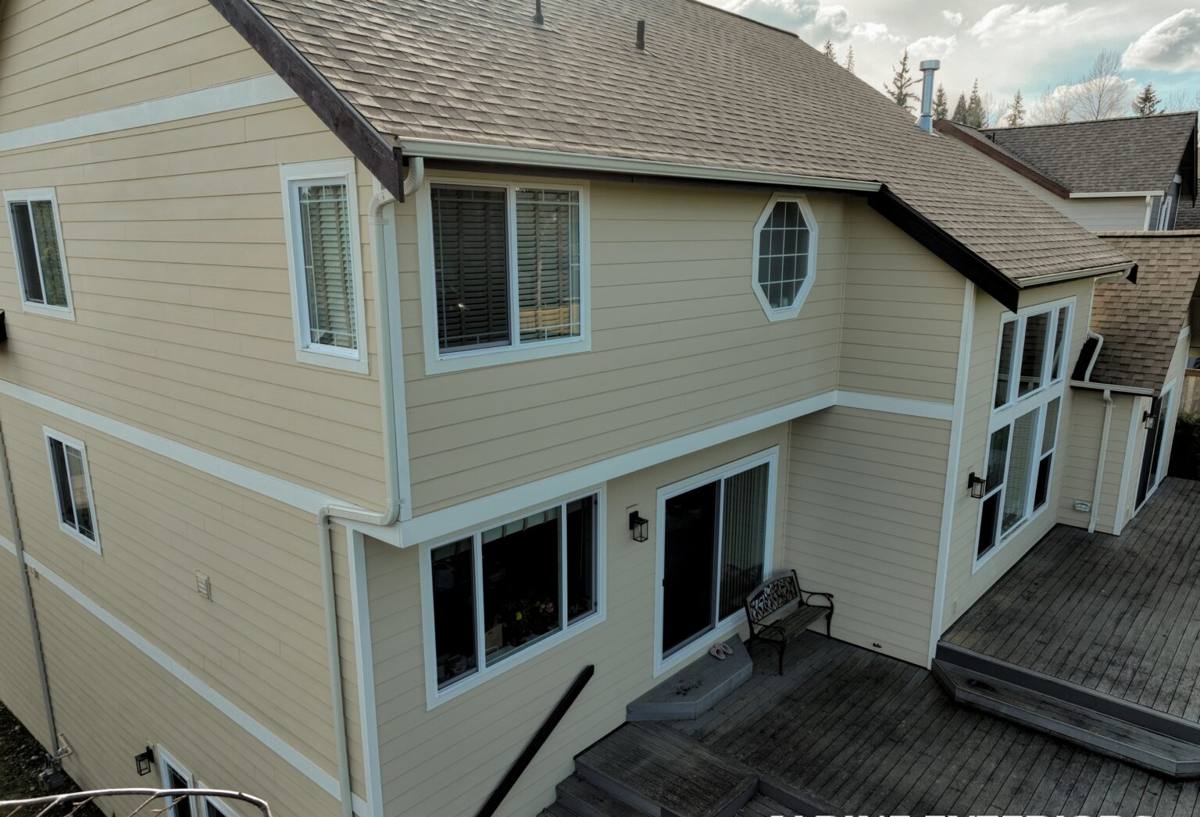
What Columbia's Climate Does to Windows Over Time
Whatcom County isn't a harsh climate in the extreme-weather sense, but it's a persistent one. It's the accumulation that causes problems, not any single storm.
Salt Air and Metal Fatigue
Homes closer to the lake pick up a fine mist carried on the wind. Over years, that mist works on aluminum frames, hardware, and screen components, leading to pitting, stiff or seized locks, and cloudy finishes on lower-grade metal parts. It's slow, but it's steady.
Driving Rain and Wind-Driven Moisture
Rain in this area doesn't always fall straight down — wind pushes it sideways into wall assemblies, especially on exposed elevations. A window that isn't flashed correctly, or that relies on caulk alone to keep water out, will eventually let moisture into the wall cavity. That's when you start seeing soft trim, stained drywall below the sill, or a musty smell in a room that never used to have one.
Moss and Prolonged Dampness
Shaded lots and tree-covered lots around Columbia hold moisture longer than open ones. Moss and algae growth on siding and trim near windows keeps wood and lower-quality composite materials damp for extended stretches, which accelerates rot at the sill and the bottom corners of the frame — the first place decay usually shows up on an aging window.
Signs a Columbia Home's Windows Need Attention
- Wood trim or sills that feel soft, spongy, or crumble slightly under pressure
- Fogging or a persistent haze between panes of a double-pane window (a failed seal)
- Windows that are noticeably harder to open, close, or lock than they used to be
- Visible gaps around the frame where old caulk has cracked or pulled away
- A cold draft near the window even when it's fully closed
- Green or black staining on the exterior sill or the wall just below the window
- Condensation forming on the inside of the glass regularly during colder months
Any one of these on its own isn't an emergency. Several of them together, especially on the same window, usually mean moisture has already gotten past the surface and into the assembly underneath.
What a Correct Window Installation Actually Involves
The window product itself matters, but in a climate like this, the installation detail matters just as much — arguably more, since a good window installed poorly will fail before a modest window installed correctly.
Removing the Old Window and Checking the Opening
We don't just pull the old window and drop a new one into the same hole. We check the rough opening for rot, soft framing, or water staining that tells us moisture has already gotten in. Any damaged wood gets addressed before a new window goes anywhere near that opening — installing a new window over a wet or rotted frame just hides the problem for a while.
Flashing and Weather Barrier Integration
This is the step that determines whether a window stays dry for twenty years or starts leaking in five. Proper flashing tape and integration with the home's existing weather-resistive barrier direct water down and out and away from the wall assembly, rather than letting it find its way behind the siding. In an area that sees as much driving rain as Sudden Valley does, this step isn't optional — it's the difference between a window that handles a windy winter and one that doesn't.
Shimming, Leveling, and Fastening
A window that isn't shimmed and leveled correctly puts uneven stress on the frame, which leads to operational problems — sashes that stick, locks that don't align, and gaps that let air and moisture through even on a window that was well made.
Sealing and Insulating the Gap
The gap between the window unit and the rough opening gets insulated and sealed properly, not just stuffed with fiberglass and caulked over. Done right, this step handles both energy performance and one more layer of moisture defense.
Interior and Exterior Trim
Finish trim work protects the edges of the installation and gives the window a clean, finished look, inside and out.
Choosing Window Materials for This Environment
There's no single "best" window material — the right choice depends on the wall's exposure, the home's style, and budget. Here's how the common options generally compare for a Columbia-area home:
| Material | How It Handles This Climate | Maintenance | General Cost Position |
|---|---|---|---|
| Vinyl | Good moisture resistance, won't rot, holds up well to salt air | Low — occasional cleaning | Most affordable |
| Fiberglass | Excellent dimensional stability, strong moisture and temperature performance | Low | Mid to higher |
| Aluminum | Durable but prone to condensation and slower to warm; salt air can affect finish over time | Moderate — hardware and finish need attention | Mid |
| Wood (clad exterior) | Attractive, but exposed wood is vulnerable to the sustained dampness common near Columbia | Higher — finish and sealant upkeep matters | Higher |
For homes with heavier shade, tree cover, or proximity to the lake, we generally steer clients toward vinyl or fiberglass for the primary weather-exposed elevations, simply because they hold up with less ongoing maintenance in sustained damp conditions. That's a judgment based on how these materials perform under repeated moisture exposure — not a knock on wood-framed windows, which still have a place on more protected, sheltered walls where upkeep is easier to stay on top of.
Full Replacement vs. Repair: How We Make the Call
Not every window on a Columbia home needs full replacement. We look at each window individually.
- Repair or reseal candidates: Sound frame, no rot, but failing caulk, worn weatherstripping, or a stiff lock
- Glass-only replacement candidates: Solid frame with a fogged or failed insulated glass unit
- Full replacement candidates: Soft or rotted framing, multiple operational failures, or a frame that's simply reached the end of its service life
We'll tell you plainly which category a window falls into rather than defaulting to a full replacement recommendation when a simpler fix will genuinely hold up.
Our Process for Columbia Window Projects
1. On-Site Assessment
We walk the home, look at each window's condition, note exposure and drainage patterns specific to the property, and talk through what you're noticing day to day — drafts, condensation, sticking sashes.
2. Straightforward Recommendation
You get a clear rundown of what needs replacement, what can be repaired, and roughly why — tied to what we actually found, not a blanket sales pitch.
3. Scheduled Installation
We work around Whatcom County's rainier stretches when scheduling exterior work, and we protect the opening properly at every stage so the home isn't left exposed to weather mid-project.
4. Final Walkthrough
Before we consider the job done, we check operation, seals, and finish work with you present.
Why Local Installation Experience Matters in Sudden Valley
A crew that's worked in and around Columbia and the rest of Sudden Valley already has a feel for how the lake, the tree cover, and the wind patterns here affect a home's exterior. That's not something you get from a spec sheet — it's from having seen how flashing details hold up (or don't) on homes with this exact exposure over multiple wet seasons. It also means we're a known, reachable local business if a question comes up after the work is done, not a crew that installed windows here once and moved on.
Get a Free, No-Pressure Estimate
If you're noticing drafts, sticking windows, fogged glass, or any of the warning signs above on a Columbia-area home, it's worth having a straightforward look before winter rains put more stress on aging frames. Reach out for a free estimate — we'll walk the property, give you an honest read on what each window actually needs, and let you decide from there. No pressure, no upsell.