 Sudden Valley Roofing
 Storm Damage Roof Repair for South Hill Homes
South Hill sits up in the trees on the Sudden Valley side of Lake Whatcom, and that elevation and tree cover cut both ways. The canopy breaks up direct sun and keeps summers comfortable, but it also means wind funnels unpredictably through gaps in the trees during a real blow, and falling limbs land on roofs more often than open-lot neighborhoods ever see. When a storm moves through Whatcom County, South Hill roofs take a different kind of beating than a roof out on flat, open ground, and the repair needs to match that reality, not a generic playbook.
This page is specifically about storm damage repair for South Hill roofs. Not a general storm damage overview, and not a full re-roof pitch — just what happens after wind, rain, or falling debris hits your roof, what a correct repair actually involves, and why it matters that the crew doing the work already knows this street-by-street terrain.
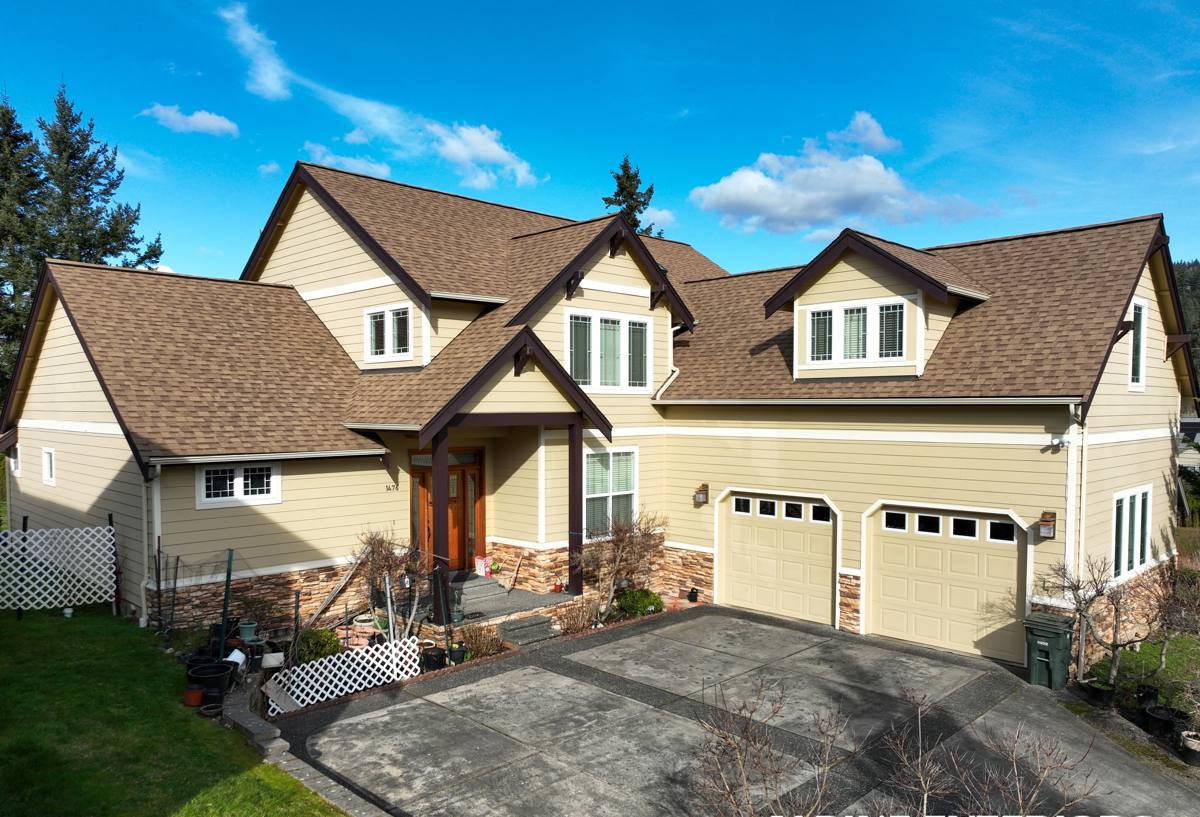
What Storm Damage Looks Like on a South Hill Roof
Most of the storm calls we get from this part of Sudden Valley fall into a handful of categories, and they're rarely as obvious as a hole in the roof:
- Wind-lifted or creased shingles along ridges, edges, and any slope that faces a gap in the tree line — the tabs can look fine from the ground but be cracked or unsealed underneath.
- Limb and debris strikes from the surrounding fir and cedar cover, ranging from a few cracked shingles to punctures through the decking after a bigger branch comes down.
- Driven-rain intrusion at flashing points — chimneys, skylights, and wall-to-roof transitions — where wind pushes rain sideways under materials that would shed a normal vertical rain fine.
- Granule loss and mat exposure on older shingles that were already softened by chronic moss and moisture before the storm, so a moderate wind event does damage that a newer roof would have shrugged off.
- Gutter and downspout damage that seems minor on its own but backs up water at the roof edge and turns into fascia and sheathing rot if it sits through the next few rain systems.
The common thread is that storm damage here is often partial and hidden rather than dramatic. A roof can take real damage in a windstorm and still look intact from the driveway.
Why This Climate Makes Storm Repair Time-Sensitive
Whatcom County's marine climate is the backdrop for every roofing decision up here, and it's what turns a small storm ding into a bigger problem if it sits too long. Three things stack up against South Hill roofs specifically:
Driving Rain
Wind-driven storms off the water push rain sideways, not straight down, which is exactly the condition that finds weak points a shingle roof was never designed to handle in a static state — a lifted tab, a gapped flashing, a cracked pipe boot. Once water gets a path in under wind pressure, it can travel well past the point of entry before it shows up as a stain on a ceiling.
Moss Season
The shaded, moisture-heavy conditions around Sudden Valley support a long moss season, often running most of the year on north-facing and heavily treed slopes. Moss holds water against the shingle surface, degrades the granule layer, and lifts shingle edges just enough to give storm-driven rain an entry point it wouldn't otherwise have. A roof with active moss growth is more vulnerable to storm damage than a clean one, and storm damage on a mossy roof spreads faster.
Salt-Influenced Marine Air
Even away from the immediate waterfront, the marine air moving through this part of Whatcom County carries moisture and salts that accelerate corrosion on exposed metal — flashing, fasteners, gutter hangers, and vent caps. Storm-stressed metal that's already corroding fails faster and leaks sooner than it would in a drier inland climate.
Put those three together and the practical lesson is simple: a delayed storm repair in South Hill doesn't stay small. What starts as a lifted shingle can become a soaked sheathing panel in a matter of weeks if it sits through the wrong string of weather.
What a Correct Storm Damage Repair Involves
A proper storm repair is not just swapping out the shingles that are obviously torn. It's a sequence, and skipping steps is how a roof ends up back on the repair list a year later.
1. Full-Roof Inspection, Not Just the Damaged Spot
Wind damage rarely stays confined to one area. We walk the whole roof — every slope, every penetration, every valley — because storm systems that hit hard enough to damage one section usually stressed the rest of the roof too, even where it isn't visible yet.
2. Decking Check Before Any Shingle Goes Back On
If water got under the roofing material, the decking underneath needs to be checked for soft spots, delamination, or rot before new shingles go down. Covering damaged decking with new shingles is a shortcut that guarantees a repeat call.
3. Flashing and Underlayment Correction, Not Just Shingle Replacement
Most storm leaks trace back to a flashing detail or underlayment gap, not a shingle failure on its own. A repair that only replaces the visible shingles without correcting the flashing or underlayment underneath is treating the symptom, not the cause.
4. Matching Materials, Not Just Covering the Hole
We match shingle profile, color, and where possible manufacturer to the existing roof so a repair doesn't stand out as a patch and, more importantly, so the repaired section performs the same as the rest of the roof under the next storm.
5. Cleanup That Includes Gutters and Ground Debris
Storm repair isn't finished until gutters are cleared of the debris that came down with the storm and the yard is clean of nails, torn shingle pieces, and branch material. A clogged gutter left in place after a repair just sets up the next round of water damage at the roof edge.
Our Process, Start to Finish
| Step | What Happens |
|---|---|
| 1. Contact and initial questions | We ask what you're seeing — a leak, missing shingles, visible debris — and get a sense of urgency before we're on site. |
| 2. On-site inspection | We walk the roof, check the attic or interior ceiling where accessible, and document what we find with photos. |
| 3. Written scope and estimate | You get a clear explanation of what's damaged, what needs to happen to fix it correctly, and an honest cost range before any work starts. |
| 4. Temporary protection if needed | If there's active water intrusion, we tarp or seal the affected area first so the damage doesn't get worse while materials are sourced. |
| 5. Repair work | Decking, flashing, underlayment, and shingles are addressed in that order — not just the top visible layer. |
| 6. Final walkthrough and cleanup | We review the completed repair with you, clear debris and gutters, and confirm everything is sealed and secure before we leave. |
Repair or Replace? How We Make That Call
Not every storm-damaged roof needs a repair — and not every storm-damaged roof needs a full replacement either. The honest answer depends on the roof's age, condition before the storm, and how widespread the damage is.
| Factor | Leans Toward Repair | Leans Toward Replacement |
|---|---|---|
| Roof age | Under roughly 12-15 years, still within expected service life | Near or past the end of its expected lifespan |
| Extent of damage | Isolated to one or two areas or slopes | Spread across multiple slopes or found alongside widespread granule loss |
| Decking condition | Solid, dry decking under the damaged area | Soft, delaminated, or rotted decking found during inspection |
| Moss and moisture history | Minimal prior moss or maintenance issues | Long-standing moss growth or chronic moisture problems predating the storm |
| Material availability | Matching shingles still available for a clean blend-in | Discontinued material makes a matched repair impossible |
We'll tell you plainly which side of that line your roof falls on. If a targeted repair genuinely solves the problem, that's what we recommend — a storm repair company that pushes full replacements on every call isn't one you'll want back for the next storm.
Storm Damage and Insurance Claims
Many South Hill storm repairs go through homeowners insurance, and how the claim is documented matters as much as the repair itself. We provide clear photo documentation and a written scope of damage that you can hand directly to your adjuster. We don't inflate damage to pad a claim, and we don't downplay it to make a fast repair sale — the documentation reflects what's actually there. If you're not sure whether your damage is worth filing a claim over, we'll give you our honest read before you make that call to your insurer.
Why a Crew That Already Works South Hill Matters
Storm damage repair goes faster and holds up better when the crew already understands the terrain. Knowing which slopes in this part of Sudden Valley face the worst wind exposure through gaps in the tree line, which roof styles common to the area are prone to moss buildup on their north faces, and which flashing details tend to be the weak point on homes built during particular local development periods all shortens the inspection and sharpens the diagnosis. A crew showing up cold to the neighborhood is starting from zero on all of that. A crew that's already worked driveways nearby isn't guessing.
After-Storm Inspection Checklist for Homeowners
Before you get on a ladder — please don't, especially right after a storm — here's what you can safely check from the ground or from inside:
- Look for shingle pieces, granules, or metal flashing scraps on the ground or in gutters after a windstorm.
- Check ceilings and around chimney or skylight interiors for new staining or soft spots.
- Watch for water pooling near the foundation on the downhill side of the roof, which can signal a gutter or downspout failure.
- Note any branches or limbs that came down near or on the roofline, even if they don't look like they hit hard.
- Listen for dripping or unusual sounds in the attic during the next rain if you have attic access.
- Photograph anything unusual you can see safely, with a date, before cleanup disturbs the evidence.
If you see any of these, that's the point to call for an inspection rather than wait and see — waiting is exactly what turns a small storm repair into a bigger one in this climate.
Reducing Storm Damage Before the Next System Rolls Through
Storm repair and storm prevention are connected. A few things consistently reduce how much damage the next windstorm does to a South Hill roof:
- Keeping moss growth under control on shaded slopes so shingles stay sealed and flat rather than lifted and brittle.
- Clearing gutters ahead of the fall and winter storm season so wind-driven rain has somewhere to go.
- Trimming back limbs that overhang the roofline where it's safe and practical to do so.
- Having flashing and pipe boots checked periodically, since these are the points that fail first under wind-driven rain, storm or no storm.
None of that guarantees a storm-free roof — nothing does in this part of Whatcom County — but it narrows the list of things a storm can find wrong.
Ready for a Straight Answer on Your Roof
If a recent storm left you wondering whether your South Hill roof needs attention, the fastest way to know for sure is to have it looked at by someone who won't oversell or underplay what they find. We offer a free, no-pressure estimate — use the form below to get a South Hill storm damage inspection scheduled.