 Sudden Valley Roofing
 Windows Built for Where You Actually Live
Edgemoor homes near Sudden Valley sit in one of the harder spots in Whatcom County to keep a window system healthy for the long haul. You've got salt-laden air moving in off the water, wind-driven rain that doesn't just fall straight down but gets pushed sideways into every seam and joint, and a wet season that stretches long enough for moss and algae to get a foothold on anything that stays damp. A window that was installed correctly for a drier inland climate can still underperform here if it wasn't specified and sealed with this exposure in mind.
This page is about one job, done right, for this one area: replacing or custom-fitting windows on homes that face this specific combination of weather. We're not going to give you a generic rundown of window brands. We're going to walk through what actually matters when the house is exposed to the elements Edgemoor sees year-round, what a correct installation looks like, and how we approach the work.
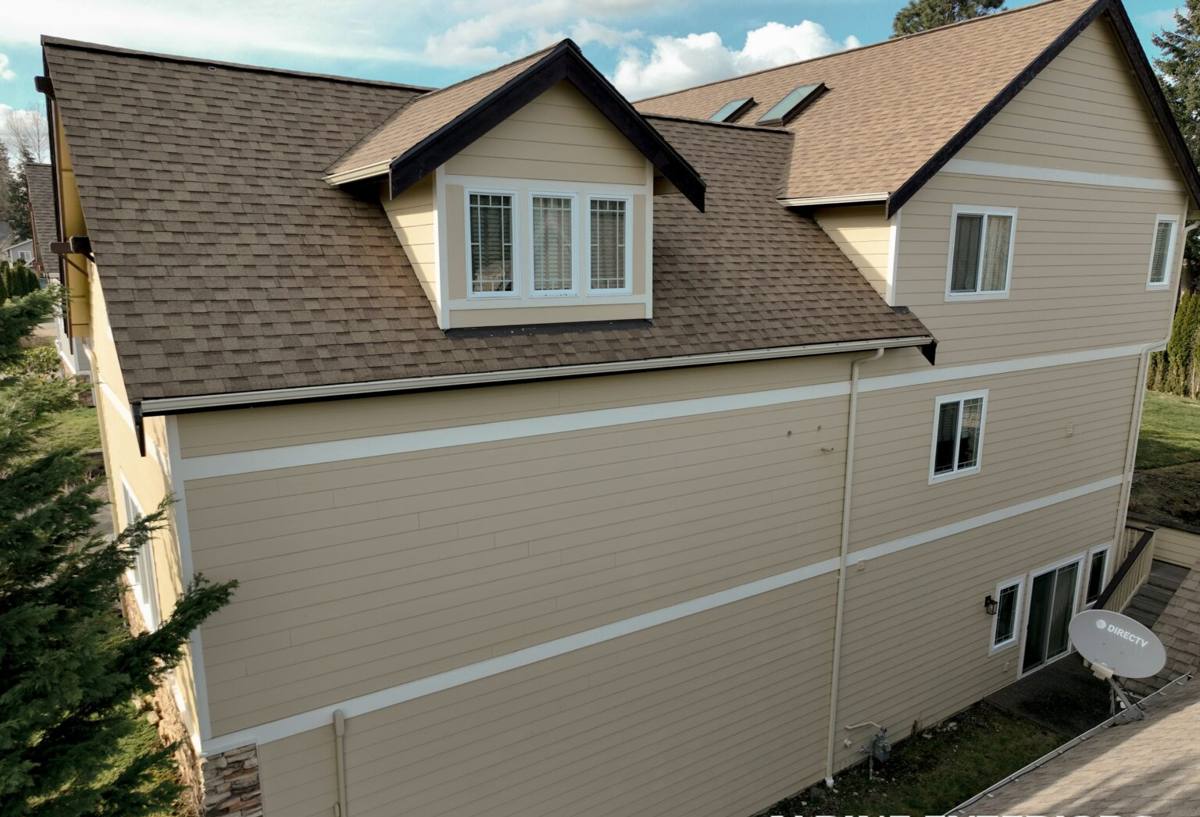
What Salt Air, Driving Rain, and Moss Season Actually Do to a Window
Salt Air and Hardware
Salt-laden moisture in the air accelerates corrosion on anything metal — hinges, cranks, balance mechanisms, and cheaper cladding fasteners. On a lot of builder-grade windows, the hardware is the first thing to fail, not the glass or the frame. Once a crank mechanism seizes or a lock strike corrodes, the window either won't close fully or won't seal tight, and that's when the bigger problems start.
Driving Rain and Seals
Wind-driven rain finds any weakness in a window's weatherstripping, flashing, or sealant line. A window that's rated fine for calm rainfall can still leak under sideways-driving rain if the installation didn't account for it — this is an installation and flashing issue as much as a product issue. Water that gets behind the frame doesn't always show up right away; it shows up months later as soft trim, stained drywall, or a musty smell near the window.
Moss and Algae Season
Whatcom County's long wet stretch means anything that stays damp — sills, exterior trim, the tops of window frames under an overhang — can grow moss or algae if it doesn't dry out between storms. This isn't just cosmetic. Trapped moisture under moss growth breaks down wood trim and can work its way into caulking lines over time, which is exactly what leads to rot around a window opening.
What "Custom" Should Mean for This Area
"Custom windows" gets used loosely in this trade. For Edgemoor homes, it should mean the window is specified to the actual opening, the actual exposure, and the actual wall assembly of your house — not just a stock size dropped into a rough opening and shimmed to fit. That distinction matters more here than in a sheltered inland neighborhood.
- Frame material matched to sun, salt, and moisture exposure on that specific wall
- Correct sizing so flashing and sealant don't have to compensate for gaps
- Glass package matched to which direction the window faces and how much weather it takes
- Hardware rated for corrosion resistance, not just the cheapest stock option
- Sill and flashing detailing that sheds water instead of trapping it
Frame Material: What Holds Up Here
There's no single "best" frame material for every home — it depends on your budget, the look you want, and how exposed that particular wall is. Here's how the common options actually perform under this area's conditions, based on maintenance burden and moisture behavior rather than brand marketing.
| Frame Material | Moisture/Salt Air Behavior | Maintenance | Best Fit |
|---|---|---|---|
| Vinyl | Won't corrode or rot; seams can be a weak point if not installed precisely | Low — occasional cleaning | Budget-conscious replacements, rear/side walls |
| Fiberglass | Very stable in wet, salty air; minimal expansion/contraction | Low | Exposed or weather-facing walls |
| Aluminum-clad wood | Good exterior protection, but hardware and any exposed fasteners need corrosion-resistant hardware | Moderate — watch cladding seams | Homes wanting a wood interior look with exterior protection |
| Solid wood | Handsome, but most vulnerable to rot and moss buildup in this climate without diligent upkeep | High | Sheltered walls or homeowners committed to regular maintenance |
We'll tell you honestly if a material you're set on isn't a great fit for a given wall — for example, we tend to steer away from solid wood on a wall that takes direct driving rain, not because wood is a bad product, but because the maintenance commitment to keep it sealed in this climate is real and easy to fall behind on.
Cladding and Hardware Details Worth Asking About
Beyond the base frame material, a few details make a bigger difference here than in a drier climate:
- Stainless or corrosion-resistant fasteners and hardware, not standard-grade steel
- Continuous sealant beads at cladding seams rather than spot-caulking
- Sill pans or sloped sills that actively shed water away from the opening
- Weep holes kept clear so trapped water has somewhere to go
Glass Packages: Matching the Window to the Exposure
Double-pane insulated glass is the baseline for any modern replacement. Beyond that, a few upgrades are worth considering depending on which direction a window faces and how sheltered it is:
- Low-E coatings — help with year-round comfort and reduce condensation risk on the interior glass surface, which matters in a consistently damp climate
- Argon or krypton gas fill — improves insulation performance without changing the look of the window
- Laminated glass — adds sound dampening and impact resistance, useful on walls that take the brunt of storms
- Triple-pane — worth pricing out for north- or water-facing walls where wind exposure is highest, though it adds cost and weight
We size the glass package to the wall, not the whole house uniformly — a sheltered window on a protected side of the home doesn't need the same spec as one taking direct wind-driven rain.
How Our Installation Process Works
1. On-Site Assessment
We look at each opening individually — current condition of the trim and sill, evidence of past water intrusion, sun and wind exposure, and how the existing flashing was (or wasn't) done. This is where we catch hidden rot or moisture damage before it becomes a surprise mid-install.
2. Measuring and Specifying
Each window is measured to the actual opening, not assumed to match a "standard" size. We spec frame material, glass package, and hardware per opening based on that wall's exposure.
3. Removal and Opening Prep
Old windows come out carefully so we can inspect the framing underneath. Any soft or water-damaged wood gets addressed before a new window goes in — installing a new window over a compromised opening just hides the problem.
4. Flashing and Sealing
This step matters more here than almost anywhere else in the county. Proper flashing tape, sill pans, and sealant sequencing are what actually stop wind-driven rain from getting behind the window. We don't rely on caulk alone to do a flashing detail's job.
5. Setting, Shimming, and Final Seal
The window is set level and plumb, shimmed correctly so it isn't relying on fasteners to hold its shape, then sealed on the exterior with attention to full coverage at corners and seams — the places seals fail first.
6. Walkthrough
We test operation, check the seal, and walk through basic care with you before we consider the job done.
Signs Your Current Windows Are Already Struggling
A lot of window problems in this climate develop slowly. If you're noticing any of the following, it's worth having them looked at before the next round of storms:
- Condensation forming between the panes (a sign the seal has failed)
- Drafts you can feel even with the window fully latched
- Cranks, locks, or hinges that stick, grind, or won't fully engage
- Moss or dark staining building up on the sill or lower frame
- Soft or discolored trim around the window opening
- Difficulty opening or closing that wasn't there a year or two ago
A Simple Seasonal Maintenance Checklist
Whatever material your windows are, a little seasonal attention goes a long way in this climate:
- Clear moss or debris off sills and horizontal trim before it builds up
- Check weep holes are clear so water can drain away, not pool
- Lubricate hardware annually to fight salt-air corrosion
- Inspect exterior caulk lines each fall before the wet season sets in
- Address any soft trim or bubbling paint immediately rather than waiting
Why It Matters That We Already Work This Area
A crew that mostly installs windows in drier, more sheltered parts of Whatcom County can still do competent work — but they may not default to the flashing details, hardware upgrades, or material choices that this specific exposure calls for unless they're prompted to. Working regularly in the Sudden Valley and Edgemoor area means we're used to speccing for salt air, driving rain, and a long moss season as the baseline assumption, not an afterthought.
That shows up in small decisions — which sealant sequence we use, whether we push corrosion-resistant hardware as standard rather than an upsell, how we detail a sill pan on a wall that takes direct weather. None of it is complicated, but it's the kind of detail that separates a window install that holds up for decades from one that starts giving you trouble in year three.
Getting an Honest Read on Your Windows
Every home on a given wall faces its own combination of exposure, age, and past workmanship, so there isn't a one-size answer to what your windows need. If you're dealing with drafts, sticking hardware, fogged glass, or just want a straight opinion on whether repair or full replacement makes more sense for your situation, we're glad to take a look. Reach out for a free, no-pressure estimate — the form below gets you started.