 Sudden Valley Roofing
 Why Ferndale Roofs Wear Differently Than Roofs Inland
Ferndale sits close enough to Bellingham Bay and the Strait of Georgia that salt-laden air is a real factor in how roofing materials age here, not just a talking point. Add Whatcom County's long wet season, wind-driven rain off the water, and the shade from mature evergreens that keeps roof surfaces damp for days after a storm passes, and you get a climate that's genuinely harder on a roof than what you'd see thirty miles inland. Homes here don't fail because the materials are bad. They fail because the roof wasn't matched to these specific conditions, or it was installed by a crew that treats every job the same regardless of where it sits.
If you're looking at a roof replacement in Ferndale, the goal isn't just to put new material on the house. It's to build a roof system that sheds moisture fast, resists moss colonization, and holds up to salt exposure without the fasteners, flashing, and edges corroding out from under a roof that otherwise still has years left.
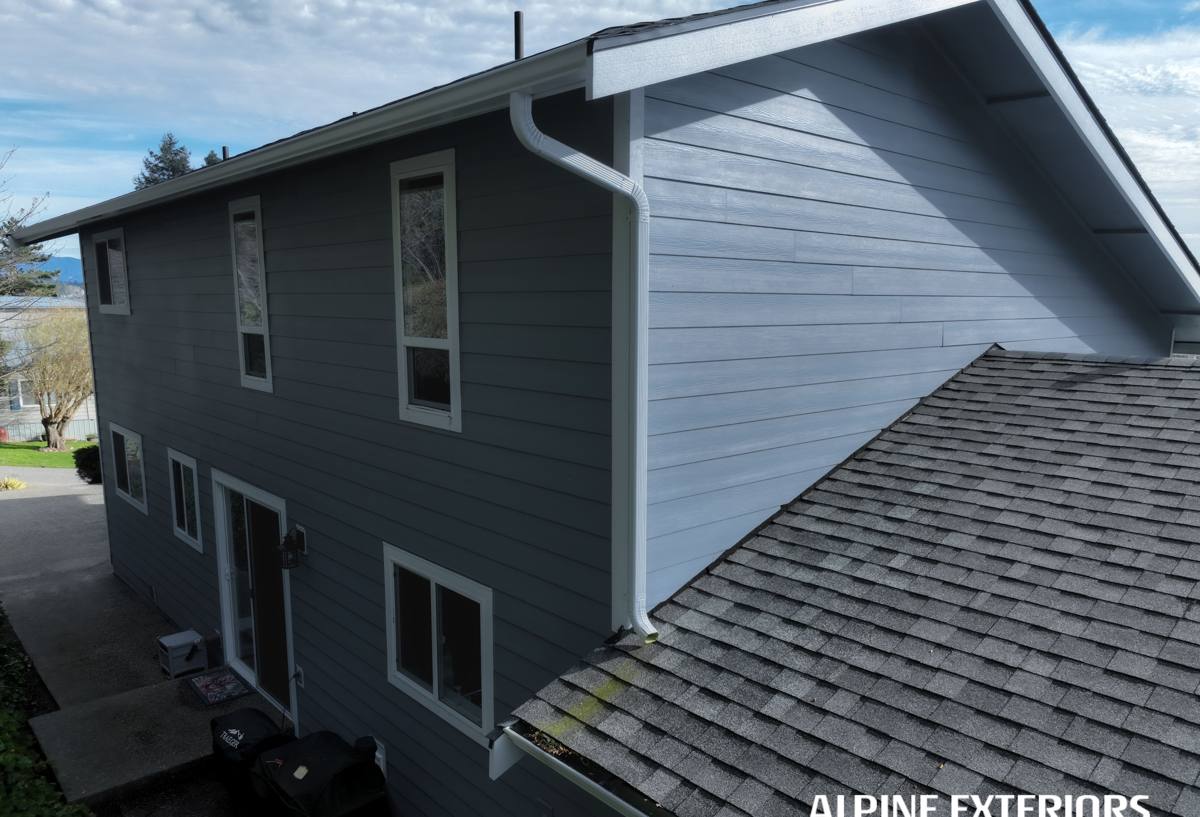
What Ferndale's Climate Actually Does to a Roof
Salt Air and Corrosion
Airborne salt accelerates corrosion on anything metal — nails, flashing, gutters, drip edge, valley metal, even fastener heads on shingles. On a roof close enough to the water to catch that air, standard galvanized fasteners can start showing rust well before the shingles themselves are due for replacement. This is one of the most overlooked factors in a Ferndale roof replacement, because the shingles get all the attention and the metal underneath gets whatever was on the truck.
Driving Rain
Wind off the water doesn't just drop rain straight down — it pushes it sideways, up under shingle tabs, and into any gap in flashing or underlayment that a calmer climate could get away with. Roofs here need underlayment and flashing details built for wind-driven water, not just gravity drainage.
Moss and Extended Damp Season
Whatcom County's moss season isn't a two-month nuisance — on shaded, north-facing, or low-slope sections it can run most of the year. Moss holds moisture against the roof surface, works its way under shingle edges, and lifts granules and tabs as it grows. A roof that isn't detailed and maintained with moss in mind will show premature wear in exactly the spots you'd expect: valleys, eaves, and anywhere tree cover blocks sun and airflow.
Signs a Ferndale Home Needs Roof Replacement, Not Another Repair
- Granule loss heavy enough that you can see bare asphalt in gutters or downspouts after rain
- Shingles that are cupping, curling, or cracking, especially on south- and west-facing slopes
- Moss or algae staining that keeps coming back within a season of cleaning
- Rusted or failing metal flashing around chimneys, vents, or valleys
- Soft spots, sagging, or visible daylight in the attic decking
- Multiple leak repairs in different spots over the last couple of years
- The roof is at or past the manufacturer's expected service life for this climate
One or two of these on their own might mean a targeted repair is enough. Several at once, especially combined with the roof's age, usually means repairs are just delaying an inevitable full replacement — and spending money on patches for a roof that needs to come off anyway.
What a Correct Roof Replacement Involves Here
Tear-Off and Deck Inspection
Every full replacement starts with tearing the old roofing off completely, not layering over it. That's the only way to actually see the deck — and in a climate this wet, finding soft or rotted sheathing before it's covered up matters more than it does in drier regions. Any damaged decking gets replaced before anything new goes down.
Moisture Barrier and Underlayment
Given the amount of driving rain and standing moisture Ferndale roofs deal with, a synthetic underlayment with self-adhering ice-and-water membrane at eaves, valleys, and roof penetrations is standard, not an upgrade. These are the areas where wind-driven rain and moss-related moisture cause the most damage, so they get extra protection by default.
Corrosion-Resistant Metal
Given the salt exposure, flashing, drip edge, and fasteners should be corrosion-resistant metal — options like aluminum or coated steel hold up far better here than standard galvanized components. This is one of the details that separates a roof built for this specific location from a generic install.
Ventilation
Balanced intake and exhaust ventilation keeps the attic dry and temperature-stable, which matters for shingle life and moisture control in a climate that's damp most of the year. Poor ventilation shortens the life of any roofing material, regardless of how well the surface layer was installed.
Material Selection for the Site
Sun exposure, tree cover, and roof pitch all factor into what material and shingle line makes sense for a given house. A heavily shaded, low-slope section of roof needs different moss-resistance considerations than a steep, sun-exposed slope on the same house.
Comparing Common Roofing Options for a Ferndale Climate
| Material | How It Handles Salt Air & Rain | Moss Resistance | Typical Lifespan Here |
|---|---|---|---|
| Standard asphalt shingles | Good with proper flashing and fasteners | Moderate — needs regular cleaning on shaded slopes | 18-25 years |
| Algae/moss-resistant asphalt shingles | Good with proper flashing and fasteners | Better — copper or zinc granules deter growth | 20-25 years |
| Metal roofing (coated steel/aluminum) | Excellent when properly coated and fastened | Excellent — sheds moisture, little for moss to hold onto | 40-50+ years |
| Wood shake | Poor without diligent, ongoing maintenance | Poor — organic material feeds moss growth | Varies widely with upkeep |
We're honest about wood shake in this climate: it's an attractive, traditional look, but the maintenance burden in a wet, mossy, salt-air environment is significant, and moisture behavior over time is a real trade-off worth understanding before you commit to it. That's a decision for the homeowner to make with full information, not a product we'd steer someone toward without a clear conversation about upkeep.
Our Roof Replacement Process
- On-site inspection and estimate — we assess the current roof, deck condition, ventilation, and any problem areas specific to your property, then walk you through options.
- Material selection — we talk through shingle or metal options suited to your roof's exposure, pitch, and shade, along with honest cost and lifespan trade-offs.
- Scheduling around weather — in a region with as much rain as Whatcom County gets, we plan tear-off and dry-in around forecasts to keep your home protected throughout the job.
- Tear-off and deck repair — full removal of old roofing, deck inspection, and replacement of any damaged sheathing.
- Underlayment, flashing, and ventilation install — moisture barrier, corrosion-resistant metal, and proper attic ventilation go in before the finish material.
- Finish roofing installation — shingles or metal panels installed to manufacturer specification, with attention to the valleys, eaves, and penetrations that take the most abuse here.
- Final walkthrough and cleanup — we review the finished roof with you, confirm everything meets spec, and clear the site of debris and old materials.
What to Ask Before You Sign With Any Roofing Contractor
- Are you licensed and insured to work in Washington, and can you provide proof?
- What underlayment and flashing materials do you use, and are they suited for coastal/salt-air exposure?
- What's your plan for tear-off and dry-in if weather turns mid-project?
- What warranty covers materials versus workmanship, and how long does each run?
- Can you provide references from other jobs in Whatcom County or similar climates?
Why Local Experience Matters for This Job
A roofing crew that works Whatcom County regularly already knows which details matter for a house near Ferndale — which fastener grade to use given salt exposure, where moss tends to establish on a given roof pitch and orientation, and how to schedule a tear-off around the region's rain patterns so your home isn't exposed longer than it needs to be. That's not something a crew traveling in from outside the area consistently gets right on the first try, because it's built from repetition, not a manual.
It also means we're not guessing at code requirements, permitting, or what inspectors in this area expect. A local crew has already worked through those specifics on other homes nearby, so your project moves without avoidable delays.
Maintenance That Extends the Life of a New Roof
A well-installed roof still needs some upkeep in this climate to hit its full expected lifespan:
- Keep gutters and downspouts clear so water isn't backing up under the roof edge
- Trim back tree limbs that shade sections of roof and slow drying after rain
- Have moss growth addressed before it spreads, rather than after it's established
- Schedule a periodic inspection, especially after major windstorms off the water
None of this replaces a properly installed roof, but it protects the investment once it's in place.
Get a Straight Answer on Your Ferndale Roof
If your roof is showing wear, has had repeated repairs, or you're just not sure how much life it has left, we'll come take an honest look and tell you where things stand — no pressure, no inflated urgency. Use the form below to request a free estimate, and we'll walk the roof with you and lay out real options for your home and budget.