 Sudden Valley Roofing
 Deck Repair Built for Geneva's Weather, Not Just Any Deck
Homes in the Geneva area near Sudden Valley take a different kind of beating than decks in a dry climate ever see. Between salt-laden air moving through the region, driving rain that comes in sideways during winter storms, and a moss season that can stretch for months, a deck here is under near-constant moisture pressure. A repair that would hold up fine somewhere else can fail within a season or two if it doesn't account for what Whatcom County actually throws at it.
We repair decks in this area because we work in it regularly, not because we drove in from out of town for one job. That matters more than most homeowners realize — the failure patterns on a Geneva deck are predictable once you've seen enough of them, and knowing what to look for before it becomes a safety issue is half the job.
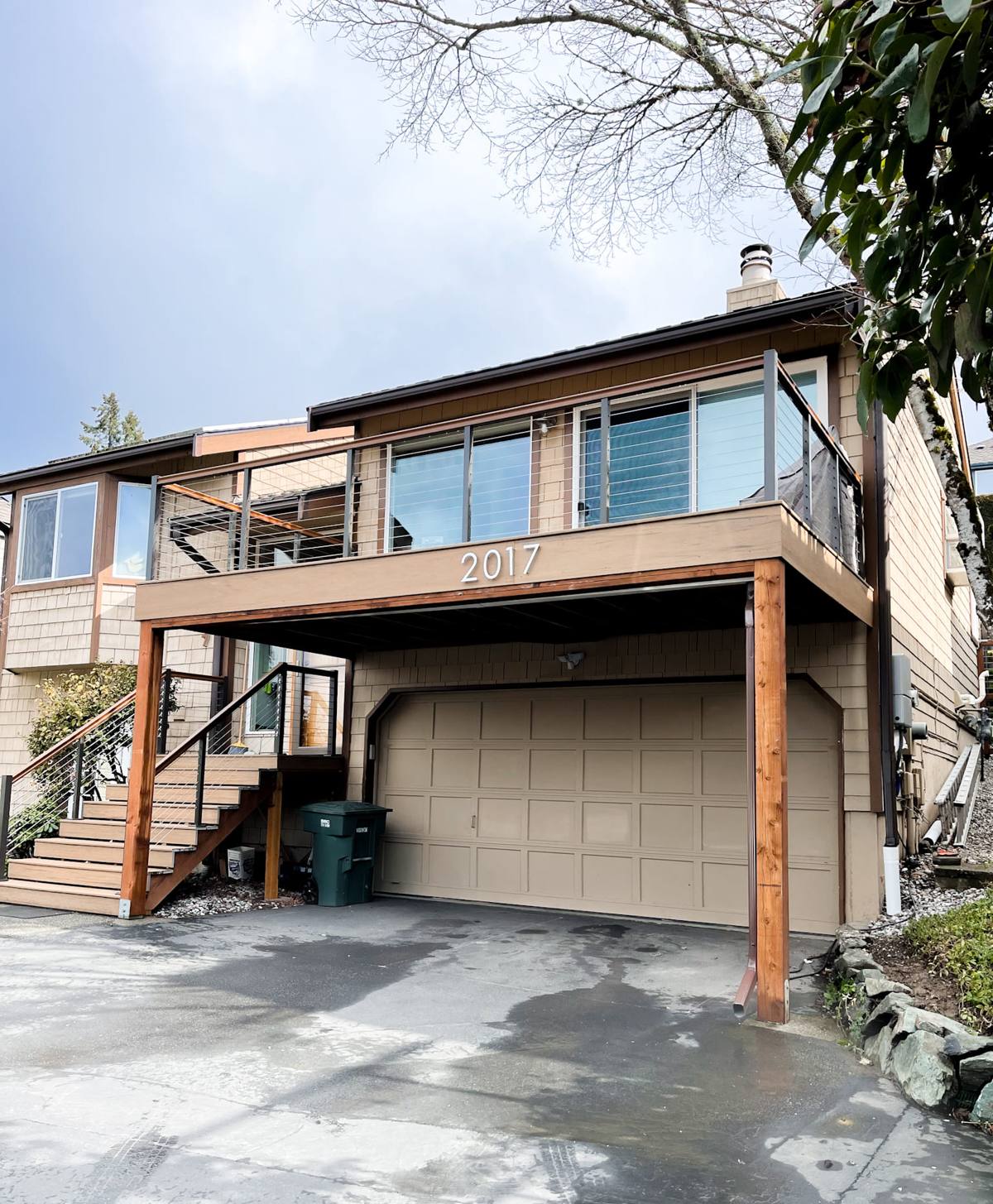
Signs Your Geneva Deck Needs Repair
Deck problems rarely announce themselves loudly. They show up as small details that are easy to write off until they aren't. Before you call anyone, walk your deck and check for these:
- Soft or spongy spots in the decking boards, especially near the house or in shaded corners
- Green or black staining that keeps returning within weeks of cleaning
- Rust streaks around fasteners or visible corrosion on brackets and hangers
- Gaps opening up where the ledger board meets the house
- Railings or posts that flex or wiggle when you lean on them
- Stair stringers that feel uneven or bounce underfoot
- Standing water that doesn't drain within an hour or two after rain
- Fasteners backing out or popping through the board surface
Any one of these on its own might be minor. Two or three together, especially around the ledger or support posts, usually means the moisture has been working on the structure longer than the surface lets on.
Why These Signs Matter More Here
In a drier climate, a soft board might just mean it's due for a refinish. In this part of Whatcom County, a soft board is more often a sign that moisture has already gotten past the surface finish and into the wood fiber. Because the region rarely gets a long stretch of dry weather to let wood fully dry out between storms, damage that starts small tends to progress faster than homeowners expect.
Common Deck Problems We See on Geneva-Area Decks
Ledger Board Separation
The ledger board — where the deck attaches to the house — is the single most important structural connection on most decks, and it's also the one most exposed to water intrusion if flashing wasn't installed correctly or has failed over time. Persistent rain finds any gap and drives moisture behind the board, where it can rot both the ledger and the house rim joist out of sight.
Moss and Algae Buildup
A long moss season means organic growth gets a real foothold on decking, especially in shaded areas or under overhangs where boards don't dry between rains. Moss holds moisture against the wood surface and makes boards dangerously slick — it's a safety issue as much as a durability one.
Fastener Corrosion
Salt-influenced air accelerates corrosion on fasteners and hardware that weren't rated for it. Once a fastener starts rusting, it loses holding strength and can stain the surrounding wood, which is often the first visible clue that something underneath needs attention.
Rail and Post Movement
Posts set in or near ground contact, or attached without adequate flashing, take on moisture from below and from splashback during heavy rain. Over time the wood around the fasteners softens, and what should be a rigid rail starts to flex.
What a Correct Deck Repair Actually Involves
A proper repair isn't just swapping out the board that looks bad. It starts with figuring out why that board failed, because replacing the symptom without addressing the cause means you're paying for the same repair again in a few years.
Our process on a repair call typically includes:
- Probing suspect boards, ledger, and framing with an awl to find soft wood that isn't visible from the surface
- Checking flashing at the ledger board and any point where the deck meets the house
- Inspecting joist hangers, post bases, and fasteners for corrosion or under-sizing
- Confirming proper drainage and slope away from the house
- Checking railing and post connections for code-appropriate spacing and attachment
- Assessing whether damage is isolated or has spread into adjacent framing
Only after that assessment do we scope the actual repair — because a board replacement, a framing repair, and a full ledger reattachment are three very different jobs with three very different price points, and guessing wrong on scope wastes everyone's time.
Repair vs. Replacement: How We Help You Decide
Not every deck with problems needs to be torn out. But there's a point where patching individual boards costs more over time than addressing the structure once. Here's how we generally think about it:
| Factor | Leans Toward Repair | Leans Toward Replacement |
|---|---|---|
| Extent of rot | Isolated to a few boards or one area | Spread across framing, ledger, or multiple structural members |
| Age of deck | Under 15 years, built with adequate framing | Original construction older or undersized for current code |
| Structural framing | Solid when probed, no soft joists | Joists, beams, or posts show significant softness |
| Ledger condition | Flashing intact, connection solid | Flashing failed, moisture behind siding or rim joist |
| Budget goal | Extend usable life a number of years | Want a long-term solution without recurring repair calls |
We'll always tell you honestly which side of that line your deck falls on. If a repair is the right call, we won't upsell you into a rebuild — and if the framing is genuinely compromised, we won't patch over it and let you find out the hard way later.
Our Deck Repair Process
Once we've scoped the work, the job itself follows a consistent sequence:
- Assessment and written scope — what's failing, why, and what it takes to fix it correctly
- Removal of compromised material — boards, framing, or hardware that's beyond saving
- Structural correction — sistering joists, replacing posts, or correcting ledger attachment and flashing as needed
- Hardware upgrade — fasteners and connectors matched to the exposure the deck actually faces
- New material installation — decking, rail components, or stair parts installed with proper gapping for drainage and movement
- Final check — rail rigidity, stair evenness, drainage, and a walk-through with you before we call it done
We don't consider a repair finished until the parts we didn't touch are also sound. There's no point leaving a fresh board bolted to a joist that's still soft underneath it.
Materials We Use and Why
Material choice on a repair matters as much as the labor. We match materials to the specific exposure of your deck rather than defaulting to whatever's cheapest or trendiest.
Decking Boards
For wood repairs, we use lumber rated for exterior exposure and finish it properly before it's ever walked on. For composite or capped composite decking, we're selective about which lines we install — some perform well in sustained wet conditions and hold up to moss growth, while others have shown maintenance issues or moisture-related problems in coastal-adjacent climates that make them a poor fit for this area. We'll walk you through the trade-offs honestly rather than pushing whatever has the best margin.
Fasteners and Hardware
Given the corrosion pressure from salt-influenced air, we use fasteners and structural connectors rated for coastal or high-moisture exposure, not standard interior-grade hardware. It costs a bit more upfront and saves you from rust staining and weakened connections a few years down the line.
Flashing
At the ledger and any transition point, correct flashing is non-negotiable. This is the detail that gets skipped most often on lower-cost repairs, and it's the one most likely to cause a repeat failure.
Why a Crew That Already Works Geneva Matters
A contractor who works this area regularly has already seen how decks in Geneva and around Sudden Valley fail — which orientations get hit hardest by driving rain, which framing details from older builds tend to need attention first, and how fast moss reclaims a north-facing deck versus a south-facing one. That local pattern recognition means a faster, more accurate diagnosis and fewer surprises once we open things up.
It also means we're not guessing at permitting or code requirements specific to Whatcom County — we handle that as a routine part of the job, not a learning curve on your project.
Maintaining Your Deck After Repair
A good repair buys you years, but a little upkeep buys you more. A few habits go a long way in this climate:
- Sweep debris and standing moss off the deck surface regularly, especially in shaded areas
- Reapply sealant or finish on wood decking on the schedule recommended for your product
- Keep gutters and downspouts clear so runoff isn't dumping directly onto or under the deck
- Check railing connections annually for movement before it becomes a safety issue
- Address small soft spots or stains as soon as you notice them rather than waiting
If you're noticing any of the warning signs above, or just want an honest read on where your deck stands, we're happy to take a look. Fill out the form below for a free, no-pressure estimate — we'll tell you straight what needs attention and what can wait.