 Sudden Valley Roofing
 Why Lake Whatcom Homes Need Siding Built for This Climate
Homes around Lake Whatcom sit in one of the more demanding microclimates in Whatcom County. The lake itself keeps humidity high year-round, tree cover along the shoreline holds moisture against exterior walls long after a storm passes, and the combination of driving rain off the water and a long, gray moss season means siding here works harder than siding on a home ten miles inland. Add in the cooler, damp air that settles into the valley through fall and winter, and you have conditions that will find every weak point in a wall system eventually — nail pops, caulk failures, swelling seams, moss creeping up from the bottom courses.
We install James Hardie fiber cement siding exclusively, and Lake Whatcom is exactly the kind of site where that decision matters most. Fiber cement doesn't absorb water the way wood-based products can, it doesn't provide the organic surface that moss and algae prefer, and it holds paint and factory finish through repeated wet-dry cycles far better than the alternatives we chose not to install. This page walks through what a correct Hardie installation looks like specifically for a Lake Whatcom property, not siding in general.
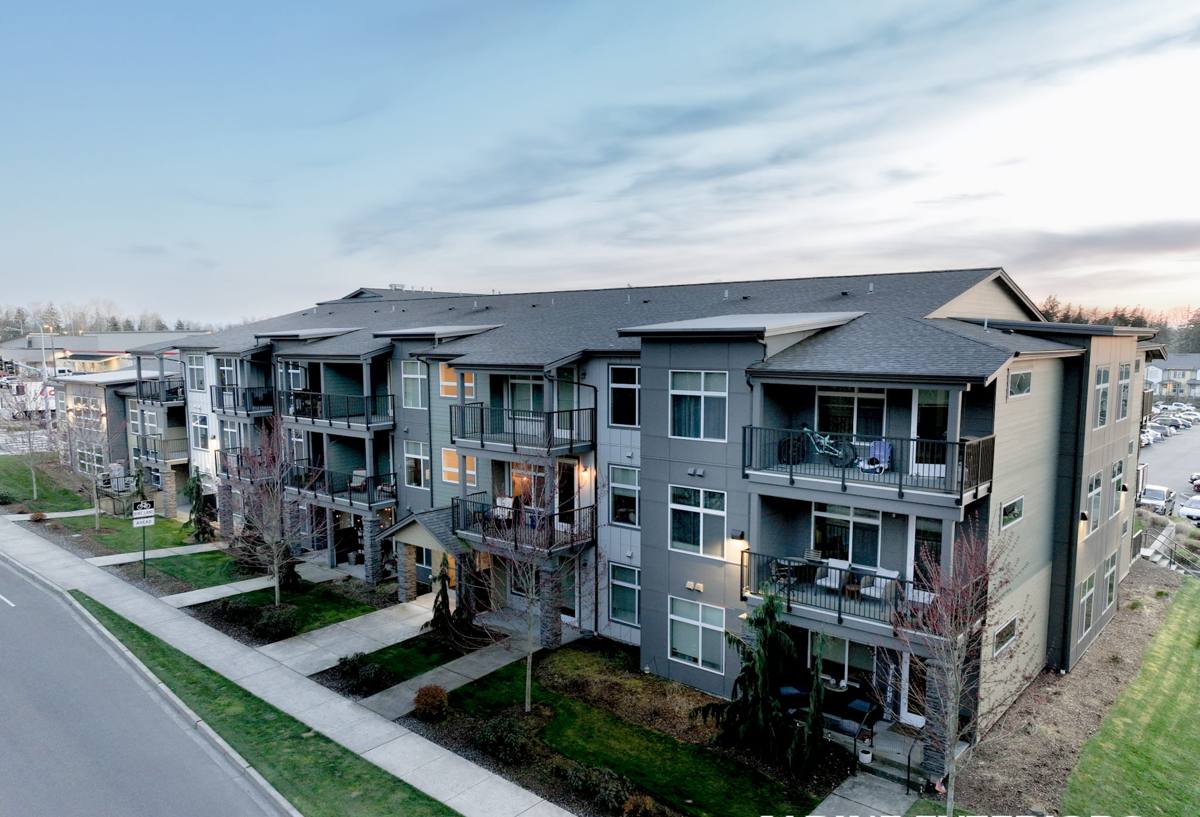
What the Lake Whatcom Climate Actually Does to Siding
Moisture That Doesn't Fully Dry Between Storms
Whatcom County gets a lot of rain, but proximity to the lake and tree cover changes how that moisture behaves. Walls in shaded, lake-adjacent lots can stay damp for days after a storm, especially on north- and east-facing elevations that get less direct sun. Siding materials that swell when wet and don't fully return to their original dimension when they dry are the ones that eventually show cupping, splitting, and paint failure at the seams.
A Long Moss and Algae Season
Moss doesn't need much — shade, moisture, and an organic surface to grip. Around Lake Whatcom, that combination exists for much of the year. Once moss establishes itself at the base of a wall or under an eave, it holds water against the substrate continuously, which accelerates whatever damage is already happening underneath.
Salt and Mineral Air Off the Water
Lake-adjacent air carries fine mineral content that settles on exterior surfaces over time. It's not ocean salt air, but it's a steady low-grade exposure that dulls unprotected finishes and can accelerate corrosion on fasteners and trim if the wrong hardware is used.
Why We Standardized on James Hardie for This Kind of Exposure
We don't install LP SmartSide, vinyl, Cemplank, Allura, primed spruce, or cedar. Each of those has legitimate uses somewhere, but for the moisture load and moss pressure we see around Lake Whatcom, they carry trade-offs we're not willing to put on a customer's home:
- Wood-based composite siding relies on edge sealing and field maintenance to keep water out of the substrate. In a climate where walls stay damp for extended stretches, any gap in that maintenance shows up as swelling at the joints.
- Vinyl siding is inexpensive and low-maintenance in the sense that it doesn't need painting, but it can warp under sustained moisture and temperature cycling, and it doesn't offer the same fire-resistance or impact durability as fiber cement.
- Cedar and primed spruce are beautiful materials, but real wood requires ongoing sealing, staining, or painting to keep moisture out — and in a shaded, damp lake environment, that maintenance interval shrinks fast.
- Other fiber cement brands (Cemplank, Allura) are chemically similar to Hardie, but we standardized on Hardie for its factory-applied ColorPlus finish, its HZ5 product engineering for wet climates, and a warranty structure we can stand behind without qualification.
James Hardie is non-combustible fiber cement — it doesn't rot, it doesn't provide moss the organic material it feeds on the way wood products do, and it's engineered specifically for climates like ours through its HZ5 product line. That's not a marketing claim; it's the reason we build every job around this one manufacturer instead of carrying five product lines and cutting corners on all of them.
What a Correct Hardie Installation Involves
The material is only half the equation. A Hardie install done to spec, in a high-moisture environment like Lake Whatcom, requires the same attention to the wall assembly behind the siding as to the boards themselves.
Water-Resistive Barrier and Flashing
Every correct install starts with a continuous water-resistive barrier and properly lapped flashing at every penetration — windows, doors, vents, and roof-to-wall transitions. Around Lake Whatcom, where walls can stay wet for days, a gap in this layer is the single most common cause of hidden rot behind otherwise good-looking siding.
Rainscreen Gap Where It's Warranted
On shaded, moisture-heavy elevations, a ventilated rainscreen gap between the siding and the wall sheathing lets bulk water drain and the wall assembly dry out between storms instead of trapping moisture against the back of the boards.
Clearance Above Grade, Decks, and Roofs
James Hardie's own installation instructions specify minimum clearances between the bottom of the siding and grade, decking, and roofing. These clearances matter more on lake-adjacent lots where splash-back, snowmelt, and standing moisture at ground level are common. Skipping this is one of the fastest ways to void a warranty and invite rot at the bottom course.
Fastener Selection and Spacing
Corrosion-resistant fasteners, installed at the manufacturer's specified spacing and depth, keep the siding secured without over-driving nails that crack the board or under-driving them so the panel can move and crack the paint line.
Caulking and Joint Treatment
Butt joints, corners, and trim intersections need the right sealant, applied correctly, and Hardie's ColorPlus boards are designed to minimize how much field caulking is even needed — factory-finished edges hold up better than field-painted cut edges exposed to weather.
James Hardie Product Lines and What Fits a Lake Whatcom Home
| Product | Best Use | Why It Fits This Area |
|---|---|---|
| HardiePlank Lap Siding, HZ5 | Primary wall siding | Engineered for the Pacific Northwest's wet, humid climate zone; standard choice for most Lake Whatcom homes |
| HardieShingle | Accent gables, dormers | Traditional shingle look without the maintenance burden of real cedar shingles in a damp climate |
| HardiePanel | Modern vertical siding, accent walls | Clean lines for contemporary lake-view homes; pairs well with board-and-batten detailing |
| HardieTrim | Corners, fascia, window/door trim | Matches the siding's moisture and fire performance instead of mixing in a wood trim liability |
ColorPlus Factory Finish
ColorPlus is a baked-on, factory-applied finish that holds color and resists fading, chipping, and moisture intrusion far better than field-applied paint. In a climate with this much sustained dampness, that factory bond at the finish layer is one of the biggest long-term differences between a Hardie install and a site-painted alternative.
Dealing with Moss and Algae the Right Way
Fiber cement doesn't stop moss from landing on a wall — nothing fully does in a shaded, wet environment — but it removes the food source that lets moss and mold colonize the surface the way organic wood fibers do. A correctly installed Hardie wall, with proper drainage and clearance, sheds moisture fast enough that moss has a much harder time establishing itself in the first place. Where it does appear, a fiber cement and ColorPlus finish can be gently cleaned without the risk of degrading the substrate the way scrubbing bare or painted wood can.
- Keep gutters clear so overflow doesn't run down the wall face
- Trim back vegetation and tree limbs that hold shade and moisture against the siding
- Maintain the manufacturer-specified clearance at grade and decking
- Rinse siding periodically with low-pressure water rather than a pressure washer aimed directly at seams
- Address any caulking gaps at trim and penetrations before they become moisture entry points
Our Process for a Lake Whatcom Siding Project
- On-site assessment: We inspect the existing wall assembly, note moisture damage, shaded exposures, and grade clearance issues specific to the lot.
- Tear-off and sheathing check: Old siding comes off and we evaluate the sheathing underneath for rot before anything new goes up — a step that matters more here than in drier parts of the county.
- Water-resistive barrier and flashing: Installed continuously, with extra attention at window heads, roof-wall intersections, and any area we flagged during assessment.
- Rainscreen where warranted: Applied on shaded or historically damp elevations to let the wall breathe.
- Hardie installation to manufacturer spec: Correct clearances, fastener schedule, and joint treatment throughout.
- Final walkthrough: We review the finished job with the homeowner and confirm clearances, trim details, and finish before calling it complete.
Why Hiring a Crew That Already Works Lake Whatcom Matters
Siding crews who haven't worked this specific area often treat it like any other Whatcom County job — standard clearances, standard barrier detailing, no particular attention to shaded exposures or lake-driven moisture patterns. That's how homes end up with siding that looks fine for a year or two and then starts showing problems at the bottom courses and north-facing walls first. A crew that already works Lake Whatcom knows which elevations need extra drainage attention, which lots have grade and drainage challenges, and how the moss season actually behaves here versus a drier inland neighborhood. That local pattern recognition is difficult to replicate from a spec sheet alone.
Cost Factors for Lake Whatcom Hardie Projects
| Factor | Why It Matters Here |
|---|---|
| Existing sheathing condition | Lake-adjacent homes with prior moisture exposure sometimes need sheathing repair before new siding goes on |
| Rainscreen application | Shaded, damp elevations may warrant a ventilated gap, which adds labor and material |
| Trim and detail complexity | Gables, dormers, and multiple roof lines common on lake-view homes add cutting and flashing time |
| Site access | Steep lake-adjacent lots and limited driveway access can affect staging and labor time |
| Product line selection | HardiePlank, Shingle, and Panel carry different material costs depending on the look and detailing chosen |
If you're weighing a siding replacement on a Lake Whatcom home, we're glad to walk the property, point out anything the current siding is telling us about moisture or drainage, and give you a straightforward, no-pressure estimate for a correctly installed James Hardie system built for this exact climate.