 Sudden Valley Roofing
 Siding Installation Built for Lake Whatcom Conditions
Lake Whatcom sits at the edge of Sudden Valley, and homes along its shoreline and up into the surrounding hillside face a specific mix of exposure: humidity coming off the water, marine air working its way in from Bellingham Bay and the Sound, driving rain that hits different walls of the same house at different angles depending on elevation and tree cover, and a moss season that runs long even by Whatcom County standards. Siding installation here isn't a generic job. It's a job that has to account for how long a wall stays wet after a storm, how much shade it sits under, and how much of that shoreline dampness reaches it on an average week.
We install siding for homes throughout the Lake Whatcom and Sudden Valley area, and we install James Hardie fiber cement exclusively. This page focuses on what that installation actually involves, what this specific stretch of shoreline demands from it, and why the crew doing the work matters as much as the material itself.
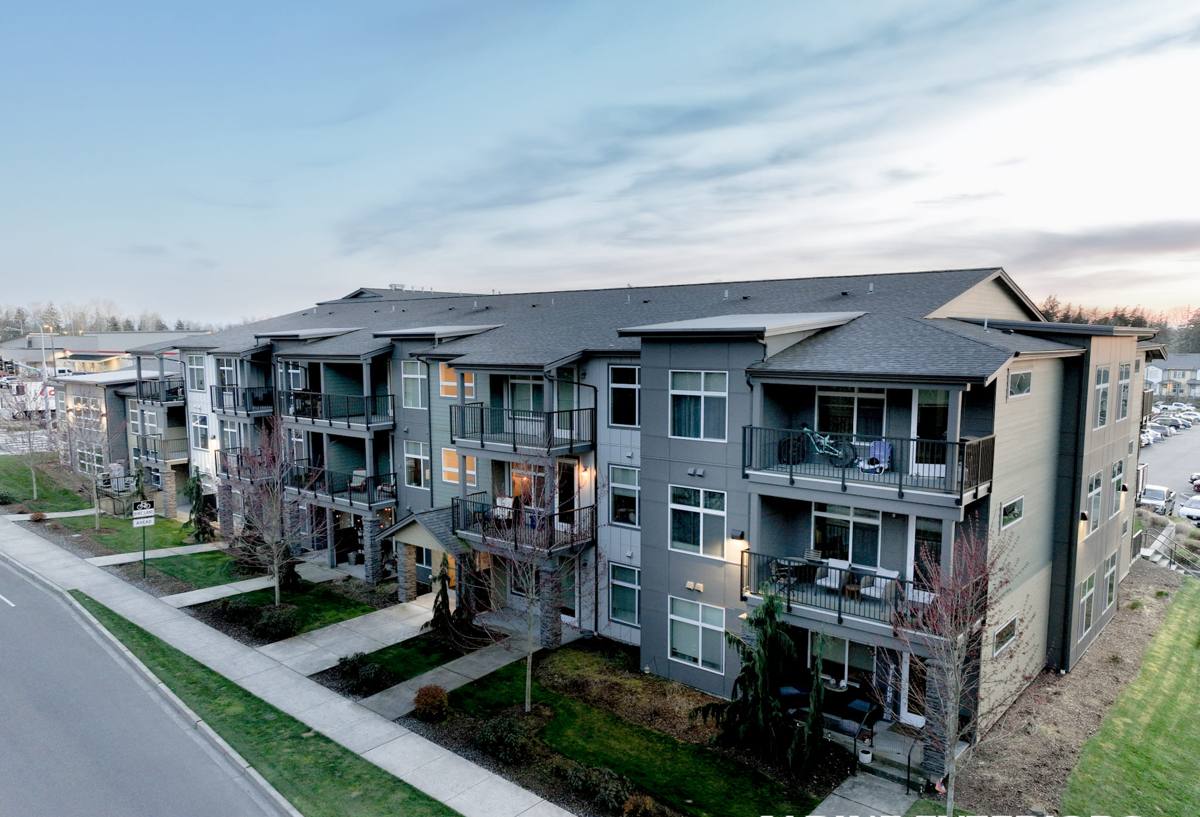
What Lake Whatcom's Climate Asks of a Siding System
Humidity Off the Water and a Long Wet Season
A lake this size adds moisture to the air well beyond what falls as rain. Homes close to the water pick up ambient humidity on days when it isn't raining at all, which means siding here rarely gets a full, uninterrupted dry cycle the way it might further inland. Materials that rely on sun exposure to shed moisture between storms don't get that chance consistently on a lakeside lot, especially on walls that face the water or sit under tree cover.
Marine Air Moving in From the Sound
Whatcom County's proximity to Bellingham Bay and Puget Sound means marine air reaches inland communities like Sudden Valley too, layering a faint salt component on top of the lake's own humidity. It's a lighter effect than you'd see on the open coast, but it's real, and it's part of why we pay attention to fastener grade and finish durability on every installation here rather than defaulting to whatever's cheapest.
Moss, Shade, and Slow-Drying Walls
Shoreline tree cover, mild temperatures, and near-constant moisture are exactly the conditions moss needs to establish itself, and it doesn't stay confined to roofs. Porous or moisture-retentive siding materials pick up growth on north-facing walls and shaded elevations, and once it takes hold it tends to come back season after season unless the underlying material and installation are built to resist it in the first place.
What a Correct Siding Installation Actually Involves
Fiber cement performs the way it's engineered to only when every layer behind the visible panel is installed correctly. On a shoreline property, the margin for error is smaller than it is on a drier, more open lot, because any gap in the water management system stays wet longer and does more damage before it's noticed.
Weather-Resistive Barrier and Flashing
A continuous weather-resistive barrier goes on before any siding, with every window, door, and penetration flashed and lapped so water sheds outward and down, never inward. On a lake-facing wall that takes wind-driven rain more often than a sheltered elevation, that lapping sequence is what actually keeps water out of the wall assembly — the siding itself is the second line of defense, not the first.
Fasteners, Clearances, and Joint Sealing
Hardie specifies fastener type, spacing, and penetration depth for a reason, and we don't deviate from it. We also hold proper clearance between the bottom edge of the siding and grade, roofing, decks, or hardscape, since tight clearances trap moisture right where a wall is least able to dry out. Butt joints and trim intersections get sealed correctly rather than caulked over as an afterthought, because a joint that opens up even slightly becomes a direct path for water on a wall that already deals with more moisture than most.
- Continuous weather-resistive barrier with every seam and penetration properly lapped
- Corrosion-resistant fasteners suited to a lakeside environment with marine air influence
- Correct clearance from grade, roofing, and hardscape at every elevation
- Properly sealed joints and trim intersections, not just surface-level caulking
- Drainage detailing behind the panels on walls that see the most sustained moisture
- Factory-finished panels installed without cut edges left unsealed or exposed
Why We Install Only James Hardie Fiber Cement
We don't offer LP SmartSide, vinyl siding, Cemplank, Allura, primed spruce, or cedar. That's a professional standard, not a limitation we apologize for. On a property that deals with lake humidity, marine air, and a long moss season, we've found that a single, well-understood system holds up better than the flexibility of offering several options that perform inconsistently in these conditions.
- Non-combustible core: Fiber cement doesn't feed a fire the way wood-based siding can, which carries real weight for a wooded lake community.
- Factory-applied ColorPlus finish: The color is cured onto the panel under controlled conditions, not applied in the field, and it holds up to sustained moisture and marine air far longer than site-applied paint or stain.
- Climate-engineered HZ product lines: Hardie's HZ5 formulation is built for regions with heavy moisture exposure and freeze-thaw cycling, which matches Lake Whatcom's conditions far better than a formulation built for a hot, dry climate.
- Dimensional stability: Fiber cement doesn't swell, cup, or warp the way engineered wood products can after repeated wetting cycles that never fully resolve on a shaded, lake-adjacent wall.
- Strong transferable warranty: Hardie backs correctly installed siding with a substantial warranty, which matters most on exactly the kind of demanding, wet climate Lake Whatcom sits in.
Our Installation Process
- On-site assessment. We walk the exterior and evaluate each elevation separately, since a lake-facing wall and a sheltered, tree-shaded wall on the same house can have very different exposure and drainage needs.
- Tear-off and substrate check. Existing siding comes off and we inspect the sheathing underneath for moisture damage before anything new goes up — a step that matters more here than on a drier lot, since hidden rot doesn't announce itself until it's advanced.
- Weather-resistive barrier and flashing. Every window, door, and penetration gets flashed and lapped correctly before a single piece of siding is hung.
- Hardie panel installation. Panels go up to Hardie's published specifications for fastening, clearance, and joint treatment, adjusted elevation by elevation for how much moisture and wind exposure each wall actually sees.
- Trim, caulking, and final inspection. Trim and joints are sealed correctly, and we walk the finished exterior with the homeowner before calling the job done.
What Influences the Cost of a Siding Installation
Every home is different, and we won't quote a number without seeing the property, but these are the factors that most often move the price up or down on a Lake Whatcom installation.
| Factor | Why It Matters Here |
|---|---|
| Home size and wall area | More square footage means more material and labor, straightforwardly |
| Tear-off vs. new construction | Removing old siding and repairing any hidden sheathing damage adds time, especially common on older lakeside homes |
| Substrate condition | Moisture-damaged sheathing found during tear-off has to be repaired before new siding goes on |
| Trim and architectural detail | Homes with more corners, gables, and window trim take longer to flash and finish correctly |
| Elevation-specific exposure | Lake-facing and shaded walls sometimes need additional drainage detailing that sheltered walls don't |
| Siding profile chosen | Lap, shingle, and panel styles within the Hardie line carry different material and labor costs |
Why a Crew That Already Works Lake Whatcom Matters
Sudden Valley is a private community with its own internal roads and homeowners association, and Lake Whatcom's shoreline lots vary in elevation, tree cover, and orientation to the water in ways that change how each wall of a house actually gets weathered. A crew that already works this specific area brings more than familiarity with the roads — they know which elevations tend to need extra drainage detailing, how to schedule around community access rules, and how marine air and lake humidity affect fastener and finish choices over the life of the installation. That knowledge doesn't show up as a line item on a quote, but it shows up in how the siding performs five, ten, and twenty years out.
A Practical Checklist Before You Hire
- Ask what siding material they install and why, and whether they'll put a written warranty behind it
- Confirm current Washington contractor licensing and active liability insurance
- Ask how they handle lakeside or shaded walls differently from sheltered ones during installation
- Ask about experience working within Sudden Valley's HOA and private-road access rules
- Get a written scope of work, including tear-off, flashing, and fastener specifics, before signing anything
Signs Your Current Siding Is Falling Behind
Not every home needs full replacement — sometimes repair or targeted attention is the right call, and we'll say so. But a few signs are worth a closer look sooner rather than later on a Lake Whatcom property specifically:
- Soft or spongy spots when pressed, especially near the bottom courses or window trim
- Moss or persistent dark staining that returns quickly after cleaning on shaded or lake-facing walls
- Visible cupping, swelling, or separation at panel joints
- Paint or finish that's chalking, peeling, or fading unevenly across different elevations
- Rot or discoloration on the sheathing visible around any existing damage or opening
If you're considering a siding installation for a home on or near Lake Whatcom, we're glad to walk the exterior with you and give you an honest read on what it needs, elevation by elevation. Reach out below for a free, no-pressure estimate.