 Sudden Valley Roofing
 Why Siding in Geneva Takes a Different Kind of Job
Geneva homes sit in a stretch of Whatcom County where the weather doesn't let up for long. Winters bring driving rain that comes in sideways more often than straight down, summers are short, and the shoulder seasons stay damp enough that moss and algae get a running start on any surface that holds moisture. Add in the salt air that moves through this part of Whatcom County on the prevailing wind, and you've got a combination that's genuinely harder on exterior materials than what siding has to deal with in drier parts of the state.
None of that is a reason to panic about your siding. It's a reason to be specific about what you install and how it's installed. A lot of siding problems we get called out to inspect in this area aren't failures of the material itself — they're failures of a system that wasn't detailed correctly for this climate in the first place. That distinction matters more here than almost anywhere else in the county.
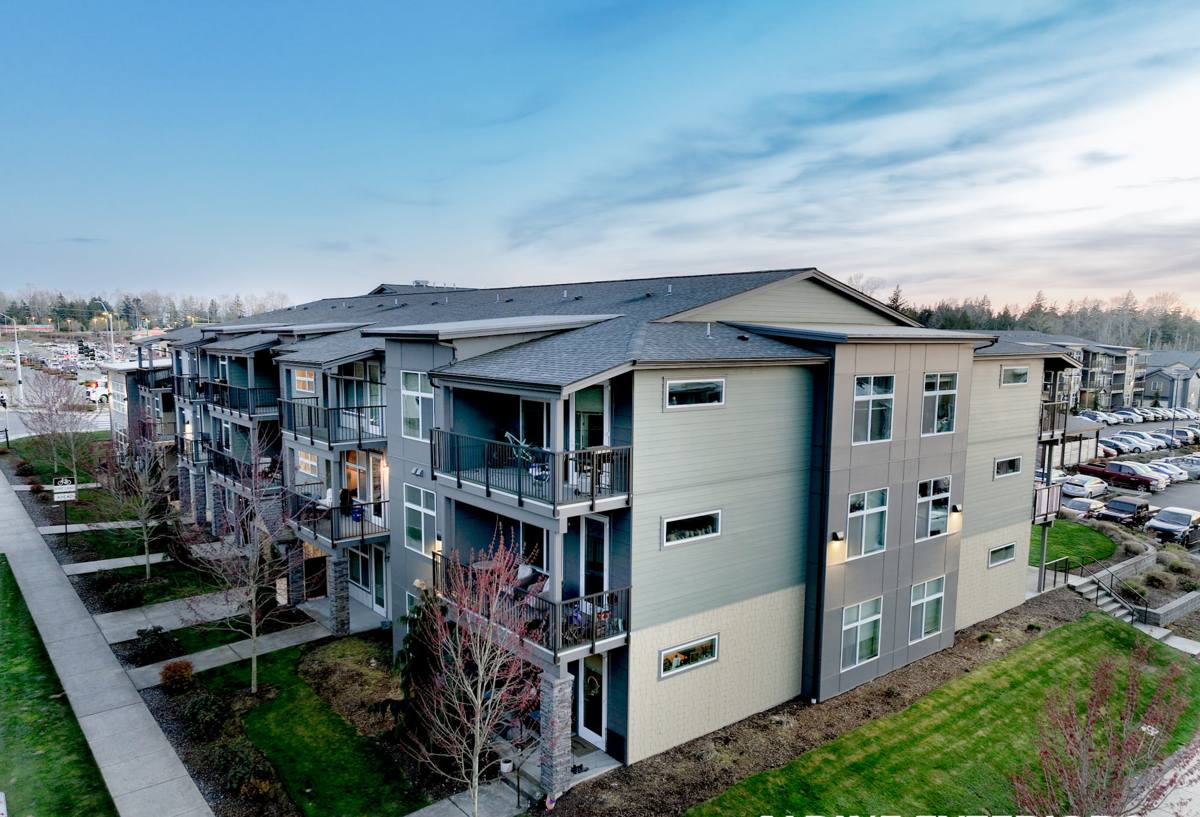
What Salt Air, Rain, and Moss Actually Do to Siding
Salt air
Airborne salt is corrosive to metal fasteners, flashing, and trim, and it accelerates the breakdown of finishes that aren't formulated to resist it. Paint film that would hold up fine forty miles inland can chalk, fade, or start lifting years sooner near moving salt-laden air. Fasteners matter as much as the siding itself — the wrong nail or screw becomes a rust streak and, eventually, a loose board.
Driving rain
Wind-driven rain doesn't just fall on a wall, it gets pushed into laps, seams, and penetrations that would stay dry in calmer weather. Siding systems in this area need real overlaps, correctly flashed windows and doors, and a drainage plane behind the cladding that can move water back out before it reaches the sheathing. Skip any of that and water finds its way in slowly, usually behind the siding where you can't see it until there's rot.
A long moss season
Shaded lots, tree cover, and persistent moisture mean moss and algae have months to establish themselves on north-facing walls and anywhere airflow is limited. On some siding materials that growth traps moisture against the surface and speeds up decay underneath. On others it's mostly a cosmetic issue that hoses off. Which category your siding falls into has a lot to do with what it's made of.
What a Correct Siding Installation Actually Involves
Siding is a system, not a single product. A correct job in Geneva's climate includes several layers working together, and skipping any one of them is where most premature failures start.
- A weather-resistive barrier installed and lapped correctly, shingle-style, so water sheds down and out rather than behind the barrier
- Proper flashing at every window, door, deck ledger, and roof-to-wall intersection — the majority of moisture intrusion we find traces back to a missed or shortcut flashing detail
- Correct fastener type, length, and placement for the specific siding product, driven to the manufacturer's spec rather than "close enough"
- Clearances maintained between siding and grade, decks, roofs, and hardscaping so water and moisture-laden debris can't wick up into the material
- Rain-screen or drainage gap detailing where the wall assembly calls for it, so incidental moisture has somewhere to go
- Caulking and sealant used only where it belongs — sealant is a backup to good flashing, never a substitute for it
Any one of those steps done wrong can undo the benefit of even the best siding product on the market. That's why we treat installation quality as equal in importance to the material choice.
Why We Install James Hardie — and Only James Hardie
We standardized on James Hardie fiber cement siding for every job we do, including in Geneva, and we don't install vinyl, LP SmartSide, Cemplank, Allura, or primed wood siding like spruce or cedar. That's not a marketing position — it's a decision based on what holds up in this climate with the least maintenance burden over the decades a homeowner actually owns the house.
Fiber cement is non-combustible, doesn't feed moss and algae the way wood-based products can, and doesn't soften or swell the way engineered wood siding can if a seam or cut edge is exposed to standing moisture for years. James Hardie's ColorPlus finish is baked on at the factory under controlled conditions, which gives it better fade and wear resistance than field-applied paint — a real advantage against salt air and UV exposure over time. Hardie also builds region-specific product lines engineered for different climate zones, which lets us match the product to what Whatcom County actually throws at a wall.
We're upfront that other products have their own advocates and legitimate use cases elsewhere. Our decision is about what we're willing to put our name behind on a home that has to survive this specific climate, and about not mixing installation standards across different product lines on our crews.
Matching the Product Line to the Wall
| Consideration | Why it matters in Geneva |
|---|---|
| Climate-engineered HZ formulation | Hardie's HZ product lines are engineered for moisture and freeze-thaw behavior specific to marine climates like Whatcom County's |
| ColorPlus factory finish | Baked-on finish resists fading and chalking better than field paint under sustained salt air and UV exposure |
| Non-combustible composition | Doesn't contribute fuel in a wildfire-adjacent exposure, and doesn't require the same moisture-driven maintenance cycle as wood-based sidings |
| Factory-primed edges (where applicable) | Reduces the number of field-cut edges left exposed to rain before they're sealed |
| Transferable warranty | Backed by the manufacturer, not just the installer, which matters if you sell the home before the siding's service life is up |
Our Installation Process on a Geneva Home
- On-site assessment. We look at sun and shade exposure, wind exposure, existing moisture damage, and how water currently moves off your roof and around your foundation before we ever talk product selection.
- Removal and inspection of the existing wall. Once old siding comes off, we check the sheathing and framing underneath for hidden rot or moisture damage — this is often where problems from a prior installation actually surface.
- Repair before re-cover. Any compromised sheathing or framing gets replaced. Covering over damaged material with new siding just hides the problem for a few more years.
- Weather-resistive barrier and flashing. Installed and lapped to shed water correctly, with particular attention to every window, door, and penetration.
- Hardie installation to manufacturer spec. Correct fasteners, correct exposure, correct clearances from grade, roofline, and decks.
- Trim, caulking, and touch-up. Sealant applied only where it's meant to be a backup layer, not a primary defense.
- Final walkthrough. We go over the finished work with you and point out anything you should keep an eye on going forward.
Why a Crew That Already Works This Area Matters
A contractor who works Geneva and the surrounding Sudden Valley area regularly already knows what this climate does to a wall over ten, twenty, thirty years — not from a manufacturer's data sheet, but from pulling old siding off local homes and seeing what actually failed and why. That experience shows up in small decisions: where we add extra flashing attention even when it's not strictly required, which wall orientations we watch for moss buildup, and how we sequence a job around this area's rain patterns so the wall isn't left open longer than it has to be.
It also means we're not guessing at permitting, typical lot conditions, or how homes in this part of Whatcom County were originally built — details that change how a re-side job needs to be sequenced.
What Affects the Cost of a Siding Project
| Factor | Why it moves the price |
|---|---|
| Extent of hidden damage found on tear-off | Rotted sheathing or framing found once old siding comes off has to be repaired before new siding goes on |
| Home size and wall complexity | Multiple stories, dormers, and cut-up wall lines take more labor and material than a simple rectangular footprint |
| Siding profile and finish selection | Lap width, texture, and color options within the Hardie lineup carry different material costs |
| Trim and detail work | Corner boards, window and door trim, and fascia detailing add labor time beyond the flat wall area |
| Access and site conditions | Steep lots, limited equipment access, or extensive landscaping to protect can add setup time |
We don't quote a job over the phone — an accurate number requires seeing the walls and, ideally, seeing what's underneath the existing siding once tear-off starts.
A Practical Checklist Before You Commit
- Ask what's included in the tear-off scope, and how hidden sheathing damage is handled if it's found
- Confirm the specific Hardie product line and profile being quoted, not just "fiber cement"
- Ask how flashing will be detailed at your windows, doors, and any deck or roof intersections
- Get the fastener schedule and clearance specs in writing, not just verbally
- Ask how long the crew has worked in this specific area and what recurring issues they watch for locally
- Understand what's covered under the material warranty versus the workmanship warranty, and for how long
What to Expect After Installation
Correctly installed Hardie siding is genuinely low-maintenance, but "low-maintenance" isn't "no-maintenance." Plan on an occasional gentle wash to keep moss and algae from establishing on shaded walls, a periodic look at caulking around trim and penetrations, and prompt attention if you ever notice a section behind gutters or downspouts that stays damp longer than the rest of the wall. Catching a small issue early is always cheaper than catching it late.
If you're weighing a siding project for a Geneva home, we're glad to come take a look, walk the property with you, and give you a straightforward, no-pressure estimate based on what your walls actually need — use the form below to get started.