 Sudden Valley Roofing
 Siding Replacement in Fairhaven: A Different Job Than a Patch-Up
Fairhaven is one of the older, tighter-built neighborhoods in Bellingham, sitting close enough to Bellingham Bay that salt-tinged air and wind-driven rain are a constant background condition rather than an occasional storm event. Homes here range from early-century construction to newer infill tucked into the same hillside streets, and whatever the vintage, a full siding replacement is a different project than a repair or a repaint. It means stripping a wall down to the sheathing, correcting whatever's been hiding underneath the old material, and rebuilding the water-management system from the framing out. We work siding jobs throughout Whatcom County, and Fairhaven is one of the areas where we see, consistently, why a replacement done to spec matters more than it would on a calmer, drier inland lot.
This page is specifically about siding replacement — not general exterior services, not repair, not a repaint. If your home just needs caulking touched up or a few boards patched, that's a smaller job. If the siding is past that point, here's what a correct replacement actually involves in this neighborhood, and why the crew doing it matters as much as the material.
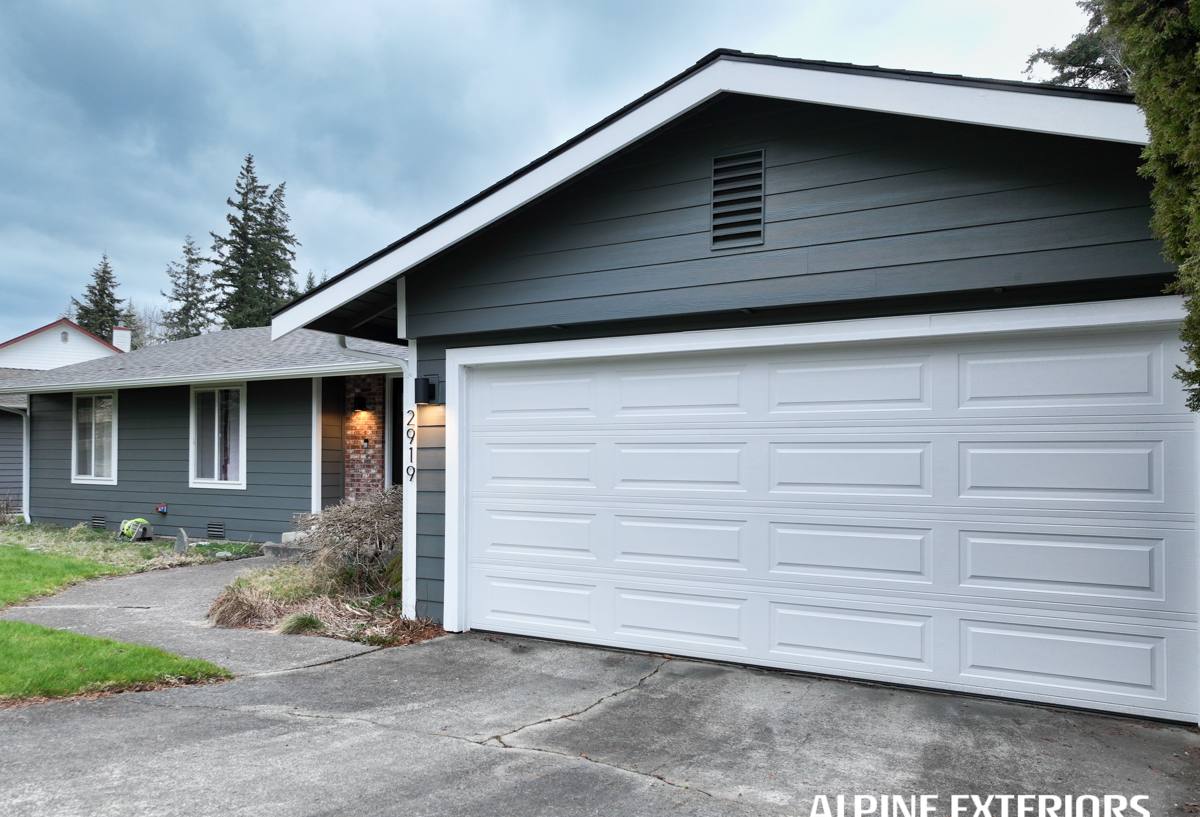
What Bellingham Bay Does to Fairhaven Siding Over Time
Salt Air and Sustained Marine Moisture
Homes close to the water take on a steady drift of moisture-laden, mildly corrosive air most of the year, not just during storms. That exposure works slowly on fasteners, flashing, and lower-grade finishes — rust bleed at nail heads, degraded caulk joints, and a paint or coating finish that chalks and fades well ahead of schedule. By the time it's visible from the street, it's usually been developing under the surface for a while.
Driving Rain Off the Water
Fairhaven's position near open water means rain doesn't just fall straight down, it gets pushed sideways. Wind-driven rain finds its way into lap joints, trim seams, and wall penetrations at angles that a siding system installed for a calmer climate was never really tested against. A house that would hold up fine forty miles inland can still take on water here, purely because of how the wind interacts with the coastline and the terrain.
A Long Moss and Mildew Season
Shade from mature trees, marine humidity, and mild temperatures add up to a moss and mildew season that runs most of the year on Fairhaven's more tree-covered lots. Roofs usually show it first, but porous or moisture-holding siding materials pick it up too, especially on north-facing walls that don't get much direct sun to dry out between wet spells.
Signs a Wall Needs Replacement, Not Repair
Not every siding problem calls for a full tear-off. Isolated damage — a cracked board, a failed caulk joint, a small area of rot around one window — is often repairable. Replacement becomes the right call when the damage is systemic rather than isolated, or when the underlying water-management layer has failed and repeated patching would just be treating symptoms.
- Soft, spongy, or crumbling siding across multiple wall sections, not just one spot
- Persistent bubbling, peeling, or staining on the interior side of an exterior wall
- Visible warping, cupping, or delamination on several boards or panels
- Siding that's been repainted or caulked repeatedly with the problem returning each time
- Buckled or separated seams that let water track behind the material during wind-driven rain
- A musty smell near exterior walls, especially on the bay-facing or shaded sides of the house
| Situation | Repair Usually Fits | Replacement Usually Fits |
|---|---|---|
| Damage extent | One or two isolated boards or panels | Multiple wall sections or whole elevations |
| Underlying sheathing | Sound, dry, no rot found on inspection | Soft, stained, or rotted in more than one spot |
| Water barrier condition | Intact behind the affected area | Failed, missing, or improperly installed originally |
| Age and material | Recent installation, minor incident damage | Original wood-based siding at or past its service life |
| Repeat problems | First occurrence in that spot | Same failure recurring after prior repairs |
Why We Only Install James Hardie Fiber Cement
We install James Hardie fiber cement siding exclusively. We don't offer LP SmartSide, vinyl siding, Cemplank, Allura, primed spruce, or cedar. That's not a supplier relationship — it's a professional standard built around what actually holds up on a bay-exposed, moisture-heavy property like a typical Fairhaven home, versus what tends to need more frequent attention.
- Non-combustible core: Fiber cement doesn't feed a fire the way wood-based siding products can, which matters for safety and, in many cases, insurance underwriting.
- Factory-applied ColorPlus finish: Baked on under controlled factory conditions rather than field-applied, it resists fading, chalking, and moisture intrusion far longer than site-applied paint on a wall that stays damp longer than average.
- Climate-engineered HZ5 formulation: Built specifically for regions with heavy moisture exposure and freeze-thaw cycling, which fits the Puget Sound and Whatcom County climate well.
- Dimensional stability: Fiber cement doesn't swell, cup, or warp the way engineered wood products can after repeated wetting cycles that never fully resolve in a shaded, marine environment.
- Strong transferable warranty: Hardie backs its products with one of the more substantial warranty structures in the industry, provided the installation follows their published specifications.
Every one of those alternatives has a legitimate place in the market, and plenty of homeowners elsewhere are satisfied with them. But on a wall that sits within a few blocks of Bellingham Bay, taking on salt air and sideways rain most of the year, we've made a professional call that we'd rather stand behind one system completely than offer a cheaper option that quietly shifts long-term maintenance risk back onto the homeowner.
What a Correct Replacement Actually Involves
A siding replacement is only as good as what happens underneath it. The visible plank is the last piece installed, not the most important one.
Tear-Off and Sheathing Inspection
Old siding comes off in full sections so the sheathing underneath can be inspected properly, not just spot-checked through a gap. This is where hidden problems from the old installation usually surface — soft plywood, rot around window openings, or trim that was never properly flashed. Any damaged sheathing gets cut out and replaced before anything new goes back on; installing over compromised sheathing just buries the problem for the next owner to find.
Water-Resistive Barrier and Flashing
A new weather-resistive barrier goes on correctly lapped, shingle-style, so water sheds downward and outward rather than working its way behind the wall assembly. Flashing at windows, doors, and every roof-to-wall transition gets installed or replaced to direct water away from the framing. Given how much of Fairhaven's water intrusion comes from wind-driven rain hitting walls at an angle, this layer is doing more of the actual work than the siding itself.
Drainage Detailing Where Called For
Depending on the wall assembly, a rain-screen or drainage gap behind the panels lets any moisture that does get past the outer layer drain and evaporate instead of sitting against the sheathing. On a marine-climate property that stays damp longer than average, that detail is the difference between a wall that dries out between storms and one that doesn't.
Fastening and Joint Sealing to Spec
Fiber cement only performs the way it's engineered to when it's installed to Hardie's published specifications — correct fastener type and spacing, proper clearance from grade and roof lines, and properly sealed joints. A loosely installed product will still develop moisture problems here regardless of how good the material itself is, which is why we treat these details as non-negotiable rather than optional.
How the Process Works, Job to Job
- On-site assessment: We walk the exterior, check sheathing condition where accessible, and identify which elevations are taking the most weather exposure — bay-facing and wind-exposed walls in Fairhaven often need different attention than sheltered ones on the same house.
- Written scope and estimate: A clear breakdown of what's being replaced, what product line and profile is being used, and what happens if hidden damage turns up once the old siding comes off.
- Scheduling around the weather window: Siding replacement exposes the sheathing to open air for however long a section is uncovered, so we sequence work in manageable stages rather than stripping more wall than can be sealed back up in the same work window.
- Tear-off, repair, and rebuild: Old material off, sheathing repaired as needed, barrier and flashing installed, new Hardie siding hung to spec.
- Final walkthrough: A walkthrough before we call the job done, so any punch-list items get addressed while the crew is still on site.
What Drives the Cost of a Fairhaven Siding Replacement
Every job is priced on its specifics, but the same handful of factors move the number up or down on most Fairhaven homes.
| Factor | Why It Matters |
|---|---|
| Total square footage and wall complexity | More corners, dormers, and trim details mean more labor per square foot than a simple rectangular elevation. |
| Condition of the sheathing underneath | Rot or soft spots found during tear-off require repair before new siding can go on, which isn't always visible before the old material comes off. |
| Existing siding material and removal difficulty | Some materials come off cleanly; others, especially older or brittle products, take longer to remove without damaging what's underneath. |
| Exposure and elevation | Bay-facing or wind-exposed walls often warrant extra attention to flashing and drainage detailing that sheltered walls don't need as urgently. |
| Trim, window, and door detailing | Homes with more window openings and trim transitions need more flashing and cutting work per square foot of siding. |
| Product line and profile | Lap siding, panel siding, and shingle-style profiles carry different material and labor costs within the Hardie lineup. |
Why a Crew That Already Works Fairhaven Matters
Fairhaven's older housing stock, hillside terrain, and proximity to the bay mean the exterior problems we find here follow patterns that don't show up the same way on newer inland subdivisions. A crew that's worked a number of homes in this specific neighborhood already knows which elevations tend to take the worst of the wind-driven rain, where sheathing damage tends to hide on homes of a certain era, and how to sequence a job around a narrower, more densely built lot without disrupting neighbors any more than necessary. That familiarity shows up in fewer surprises mid-project and a scope that holds up once the old siding actually comes off the wall.
It also matters for logistics. Working the same part of Whatcom County regularly means material lead times, disposal, and scheduling are dialed in rather than figured out fresh on every job, which keeps a Fairhaven property from sitting with exposed sheathing any longer than it has to.
Ready to Talk Through Your Siding?
If you're seeing signs of failing siding on a Fairhaven home, or you just want an honest opinion on whether repair or full replacement is the right call, we're glad to take a look. Fill out the form below for a free, no-pressure estimate — we'll walk the exterior, tell you what we actually see, and give you a straight answer either way.