 Sudden Valley Roofing
 Roof Repair Built for Yew Street's Conditions
Homes along Yew Street in Sudden Valley sit under heavy tree cover near Lake Whatcom, and that setting shapes what a roof needs here more than almost anything else. Long stretches of overcast, wet weather move through Whatcom County for much of the year, and the moisture-laden air common to this part of the Pacific Northwest doesn't dry roofs out quickly once it settles in. Add shaded, north-facing slopes and a canopy of evergreens dropping needles and debris, and you get the two conditions that drive most of the repair calls we get in this neighborhood: prolonged moisture exposure and a long moss season that starts earlier and lasts longer than it does in drier parts of the state.
None of that means Yew Street roofs fail faster than roofs anywhere else. It means they fail differently — slower, quieter leaks that start at a compromised seam or a moss-lifted shingle edge rather than a single dramatic storm event. Catching and correctly repairing those early signs is what keeps a 20-year roof lasting 20 years instead of 12.
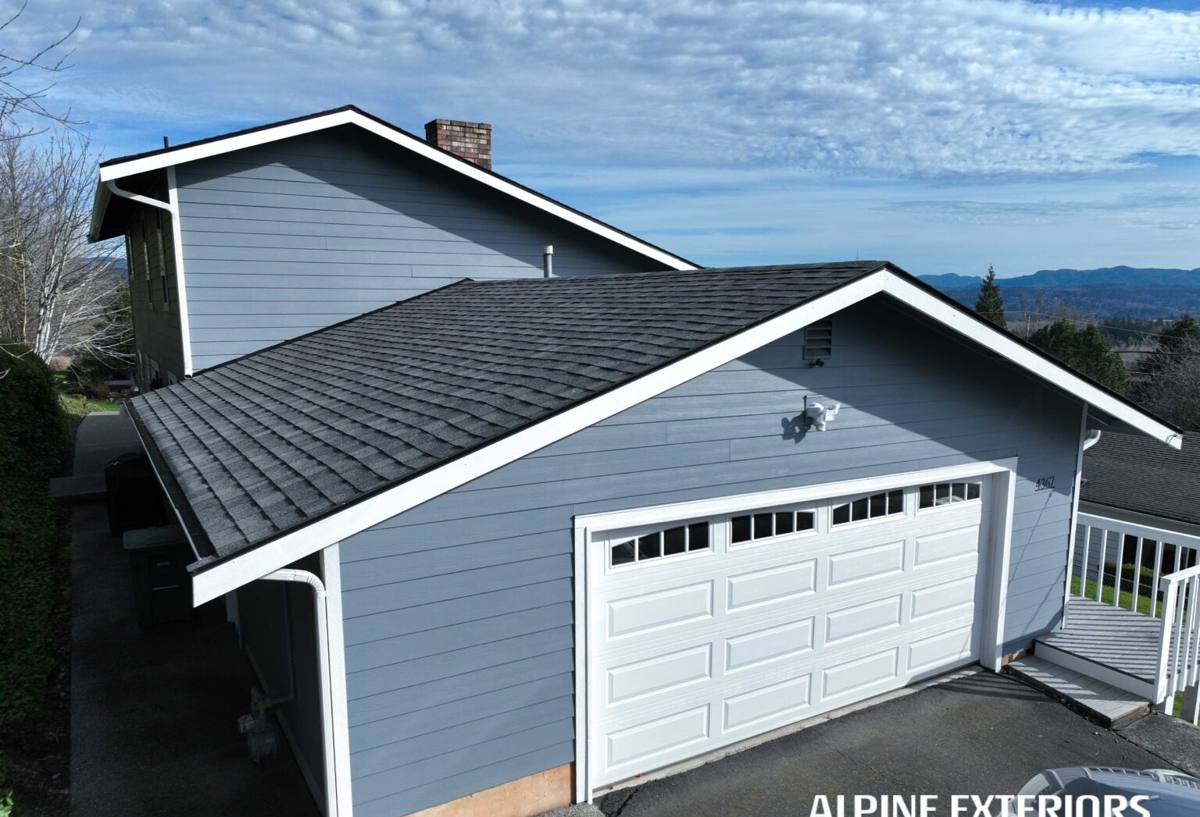
Common Roof Repair Needs We See on Yew Street
The repair work we're called out for in this part of Sudden Valley tends to fall into a handful of recurring categories:
- Moss and algae growth lifting shingle tabs and holding moisture against the roof deck
- Leaks at valleys, chimney flashing, and skylight curbs where water concentrates
- Wind- or debris-damaged shingles from falling branches and gusts off the lake
- Deteriorated pipe boots and vent flashing that crack and shrink over time
- Gutter and edge-flashing failures that back water up under the roof covering
- Interior ceiling stains that trace back to a small, localized roof defect
Most of these start small. A shingle lifted by moss growth, left alone through one more wet season, becomes a soft spot in the decking. A cracked pipe boot that would have been a five-minute fix becomes a stained ceiling and a mold conversation. The pattern we see over and over is that early, correctly diagnosed repair work is cheap; deferred repair work is not.
Why Moss Is More Than a Cosmetic Issue
Moss doesn't just look bad on a shaded roof — it actively holds water against the shingle surface and works its rhizoids under the granule layer, prying tabs open at the edges. On a roof with the kind of tree cover common along Yew Street, moss can re-establish within a season or two of being cleaned off if the underlying growth cycle isn't addressed. Repair work in a moss-prone area has to account for this, or the same leak comes back in two years.
What a Correct Roof Repair Actually Involves
Diagnosis Before Any Work Starts
The single biggest difference between a repair that lasts and one that doesn't is whether the actual source of the leak was found before anyone started patching. Water on a roof travels — it can enter at a flashing seam ten feet uphill from where a stain shows up on your ceiling. We trace the path from the interior evidence back to the roof surface, checking flashing, underlayment laps, fastener patterns, and decking condition before recommending a fix.
Matching Materials, Not Just Covering the Spot
A repair patch that doesn't match the existing shingle's exposure, nailing pattern, or weathered color will often fail faster than the surrounding roof and stands out visually. We match shingle type, weight, and as close a color as the manufacturer's current line allows, and we tie new material into the existing courses correctly rather than surface-mounting a patch over the top.
Flashing and Underlayment Get the Same Attention as Shingles
Most persistent leaks trace back to flashing or underlayment, not the shingle field itself. A proper repair replaces compromised step flashing, counter-flashing, or valley metal rather than sealing over it with caulk or roofing cement, which is a temporary measure at best in a climate that sees this much sustained rain.
Our Process From Call to Completed Repair
- Inspection: We walk the roof and the attic or interior space below the affected area, documenting what we find with photos.
- Written estimate: You get a clear scope of work and price before anything is touched — no verbal-only quotes.
- Repair day: We stage materials, protect landscaping and gutters, complete the repair, and clean up the site including magnetic sweeps for stray fasteners.
- Walkthrough: We show you the completed work and explain what was done and why.
We don't upsell a full replacement when a repair is the honest answer, and we don't patch around a problem that actually needs a larger fix. If a roof is genuinely past the point where repair makes sense, we'll tell you that plainly and explain the reasoning, not just recommend the more expensive option by default.
Repair vs. Replacement: How We Decide
Not every roof problem on a Yew Street home needs a full replacement, and not every leak can be permanently solved with a patch. Here's the general framework we use when advising homeowners:
| Factor | Leans Toward Repair | Leans Toward Replacement |
|---|---|---|
| Age of roof | Under 15 years, or well-maintained older roof | Near or past manufacturer's expected service life |
| Extent of damage | Localized — one flashing point, a small shingle area | Widespread across multiple slopes |
| Decking condition | Solid, dry decking under the affected area | Soft, delaminated, or rotted decking found during inspection |
| Moss/algae history | First occurrence, treatable | Repeated growth causing cumulative granule loss |
| Number of past repairs | First or second repair in this area | Same spot repaired multiple times already |
This table is a starting point, not a substitute for an on-roof inspection — the right call always depends on what we actually find once we're up there.
Cost Factors for Roof Repair in Sudden Valley
We don't publish flat repair prices because the range is genuinely wide depending on scope, but these are the variables that move the number most:
| Factor | Why It Matters |
|---|---|
| Roof pitch and access | Steeper slopes and limited driveway access near the lake add labor time and equipment needs |
| Story height | Two-story homes require additional fall-protection setup |
| Material match | Discontinued or specialty shingle colors can take longer to source |
| Decking repair needed | Rotted or soft decking found underneath adds material and labor beyond the surface patch |
| Moss treatment scope | Heavier growth requires more careful removal to avoid damaging the shingle surface underneath |
Broad honest range for most single-point repairs (a flashing fix, a section of storm-damaged shingles, a pipe boot replacement) runs from a few hundred dollars up to a couple thousand for larger multi-area repairs. Anything involving deck replacement or extensive moss remediation will land higher, and we'll walk you through exactly why before we start.
Why a Crew That Already Works Yew Street Matters
A repair crew that regularly works this stretch of Sudden Valley already understands the roof pitches, tree cover patterns, and access constraints typical of the neighborhood before they climb the ladder. That translates into faster, more accurate diagnosis — less time spent figuring out the property, more time spent fixing the actual problem. It also means we're not guessing at how a particular repair will hold up under this area's specific combination of shade, moisture, and moss pressure; we've seen how similar fixes performed on similar roofs nearby over multiple seasons.
Local presence also means accountability. If a repair doesn't hold, we're not driving in from across the region to make it right — we're already working in the area and can respond quickly.
A Homeowner's Roof Repair Checklist
Before you call anyone for a roof repair, a little groundwork helps you get an accurate, efficient estimate:
- Note where and when you first noticed a leak, stain, or missing shingle
- Check your attic or crawlspace above the ceiling for signs of moisture, mold, or daylight
- Take photos of any visible roof damage from the ground if it's safe to do so
- Check whether the roof or affected section is still under a manufacturer or workmanship warranty
- Ask any contractor for proof of current WA state licensing and liability insurance
- Get the scope of work in writing before repairs begin, not just a verbal price
Maintenance That Extends the Life of Your Repair
A well-executed repair should hold for years, but a few habits protect that investment given how much moss and moisture pressure this area sees. Clear debris from valleys and gutters at least once a year, ideally after leaf and needle drop in the fall. Trim back overhanging branches where practical to reduce shade and debris accumulation. Have moss growth treated before it spreads rather than after it's already lifted shingle edges. And if you notice a new stain, a lifted shingle, or a gutter overflowing during heavy rain, get it looked at promptly — in Whatcom County's climate, small roof problems rarely stay small for long.
If you're dealing with a leak, storm damage, or moss buildup on a Yew Street roof, we're happy to take a look and give you a straightforward, no-pressure estimate — just fill out the form below and we'll get back to you.