 Sudden Valley Roofing
 Asphalt Shingle Roofing Built for Alger's Weather
Alger sits in a stretch of Whatcom County where the weather doesn't do anything halfway. Homes here take on salt-laden air moving in off the water, long stretches of driving rain through the fall and winter, and a moss season that can run most of the year if a roof isn't shedding water and drying out the way it should. An asphalt shingle roof that's specified and installed correctly for this environment will hold up for decades. One that isn't — even a roof using good materials — can start showing granule loss, soft spots, and moss colonization inside the first few winters. The difference almost always comes down to installation detail, not the shingle brand on the wrapper.
This page covers what we actually do when we install or repair asphalt shingle roofing for homes in the Alger area: what the climate demands, how we approach the tear-off and installation, what separates a correct job from a rushed one, and why local experience matters more than most homeowners realize until it's their roof underperforming.
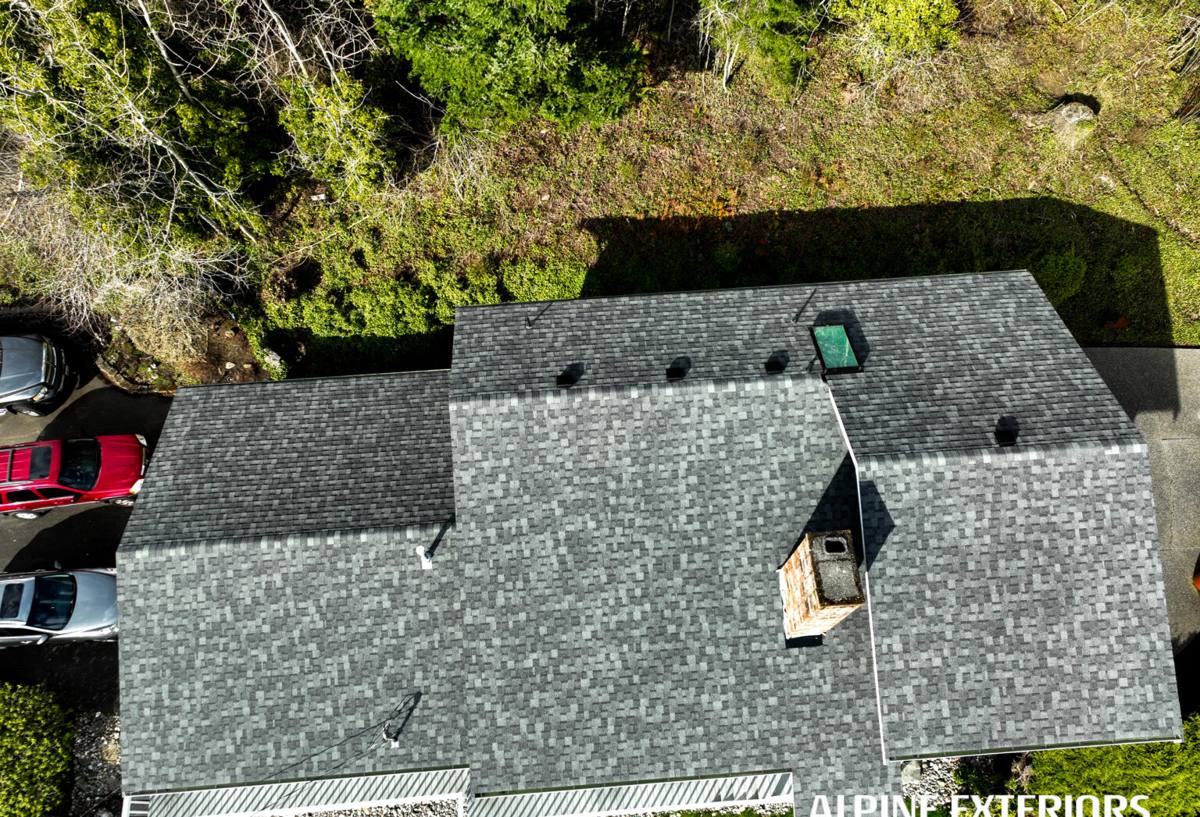
What Alger's Climate Does to a Shingle Roof
Salt Air and Metal Fatigue
Proximity to the water means airborne salt settles on every exterior surface, roofs included. It's not usually the shingles themselves that suffer first — it's the exposed metal. Flashing, drip edge, nail heads, and vent stacks corrode faster here than they would inland. Once flashing starts to pit or rust, water finds a way underneath it long before the shingles above look worn. We spec corrosion-resistant metal and fasteners specifically because of this, not as an upsell.
Driving Rain and Wind-Driven Water
Rain in this part of Washington rarely falls straight down. Wind pushes it sideways and up under shingle tabs, laps, and any transition point — valleys, sidewalls, chimneys, skylights. A roof system that only relies on the shingles themselves to keep water out will eventually leak here. The underlayment, ice-and-water membrane at vulnerable points, and correct flashing details are what actually stop wind-driven rain, and they matter more in Alger than they would in a drier climate.
Moss and Prolonged Dampness
Shaded roof sections, north-facing slopes, and areas under overhanging trees stay damp for extended stretches. Moss and algae take hold in that dampness, and once established, moss roots work under shingle edges and lift them, which is when small leaks start. Ventilation and airflow across the roof deck reduce how long a roof stays wet after a storm, which directly affects how much moss growth you'll deal with over the life of the roof.
Signs an Alger Roof Needs Attention
- Granules collecting in gutters or at downspout outlets — a sign shingles are wearing down
- Dark streaking or green-black patches, especially on shaded or north-facing slopes
- Moss growth along shingle edges or in valleys, even if it looks minor
- Curling, cupping, or cracked shingle tabs
- Soft or spongy spots when walked, which usually means deck damage underneath
- Rust staining below vent stacks, flashing, or metal valleys
- Daylight visible through the attic roof deck, or damp insulation after a storm
- Missing or lifted shingles after a windstorm
Any one of these on its own might not mean a full replacement is needed. Several together, or any sign of active water intrusion, usually does.
What a Correct Asphalt Shingle Installation Involves
A shingle roof is a system, not a single product. Skipping or shortcutting any layer is where most premature failures start — and it's usually invisible from the ground once the job is buttoned up. Here's what we treat as non-negotiable on every installation:
Tear-Off and Deck Inspection
We remove the old roofing down to the deck rather than layering over it. That lets us actually see the plywood or OSB underneath, replace any sections that are soft, delaminated, or water-damaged, and confirm the deck is properly nailed before anything new goes down. Roofing over a compromised deck just hides a problem that gets more expensive later.
Underlayment and Ice-and-Water Protection
Synthetic underlayment goes down across the full deck as the roof's secondary water barrier. In areas most exposed to wind-driven rain — eaves, valleys, around chimneys and skylights — we add self-adhering ice-and-water membrane. This is the layer that keeps a roof dry in Alger's weather even if wind pushes water under a shingle tab.
Flashing
Every penetration and transition point — valleys, sidewalls, chimneys, vent stacks, skylights — gets new, properly lapped flashing. Given the salt air here, we use corrosion-resistant metal rather than the cheapest available flashing, because that's the component most likely to fail early in this environment.
Ventilation
Balanced intake and exhaust ventilation keeps the attic and roof deck at a stable temperature and moisture level. This reduces moss-friendly dampness, prevents premature shingle aging from trapped heat, and helps avoid ice damming during cold snaps. Ventilation is often the most overlooked part of a shingle roof, and it's one of the biggest factors in how long the roof actually lasts.
Shingle Installation and Fastening
Nailing pattern, nail placement within the manufacturer's nailing zone, and exposure consistency all affect wind resistance and how the shingles seal down over time. We follow manufacturer specifications exactly, which is also what keeps material warranties valid — a warranty issued to the manufacturer's specs doesn't hold up if the installation deviates from them.
Comparing Asphalt Shingle Options
| Shingle Type | Typical Lifespan | Wind Rating | Best Fit For |
|---|---|---|---|
| 3-tab (standard) | 15–20 years | Lower | Budget-conscious projects, less wind exposure |
| Architectural / dimensional | 25–30 years | Moderate to high | Most Alger homes — better wind and impact performance |
| Impact-rated / high-wind | 30+ years | Highest | Exposed sites, homes with a history of wind damage |
Most homes in this area do best with an architectural shingle rated for higher wind exposure, given how much wind-driven rain the roof will see over its life. We'll walk through the actual trade-offs for your specific roof rather than defaulting to one product for every job.
Cost Factors on an Alger Roof
Every roof prices differently based on a handful of real variables, not a flat per-square rate. The factors that move the number most on local homes:
| Factor | Why It Matters |
|---|---|
| Roof pitch and complexity | Steep or multi-plane roofs take longer and require more safety setup |
| Deck condition | Rot or water damage found at tear-off adds repair scope |
| Number of penetrations | Each vent, chimney, and skylight needs its own flashing detail |
| Shingle tier chosen | Standard vs. architectural vs. impact-rated material cost |
| Ventilation upgrades | Adding proper intake/exhaust if the current system is inadequate |
| Access and site conditions | Tree cover, driveway access, and staging area affect labor time |
We give a written estimate after actually looking at the roof — not a phone quote — because deck condition and complexity can't be judged accurately from a description alone.
Repair vs. Full Replacement
Not every issue means a new roof. A localized leak from failed flashing, a section of wind-damaged shingles, or isolated moss lifting can often be repaired if the rest of the roof is sound and the shingles have useful life left. We'll always tell you honestly when repair makes sense versus when the roof is past the point where patching is a good use of money. Signs that point toward replacement rather than repair include widespread granule loss, multiple leak points, shingles nearing the end of their rated life, or deck damage found in more than one area.
Our Process for Alger Homeowners
- Inspection. We look at the roof up close — not just from the ground — and check the attic for moisture, ventilation, and deck condition.
- Written estimate. A clear scope and price based on what we actually find, with the reasoning behind any recommended repairs or upgrades.
- Scheduling around weather. Given how much rain this area gets, we plan installation timing to minimize the deck's exposure to open weather.
- Tear-off and deck check. Old roofing removed, deck inspected and repaired as needed before anything new is installed.
- System installation. Underlayment, ice-and-water membrane, flashing, ventilation, and shingles installed to manufacturer spec.
- Final walkthrough. We review the completed roof with you, including any warranty paperwork.
Why Local Experience Matters for This Job
A crew that already works roofs in and around Sudden Valley and Alger knows which details actually matter here — where wind-driven rain tends to find weak points, which roof orientations hold moss longest, and how corrosion moves faster on metal near the water than it does even a short distance inland. That's not something a generic installation checklist covers. It comes from working the same climate repeatedly and paying attention to what fails and what doesn't. It also means faster response if something needs a look after a storm, rather than waiting on a crew that has to travel in from outside the area.
Maintaining Your Roof After Installation
A properly installed shingle roof still benefits from basic upkeep, especially given the moss pressure in this area:
- Keep gutters clear so water isn't backing up under the eaves
- Trim back overhanging branches to reduce shade and debris buildup
- Have moss growth addressed early rather than letting it establish under shingle edges
- Schedule a periodic inspection, particularly after major windstorms
- Address any small leak signs promptly rather than waiting for them to spread
None of this requires major effort, but it does extend the practical life of the roof and catches small issues before they become deck repairs.
If you're dealing with an aging roof, storm damage, or just want an honest look at where your roof stands, we're happy to come out and take a look. The estimate is free, there's no pressure, and you'll get a straight answer about what the roof actually needs — use the form below to get started.