 Sudden Valley Roofing
 Why Alger Roofs Wear Differently Than Roofs Inland
Homes in the Alger area sit in a stretch of Whatcom and Skagit County where the weather doesn't do anything extreme, but it also doesn't let up. Salt-laden air off the Sound corrodes exposed metal fasteners and flashing faster than manufacturers' warranties assume. Driving rain, pushed sideways by wind off open water and low terrain, finds every gap in flashing and underlayment that a calmer climate would never expose. And the long stretch of overcast, damp months each year gives moss and algae months to take hold on north-facing slopes and shaded valleys before a homeowner even notices.
None of this means Alger needs an exotic roofing system. It means a new roof installation here has to be built with these three stressors in mind from the decking up, not patched around later. A roof that would perform fine in a drier part of the state can underperform here within a handful of years if the installer treated it like a generic job instead of a local one.
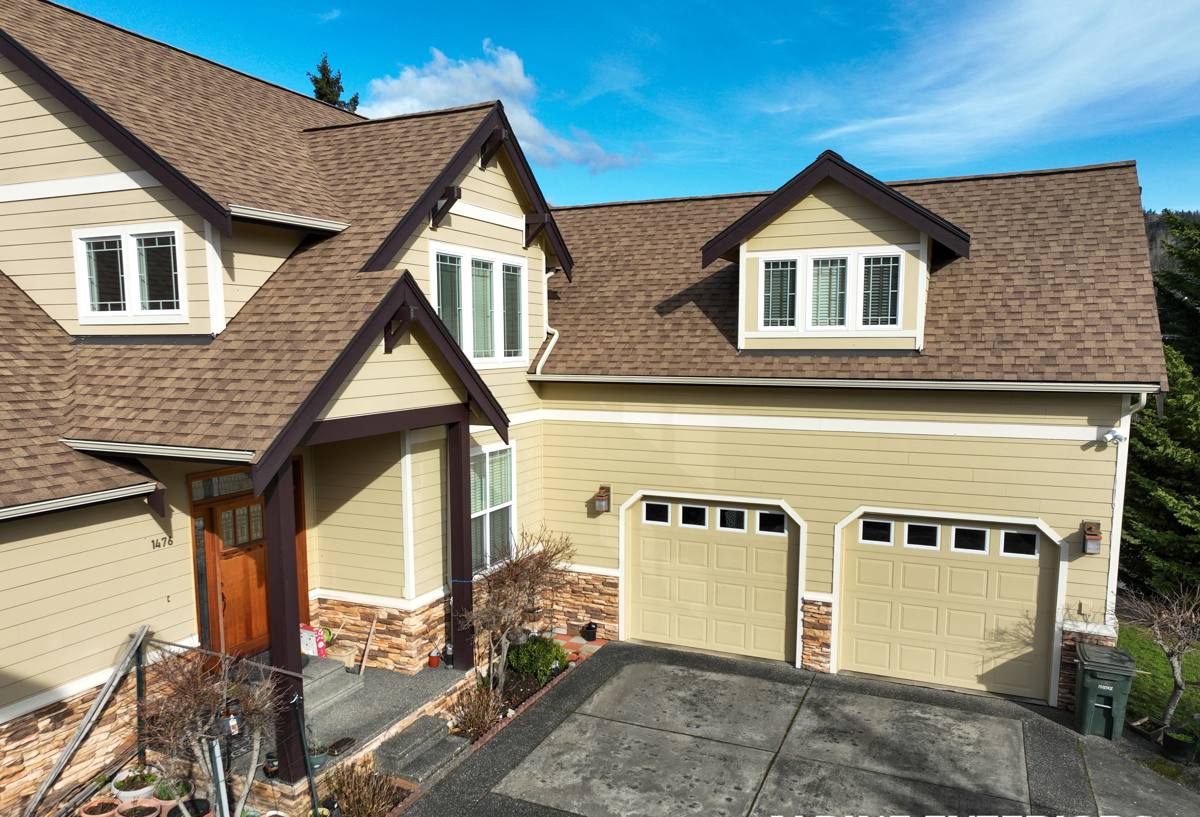
What a Correct New Roof Installation Involves
It starts below the shingles, not with them
Most roof problems homeowners eventually deal with didn't start with the shingles at all — they started with what's underneath them. A correct installation in this climate means:
- Full tear-off to bare decking, not a layover, so hidden rot, soft spots, and prior flashing mistakes get found and fixed
- Decking repair or replacement wherever moisture has already softened the plywood or OSB
- A synthetic or self-adhered underlayment rated for high-moisture exposure, not the cheapest felt option
- Ice-and-water shield at eaves, valleys, and any low-slope transitions, since these are where driving rain backs up under wind pressure
- New flashing at every penetration — chimneys, vents, skylights — rather than reusing old flashing to save a step
Skipping any one of these doesn't usually cause a failure in year one. It causes one in year six or seven, which is exactly when it's hardest to trace back to the install.
Ventilation is not optional here
A roof that can't breathe traps moisture in the attic, and trapped moisture is what accelerates decking rot, encourages mold, and shortens shingle life from the underside — a failure mode homeowners rarely see coming because it doesn't show on the surface first. Proper intake at the eaves paired with exhaust at the ridge keeps air moving through the attic year-round, which matters even more in a climate where the outside air itself carries a lot of moisture for much of the year.
Roofing Materials: What Performs in Alger's Conditions
There's no single "best" roofing material — there's a best material for this climate, this roof pitch, and this budget. Here's how the common options actually compare for a home in the Alger area:
| Material | Moisture & Salt Air Performance | Moss Resistance | Typical Lifespan Here |
|---|---|---|---|
| Architectural asphalt shingle | Good, with proper underlayment and flashing | Moderate — benefits from zinc/copper strips | 25–30 years |
| Standing seam metal | Excellent when properly fastened and coated | High — sheds moss naturally | 40–50+ years |
| Cedar shake | Requires ongoing maintenance in high-moisture areas | Low without regular treatment | 20–25 years with upkeep |
| Synthetic/composite shingle | Good, consistent performance | Moderate to high depending on product | 30–50 years |
We're upfront about the trade-offs. Cedar can look great, but in a climate this damp it demands a maintenance schedule most homeowners underestimate — cleaning, treating, and watching for moss intrusion under the shakes. We don't discourage it outright, but we make sure homeowners understand what owning one actually requires before they commit. Metal costs more up front but asks the least of you over the decades that follow.
Moss and Algae: Prevention Built Into the Install
Moss doesn't just sit on top of a roof — its roots work into shingle granules and lift tabs, and the moisture it holds against the surface keeps that section of roof wet long after the rest has dried. In an area with as much overcast, damp weather as this one gets, moss prevention has to be part of the installation plan, not an afterthought:
- Zinc or copper control strips installed near the ridge on shaded or north-facing slopes, so rain carries trace metal down the roof and inhibits regrowth
- Trimming back overhanging branches where we can flag it, since shade and debris are what let moss get a foothold in the first place
- Choosing a shingle or panel profile that doesn't trap organic debris in the way water naturally wants to drain
None of this makes a roof moss-proof forever — nothing does in this climate — but it buys years before the first cleaning is needed, and it means any moss that does show up sits on the surface instead of working into the roofing material underneath.
Our Installation Process, Start to Finish
- On-site inspection and estimate. We look at the existing roof, decking condition (where visible), ventilation setup, and any problem areas before quoting anything.
- Material selection. We walk through options against your budget and how long you plan to be in the home — a 15-year hold and a forever-home call for different answers.
- Permitting. We handle the local permit process so you're not the one tracking it down.
- Tear-off and deck inspection. Old roofing comes off completely; any compromised decking gets replaced before anything new goes down.
- Underlayment, flashing, and ice-and-water shield. This is where most of a roof's long-term durability actually gets decided.
- Roofing material installation. Installed to manufacturer spec, not shortcuts, so the warranty is actually valid if you ever need it.
- Ventilation check and correction. We confirm intake and exhaust are balanced for the attic space, not just present.
- Final walkthrough and cleanup. Magnetic sweep for debris, visual walkthrough with the homeowner, and a clear explanation of what was done.
What a New Roof Actually Costs — and What Moves the Number
We're not going to give a number that means nothing without seeing your roof, but here are the factors that actually move the price up or down, so an estimate makes sense when you get one:
| Factor | Why It Matters |
|---|---|
| Roof size and pitch | Steeper roofs take longer and require more safety setup |
| Number of layers to remove | Tear-off of multiple old layers adds labor and disposal cost |
| Decking condition | Rot or soft spots found during tear-off mean replacement, which isn't always visible from the ground beforehand |
| Material choice | Asphalt, metal, and composite materials have very different material and labor costs |
| Roof complexity | Valleys, dormers, chimneys, and skylights each add flashing work |
| Access | Difficult site access can add setup time and equipment cost |
The honest answer is that the only way to get a real number is a real inspection — anything else is a guess, and guesses are how homeowners end up with surprise change orders mid-project.
Why a Crew That Already Works This Area Matters
A roofing crew that regularly works Alger and the surrounding Whatcom County communities isn't guessing at what this climate does to a roof over time — they've already seen how a specific underlayment holds up after a few wet winters, which north-facing slopes need extra moss protection, and where driving rain tends to find its way in on a given roof style. That's not something you get from a crew passing through once. It also means we're not far away if something needs a follow-up look after the first heavy storm season, and we already know the local permitting process instead of learning it on your project's timeline.
A Simple Post-Install Maintenance Checklist
A well-installed roof still benefits from a little attention. This is what we recommend homeowners keep on a rough annual schedule:
- Clear gutters and downspouts before the wet season builds up, so water isn't backing up under the eaves
- Do a visual check for moss or algae starting on shaded slopes each spring
- Trim back any tree branches that have grown closer to the roofline over the year
- After any major windstorm, do a quick visual scan for lifted or missing shingles
- Have a professional look at flashing around chimneys and vents every few years, since these are the most common failure points on an otherwise sound roof
If you're weighing a new roof for a home in the Alger area, we're glad to come take a look and walk you through what your specific roof actually needs — no pressure, no upsell, just a straight answer. Use the form below to request a free estimate.