 Sudden Valley Roofing
 Building a Deck That Actually Holds Up in Barkley
A deck in Barkley isn't judged by how it looks the day it's finished. It's judged by how it looks and performs five, ten, fifteen years later, after another few hundred wet weeks have come and gone. Whatcom County's combination of driving rain, humid air off Lake Whatcom, and a moss season that runs longer than most homeowners expect puts real stress on outdoor structures. A deck built to a generic spec — the kind you'd get in a drier inland climate — tends to show its age fast here: cupped boards, rusting fasteners, soft spots where water sat too long, and moss creeping into every shaded corner.
We build decks in Barkley the way the local conditions actually demand, not the way a national how-to guide assumes. That means paying attention to drainage, fastener corrosion resistance, ledger flashing, and airflow underneath the structure — details that don't show up in a walkthrough but determine whether the deck is still solid a decade from now.
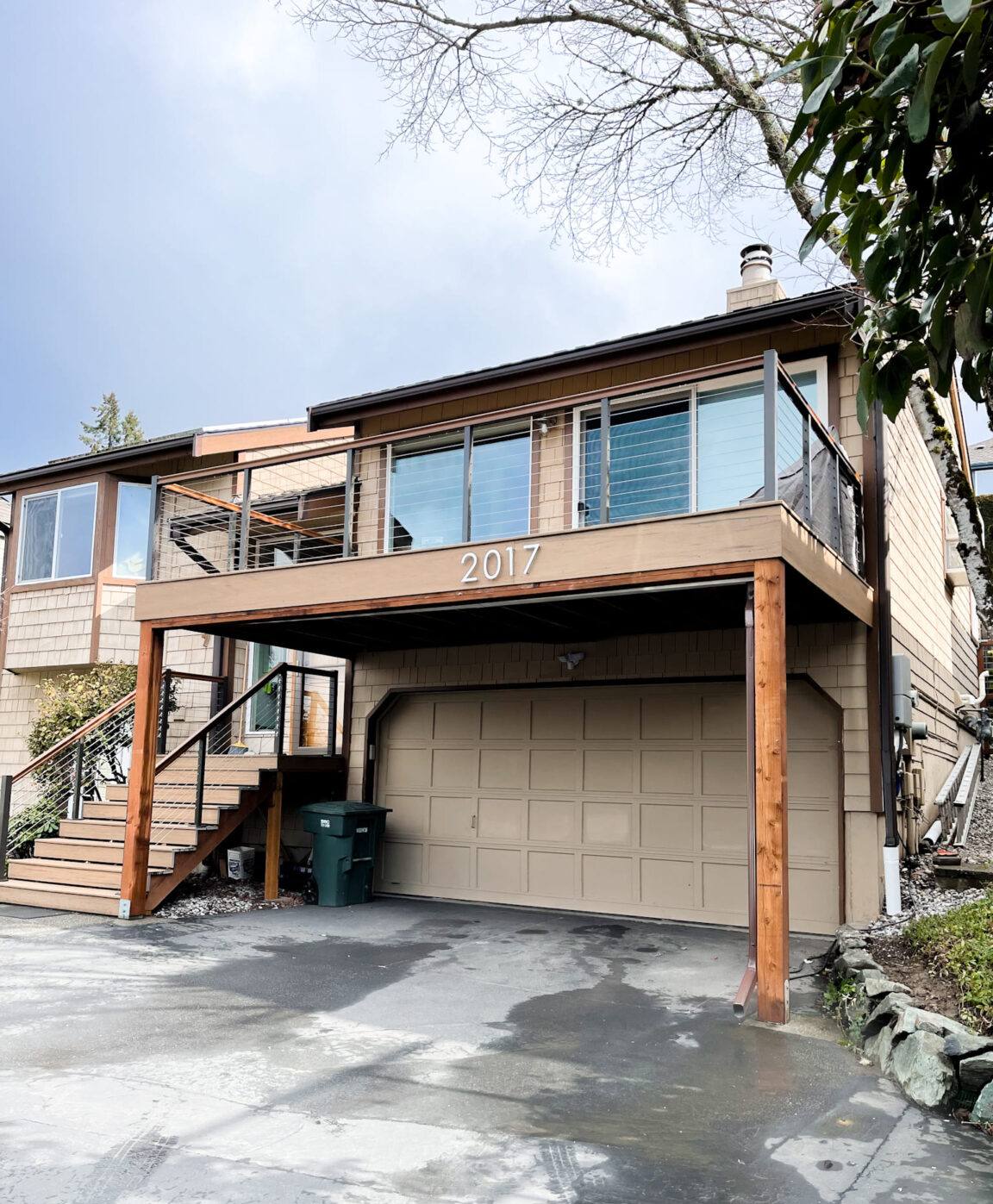
What Barkley's Climate Does to a Deck Over Time
Moisture That Doesn't Let Up
Sudden Valley sits in a part of Whatcom County that sees long stretches of steady, driving rain rather than short, hard downpours that come and go quickly. That matters for deck construction because it means wood, fasteners, and framing connections stay wet for extended periods rather than getting a quick soak and drying out. Anywhere water can collect — a poorly sloped board, a ledger board without proper flashing, joist hangers packed with debris — becomes a slow-motion failure point.
Moss Season Runs Long
Shaded decks, north-facing decks, and decks tucked under tree canopy in this area can stay damp enough to grow moss for a good chunk of the year, not just a few weeks in late fall. Moss holds moisture against the deck surface, which accelerates wood decay and makes boards slick and slippery underfoot. A deck design that ignores sun exposure and airflow is inviting a moss problem before it's even finished.
Salt Air's Slow Corrosion
Depending on a home's exact location and exposure, salt-laden air can accelerate corrosion on fasteners, hardware, and any exposed metal connectors. Standard hardware that would be fine in a dry inland climate can start rusting and losing strength years earlier out here. This is one of the most common reasons we see older decks in this region with structurally sound lumber but failing, corroded hardware underneath.
What a Correctly Built Deck Involves
Framing and Structure
The framing is the part nobody sees and the part that matters most. Proper joist spacing, correctly sized beams for the span and load, and solid post footings set below frost depth are non-negotiable. In this climate we also pay close attention to ventilation underneath the deck — a low deck with poor airflow traps moisture against the framing and shortens its life significantly, even if the visible boards look fine.
Ledger Attachment and Flashing
Where a deck attaches to the house is the single most common point of hidden water damage on decks in wet climates. A ledger board without proper flashing lets water track behind it and into the house's wall assembly, sometimes for years before anyone notices. We flash every ledger connection correctly and never rely on caulk alone to do that job.
Fasteners and Hardware
Given the corrosion pressure from salt air and constant moisture, we use fasteners and structural hardware rated for exterior, coastal-adjacent exposure — not the cheaper standard-grade hardware that starts showing rust within a few seasons. This is one of those decisions that costs a little more upfront and saves a homeowner a hardware replacement project a few years down the road.
Decking Material Selection
Pressure-treated wood, cedar, and composite decking all behave differently in sustained wet conditions. Each has real trade-offs in maintenance, moisture behavior, and long-term appearance — there's no single "best" material for every homeowner, only the right fit for a given budget, maintenance appetite, and how much shade or moss exposure the site gets.
| Material | Moisture Behavior | Maintenance | Typical Lifespan Here |
|---|---|---|---|
| Pressure-treated wood | Resists rot when properly sealed and maintained; can cup or check if neglected | Needs re-sealing every 1-2 years in this climate | 15-20 years with upkeep |
| Cedar | Naturally moisture and insect resistant; still needs finish protection | Periodic cleaning and sealing to preserve color and surface | 15-25 years with upkeep |
| Composite decking | Doesn't rot or absorb water like wood; can still support surface moss/mildew if unwashed | Occasional washing, no sealing/staining required | 25+ years, varies by product warranty |
Drainage and Grading Around the Deck
A deck doesn't exist in isolation from the ground around it. If the grading around a Barkley home's foundation or the deck's footing area doesn't shed water away properly, that moisture ends up sitting against posts, footings, and the underside of the structure. Part of doing this job right is looking at how water moves across the site before, during, and after a build — not just installing the deck and hoping the existing drainage handles it.
Signs Your Existing Deck Has a Drainage Problem
- Standing water or persistent damp patches on the deck surface after rain has stopped elsewhere
- Moss or algae concentrated in one section rather than spread evenly
- Soft or spongy spots when you walk across certain boards
- Visible staining or dark streaking on framing members underneath
- Rust bleeding from fastener heads onto the deck surface
- A musty smell coming from underneath the structure
Our Process for Barkley Deck Projects
1. On-Site Assessment
We walk the property, look at sun exposure, shade patterns, existing drainage, and how the deck will tie into the house. For replacement projects, we also assess what's salvageable versus what needs to come out.
2. Design and Material Conversation
We talk through material options honestly, including the maintenance commitment each one carries, so the homeowner picks a deck that fits how they actually want to spend their weekends, not just how it looks on day one.
3. Permitting
Deck projects in Whatcom County typically require permits depending on size, height, and attachment to the structure. We handle that process as part of the job so it's not left for the homeowner to sort out.
4. Build with Moisture Management Built In
Flashing, hardware selection, ventilation, and drainage aren't add-ons we mention at the end — they're part of the build from the framing stage forward.
5. Final Walkthrough
Before we call a project done, we walk it with the homeowner, point out how to maintain the specific material chosen, and answer questions about upkeep for the local climate.
Why Local Experience with Barkley Homes Matters
A crew that only occasionally works in this part of Whatcom County can still build a technically sound deck on paper. What's harder to replicate without local experience is the judgment calls: how much airflow a given shaded lot actually needs, which hardware grade is worth the upcharge for a property's specific exposure, and where drainage tends to cause problems on the kinds of lots common around Sudden Valley. That judgment comes from having built and maintained decks in these exact conditions repeatedly, not from a general contracting background applied to a new region.
We also know what "normal wear" looks like here versus what's an early warning sign of a real problem, which matters when a homeowner calls a few years after a build with a question about a spot that looks a little off.
Maintaining a Deck Once It's Built
- Sweep debris off the deck surface regularly, especially in fall when leaves and needles trap moisture
- Keep gutters and downspouts clear so runoff isn't dumping directly onto or near the deck
- Trim back vegetation that shades the deck excessively and slows drying
- Check and clean underneath the deck periodically for debris buildup that blocks airflow
- Re-seal wood decking on the schedule appropriate to the product, not just when it looks faded
- Inspect fasteners and hardware annually for early rust or loosening
Getting Started
Whether it's a new deck, a replacement for one that's showing its age, or a repair to address a specific drainage or rot problem, we're happy to come take a look and give an honest read on what the property needs. If you're in Barkley or elsewhere around Sudden Valley and want a straightforward, no-pressure estimate, reach out through the form below and we'll set up a time to walk the site with you.