 Sudden Valley Roofing
 Edgemoor sits close enough to Bellingham Bay that salt-laden air, wind-driven rain, and heavy tree cover are simply part of owning a home there. A deck built the way you'd build one on a dry inland lot elsewhere in Whatcom County won't hold up the same way here. If you're planning a new deck or replacing a tired wood one, the material choice and the installation details matter more than they would somewhere less exposed to marine weather.
What Edgemoor's Setting Actually Does to a Deck
Three things work against outdoor structures in this neighborhood, and they work on different parts of the deck — the surface, the fasteners, and the framing underneath.
Salt Air and Metal Fasteners
Salt in the air off the bay accelerates corrosion on anything metal — screws, joist hangers, structural connectors, railing brackets. Standard galvanized hardware that's fine forty minutes inland can start rusting and bleeding orange streaks onto a deck surface within a few seasons this close to saltwater. This is one of the most common issues we find when we're called out to look at a deck that's failing early: the boards themselves are fine, but the fasteners holding them down aren't rated for the exposure they're getting.
Driving Rain and Water Management
Wind off the bay pushes rain sideways, not just straight down. That means water gets driven into gaps, ledger connections, and any spot where the deck meets the house siding, even on structures with a roof or overhang above them. A deck that's only built to shed water from directly overhead will still take on moisture at the edges and connection points over time, and that moisture has to have somewhere to go once it's in.
Tree Cover, Shade, and Moss
Edgemoor's wooded lots are part of the appeal, but shade and organic debris mean a longer moss and algae season than an open, sun-exposed deck would see. Damp leaf litter sitting in board gaps or against a ledger board keeps wood-based products wet for extended stretches, and it gives moss and algae a surface to take hold on — composite or wood, shaded and damp is shaded and damp.
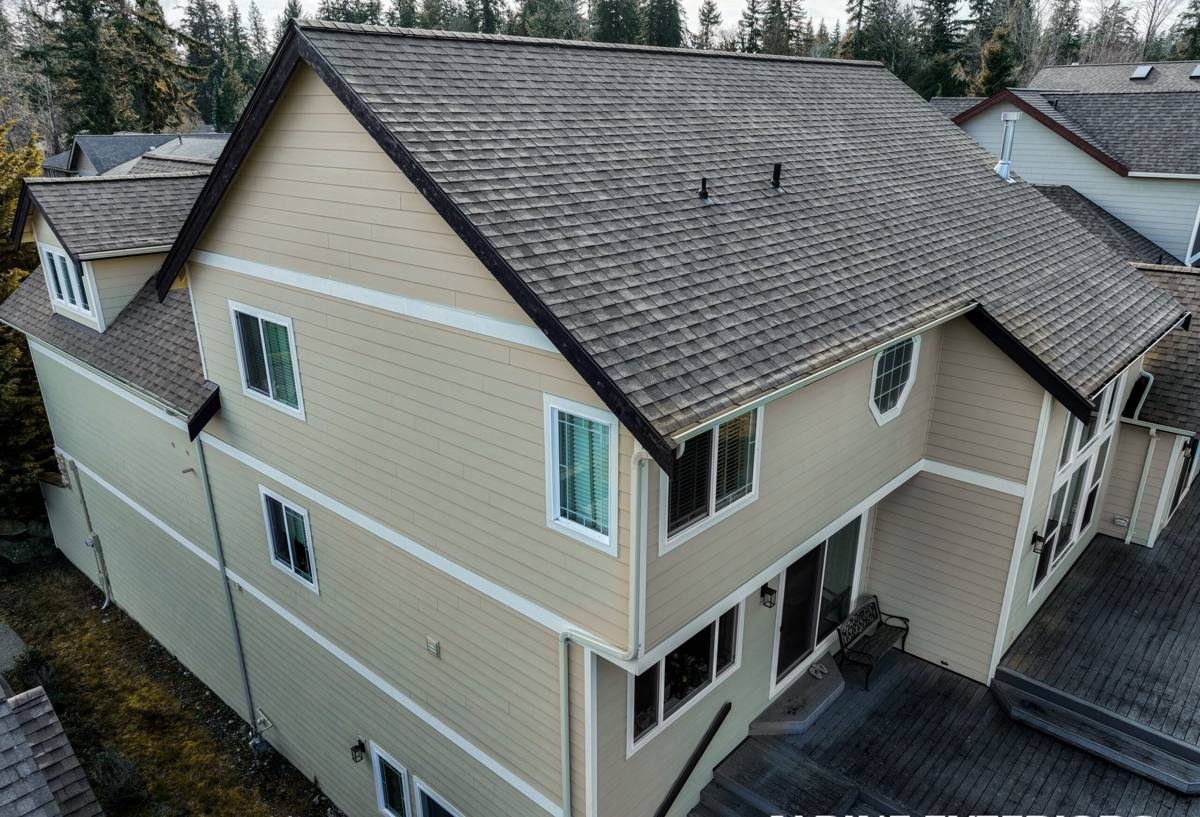
Why Composite Makes Sense for This Climate
Composite decking — a blend of wood fiber and recycled plastic, usually finished with a protective cap layer — doesn't solve every problem above on its own, but it removes the biggest one: it won't rot, splinter, or absorb water into the board itself the way solid wood does over years of shade and dampness. For a lot like most in Edgemoor, that's a meaningful difference over the life of the deck, and it's the main reason we recommend it over wood for this area more often than not.
It's not maintenance-free, and we don't tell customers it is. Composite still needs to be cleaned periodically to keep moss and algae from staining the surface, and the substructure underneath still needs to be framed, flashed, and fastened correctly — a good board on a poorly built frame will still disappoint you. What composite does buy you is a surface that won't cup, crack, or need sanding and refinishing the way wood decking eventually does in a wet, shaded environment.
Capped vs. Uncapped Composite
Not all composite is the same, and the difference matters more in a climate like Edgemoor's than it would in a dry one.
- Capped composite has a plastic wear layer fused around the wood-fiber core, resisting moisture absorption, staining, and fading. This is what we recommend for shaded, moisture-heavy lots close to the water.
- Uncapped composite has an exposed wood-fiber surface. It's generally less expensive up front but more prone to surface moisture absorption, mold growth, and fading over time in a damp, shaded setting.
- Board profile matters too — grooved-edge boards paired with hidden fastener systems behave differently around trapped moisture than face-screwed boards, and the right choice depends on airflow at your site.
We'll walk you through the specific product lines, colors, and warranty terms during your estimate rather than push one brand across every job — the right pick depends on your lot's sun exposure, your budget, and how the deck ties into the rest of the house.
What a Correct Installation Involves Here
Most composite decking problems we get called out to fix aren't a bad board — they're a substructure or detailing mistake that the decking manufacturer's warranty was never going to cover in the first place. In a marine climate, these details aren't optional extras; they're the difference between a deck that lasts two decades and one that needs framing repairs in ten years.
| Detail | Why it matters in Edgemoor |
|---|---|
| Corrosion-resistant fasteners and hardware | Salt air accelerates rust on standard galvanized hardware; stainless or coated fasteners rated for coastal exposure hold up significantly longer |
| Proper ledger flashing at the house connection | Driving rain pushes water into ledger connections; correct flashing keeps it out of the rim joist and siding behind it |
| Joist spacing matched to the board manufacturer's spec | Composite boards flex differently than dimensional lumber; spacing that's fine for wood can cause sagging or gapping in composite over time |
| Ventilation and clearance under the deck | Poor airflow under a low deck traps moisture and speeds up moss growth on the underside and corrosion on hardware |
| Gap spacing between boards | Too tight and debris packs in and holds moisture against the board edge; too wide and small debris and grit fall straight through anyway |
| Framing material | Pressure-treated framing rated for ground contact where relevant, kept correctly separated from composite boards to avoid trapping moisture between the two |
Our Process
We approach every Edgemoor deck the same structured way, whether it's a full replacement or a new build from bare ground:
- On-site assessment. We look at sun exposure, tree cover, existing drainage patterns, and how close the lot sits to the water to gauge salt exposure — that assessment drives the hardware and board recommendation, not a generic default we use everywhere.
- Substructure evaluation or build. If we're replacing an existing deck, we check the ledger connection, joists, and posts before deciding what can be reused safely and what needs to be rebuilt to current standards.
- Drainage and flashing plan. Ledger flashing, any needed under-deck drainage, and clearance for airflow get planned before a single board goes down, not worked out on the fly.
- Installation. Boards, fasteners, and fastening method go in to the manufacturer's spec, not shortcuts, because that spec is what keeps the product warranty valid if something does go wrong down the line.
- Walkthrough and cleanup. We go over care basics for your specific board — cleaning frequency, what not to use on the surface — and leave the site clean before we call it done.
Living With a Composite Deck in a Mossy, Salt-Air Climate
Composite cuts down on maintenance substantially compared to wood, but "low-maintenance" isn't "no-maintenance," especially under Edgemoor's tree canopy and this close to the bay.
A Realistic Care Routine
- Sweep off leaves, needles, and debris regularly during fall and the wetter months so organic matter doesn't sit in board gaps
- Rinse the deck a few times a year with plain water and a soft-bristle brush to keep algae and moss film from establishing
- Use a cleaner rated for composite decking if moss does take hold — avoid pressure washers on high settings, which can damage the cap layer
- Check railing hardware and fastener heads periodically for early rust staining, especially on lots closest to the water
- Keep gutters and downspouts near the deck clear so roof runoff isn't dumping extra water onto or under the deck surface
None of this is heavy labor — it's closer to the upkeep a set of outdoor furniture needs than what a wood deck demands in stripping, sanding, and re-staining every couple of years. Most Edgemoor customers find a couple of cleanings a year is plenty once the deck is a few seasons in.
Why Local Experience in Edgemoor Matters
A contractor who mostly works drier, inland parts of Whatcom County can build a technically sound deck that still underperforms here, simply because they're specifying standard hardware and standard spacing instead of accounting for salt exposure and heavy shade. Working in and around Bellingham's bay-adjacent neighborhoods on a regular basis means we already know which fastener grades actually hold up, how much clearance a shaded deck needs to stay ahead of moss, and where driving rain most often finds its way into a poorly detailed ledger connection.
That local pattern recognition also shortens the assessment on your end. We're not guessing at how your lot will behave over the next ten or fifteen years — we've watched lots with similar sun exposure and similar proximity to the water perform, or fail to perform, over several seasons already.
Questions Worth Asking Before You Hire
Whoever you choose for a composite deck in Edgemoor, it's worth confirming a few things up front before signing anything:
- What fastener and hardware grade are they specifying, and is it rated for coastal or marine exposure?
- Will they inspect and, if needed, upgrade the ledger flashing and connection to the house, or just build on top of what's already there?
- Are they installing to the board manufacturer's spacing and fastening spec so the product warranty stays valid if you ever need it?
- Do they have a specific plan for under-deck ventilation given your lot's shade and drainage pattern?
- Can they explain, in plain terms, why they're recommending one composite product over another for your specific site rather than just their usual default?
If a contractor can't answer the hardware and flashing questions specifically, that's usually a sign the deck is being built to a generic spec rather than to your lot's actual conditions.
Get a Straightforward Estimate
If you're weighing a composite deck for your Edgemoor property, we're glad to come take a look, walk the site with you, and give you a clear picture of what your specific lot needs — no pressure, no generic quote pulled off a price sheet. Use the form below to request a free estimate.