 Sudden Valley Roofing
 Composite Decking Built for Sehome's Weather, Not Just Its Looks
Sehome sits close enough to Bellingham Bay that salt-tinged air is a real factor in how exterior materials age, and it shares the rest of Whatcom County's long stretch of driving rain and low, weak-sun winters. That combination is hard on a deck. Wood grain opens up, fasteners weep rust streaks, and anything shaded by mature trees or a neighboring roofline stays damp long enough to grow moss well into what should be the dry season. Composite decking was designed to shrug off exactly this kind of environment, but only when it's installed correctly for the site it's going into. A composite deck put down without attention to drainage, ventilation, and fastening in a climate like ours will still disappoint the homeowner, just more slowly than a wood deck would.
This page is about doing composite decking right for Sehome specifically — what the climate demands, what a correct installation actually involves, and what our process looks like from first walk-through to final cleanup.
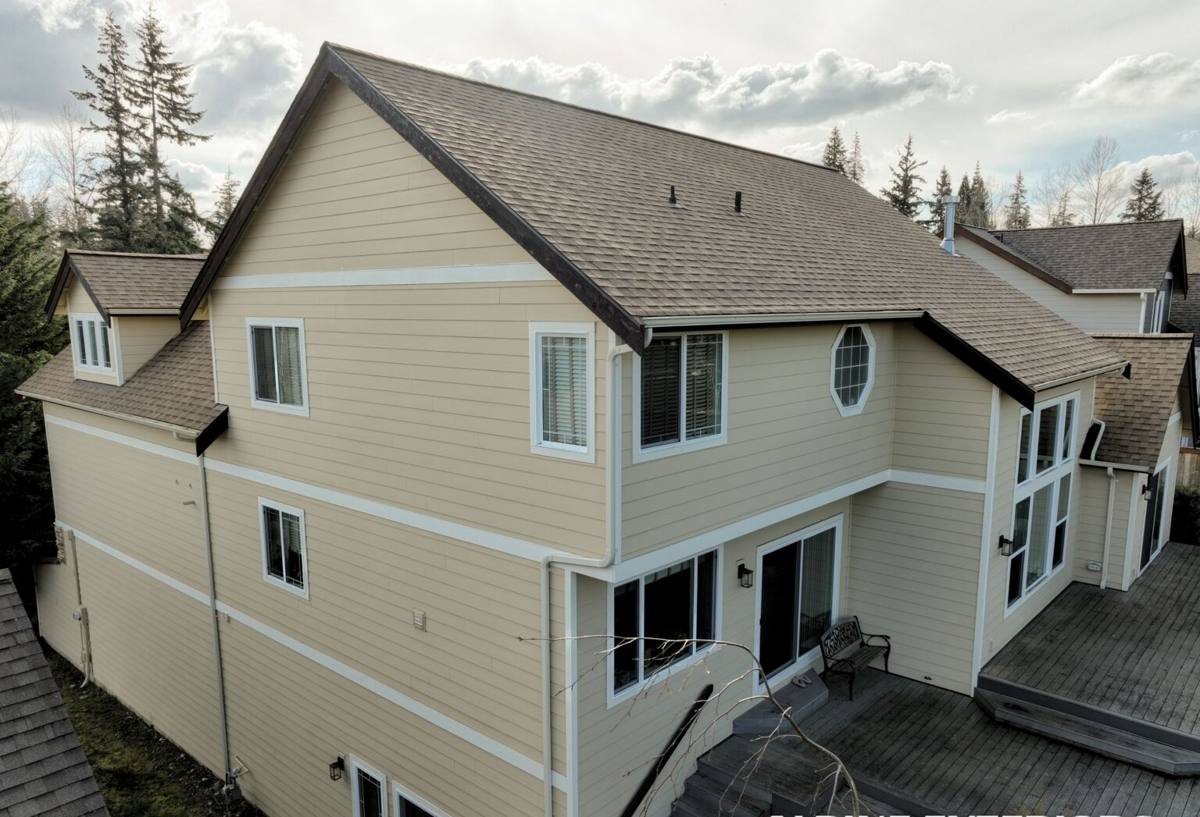
What Whatcom County's Climate Does to an Outdoor Deck
Moisture That Doesn't Let Up
Our wet season runs long. Boards, ledger boards, and joists can stay damp for weeks at a stretch, especially on decks that sit low to the ground, back up to landscaping, or get shaded most of the day. That prolonged moisture is what drives moss and algae growth, softens untreated wood, and corrodes cheap fasteners from the inside out.
Salt Air and Metal Fatigue
Homes closer to the water pick up a fine, near-constant dose of salt in the air. It doesn't damage composite boards the way it can degrade some finishes, but it does accelerate corrosion on hardware, brackets, and screws that aren't rated for coastal exposure. This is one of the most commonly overlooked details on decks built by crews who don't regularly work this area.
A Genuinely Long Moss Season
Between the shade, the moisture, and the mild temperatures, moss and algae in Whatcom County aren't a once-a-year nuisance — they're closer to a year-round condition on decks that don't drain and ventilate properly. A deck surface that stays slick or streaked well past when it "should" have dried out is usually telling you something about the substructure underneath it, not just the surface finish.
Composite vs. Wood vs. Basic Composite: What Actually Holds Up Here
| Material | How It Handles Our Rain and Moss Season | Ongoing Maintenance |
|---|---|---|
| Untreated or budget-treated wood | Absorbs moisture readily; prone to cupping, splitting, and moss growth in shaded, damp spots | Annual sanding, staining, and sealing to keep ahead of rot |
| Basic (uncapped) composite | Better than wood but the exposed surface can still absorb some moisture and stain over time, especially in shade | Periodic cleaning; more prone to surface staining than capped boards |
| Capped composite (cap-stock) | A polymer shell resists moisture absorption, staining, and moss adhesion far better through our wet months | Routine rinsing and occasional cleaning; no sanding or refinishing |
We install capped composite as our standard recommendation for this area precisely because Whatcom County's moisture load is high enough that the difference between capped and uncapped boards shows up within a few wet seasons, not decades.
What a Correct Composite Deck Installation Involves
The Substructure Matters More Than the Boards
Composite decking is only as good as what's underneath it. We use pressure-treated or otherwise moisture-rated framing, and we pay close attention to joist spacing — many composite manufacturers require tighter spacing than traditional wood decking, especially on angled or picture-frame layouts. Skipping this is one of the most common shortcuts we see on decks that later develop bounce, sagging, or board-end problems.
Drainage and Airflow Underneath
A deck that can't shed water and breathe underneath is a deck that stays damp, and damp is what feeds moss. We grade and detail the area under the deck so water has somewhere to go, and we keep joist framing off the ground and clear of trapped debris where the design allows it.
Fasteners and Hardware Rated for This Environment
Given the salt air closer to the water and the sheer amount of moisture exposure inland, we use fasteners and structural hardware rated for coastal or wet-climate use — not the cheapest bin-stock option. Hidden fastener systems, when compatible with the board profile, also reduce the number of surface penetrations where water and grime can collect.
Board Layout and Expansion Gaps
Composite boards expand and contract with temperature more than most homeowners expect. Getting gapping right at butt joints, picture-framed borders, and against the house keeps the deck looking clean instead of buckled a year or two in.
How Our Process Works
- On-site assessment. We walk the space, check sun and shade exposure, existing drainage, and ledger/house attachment conditions.
- Framing evaluation. On replacement projects, we inspect existing framing for rot or moisture damage before deciding what can be reused versus what needs to be rebuilt.
- Material selection with you. We talk through board profile, color, and capped vs. basic composite based on your budget and how much sun or shade the deck actually gets.
- Installation. Framing and drainage detailing first, then decking, fascia, and any railing or stair work.
- Final walkthrough and cleanup. We check for level, secure fastening, and clean gap lines, and we haul away debris and offcuts.
Choosing the Right Board and Color for a Damp, Shaded Site
Not every composite product suits every yard. Before you pick a color or profile, it's worth being honest about how your specific deck site behaves:
- How much direct sun does the deck get, and for how many hours a day in summer versus winter?
- Is it shaded by trees, fencing, or the house for most of the day — a common Sehome condition on smaller, tree-lined lots?
- Does the ground or landscaping below the deck stay damp longer than the rest of the yard?
- Will furniture, planters, or grills sit in one spot long-term, trapping moisture underneath them?
- Do you want a lighter color that shows less contrast with pollen and debris, or a darker tone that hides shade-related discoloration better?
Lighter composite tones tend to show dirt and pollen more visibly, while darker tones can run warmer in direct sun but generally mask the kind of surface staining that shows up faster in shaded, damp corners of a yard.
Maintenance: What Composite Actually Saves You From, and What It Doesn't
Composite decking is not maintenance-free, and we won't tell you otherwise. What it does eliminate is the annual sanding, staining, and sealing cycle that wood decks need to survive our wet season. What it still needs is periodic rinsing to clear pollen, leaf debris, and the fine grime that our damp air deposits over time, plus occasional cleaning in shaded spots that hold moisture longer. A deck that's installed with proper drainage and airflow underneath needs far less of this than one that isn't — which circles back to why the installation details matter as much as the board itself.
What Affects the Cost of a Composite Deck
| Factor | Why It Matters |
|---|---|
| Deck size and shape | Larger decks and angled or multi-level layouts require more material and labor |
| Framing condition | Replacing rotted or undersized existing framing adds cost but is not optional if it's compromised |
| Board tier (basic vs. capped composite) | Capped boards cost more up front but resist moisture and staining better through our wet season |
| Railing and stair work | Composite or metal railing systems and multi-step stair runs add material and labor |
| Site access | Tight side yards, elevation changes, or limited equipment access can affect labor time |
Exact numbers depend on your specific deck, which is why we prefer to walk the site and give you a real number rather than a rough guess over the phone.
Why It Matters to Hire a Crew That Already Works in Sehome
A crew that regularly works this part of Whatcom County already knows how much shade a given lot type tends to hold, how far the salt air reaches inland, and how long moss actually stays a problem here versus in a drier climate. That local familiarity shows up in small decisions — joist spacing, hardware selection, drainage detailing — that don't cost much more to get right the first time but cost real money to fix later. We'd rather spend the extra attention up front during the assessment and framing stages than have a homeowner call us back in two years about a soft spot or a moss-covered corner that never should have stayed wet that long.
Let's Look at Your Deck
If you're planning a new composite deck or replacing a tired wood one in Sehome, we're happy to walk the site, talk through board options for your yard's sun and shade conditions, and give you a straightforward, no-pressure estimate. Use the form below to get started.