 Sudden Valley Roofing
 Building New in Cordata? Get the Windows Right the First Time
New construction is the one point in a home's life where windows can be installed exactly to spec, with full access to the rough opening, the sheathing, and the weather-resistive barrier before anything closes it in. Get that sequencing right and the windows perform for decades. Get it wrong — even with a good window unit — and you're chasing leaks, fogged glass, or soft trim within a few winters. In Cordata and the broader Whatcom County area, where homes deal with a marine-influenced climate, wind-driven rain, and a long moss season on north-facing surfaces, that installation sequencing matters more than the window brand on the label.
Sudden Valley Roofing Co installs new-construction windows for builders, general contractors, and homeowners managing their own builds in the Cordata area. This page covers what a correct install actually involves here, what to ask for, and why local experience changes the outcome.
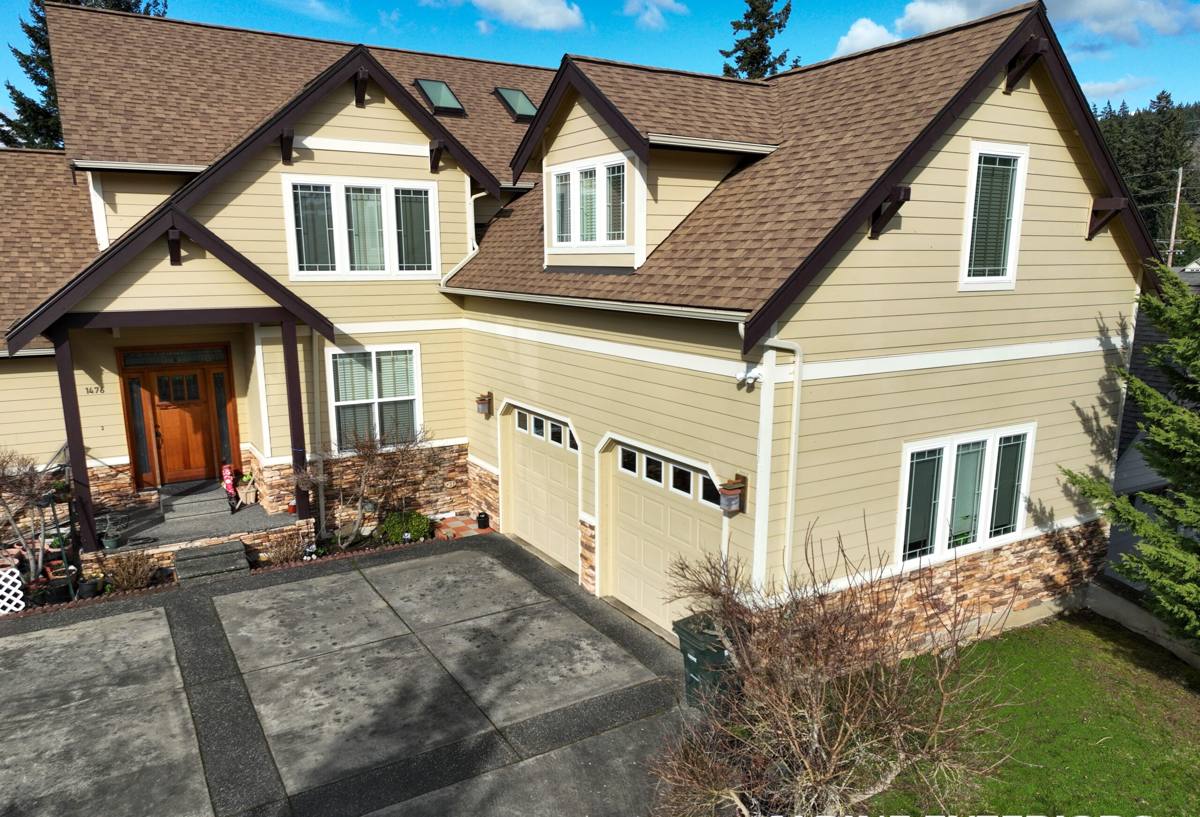
What Cordata's Climate Actually Does to a New Window Opening
Western Washington's coastal and marine climate isn't dramatic in any single event — it's the accumulation. Long stretches of low-intensity, wind-pushed rain test flashing details that a short, heavy downpour never would. Moisture sits against north and west-facing walls for months at a time. Add salt-influenced air moving in off the Sound and Bellingham Bay on windy days, and you've got conditions that slowly work on anything installed loosely or out of sequence.
The three things that actually fail
- Flashing sequencing — if the sill pan, side flashing, and head flashing aren't layered correctly (shingle-style, bottom to top) water finds the seams eventually, not immediately.
- Sealant used as a substitute for flashing — caulk fails under UV and thermal cycling; it's a supplement to proper flashing, never a replacement for it.
- Moss and organic buildup on sills and trim — this region's damp shade holds moisture against exterior wood and composite trim longer than sunnier climates, which is why sill material and drainage detail matter as much as the window itself.
None of this is unique to Cordata specifically, but it's a defining feature of building anywhere in Whatcom County, and it's why a new-construction install here needs the same care as a re-roof or siding job — it's building envelope work, not just hanging glass in a hole.
What a Correct New-Construction Window Install Involves
New-construction windows (as opposed to retrofit/replacement units) have a nailing fin and are designed to be integrated directly into the wall's weather-resistive barrier during framing. That integration is where the job is won or lost.
The sequence we follow
- Verify rough opening dimensions and squareness before the window ever arrives on site — undersized or out-of-square openings cause more callbacks than any other single issue.
- Install a sloped sill pan flashing so any water that does get past the window has a path back out, not into the framing.
- Set the window level, plumb, and square, shimmed at the manufacturer's specified points — not just at the corners.
- Fasten through the nailing fin per the window manufacturer's schedule, not a generalized "close enough" pattern.
- Flash the sides, then the head, in proper shingle-lap order over the weather-resistive barrier so every layer sheds water onto the layer below it.
- Seal and back-caulk where specified — as a supplement to flashing, not instead of it.
- Insulate the gap between frame and rough opening with a low-expansion foam or backer rod, avoiding high-expansion foam that can bow window frames.
Skip or shortcut any one of these steps and the window itself — no matter how good — is compromised. This is also why we don't treat window installation as a side task tacked onto framing crews; it's a distinct trade with its own failure points.
Why a Local Cordata Crew Matters Here
Windows sold nationally are engineered to a baseline; how they actually perform depends on install detail matched to regional conditions. A crew that installs primarily in dry, low-wind climates develops habits — tighter tolerances on flashing laps, more reliance on sealant, less attention to sill drainage — that don't hold up here. Working new construction across Whatcom County day in and day out means our crew is used to:
- Inspecting the weather-resistive barrier and sheathing before the window ever goes in, and flagging problems to the builder before they're buried behind trim.
- Coordinating flashing details with siding and roofing trades so water management is continuous around the whole envelope, not just at the window opening.
- Selecting sill and trim materials that hold up to sustained damp shade rather than just short exposure.
- Timing install around the region's wet stretches so the opening isn't left exposed longer than necessary.
That's the practical case for hiring a crew that already works this area regularly, rather than one working from a generic install checklist.
Window Type and Material Considerations for New Builds Here
We don't push a single brand or frame material — the right choice depends on the home's design, budget, and exposure. What we do insist on is being straightforward about trade-offs, because in this climate the wrong call shows up as a maintenance headache within a few years, not a catastrophic failure.
| Frame Material | How It Handles Local Conditions | Trade-Off to Know |
|---|---|---|
| Vinyl | Handles moisture well, low maintenance, good value | Limited color/finish flexibility, can flex on very large openings |
| Fiberglass | Very stable dimensionally, holds up to damp cycling with minimal expansion/contraction | Higher upfront cost than vinyl |
| Aluminum-clad wood | Attractive interior wood look with a weather-resistant exterior shell | Cladding seams need correct flashing detail; interior wood needs interior humidity control |
| Bare wood | Traditional appearance, repairable | Highest maintenance burden in a wet, mossy climate — needs regular refinishing |
For new builds in Cordata, we most often see vinyl and fiberglass specified because they minimize long-term maintenance against this region's moisture load, but the right answer depends on the home's design and the owner's willingness to maintain exterior wood finishes.
Glass and Performance Specs Worth Understanding
Beyond frame material, a few glass and assembly specs actually matter for how a window performs in Whatcom County's climate:
What to look for
- Low-E coatings — help manage heat loss through our long heating season without meaningfully affecting the amount of natural light.
- Argon or krypton gas fill — improves insulation value between panes; argon is standard and cost-effective for most residential applications.
- Warm-edge spacer systems — reduce condensation risk at the glass edge, which matters in a climate with sustained humidity and cooler indoor-outdoor temperature differentials.
- NFRC performance labels — U-factor and Solar Heat Gain Coefficient ratings let you compare windows on an apples-to-apples basis rather than marketing claims.
We can walk through these specs against your specific plans and orientation — south and west-facing openings often benefit from different glass packages than north-facing ones in this climate.
Our Process, Start to Finish
For builders and homeowners managing new construction in Cordata, the process generally looks like this:
- Plan review — we review window schedules and rough opening details against the framing plans before anything is ordered.
- Coordination with your builder or GC — we schedule around framing completion and sheathing/WRB installation so openings are ready when we arrive.
- Install — full flashing, fastening, and sealing sequence as outlined above, with photos of flashing layers before they're covered by siding or trim.
- Inspection walkthrough — we walk the openings with you or your builder before siding closes them in, so any adjustment happens while it's still accessible.
We're comfortable working directly with general contractors as a subcontracted trade, or directly with owner-builders managing their own project.
What to Ask Any Contractor Installing Your New-Construction Windows
Whether you hire us or someone else, these questions separate a careful installer from one who's just hanging units:
- Will you install a sloped sill pan on every opening, not just where it's convenient?
- What's your flashing sequence, and can you walk me through it before you start?
- Do you follow the specific manufacturer's fastening and shimming schedule for the windows we're using?
- How do you handle sealant — as a backup to flashing, or as the primary water barrier?
- Will you document flashing details with photos before siding covers them?
If a contractor can't answer these clearly, that's worth noting before the openings get buried behind finish materials.
Get an Estimate for Your Cordata Build
If you're framing a new home or addition in the Cordata area and need windows installed correctly the first time, we're glad to review your plans and put together a straightforward estimate — no pressure, no upsell. Use the form below to get started.