 Sudden Valley Roofing
 Ferndale's Climate Is Hard on a Roof — Here's Why
Ferndale sits close enough to the water and open farmland that homes here take on a specific combination of weather stress: salt-laden air drifting in off the Salish Sea, long stretches of driving, wind-blown rain, and a moss season that can run from early fall through late spring under the Pacific Northwest's persistent cloud cover. None of these on their own is unusual for Whatcom County. Together, applied year after year, they're what actually wears out a roof — not one big storm, but decades of slow, steady exposure.
Salt air accelerates corrosion on any exposed metal — fasteners, flashing, panel edges — faster than it would inland. Driving rain finds every weak seam, lap, and penetration, especially on roofs with a lot of valleys, dormers, or low-slope sections. And moss doesn't just sit on a roof looking bad; given a foothold in a seam or under a lifted shingle tab, it holds moisture against the roofing material and the deck underneath, which is where rot and leaks actually start. A roof built or maintained without these three things in mind will underperform in Ferndale even if it would have held up fine somewhere drier or further from the water.
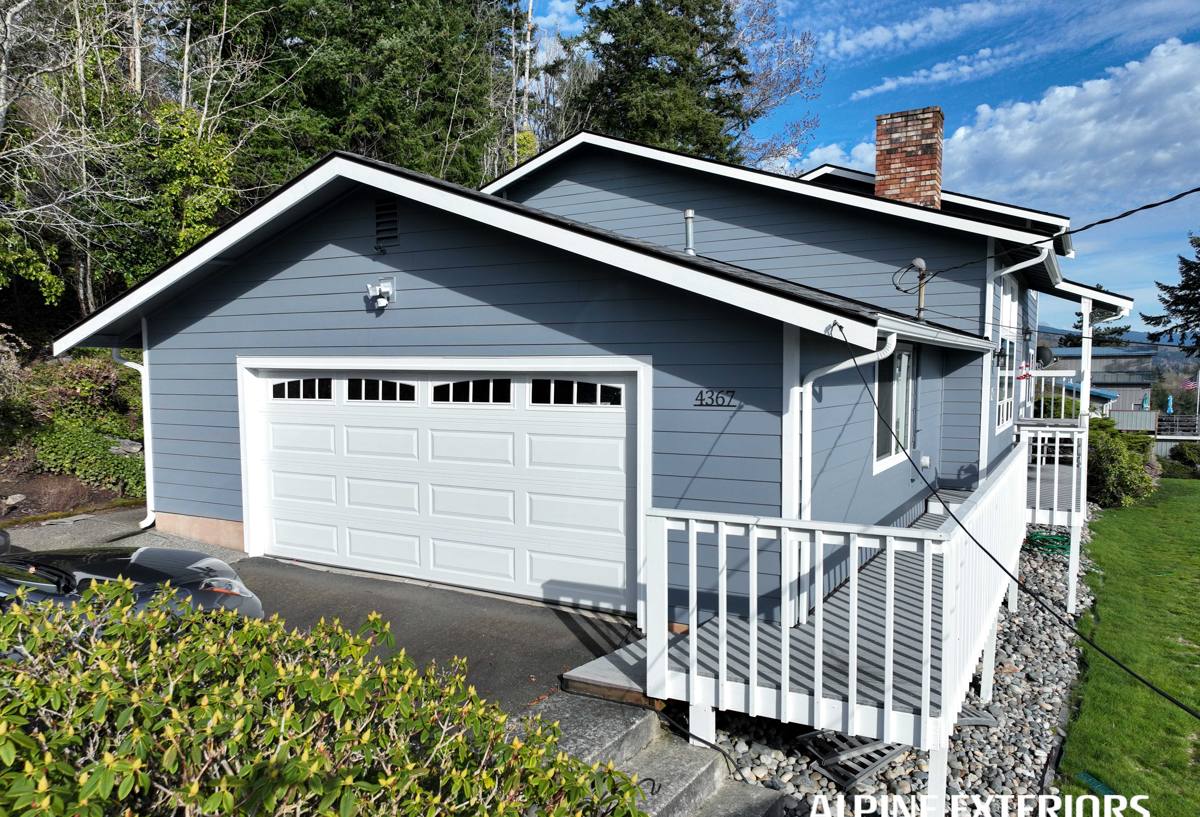
Why Metal Roofing Fits This Environment
Metal roofing isn't the right choice for every home or every budget, but for Ferndale's climate specifically, it addresses the three stressors above better than most alternatives when it's specified and installed correctly.
Rain Shedding and Wind Performance
A properly installed metal roof — especially standing seam — has far fewer exposed laps and fasteners for wind-driven rain to work into compared to a shingle roof. Panels run in long, continuous runs from ridge to eave, which reduces the number of joints where water intrusion typically starts. That matters on a coastline where storms regularly bring rain sideways, not straight down.
Moss Resistance
Moss needs a rough, porous surface and standing moisture to establish itself. A smooth painted metal panel gives it much less to grip, and steep or well-pitched metal roofs shed water fast enough that moss struggles to get started in the first place. It's not moss-proof — spores can still settle in valleys, around penetrations, or near overhanging trees — but it's a meaningfully harder surface for moss to colonize than asphalt shingles or wood shakes, which both have textured, absorbent surfaces moss favors.
Longevity Against Salt Air
This is the one place metal roofing requires the most care, not the least. Bare or poorly coated metal corrodes in salt air. A correctly specified system — the right base metal, the right factory finish, and corrosion-resistant fasteners — is built to handle that exposure for decades. A system where any of those three are wrong will corrode faster near the coast than the same product would ten or twenty miles inland.
Panel Systems: What We Typically Recommend and Why
| System | Fastening | Best For | Coastal Considerations |
|---|---|---|---|
| Standing seam | Concealed clips, no exposed fasteners on the field | Homes wanting maximum longevity and clean lines | Best rain and salt-air performance; fewer failure points |
| Exposed-fastener panel | Screws through the panel face | Budget-conscious projects, outbuildings, shops | Requires periodic fastener inspection; gaskets degrade over time |
| Stone-coated steel | Interlocking panels, concealed fasteners | Homeowners wanting a shingle or tile look with metal durability | Good moss resistance; coating quality matters near salt air |
For most Ferndale homes, especially anything within a few miles of open water or exposed to prevailing wind, we lean toward standing seam or a quality stone-coated system. Exposed-fastener panels aren't wrong, but they carry more long-term maintenance in a salt-air environment because every screw penetration is a potential future leak point as gaskets age.
What a Correct Installation Actually Involves
Metal roofing looks simple from the ground, but a lot of the work that determines whether it lasts happens in details that never show once the roof is done.
- Deck inspection and repair: Any soft, delaminated, or moss-damaged decking gets replaced before a single panel goes on — covering a bad deck with new metal just hides the problem.
- Underlayment: A high-temp synthetic underlayment, with self-adhered ice-and-water membrane at eaves, valleys, and penetrations — the areas where wind-driven rain is most likely to push past the panel seams.
- Corrosion-resistant fasteners and flashing: Matched to the panel's base metal so you don't get galvanic corrosion between dissimilar metals, which is a common cause of premature failure near salt air.
- Ventilation: Proper intake and exhaust airflow so moisture doesn't get trapped under the panels, which both extends roof life and prevents condensation issues in the attic.
- Panel expansion allowance: Metal expands and contracts with temperature swings; clips and fastener spacing need to account for that movement so panels don't oil-can or work loose over time.
- Detailed flashing at every penetration: Chimneys, vents, skylights, and valleys are where most roof leaks actually originate, metal or otherwise — this is where careful workmanship matters most.
How Our Process Works
1. On-Site Inspection and Measurement
We walk the roof (or use a close visual and measurement process where access is limited), check the deck condition where visible, note valleys, penetrations, ventilation, and any existing moss or moisture damage, and take accurate measurements for material ordering.
2. Material and System Selection
Based on the home's exposure, roof pitch, and your budget, we walk through panel type, gauge, and finish options and explain the trade-offs honestly — including where a lower-cost option is a reasonable choice and where it isn't for your specific situation.
3. Tear-Off or Overlay Decision
In most cases we recommend a full tear-off so the deck can be inspected and repaired properly — this is especially important on older roofs with moss history, since trapped moisture damage isn't always visible from above. Overlay is sometimes appropriate on sound, dry decks, and we'll tell you plainly if that applies.
4. Installation
Deck repair, underlayment, and ice-and-water membrane go down first, followed by panel installation working from eave to ridge, with flashing detailed at every penetration and transition as we go rather than patched in afterward.
5. Cleanup and Walkthrough
Job site and yard are cleaned of debris and fasteners, and we walk the finished roof and attic access with you so you know what was done and what to watch for going forward.
Maintenance That Actually Matters Here
A metal roof is lower-maintenance than shingles, not maintenance-free, especially in this climate.
- Keep gutters and valleys clear of needles and debris so water has a clear path off the roof — clogged valleys are a common spot for moss to start and water to back up.
- Trim back overhanging branches where practical; shade and leaf litter are the biggest drivers of moss growth, more than the roofing material itself.
- Have fasteners and sealant checked periodically on exposed-fastener systems — this is the maintenance item most specific to salt-air environments.
- Rinse off accumulated salt film and debris occasionally if the home is close to open water or exposed to onshore wind.
- Address any moss you do see early, before it establishes under a seam or lifts a panel edge.
What Drives the Cost
| Factor | Why It Matters |
|---|---|
| Panel system and gauge | Standing seam with heavier gauge steel costs more upfront but generally needs less long-term maintenance in salt air |
| Roof complexity | Valleys, dormers, and multiple penetrations add labor and flashing work regardless of panel type |
| Tear-off vs. overlay | Tear-off costs more but lets us inspect and repair the deck — often worth it on older or moss-affected roofs |
| Finish and coating quality | Better factory finishes resist salt-air corrosion and fading longer, which matters more here than inland |
| Ventilation upgrades | Adding or correcting intake/exhaust venting protects the deck and extends roof life |
We won't quote a number without seeing the roof, but broadly, metal roofing runs higher upfront than asphalt shingles and lower than the highest-end tile or slate systems — the payoff is in reduced maintenance and a much longer service life, which matters more in a climate that's actively working against a roof year-round.
Why a Crew That Already Works Ferndale Matters
Roofing crews that mostly work inland or in drier climates don't always specify fasteners, flashing, and coatings with salt-air corrosion in mind, because they don't need to where they usually work. A crew based in and around Whatcom County — working Ferndale, Sudden Valley, and the surrounding area regularly — sees how roofs here actually age: where moss tends to establish first, which exposures take the worst of the driving rain, and which material choices hold up over years, not just on the spec sheet. That local pattern recognition is hard to replicate from a one-off job, and it's the difference between a roof that's technically installed correctly and one that's installed correctly for this specific place.
Being local also means straightforward things: we're reachable if a question comes up after the job, we know the local permitting process, and we're not traveling in from out of the area to do the work.
Signs Your Roof Needs Attention
- Visible moss growth, especially in valleys or on north-facing slopes that stay shaded and damp
- Rust streaking or discoloration around fasteners or flashing on an existing metal roof
- Granule buildup in gutters, on a shingle roof, signaling accelerated wear
- Soft spots, sagging, or staining on the attic side of the deck
- Lifted, curling, or loose panel edges or shingle tabs after a windy season
- Daylight visible around chimney, vent, or skylight flashing
If you're seeing any of these, or you're simply due for a roof replacement and want to understand whether metal is the right call for your home, we'll come take a look. The estimate is free, there's no pressure, and we'll give you an honest read on what your roof actually needs — use the form below to get started.