 Sudden Valley Roofing
 Storm Damage Roof Repair for Happy Valley Homes
Happy Valley sits close enough to Sudden Valley and Lake Whatcom that it shares the same weather pattern year-round: wet winters, wind events that funnel through the tree line, and a moss season that never really ends. When a storm rolls through Whatcom County, homes in this pocket tend to take damage in the same predictable spots — ridge caps, valleys, and anywhere wind has a chance to lift a shingle edge. This page covers what storm damage repair actually looks like for a Happy Valley roof, not a generic checklist written for a different climate.
We're not asking you to take our word for the damage or the fix. A proper storm repair starts with a clear explanation of what's wrong, why it happened, and what it takes to correct it — in plain language, before any work begins.
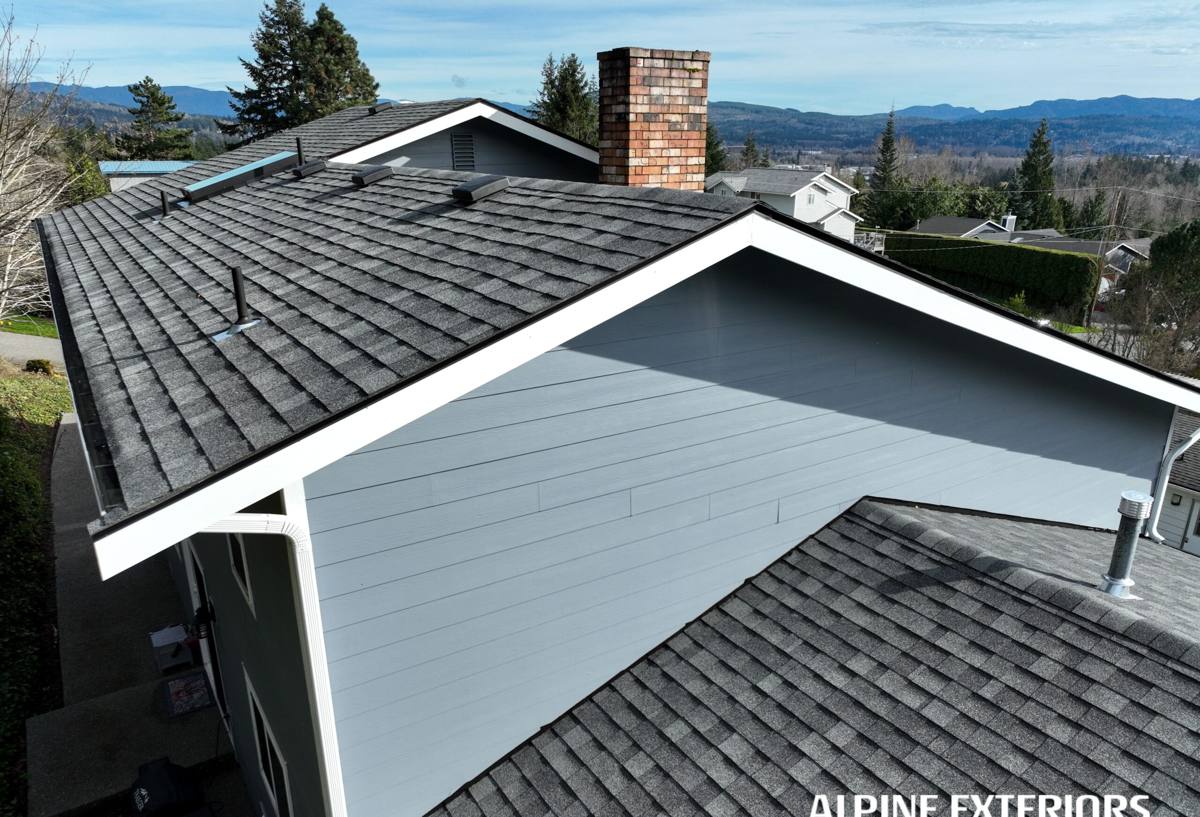
Why Happy Valley Roofs Take a Different Kind of Beating
This isn't a coastal salt-spray zone in the way a beach town is, but the broader Whatcom County climate still stacks several stressors on top of each other, and Happy Valley gets all of them:
- Driving rain: Storms here often come in sideways rather than straight down, which pushes water up under shingle tabs and into laps that were never designed to handle wind-driven moisture.
- Long moss season: Shade from surrounding trees and consistently damp conditions mean moss and moisture-loving growth get a long runway to establish on north-facing slopes and shaded valleys.
- Wind funneling: Homes tucked among trees and along the lake corridor can see gusty, unpredictable wind loading that catches shingle edges and flashing differently than open, exposed sites.
- Temperature swings: Cold nights followed by wet, milder days keep roofing materials expanding and contracting, which loosens fasteners and opens seams over time.
None of these stressors is dramatic on its own. The problem is that they compound — a roof that's already softened by years of trapped moisture under moss is far more vulnerable the next time a real wind event comes through.
What Storm Damage Actually Looks Like Here
Storm damage in this area rarely announces itself with a hole in the roof. More often it shows up as:
- Shingles that are lifted, creased, or missing entirely along ridges and edges
- Flashing that's been bent, separated, or peeled back around chimneys, vents, and valleys
- Granule loss that leaves shingles thin and brittle in the wind-exposed sections
- Soft or discolored decking visible from the attic after water has been getting in for a while
- Gutters pulled loose or overwhelmed, sending water back up under the roof edge
What a Correct Storm Repair Involves
A storm repair done right isn't just "replace the shingles that blew off." It's an inspection process that treats the visible damage as a clue, not the whole story.
1. Full Roof Assessment, Not Just the Obvious Spot
Wind and rain rarely damage only the area you can see from the ground. We walk the whole roof plane, check ridges, valleys, penetrations, and the underside in the attic where accessible, because a lifted shingle two slopes away from the "obvious" damage is often where the real leak started.
2. Distinguishing Storm Damage from Pre-Existing Wear
This matters for your insurance claim and for your wallet. A shingle that failed because moss had been holding moisture against it for two years is a maintenance issue, not storm damage — and we'll tell you which one you're looking at rather than blur the line to pad a claim.
3. Matching Materials and Fastening for Wind Exposure
Repairs get fastened and sealed to handle the same wind-driven rain that caused the damage in the first place, not just patched to look right from the street. That includes proper nail placement, correct flashing laps, and sealing details that account for how water actually moves on a wind-exposed slope.
4. Checking Decking and Underlayment, Not Just Shingles
If water has been getting under the roof surface for any length of time, the decking underneath needs to be checked for soft spots or rot before new shingles go back down. Covering damaged decking with new shingles just hides the problem until it's bigger and more expensive.
Our Process for Happy Valley Storm Calls
| Step | What Happens | Why It Matters |
|---|---|---|
| Initial contact | We ask what you saw, when the storm hit, and what symptoms you're noticing indoors | Helps us prioritize active leaks and bring the right materials the first visit |
| On-site inspection | Full roof walk, attic check where accessible, photos of damage areas | Confirms scope before any work or estimate is finalized |
| Written estimate | Plain-language breakdown of what's damaged, what's wear, and repair options | You know what you're paying for and why, before we start |
| Repair work | Matched materials, proper flashing and fastening for wind exposure | Fixes the cause, not just the visible symptom |
| Final check | Walk the repair with you, confirm decking and flashing are sound | No surprises after the crew leaves |
Moss, Drainage, and the Slow Damage Between Storms
Storm damage and moss damage are often the same conversation on a Happy Valley roof, just at different speeds. A storm causes sudden, visible damage. Moss causes slow damage that sets the roof up to fail badly the next time wind and rain show up together. If we're already on your roof for storm repair, it's worth addressing moss and drainage issues in the same visit rather than treating them as separate problems down the road.
What We Look At Beyond the Storm Damage Itself
- Moss buildup on shaded, north-facing slopes and in valleys where debris collects
- Gutters and downspouts — clogged or undersized gutters push water back toward the roof edge and fascia
- Ventilation — a roof that can't breathe holds moisture longer after every rain, which speeds up moss growth and shingle fatigue
- Fastener condition on older sections, since repeated temperature swings work nails loose over years
Repair vs. Replacement: How We Help You Decide
Not every storm-damaged roof needs a full replacement, and not every roof is worth repairing again. The honest answer depends on the roof's age, how much of it is affected, and what we find once we're actually up there.
| Factor | Leans Toward Repair | Leans Toward Replacement |
|---|---|---|
| Age of roof | Under roughly 10–12 years | Near or past expected material lifespan |
| Extent of damage | Isolated to one or two areas | Spread across multiple slopes |
| Decking condition | Solid, dry decking underneath | Soft or rotted decking found in multiple spots |
| Prior repair history | First or second repair on this roof | Roof has needed repeated patching over the years |
| Moss/moisture history | Recently maintained, minimal moss | Long-term moss buildup with underlying wear |
We'll walk you through where your roof lands on that scale honestly. A repair that's likely to fail again within a year or two isn't a good use of your money, and we'll say so.
Insurance and Documentation
If you're filing a storm damage claim, documentation matters. We provide clear photos and a written description of the damage that separates storm-caused issues from pre-existing wear, which is exactly what an adjuster needs to see. We're not a public adjuster and won't inflate a claim, but we will make sure the legitimate storm damage on your roof is documented accurately so you're not shortchanged.
What to Check After a Storm — Before You Call Anyone
A quick homeowner check can help you describe the problem accurately and know how urgent it is:
- Look for shingle pieces or granules in the yard, gutters, or driveway after wind events
- Check ceilings and upper closets for new water stains or damp spots
- From the ground, look for visibly lifted or missing shingles, especially along ridges and edges
- Check gutters for overflow marks or debris buildup that could be forcing water back under the roof edge
- Note the date and approximate wind speed or storm severity if you can — it helps with both repair diagnosis and insurance documentation
If you see active water intrusion inside the home, that's the point to call rather than wait — a tarp or temporary patch can prevent a small repair from becoming a decking replacement.
Why a Crew That Already Works Happy Valley Matters
Roofing crews that only pass through occasionally don't have a feel for how this specific pocket of Whatcom County behaves — which slopes hold moss longest, which wind directions cause the most lifting, or how drainage tends to back up on these lots. A crew that already works in Sudden Valley and the surrounding Happy Valley area has seen the same failure patterns on enough roofs to know what to check first, and that translates into faster, more accurate diagnosis instead of guesswork.
It also means we're not disappearing after the invoice is paid. If a repair needs a follow-up check after the next big storm, we're local enough for that to be a normal request, not a hassle.
Get a Free, No-Pressure Estimate
If your Happy Valley home has visible storm damage, or you just want a roof checked out after a rough stretch of weather, fill out the form below for a free estimate. We'll give you a straight assessment of what's damaged, what's simply worn, and what it actually takes to fix it right.