 Sudden Valley Roofing
 Why Lake Whatcom Homes Wear Out Siding Differently
Homes around Lake Whatcom sit in a pocket of Whatcom County that gets more of everything: more tree cover, more shade, more standing moisture in the air, and more of the marine-influenced weather that rolls in off the Puget Sound region and settles into the lake basin. That combination is hard on exterior siding in ways that don't show up the same way on a house in a drier, more open part of the county. Wood-adjacent products soften. Paint fails early on south and west exposures that take direct rain. Moss and algae get a foothold on anything that stays damp for more than a day or two, which around this lake is most of the year.
We've replaced siding on enough Sudden Valley and Lake Whatcom properties to know the failure patterns aren't random. They're driven by three things every home here deals with: heavy tree canopy that keeps siding shaded and slow to dry, driving rain that gets pushed sideways by wind off the water, and a moss season that, realistically, runs most of the year in the shadier lots. Any siding replacement plan for this area has to be built around those three facts, not around a generic siding job that happens to be located here.
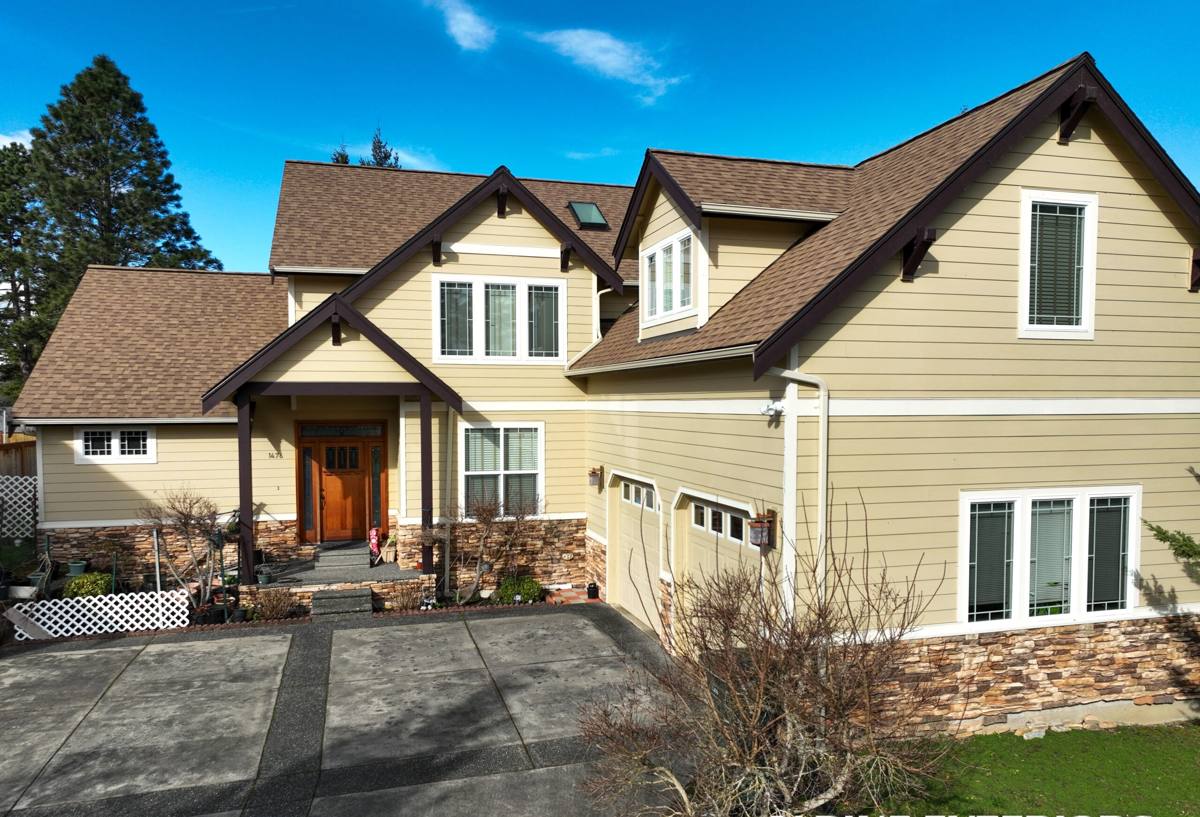
What "Correct" Siding Looks Like in This Climate
A siding job that's correct for Lake Whatcom isn't just about the product on the wall — it's about what's underneath it and how it's detailed. We see a lot of the same shortcuts on older homes in this area, and they're worth understanding before you plan a replacement.
Water Management Comes First
Before any new siding goes up, the water-resistive barrier and flashing details matter more here than almost anywhere else in the county. Homes tucked under tree cover near the lake stay damp longer after a storm, so any gap in the house wrap, any missed kick-out flashing at a roof-to-wall intersection, or any window trim without proper head flashing becomes a slow leak that rots sheathing behind perfectly good-looking siding. We open up the wall assembly during a siding replacement specifically to check and correct these details — it's often more important than the siding brand itself.
Ventilation and Drying
Because so many Lake Whatcom lots are shaded, wall assemblies here dry out slower after wetting events. A rainscreen gap (a small ventilated space between the siding and the water barrier) matters more here than on a home in full sun, since it gives moisture a path to escape instead of sitting against the sheathing.
Moss and Algae Resistance
Product finish matters. A factory-applied, baked-on finish resists the kind of biological growth that eats through field-applied paint within a few seasons in this environment. We'll talk about why that's the core reason we standardized on one product family later in this page.
Our Siding Replacement Process for Lake Whatcom Properties
Every siding replacement we do follows the same core sequence, adjusted for what we find once the old siding comes off.
- Inspection and moisture check — we look at the current siding, trim, and any visible staining or soft spots before quoting, and we're upfront if we suspect hidden rot that won't show until demo.
- Tear-off and sheathing assessment — old siding comes off in sections so we can evaluate the sheathing and framing underneath as we go, rather than guessing from the outside.
- Repair of any rot or damage — damaged sheathing, framing, or window bucks get replaced before anything new goes back on. We don't cover over soft wood.
- Water-resistive barrier installation — a new, continuous barrier with properly lapped and taped seams, sealed penetrations, and correct flashing at every window, door, and roof intersection.
- Rainscreen / drainage plane — furring or a manufactured drainage mat where the wall assembly and budget call for it, especially on shaded, north- and west-facing walls.
- Siding installation to manufacturer spec — correct fastener type and spacing, proper clearances at grade and roof lines, and joints sealed or flashed per the product's installation manual, not shortcuts.
- Trim, caulking, and final detail work — the small stuff that determines whether water sheds away from the house or finds its way in over the next decade.
Why We Install Only James Hardie Fiber Cement
We get asked why we don't offer vinyl, LP SmartSide, or one of the other fiber cement brands on the market. The honest answer is that we tested our standards against this specific climate — heavy shade, driving rain, long wet seasons — and one product held up to the standard we're willing to put our name behind.
James Hardie's fiber cement is non-combustible, dimensionally stable in wet-dry cycling, and comes with a factory-applied ColorPlus finish that's baked on rather than field-painted. That finish is a big part of why it resists the moss and algae growth that plagues shaded lake-adjacent homes — it's simply harder for organic growth to get a grip on than a field-applied paint film that starts breaking down within a few years in this environment. Hardie also engineers specific product lines (their HZ5 line, for example) for wetter, cooler climates like ours, which is not something every siding manufacturer does.
Vinyl siding can warp and gap over time as it expands and contracts, which becomes a bigger issue on walls that see constant wet-dry cycling. LP SmartSide and other wood-strand products are engineered wood — meaning if the water-resistive barrier or a caulk joint fails and moisture gets behind the panel, that wood-based substrate is more vulnerable to swelling and degrading than a cement-based product. None of these are products we'd call bad outright — they have real uses and reasonable installations elsewhere. They're just not the product we're willing to warranty and stand behind on a lake-adjacent, tree-shaded, high-moisture property like the ones we see around Lake Whatcom and Sudden Valley.
Cost Factors for a Lake Whatcom Siding Replacement
Every home is different, but the line items that move a siding replacement quote up or down are consistent. We don't publish fixed prices because a lot of these factors only become clear once we're on-site or have opened up a section of wall.
| Factor | Why It Matters Here |
|---|---|
| Extent of hidden rot | Shaded, damp lots have a higher chance of sheathing or framing damage behind old siding that isn't visible until tear-off |
| Home size and wall complexity | Dormers, multiple gables, and cut-up wall planes (common on lake-view homes) add labor time and trim detail |
| Rainscreen / drainage upgrade | Adding a ventilated gap behind siding costs more up front but pays off in drying performance on shaded walls |
| Access and site conditions | Sloped lake-adjacent lots and tree-covered driveways can affect staging, scaffolding, and material delivery |
| Trim and color selection | Custom trim profiles and ColorPlus color choices affect material cost but not labor significantly |
| Existing siding removal and disposal | Layered old siding (some homes have siding installed over siding) adds tear-off time |
Signs Your Lake Whatcom Home Needs Siding Replacement Now
Some warning signs are worth acting on before they turn into a bigger repair bill. If you're seeing any of these, it's worth having someone look at the wall assembly, not just the surface.
- Persistent moss or dark algae staining that comes right back after cleaning
- Soft or spongy spots when you press on the siding, especially near the bottom courses or window sills
- Paint that's peeling, bubbling, or chalking heavily on shaded walls
- Visible warping, buckling, or gapping between siding panels or boards
- Musty smells or visible mold on interior walls that back up to exterior siding
- Siding that's more than 20-25 years old and has never been fully inspected behind the surface
- Rot or staining around window and door trim, especially on walls that face prevailing wind and rain
Why Hire a Crew That Already Works Lake Whatcom
A siding crew that mostly works drier, sunnier parts of the county can still do fine work, but they're guessing at details that a Lake Whatcom-experienced crew already knows. We know which orientations on this lake take the worst wind-driven rain, which lots hold shade long enough that a rainscreen gap isn't optional, and which older homes in Sudden Valley and the surrounding area tend to have sheathing issues behind their original siding because of how they were originally built and detailed. That local pattern recognition shows up in faster, more accurate quotes and fewer surprises once tear-off starts.
It also matters for warranty follow-through. If something needs attention five or ten years down the road — a caulk joint, a trim detail, a question about how the assembly is holding up — you want a crew that's still working in your neighborhood, not one that quoted the job once and moved on to a different part of the state.
Get an Honest Look at Your Home
If your siding is showing its age, staying damp longer than it should, or you're just planning ahead before it becomes a bigger problem, we're happy to come take a look. We'll tell you honestly what we see — whether that's a full replacement, targeted repairs, or a few more years of life left in what you've got — and walk you through what a James Hardie fiber cement replacement would involve for your specific home. Request a free, no-pressure estimate using the form below.