 Sudden Valley Roofing
 Metal Roofing Built for Yew Street's Conditions
Homes along Yew Street sit in one of the wetter, greener corners of Whatcom County, and the roof over your head deals with that reality every single day. Long stretches of drizzle, periods of driving rain off the water, and a moss season that can run eight or nine months out of the year all put steady pressure on a roof system. Metal roofing handles that combination better than most materials available today, but only when it's specified and installed correctly for this specific area. A metal roof that's right for a dry inland climate isn't automatically right for Yew Street — the fastener choices, panel profile, and moisture management all need to account for what this neighborhood actually experiences.
We work on homes throughout Sudden Valley and the surrounding Whatcom County area regularly, which means we're not guessing at how a roof will perform here — we're watching it happen year after year on homes like yours.
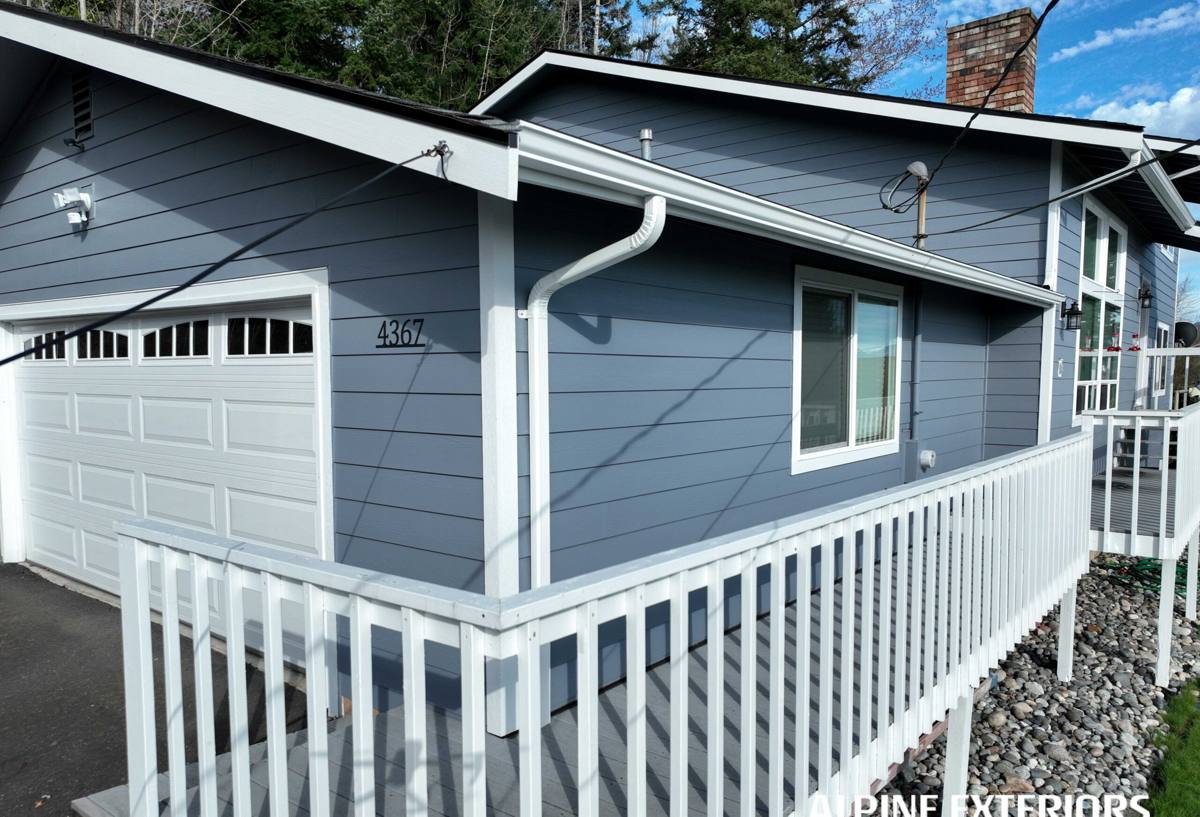
What Yew Street's Climate Actually Does to a Roof
Moisture That Doesn't Let Up
Whatcom County doesn't get dramatic storms as much as it gets persistent, low-grade wet weather. That steady moisture works its way into any gap, seam, or fastener that isn't sealed correctly. On an asphalt shingle roof, this shows up as slow granule loss and eventual leaks around penetrations. On a poorly installed metal roof, it shows up as rust streaking at cut edges, corrosion at fastener heads, and water tracking backward under panels at low-slope transitions.
Salt-Bearing Air
Marine-influenced air common to this part of Washington carries salt content that accelerates corrosion on unprotected metal edges, exposed fasteners, and lower-grade coatings. This is the single biggest reason we're particular about panel gauge, coating type, and fastener material on jobs in this area — cutting corners here doesn't show up as a problem for a year or two, but it shows up eventually.
A Long Moss Season
The combination of shade from mature trees, consistent moisture, and moderate temperatures makes this a strong moss environment for most of the year. Moss doesn't just look bad — on the wrong roofing material it lifts edges, holds water against the surface, and shortens the roof's life. Metal roofing doesn't stop moss spores from landing, but it removes the conditions moss needs to actually take hold and grow the way it does on shingles or wood shakes.
Why Metal Roofing Makes Sense Here
- Smooth, hard surfaces give moss and algae far less to grip onto compared to textured shingles or wood shakes
- Correctly lapped panels shed steady rain fast instead of allowing water to sit and soak in
- Standing seam profiles eliminate exposed fastener heads, which are the first thing salt air corrodes on lower-quality systems
- A well-installed metal roof holds up under decades of Whatcom County's wet-dry freeze-thaw cycling without the granule loss shingles experience
- Steep and moderate rooflines common on Sudden Valley homes drain efficiently under metal, reducing standing water at valleys and transitions
What a Correct Metal Roof Install Actually Involves
Deck and Substrate First
Before any panel goes down, we check the roof deck for soft spots, rot, or moisture damage — especially common under old moss-covered shingles that have been holding water against the wood longer than the homeowner realized. Installing new metal over a compromised deck just hides the problem; it doesn't fix it.
Underlayment That Matches the Climate
We use a high-temperature, self-adhered underlayment at eaves, valleys, and penetrations rather than relying on standard felt alone. In a climate with this much sustained moisture, the underlayment is your backup system if wind-driven rain ever gets past the panel seams — it needs to actually do that job.
Fasteners and Flashing
Fastener material matters as much as the panel itself. We match fasteners to the panel metal to avoid galvanic corrosion, and we detail flashing at every chimney, vent, skylight, and wall transition individually rather than relying on generic trim pieces. Most metal roof leaks trace back to flashing details, not the panels.
Ventilation
Trapped attic moisture is a bigger issue in a damp climate like this one than in drier regions. Proper intake and exhaust ventilation keeps condensation from forming on the underside of the deck, which protects both the roof structure and the metal panels from the inside out.
Panel Options for Yew Street Homes
| Panel Type | Best For | Trade-Offs |
|---|---|---|
| Standing seam (concealed fastener) | Long-term, low-maintenance roofs; homes with visible rooflines | Higher upfront cost; requires precise installation |
| Exposed-fastener metal panel | Budget-conscious projects, outbuildings, simpler rooflines | Fasteners need periodic inspection and eventual re-tightening or replacement as gaskets age |
| Stone-coated steel | Homeowners wanting a shingle or shake appearance with metal's durability | More surface texture, so slightly more moss resistance benefit than smooth panels but still far better than shingles |
We don't push one system on every home. The right call depends on your roof's pitch, how visible it is from the street, and what you're trying to balance between upfront cost and long-term maintenance.
Our Process for a Yew Street Metal Roof
- On-site inspection — we look at the current roof, the deck condition, attic ventilation, and any moss or moisture damage already present
- Honest scope and options — we walk you through panel choices and give you a straightforward, written estimate with no pressure to decide on the spot
- Tear-off or deck repair — old roofing removed, deck repaired where needed before anything new goes down
- Underlayment and flashing detail — the part that determines whether the roof actually stays dry through a Whatcom County winter
- Panel installation — installed to manufacturer spec with fasteners and sealants matched to the panel material
- Final walkthrough — we go over the finished roof with you and clean the site before we leave
Cost Factors Homeowners Should Know
| Factor | Why It Matters |
|---|---|
| Roof pitch and complexity | More valleys, dormers, and penetrations mean more flashing work and labor time |
| Panel gauge and coating | Heavier gauge and better coatings cost more upfront but resist salt-air corrosion longer |
| Tear-off vs. overlay | Full tear-off costs more initially but lets us properly assess and repair the deck underneath |
| Ventilation upgrades | Adding or correcting intake/exhaust venting protects the investment but adds to project scope |
| Access and roof height | Steeper or harder-to-access roofs require more staging and safety setup |
We give real, project-specific numbers after seeing your roof in person — we don't quote off a phone call for a system this important.
Maintenance That Keeps Moss and Corrosion in Check
- Clear overhanging branches where practical to reduce shade and debris buildup
- Rinse off accumulated needles and leaf debris from valleys once or twice a year
- Check exposed-fastener systems periodically for loosened screws or worn gaskets
- Keep gutters clear so water isn't backing up under the eave edge
- Have flashing points inspected every few years, especially after major wind events
None of this is heavy maintenance compared to a shingle roof in this climate — that's a large part of the appeal. But "low-maintenance" doesn't mean "no maintenance," and skipping these basics is how even a good metal roof develops avoidable problems.
Why Local Experience on Yew Street Matters
A metal roof installed by a crew unfamiliar with this specific microclimate can still fail early — not because metal roofing is the wrong choice, but because generic installation practices don't account for what Whatcom County actually throws at a roof over time. We've installed and repaired roofs throughout Sudden Valley and the surrounding area, so we already know which details matter most here: the flashing points that need extra attention, the ventilation gaps that cause condensation in homes with this kind of tree cover, and the fastener and coating choices that actually hold up against sustained marine-influenced moisture rather than just looking good on install day.
That local track record is also why we're comfortable being straightforward with you about cost, timeline, and what your roof actually needs — we're not disappearing after the job's done, and we'd rather earn the next job on Yew Street than oversell this one.
Get a Straightforward Estimate
If you're weighing a metal roof for your Yew Street home, we're glad to take a look and give you an honest read on your options — no pressure, no inflated scare tactics, just a clear picture of what your roof needs and what it would cost to do right. Use the form below to request a free estimate.