 Sudden Valley Roofing
 Windows Built for South Hill's Weather, Not Just the Showroom
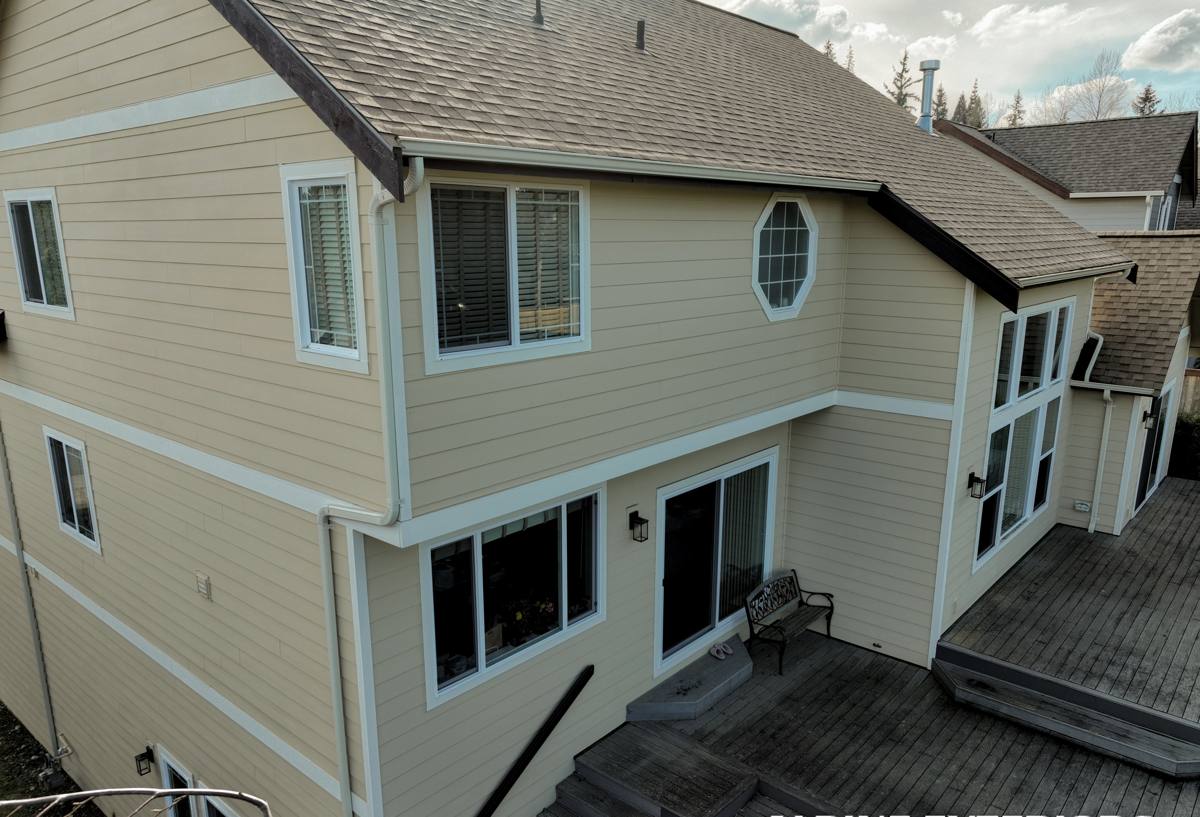
South Hill homes sit up in the trees above Lake Whatcom, which means more wind exposure, more shade-driven moisture, and more direct contact with the weather patterns that roll through Whatcom County off the Sound. A window that looks fine in a catalog can still fail here if it wasn't sealed and flashed for driving rain, salt-laden air, and months of shaded dampness every year. We install windows in this specific area regularly, and the failures we get called out to fix almost always trace back to the same thing: the window itself was fine, but the installation around it wasn't built for this climate.
This page covers what window replacement actually involves for a South Hill home — what the local conditions demand, what a correct install looks like, and how to tell a contractor who understands this area from one who's just passing through.
What This Climate Does to Windows Over Time
Whatcom County weather is hard on window assemblies in a few specific ways, and South Hill's elevation and tree cover tend to concentrate all of them:
Driving Rain and Wind-Driven Water
Storms here don't just drop rain straight down — wind pushes it sideways into window frames, especially on exposed or upslope-facing walls. Over years, that constant lateral pressure finds any weak point in the flashing or sealant. Once water gets behind a frame, it doesn't dry out fast in this climate — it just sits there, working on the framing.
Salt Air
Proximity to the Sound means a steady low level of salt in the air, even well inland. Salt accelerates corrosion on window hardware — hinges, locks, balance mechanisms — and it's harder on lower-grade aluminum and unfinished metal components than most manufacturers' standard warranties assume.
Long Moss and Mildew Season
Shaded, tree-covered lots stay damp longer after every rain. That's great for moss on a roof and murder on window sills, sashes, and exterior trim that aren't detailed to shed water and dry out between storms. Wood sills and poorly ventilated frame cavities are where we see the worst rot.
Temperature Swings and Condensation
Cool, damp nights against warmer interior air create condensation on glass and, worse, inside the frame cavity if the unit isn't properly insulated and vapor-managed. Persistent interior condensation is often the first visible sign that a window's seal has failed.
Signs It's Time to Replace, Not Just Repair
- Visible fog or moisture between the panes of a double- or triple-glazed unit — the seal has failed and can't be repaired
- Soft, spongy, or discolored wood at the sill or lower frame corners
- Windows that are hard to open, close, or lock — often a sign the frame has shifted or swollen
- Noticeable draft or cold spot near the frame even when the window is fully closed
- Paint or finish that keeps failing in the same spot no matter how often it's touched up
- Visible daylight or gaps around the frame from outside
- A jump in heating costs with no other obvious cause
If you're only seeing one or two of these and the frame is still solid, a repair or re-seal may be enough. Once rot or seal failure shows up, replacement is almost always the more honest recommendation — patching a failed frame just delays the same repair at a higher cost later.
What a Correct Installation Actually Involves
The window unit itself is maybe a third of what determines how it performs. The rest is installation detail — and it's the part that's invisible once the trim goes back on, which is exactly why it gets rushed on lower-quality jobs.
Removal and Opening Inspection
Before a new window goes in, we open the rough opening up and actually look at the framing, sheathing, and any existing flashing. This is where hidden rot or past water damage shows up. Installing a new window over a compromised opening just seals the problem inside the wall.
Flashing and Water Management
Proper flashing — sill pan, jamb flashing, and head flashing integrated with the house wrap in the right shingle-lap order — is what actually keeps driving rain out, not the caulk bead around the trim. This is the single most common shortcut we see skipped on lower-bid jobs, and it's the one that causes the most expensive damage later.
Air Sealing and Insulation
The gap between the window frame and the rough opening needs to be sealed with the right materials — not just stuffed with fiberglass, which does little for air sealing and nothing for water management. Low-expansion foam or backer rod and sealant, applied correctly, is what actually stops drafts and condensation at the frame.
Level, Plumb, and Square
A window that's out of square will bind, won't seal evenly, and will stress the frame over time. This takes patience with shims and checks at every stage — it's not something that can be eyeballed quickly.
Interior and Exterior Finish
Trim, caulking, and paint or stain on the finished product should look clean, but the finish work is the last five percent — it doesn't compensate for a rushed opening underneath it.
Choosing a Frame Material for This Climate
There's no single "best" window material — it depends on budget, exposure, and how much maintenance you want to do. Here's how the common options actually compare for a damp, salt-exposed, tree-shaded property like most of South Hill:
| Frame Material | Moisture Resistance | Maintenance | Typical Cost Position |
|---|---|---|---|
| Vinyl | Good — won't rot, minimal corrosion risk | Low — occasional cleaning | Lower to mid |
| Fiberglass | Very good — dimensionally stable, resists moisture and salt corrosion | Low | Mid to higher |
| Wood (unclad) | Poor without diligent upkeep — most vulnerable to rot in this climate | High — regular painting/sealing required | Mid to higher |
| Wood-clad (exterior aluminum or fiberglass shell) | Good on the exterior face if flashed correctly; interior still wood | Moderate | Higher |
| Aluminum | Fair — prone to corrosion in salt air unless well-finished; poor insulator without thermal break | Low to moderate | Varies widely |
Our default recommendation for most South Hill homes is vinyl or fiberglass with a quality low-E, argon-filled sealed unit — they hold up best against salt exposure and constant damp shade without demanding ongoing maintenance. We'll still install what fits your home and budget, including wood-clad where the look matters more than upkeep, but we'll tell you honestly what the maintenance tradeoff looks like before you commit.
How We Handle a South Hill Window Project
- On-site assessment — we look at every window being considered, check for existing rot or water intrusion, and note exposure (sun, wind, tree cover) on each wall
- Honest scope and estimate — which windows need full replacement, which could be repaired, and why
- Product selection — matched to exposure, budget, and how the home is used, not a one-size-fits-all package
- Opening prep — removal, inspection, and repair of any hidden rot before the new unit goes in
- Installation — proper flashing, air sealing, and squaring, done in the order that actually sheds water
- Finish work — trim, caulking, and paint or stain to match the home
- Walkthrough — every window operated and checked with you before we call it done
Why It Matters That We Already Work This Area
A crew that mostly works flatter, less exposed neighborhoods can still do competent work, but they're guessing at things a South Hill-familiar crew already knows: which exposures take the worst wind-driven rain, how much moss and shade pressure a given wall sees, and how salt air affects hardware choices over time. That local pattern recognition is what keeps us from treating every job as a generic install and instead building each one for the specific conditions of the site.
We also stand behind the installation itself, not just the product warranty. A window can be top quality and still leak if it's installed wrong — so our workmanship on the flashing, sealing, and framing is something we're accountable for directly, separate from whatever coverage the manufacturer provides on the unit.
What Affects the Cost
| Factor | Why It Matters |
|---|---|
| Number of windows | Per-window cost typically drops as more are done in one visit |
| Frame material | Vinyl is generally the most budget-friendly; fiberglass and wood-clad cost more upfront |
| Size and configuration | Large or custom-shaped windows and multi-panel units cost more than standard sizes |
| Condition of the opening | Hidden rot or framing damage found during removal adds repair time before the new window can go in |
| Access and height | Upper-floor or hard-to-reach windows take longer and may need additional equipment |
| Trim and finish work | Matching existing trim profiles or repainting/staining adds labor beyond the window itself |
We won't quote a number without seeing the actual openings — anyone who gives you a firm price over the phone for a whole-house job is guessing, and that guess usually turns into a change order later.
Get a Straightforward Estimate
If your South Hill windows are drafty, fogged, or starting to show rot at the sills, it's worth getting a second set of eyes on them before another wet season goes by. Fill out the form below for a free, no-pressure estimate — we'll take a look, tell you honestly what we find, and give you options that fit your home and budget.