 Sudden Valley Roofing
 Building a new home on Yew Street means locking in window decisions before the walls are even closed up — decisions that are far cheaper to get right the first time than to fix once the siding and trim are finished. Sudden Valley sits inside Whatcom County's marine climate: salt-tinged air, driving rain that rarely falls straight down, and a moss season that can run from early fall well into spring. Windows installed correctly during framing account for all of that from day one. Windows installed carelessly are usually the reason a two- or three-year-old house starts showing water staining around the window heads or soft trim at the sills.
Why Yew Street's Climate Changes How a Window Gets Installed
A new-construction window on Yew Street has to deal with three things at once, and they compound each other. Salt air accelerates corrosion on fasteners, hinge hardware, and cheap flashing metal — not overnight, but steadily, year after year. Driving rain, pushed sideways by wind off the water, finds any gap in a flashing detail that a straight-down rain never would; this is the single biggest reason new-construction windows leak, and it's almost always an installation issue, not a product defect. And the long moss season means anything that gets damp around a window opening stays damp longer, because the surrounding wood, siding, and trim aren't drying out between storms the way they would in a drier climate. Put those three together and you get a simple rule: on a Yew Street build, the flashing and water-management details around the window matter more than the window itself.
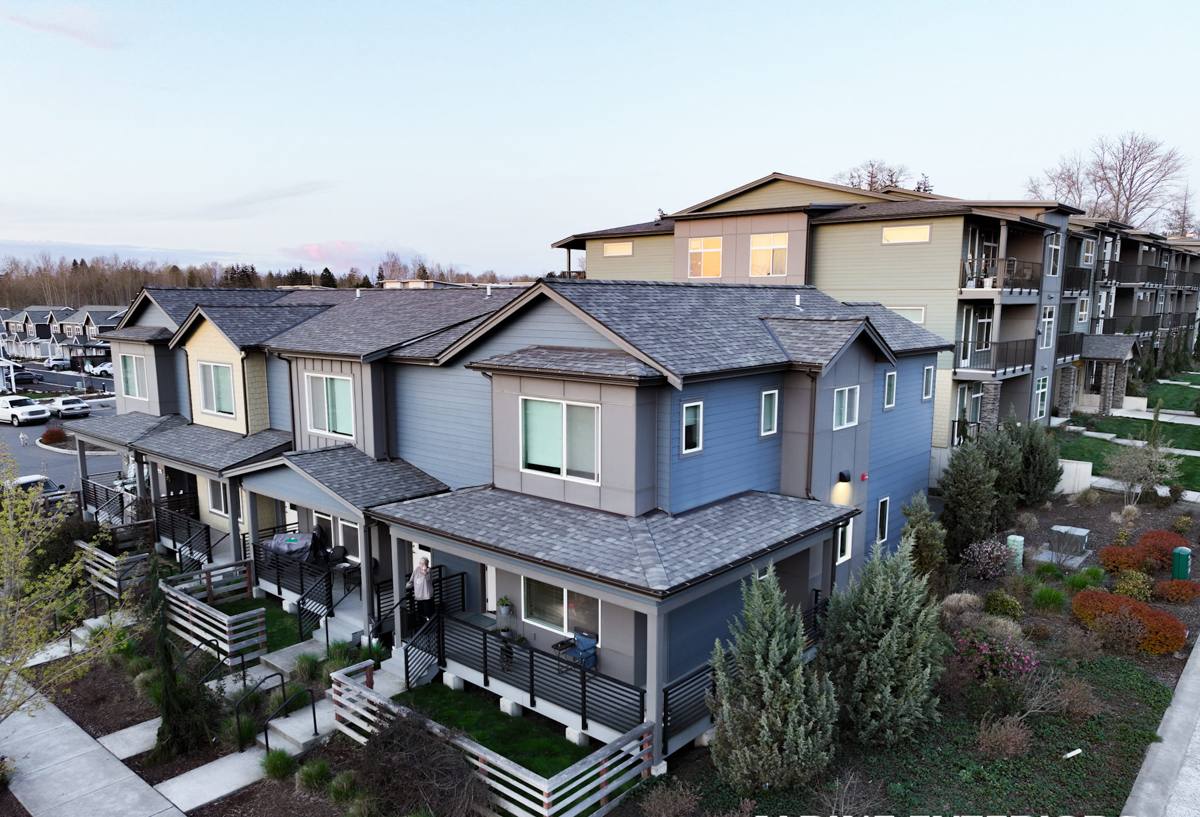
What a Correct New-Construction Window Install Actually Involves
Sequencing With the Weather-Resistive Barrier
New-construction windows go in during framing, before the exterior cladding, which means the weather-resistive barrier (house wrap) has to be integrated with the window flashing in the right order — wrap first, then sill pan, then window, then jamb and head flashing lapped over the wrap above. Skip a step or do it out of order and you've built a shingle-style water path that runs water into the wall instead of away from it.
Flashing the Way a Roofer Thinks About Water
Because our crew's background is roofing, we approach window flashing the same way we approach a roof valley: water always moves downhill, and every layer above has to shed onto the layer below it, never the reverse. A sill pan that pitches even slightly toward the interior, or head flashing that isn't lapped correctly under the housewrap, will hold water against the framing instead of directing it back outside. That's the detail that separates a window that's dry in year one and still dry in year fifteen from one that starts failing quietly behind the trim.
Fastening and Shimming for the Long Haul
New-construction windows are typically installed with a nailing fin fastened directly to the sheathing, then shimmed square and plumb at the jambs so the sash operates correctly for the life of the house. Under-shimming leads to a window that binds or won't latch within a few years as the house settles; over-shimming can bow the frame and break the seal on an insulated glass unit. Getting this right the first time avoids a service call the homeowner shouldn't have to make.
New-Construction vs. Replacement: Not the Same Job
It's worth being clear about this distinction, because a lot of window trouble on newer homes traces back to someone installing the wrong type of window for the stage of construction. New-construction windows have a nailing fin meant to be fastened to open stud bays before siding goes on. Replacement (or "pocket") windows are built to install into an existing, finished opening without disturbing the siding or interior trim. Using a replacement-style window during framing — or trying to retrofit a nailing-fin window into a finished wall — creates flashing and fit problems that show up as leaks or drafts later.
| Factor | New-Construction Window | Replacement Window |
|---|---|---|
| Installed at | Framing stage, open stud bay | After the home is finished/sided |
| Flashing access | Full access to sheathing and house wrap | Limited to the existing opening |
| Best fit for | New builds, additions, full re-sides | Swapping out an aging window in place |
| Trim/siding impact | Trim and siding installed after window | Existing trim and siding usually stay intact |
Frame Material Choices for This Climate
Every frame material can work in Whatcom County if it's installed and maintained correctly, but they don't all behave the same way once salt air, standing moisture, and moss are part of the picture year after year.
| Frame Material | Moisture/Salt-Air Tolerance | Maintenance | Typical Cost Position |
|---|---|---|---|
| Vinyl | Good — won't corrode or rot, but can distort under sustained heat/cold cycling | Low; occasional cleaning of tracks and weep holes | Entry to mid-range |
| Fiberglass | Very good — dimensionally stable, resists moisture and corrosion well | Low | Mid to upper |
| Wood-clad | Depends entirely on the cladding and sealant staying intact; exposed wood is vulnerable to moss-season moisture | Higher; needs periodic sealant and finish checks | Upper |
| Aluminum | Prone to corrosion in salt air unless properly finished; poor thermal performance | Moderate | Varies |
For most new builds in this area, we recommend vinyl or fiberglass for their consistent behavior in wet, salty, moss-prone conditions and their low long-term maintenance burden. Wood-clad windows can still be the right architectural choice, but we're upfront with owners that they carry a real maintenance commitment in this climate — the wood isn't the weak point, an unmaintained finish is.
Our Process for a Yew Street New Build
- Plan review with the builder or owner — confirming window schedule, sizes, and rough openings before framing locks them in.
- Site coordination — timing our install between the framer and the sider so flashing sequencing isn't rushed or done out of order.
- Sill pan and flashing installation — built and lapped correctly before the window ever goes in the opening.
- Window setting, shimming, and fastening — squared, plumb, and fastened to spec, with operation checked on every unit.
- Head and jamb flashing tie-in — integrated with the house wrap so water sheds outward at every layer.
- Final walk-through — every window opened, closed, and checked for smooth operation and a tight seal before we sign off.
Mistakes We Watch For Before They Become Callbacks
- Housewrap taped over the flashing fin instead of lapped correctly underneath it
- Sill pans missing or built with a back dam that's too low to stop wind-driven rain
- Nailing fins fastened through housewrap without proper flashing tape at the corners
- Foam or caulk used as a substitute for proper flashing rather than as a supplement to it
- Windows shimmed out of square, causing hardware to bind within the first year or two
- Weep holes in the sill track left blocked by trim, paint, or debris
Why a Crew That Already Works Yew Street Matters
A lot of the risk in new-construction window work isn't the window — it's the coordination around it. Our crews already work in and around Sudden Valley regularly, which means we know how to schedule around the other trades on a build without creating gaps where an opening sits unprotected during a stretch of driving rain. Many Sudden Valley properties also fall under community association guidelines, and having done work in the neighborhood before means we're not learning that process for the first time on your build. None of that replaces sound flashing and installation work, but it does mean fewer surprises, fewer delays, and a crew that isn't guessing at how this particular corner of Whatcom County behaves through a wet fall and winter.
Cost Factors for New-Construction Windows
Costs vary by project, and we'd rather walk a specific plan set with you than quote a number in the abstract. In general, these are the factors that move the price up or down:
| Factor | Effect on Cost |
|---|---|
| Number and size of window openings | More and larger openings mean more material and labor |
| Frame material and glass package | Vinyl is typically the entry point; fiberglass and wood-clad run higher |
| Energy performance rating | Higher-performance glass packages cost more but reduce heating/cooling load |
| Site access and staging | Difficult lot access or lift/scaffolding needs add labor time |
| Coordination complexity | Tight build schedules with multiple trades can affect labor efficiency |
Living With the Windows: Moss-Season Maintenance
Good installation gets a window through decades of Whatcom County weather, but a little seasonal attention keeps it performing the way it was designed to. Before the wet season sets in each fall, it's worth checking that weep holes at the base of the sill track are clear, that exterior caulk lines at the trim haven't cracked or pulled away, and that gutters and downspouts near window heads aren't dumping extra water onto the wall above. None of this is complicated work, but skipping it is how small, cheap-to-fix issues turn into wall damage over a few wet winters.
If you're planning a new build or addition on Yew Street and want windows installed by a crew that treats flashing and water management as seriously as we treat a roof, we're happy to take a look at your plans. Reach out for a free, no-pressure estimate — the form below gets you started.