 Sudden Valley Roofing
 Composite Decking for Acme Homes
Acme sits back in the wooded foothills along the Nooksack River drainage, east of the more open parts of Whatcom County. That location comes with real advantages — privacy, tree cover, quiet — and one consistent headache: everything outside stays wet and shaded for a large part of the year. A deck built for a sunny, dry climate does not hold up the same way out here. Composite decking has become the default choice for a lot of Acme homeowners for a simple reason: it does not absorb water the way wood does, it does not need annual staining, and it resists the rot and softening that shaded, damp wood decks eventually develop.
Whatcom County as a whole deals with a marine-influenced climate — moisture off the Sound, driving rain through the fall and winter, and a moss season that can run half the year in shaded spots. Acme's tree canopy and valley humidity push those effects further. A deck here spends more hours per day out of direct sun than one closer to open water or cleared lots, which matters more for material choice than most homeowners expect.
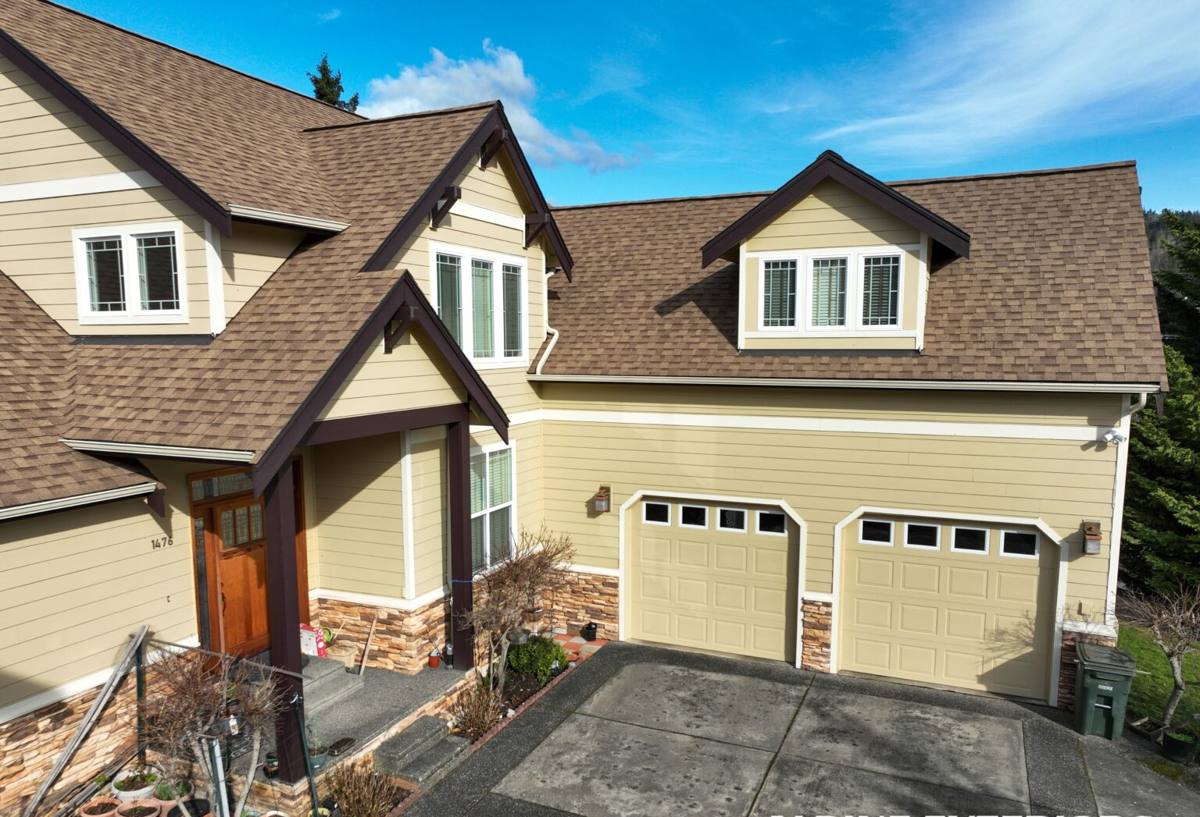
What Acme's Setting Actually Does to a Deck
Shade and Slow Drying
The biggest factor isn't rainfall totals — it's how long a deck surface stays wet after it rains. A deck under partial forest canopy in Acme can stay damp for a day or more after a storm passes, compared to a few hours for a deck in full sun. That extended dampness is what drives moss growth, mildew staining, and — on wood decking — slow rot in the boards and the framing underneath.
Debris Load
Needles, leaves, and moss spores collect in board gaps and against ledger boards faster here than in more open parts of the county. Left alone, that organic debris holds moisture against the decking and framing long after the surface itself would otherwise be dry.
Freeze-Thaw Cycling
Whatcom County gets enough winter cold snaps that damp wood fibers and hairline cracks in old decking can freeze, expand, and split further. Composite boards don't have the same grain structure to split, but the substructure underneath still needs to be built to shed water so ice doesn't form and sit against framing connections.
What a Correct Composite Deck Build Involves
Composite decking is only as good as what's underneath it. Most deck failures we get called out to inspect in this area aren't a problem with the boards themselves — they're a problem with framing, flashing, or fastening that was done wrong the first time.
- Ledger flashing: Where the deck attaches to the house, proper flashing keeps water from working behind the siding and into the wall framing — this is one of the most common failure points on older decks we inspect.
- Joist tape or joist protection: A protective barrier over the top of each joist keeps rainwater from soaking into the wood framing through fastener holes, which is where hidden rot usually starts.
- Proper board spacing: Composite boards need consistent gapping for drainage and airflow — too tight and water and debris get trapped; too wide and the deck feels and looks unfinished.
- Hidden or approved fastening systems: Most composite board lines are engineered for a specific clip or screw system. Using the wrong fastener can void the manufacturer's warranty and cause boards to buckle as they expand and contract with temperature.
- Ventilation underneath: Low-clearance decks need enough airflow beneath the framing to let moisture escape rather than sit and slowly break down structural wood.
Substructure Material Choices
The boards on top get the attention, but the frame underneath matters just as much in a damp climate. Pressure-treated lumber is standard for framing, but in consistently shaded, wet conditions like much of Acme, we'll often talk through composite or steel framing components for ledger areas and ground-level contact points where wood-on-wood or wood-on-soil contact would otherwise be a long-term risk.
Choosing the Right Composite Board
Not all composite decking is built the same, and the differences matter more in a wet, shaded climate than they would somewhere drier. The table below covers the main categories homeowners in Acme end up choosing between.
| Decking Type | Moisture Behavior | Maintenance | Typical Lifespan |
|---|---|---|---|
| Capped composite | Outer polymer shell resists moisture absorption and staining | Occasional wash-down; no staining or sealing | 25–30+ years |
| Uncapped composite | Can absorb some moisture at cut edges over time | Periodic cleaning; more prone to mold in shade | 15–20 years |
| Solid PVC | Essentially non-absorbent | Low; wash-down only | 25–30+ years |
| Pressure-treated wood | Absorbs and releases moisture constantly | Annual cleaning, staining, or sealing | 10–15 years in shaded/wet conditions |
For most Acme properties with meaningful tree cover, we steer homeowners toward capped composite or solid PVC boards specifically because of how much time the deck surface spends damp. Uncapped composite can still be a reasonable, lower-cost option on decks that get more sun exposure and regular cleaning.
Our Installation Process
1. On-Site Assessment
We look at sun exposure, drainage slope, existing framing condition (if this is a replacement), and how the deck ties into the house. In Acme specifically, we pay close attention to tree proximity and how much organic debris the site is likely to shed onto the finished deck.
2. Framing and Waterproofing
Ledger flashing, joist protection, and proper slope away from the house get handled before a single composite board goes down. This is the stage that determines whether the deck holds up for decades or starts showing problems in a few years.
3. Board Installation
Boards go down with the fastening system specified by the manufacturer for that product line, with consistent spacing for drainage and expansion. Board ends and cuts get sealed or capped per manufacturer specs to keep moisture from wicking in at exposed edges.
4. Railing, Stairs, and Finish Work
Railing systems, stair stringers, and fascia get installed to match the decking line and manufacturer warranty requirements, since mismatched components can affect coverage.
5. Final Walkthrough
We walk the finished deck with the homeowner, cover basic care, and note anything worth watching in the first year — settling, drainage patterns after the first real rain, that kind of thing.
Living With a Composite Deck in a Wet, Shaded Climate
Composite decking is genuinely low-maintenance compared to wood, but "low-maintenance" isn't "no-maintenance" — especially under tree cover. A little seasonal attention keeps a composite deck looking and draining the way it should.
- Sweep leaves, needles, and debris out of board gaps regularly during fall drop and after windstorms.
- Rinse or lightly scrub shaded areas where moss and algae are more likely to take hold, particularly along the north side of the house or under heavy canopy.
- Keep gutters and downspouts near the deck clear so runoff isn't dumping extra water directly onto the surface or framing.
- Check railing posts and stair connections once a year for any movement, since these are the hardware points most likely to loosen over time.
- Trim back overhanging branches where practical to cut down on both debris and the amount of time the deck surface stays shaded and damp.
None of this is heavy work — it's the kind of seasonal upkeep that keeps a good composite deck looking new well past the point a comparable wood deck would need refinishing or repair.
What Affects the Cost of a Composite Deck
Every deck is different, so we won't quote a number without seeing the site, but these are the factors that move the price up or down on most Acme projects.
| Factor | Why It Matters |
|---|---|
| Deck size and shape | Square footage and the number of angles, cutouts, or transitions directly affect labor and material. |
| Height off grade | Taller decks need more substantial framing, footings, and often stairs or additional railing. |
| Board tier | Entry-level capped composite, premium capped composite, and solid PVC carry different material costs per square foot. |
| Site access and slope | Sites with limited equipment access or steep grade — common in the Acme foothills — can add labor time. |
| Old deck removal | Tearing out and disposing of an existing wood deck adds cost versus building on new footings. |
| Railing and stair complexity | Cable rail, glass panels, and multi-level stairs cost more than standard baluster railing. |
Why It Matters to Hire a Crew That Already Works in Acme
Deck-building basics don't change from town to town, but the judgment calls do. Knowing how much slope to build into framing for a site that stays shaded most of the day, which fastening systems actually hold up through repeated Whatcom County wet-dry cycles, and how much debris clearance to leave under a low deck near heavy tree cover — that comes from having done the work in this specific area, not just from a general decking background.
Sudden Valley Roofing Co works throughout Whatcom County, including the Acme area, and we build composite decks the same way we approach roofing and siding here: with the regional weather as a starting assumption, not an afterthought. That means framing and flashing decisions get made for the climate this deck will actually sit in, not a generic install.
Get a Free, No-Pressure Estimate
If you're planning a new composite deck or replacing an aging wood deck in Acme, we're glad to come take a look, talk through board options, and give you a straightforward estimate — no pressure, no obligation. Use the form below to get started.