 Sudden Valley Roofing
 Deck Building in Acme, Built for Whatcom County's Weather
Homes around Acme and the greater Sudden Valley area sit up in the foothills, but that doesn't mean they're spared the moisture load that defines this part of Whatcom County. Rain here isn't the gentle, straight-down kind for long stretches of the year — driving rain gets pushed sideways under railings, against ledger boards, and into any joint that isn't properly sealed. Add salt-tinged air that drifts inland from the county's shoreline on certain weather patterns, along with a long moss season that settles into shaded, tree-covered lots and doesn't fully let go until well into summer, and you've got three separate stresses working on any wood or composite structure sitting outside year-round. A deck built without those pressures in mind is one that starts showing problems years before it should.
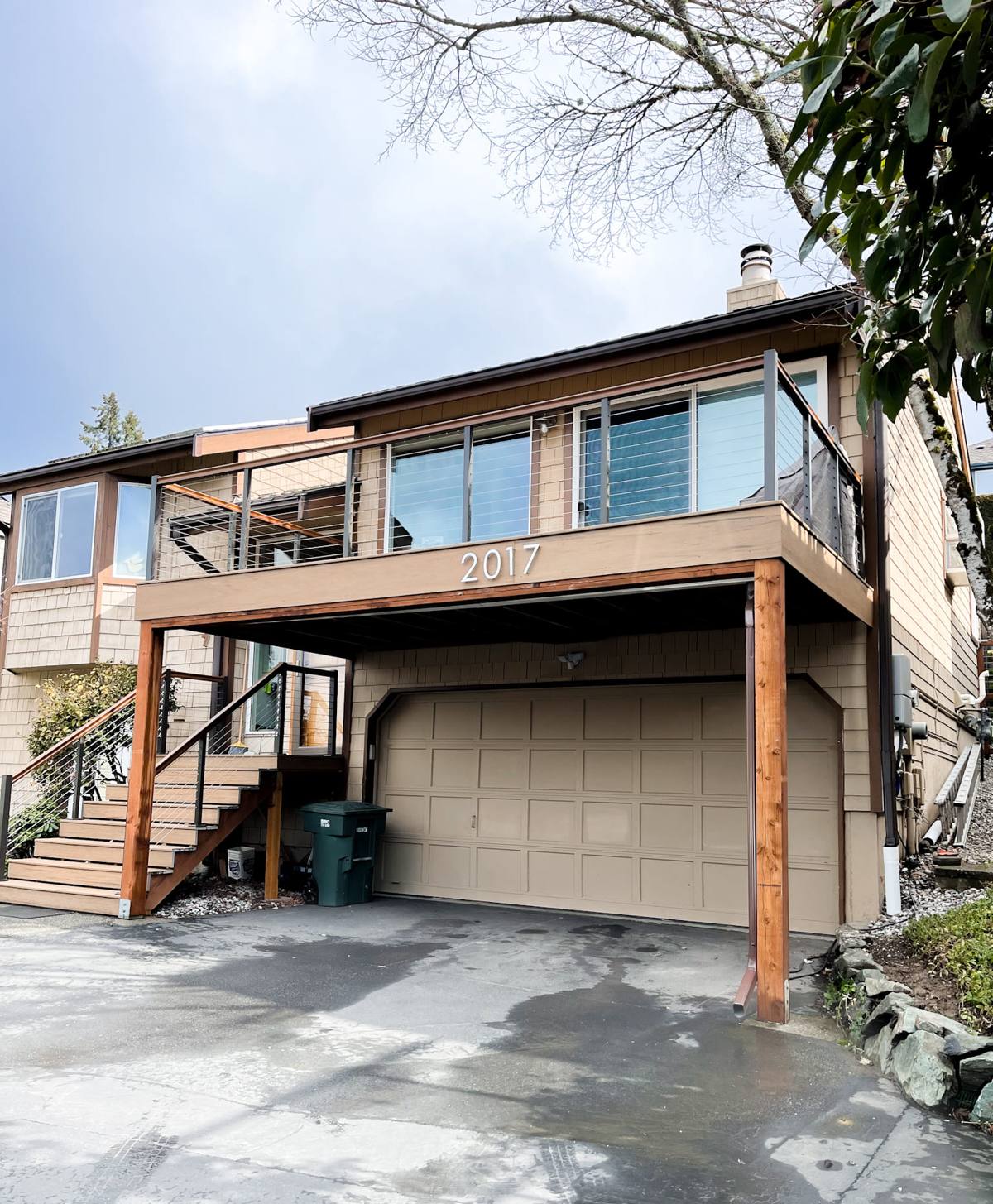
This page is about what a correctly built deck looks like for a home in the Acme area — the details that actually matter given the local climate and terrain, how we run the build from the first visit to the final walkthrough, and why it's worth hiring a crew that already knows this specific corner of Whatcom County.
What Acme's Climate and Terrain Ask of a Deck
Moisture Is the Long-Term Enemy
Standing moisture, not any single storm, is what shortens a deck's life here. Wood that stays damp between rain events — because a board can't drain, because a ledger connection traps water against the house, or because a joist sits directly on damp soil — starts to rot from the inside long before it looks bad from the top. Composite and PVC decking don't rot the same way, but they still depend on correctly built framing underneath, and that framing is wood on almost every deck we build.
Moss, Algae, and Shade
Wooded lots are common around Acme, and shade plus year-round moisture is exactly what moss and algae need to take hold. Decking that stays damp and shaded develops a slick, dark surface within a couple of seasons if it isn't built and finished with that in mind, and a mossy deck surface isn't just unsightly — it's a real slip hazard on stairs and landings.
Sloped, Wooded Lots
A lot of properties in this area sit on sloped or uneven ground with mature tree cover nearby. That affects footing depth, how a deck is stepped down a grade, and how much clearance is left for air to move underneath the structure. A deck tucked tight against a hillside with poor airflow underneath will hold moisture far longer than one built with proper clearance and drainage in mind.
What a Correctly Built Deck Involves
Footings Set for the Ground They're In
Footings need to reach solid, undisturbed soil below the frost line, and on sloped ground that often means each footing is a slightly different depth rather than a uniform pour. Skipping this step to save time is one of the most common causes of a deck that develops a noticeable lean or bounce within a few years.
Ledger Board Flashing
The ledger board — where the deck attaches to the house — is the single most common failure point on decks in this climate, and it isn't close. Without proper flashing that directs water away from the house rather than behind the ledger, moisture works its way into the rim joist and wall framing where it can't be seen until real damage has already happened. Correct flashing, installed as a system rather than caulked on afterward, is non-negotiable on every ledger-attached deck we build.
Joist Layout and Framing Hardware
Joist spacing has to match the decking material's span rating, not a generic default, and every connection — joist hangers, post bases, beam connections — needs hardware rated for the fastener and lumber being used. Undersized or mismatched hardware is invisible once the decking goes down, which is exactly why it's a detail that gets skipped on rushed jobs.
Fasteners That Won't Corrode
Standard fasteners corrode faster than most homeowners expect in this climate, especially in shaded, damp locations or where salt-tinged air reaches a property. We use stainless steel or coated fasteners rated for ground-contact and treated lumber compatibility, because a rust-streaked deck surface and weakening fastener connections are what happen when hardware is chosen on price alone.
Choosing a Decking Material for This Climate
| Material | Moisture & Moss Behavior | Maintenance | Typical Lifespan |
|---|---|---|---|
| Pressure-Treated Lumber | Resists rot when sealed and maintained, but absorbs moisture if finish isn't kept up | Needs cleaning and resealing every 1-2 years in this climate | 15-20 years with upkeep |
| Cedar | Naturally moisture- and insect-resistant, but greys and can develop moss if left unfinished in shade | Periodic cleaning and staining to hold color and resist moss | 20-25 years with upkeep |
| Composite/PVC | Doesn't rot; resists moisture absorption, though surface can still support moss growth in deep shade without cleaning | Occasional washing; no staining or sealing required | 25-30+ years |
None of these materials is automatically wrong for an Acme property — the right choice depends on how shaded the lot is, how much upkeep you want to do, and what you're trying to spend upfront versus over time. A heavily shaded, moss-prone lot is where composite decking earns its higher upfront cost fastest, since it removes the yearly staining cycle that shaded wood decking demands to keep moss from taking hold. On sunnier, more open lots, well-maintained cedar or pressure-treated lumber performs perfectly well for a fraction of the material cost.
Cost Factors Worth Understanding
| Factor | What It Affects |
|---|---|
| Decking material | Upfront cost, long-term maintenance burden, and moss/moisture resistance |
| Footing depth and count | Structural stability on sloped or uneven ground |
| Ledger vs. freestanding design | Whether flashing work at the house is required and how the deck ties into existing structure |
| Railing and stair complexity | Material choice, code-required height and spacing, and labor time |
| Site access and grade | Equipment access, hand-digging needs, and staging time on sloped lots |
| Fastener and hardware grade | Long-term corrosion resistance and structural connection life |
Two bids for what looks like "the same deck" can land far apart once you account for these factors, and the gap is almost always real scope rather than one contractor padding a number. A written estimate that breaks out material grade, footing plan, and hardware specification separately tells you far more than a single bottom-line figure.
Permits and Code Basics
Most decks attached to a home, and many freestanding decks above a certain height, require a building permit in Whatcom County. Guardrails are generally required once a deck surface sits a certain height above grade, stair rise and run have to fall within code limits, and guardrail baluster spacing has to meet code to prevent a child from passing through. If your property is part of a community association, as many are in the Sudden Valley area, there may also be design review expectations on top of the county permit — worth checking before work starts rather than after. We handle the permit process as part of the job rather than leaving it for the homeowner to sort out.
How Our Process Works
- On-site visit: We walk the property in person, look at grade, drainage, sun and shade exposure, and existing structure before talking through options — not a phone estimate.
- Design and material selection: We go over decking material, railing style, and layout based on how the space will actually be used and how much upkeep you want going forward.
- Written estimate and permitting: You get an itemized bid covering material, footings, framing, railings, and hardware, and we pull the required permit before work begins.
- Demolition, if applicable: An existing deck comes out completely, and we check the ledger connection and any framing underneath for hidden rot before building new.
- Footings and framing: Footings go to the required depth for the soil and grade on your lot, and framing is built to match the decking material's span requirements.
- Decking, railings, and stairs: Installed to manufacturer specification with corrosion-resistant fasteners throughout.
- Final walkthrough: We review the finished deck with you in person and do a full site cleanup before calling the job done.
A Practical Checklist Before You Hire a Deck Builder
- Does the estimate specify decking material, footing depth, and hardware grade, not just "new deck"?
- Is ledger flashing explicitly addressed for any deck attached to the house?
- Will they pull the required Whatcom County permit as part of the job?
- Do they carry current WA contractor licensing, liability insurance, and workers' compensation?
- Can they point to recent, real work in or near Acme or Sudden Valley?
- Does the bid separate manufacturer material warranty from the contractor's own workmanship warranty?
Why Hiring a Crew That Already Works in Acme and Sudden Valley Matters
A crew that regularly builds decks in this part of Whatcom County has already seen how sloped, wooded lots around Acme affect footing layout, how shaded decks hold moss longer than exposed ones, and which ledger details actually keep water out through a full wet season rather than just looking finished on install day. That's practical knowledge that shows up in dozens of small decisions over the course of a build — decisions a crew unfamiliar with this specific terrain and climate might not think to make at all.
It also matters after the job is done. A workmanship warranty is only as good as the company standing behind it years later, and a contractor with an established presence in the area is one you can actually reach if a question comes up down the road.
Repair, Replace, or Rebuild?
Not every aging deck needs to come out completely. Whether repair, partial replacement, or a full rebuild makes sense usually comes down to the condition of the framing underneath, not just how the surface boards look.
- Soft or spongy decking boards, especially near the ledger or stairs
- Persistent moss or algae staining that returns quickly after cleaning
- Visible gaps, rust streaking, or corrosion at fastener locations
- Noticeable bounce, sway, or movement when walking across the deck
- Rot or staining on the house siding directly behind the ledger board
If the framing and footings are sound, refinishing or replacing decking boards can extend a deck's life significantly. If the ledger connection or framing shows real rot, a rebuild is usually the more honest recommendation, even if it costs more upfront than patching a problem that's going to resurface within a year or two.
If you'd like an honest, no-pressure look at your deck in the Acme or Sudden Valley area and a written estimate you can compare against anything else you've received, we're glad to come take a look. Use the form below to request a free estimate.