 Sudden Valley Roofing
 Why Alger Decks Wear Differently Than Decks Inland
Alger sits close enough to open water that homes here deal with a steady drift of salt air on top of everything else the Pacific Northwest throws at a deck: long stretches of driving rain in fall and winter, short gray days that never quite dry out a shaded deck surface, and a moss season that can run from October into April. That combination is harder on outdoor structures than most homeowners moving from drier climates expect. Salt-laden moisture accelerates corrosion on fasteners and hardware, standing rain finds every low spot in a deck surface or substructure, and moss doesn't just look bad — it holds moisture against the board and turns a walking surface slick and dangerous within a season or two if it's never addressed.
Composite decking exists specifically to handle this kind of exposure better than wood, but only if it's chosen and installed correctly for the site. A composite deck built the same way you'd build one in Spokane or Boise won't hold up the same way in Whatcom County. The framing, drainage, fastening, and even the board profile need to account for what this specific climate does to a deck year after year.
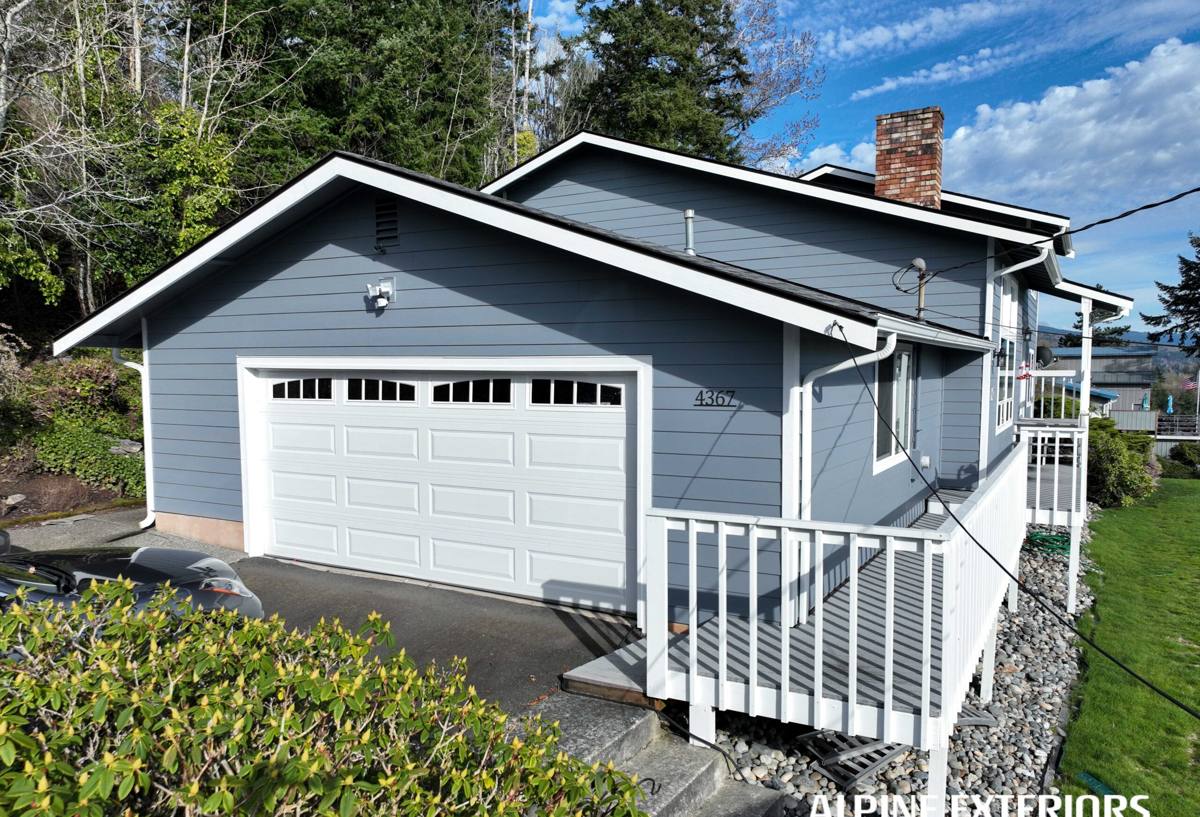
What Alger's Climate Actually Does to a Deck
Salt Air and Hardware
Salt air doesn't rot composite boards the way it can degrade untreated metal, but it does accelerate corrosion on fasteners, brackets, and railing hardware that isn't rated for coastal exposure. Once a fastener starts rusting under a board, it stains the surface and eventually loses grip. This is one of the most common corners cut on lower-bid deck jobs — using standard-grade screws and brackets instead of stainless or coated hardware rated for marine or coastal environments.
Driving Rain and Drainage
Rain that comes in sideways during a winter storm doesn't behave like a light shower. It gets under railing caps, into end-grain cuts, and behind ledger boards if flashing wasn't done right. A deck that looks fine in July can be hiding a slow moisture problem that only shows up as soft framing or a failed ledger connection two or three winters later.
Moss and Algae Growth
Shaded decks, north-facing decks, and decks under mature trees hold moisture longer through the wet months, which is exactly what moss and algae need to take hold. On wood decking, moss digs into the grain. On composite, it sits on the surface, but it still needs the right board texture and a cleaning routine to keep from becoming a slip hazard.
Quick Reference: Climate Stress vs. What It Affects
| Climate Factor | Primary Risk | What Prevents It |
|---|---|---|
| Salt air | Corroding fasteners and hardware | Stainless or coastal-rated fasteners, hidden fastening systems |
| Driving rain | Hidden moisture behind ledgers and end cuts | Proper flashing, sealed end cuts, correct board spacing |
| Long moss season | Slippery surfaces, trapped moisture | Textured capped boards, airflow underneath, seasonal cleaning |
| Shaded, low-sun sites | Slow drying, algae buildup | Deck orientation planning, proper board gapping |
What a Correct Composite Deck Install Involves
Composite decking is often sold as low-maintenance, and the boards themselves are. But the board is only one part of a deck. The framing underneath, the way the deck attaches to the house, and the hardware used all determine whether that low-maintenance promise actually holds up in this climate.
Framing and Substructure
We build the substructure to handle the added weight and moisture exposure of a coastal-influenced climate, not just to meet minimum code spans. That means treated or naturally durable framing lumber, joist spacing tightened where board manufacturers recommend it for this region's moisture levels, and attention to how the deck ties into the house at the ledger board — the single most common point of hidden water damage on any deck.
Ledger Flashing
Where the deck meets the house, we flash the ledger board properly so driving rain can't work its way behind it. This is invisible once the deck is finished, but it's the difference between a deck that lasts decades and one that develops rot at the house connection within a few years — a repair that's far more expensive than doing it right the first time.
Hardware Selection
Given the salt air here, we use fasteners and structural hardware rated for coastal or marine-adjacent exposure rather than standard interior-grade hardware. It costs more up front and makes no visible difference on installation day, but it's one of the main reasons decks either hold up for twenty-plus years or start showing rust stains and loose connections in five.
Choosing the Right Composite Board for This Climate
Capped vs. Uncapped Composite
Capped composite boards have a protective outer shell wrapped around the core material, which resists moisture absorption, staining, and fading far better than uncapped composite. In a climate with this much rain and this long a moss season, we generally steer homeowners toward fully capped boards specifically because they don't give algae and moisture a porous surface to grip. Uncapped composite can still be a reasonable option on a budget, but it needs more frequent cleaning and is more prone to surface staining over time.
Texture and Color
Board texture matters more here than in drier climates. A smooth, low-texture board can get slick when wet or lightly mossed; boards with more grain texture or a slip-resistant finish hold traction better through the wet months. Color matters too — very light boards show algae streaking faster than mid-tone or variegated colors, which is worth factoring in even if it's a secondary concern to how the board performs structurally.
Board Spacing and Airflow
Correct gapping between boards isn't just for expansion — it lets water drain through instead of pooling, and it keeps air moving underneath the deck surface so moisture doesn't sit trapped against the underside of the boards, which is one of the conditions that lets mildew and moss establish themselves in the first place.
Composite Decking Compared to Other Materials
| Material | Moisture Handling in This Climate | Maintenance | Typical Lifespan Here |
|---|---|---|---|
| Pressure-treated wood | Absorbs moisture, prone to splitting and mold in shaded areas | Annual sealing/staining recommended | 10–15 years before major repair |
| Cedar | Naturally moisture-resistant but still needs sealing against driving rain | Sealing every 1–2 years | 15–20 years with upkeep |
| Uncapped composite | Resists rot but can absorb surface moisture and stain | Periodic cleaning | 20–25 years |
| Capped composite / PVC | Best resistance to moisture, salt exposure, and staining | Occasional rinsing/cleaning | 25–30+ years, per manufacturer warranty |
None of these materials are wrong choices in general — wood and cedar have their place and their own appeal. Our professional standard is to walk homeowners through the real trade-offs for an Alger property specifically: how much upkeep they're willing to do, how shaded or exposed the deck site is, and what they want the deck to look like fifteen years from now, not just on installation day.
Our Installation Process
- On-site evaluation of the deck location, sun/shade exposure, drainage path, and existing structure if this is a replacement.
- Board and hardware recommendation based on that specific site's exposure — not a one-size answer for every yard.
- Permit handling where required by the local jurisdiction.
- Demolition and disposal of the old deck, if applicable, including inspection of ledger and framing condition underneath.
- Framing build-out with coastal-rated fasteners and properly flashed ledger connections.
- Composite board installation with correct spacing, hidden or approved fastening method, and clean edge/trim work.
- Railing, stair, and fascia installation to match the board system.
- Final walkthrough covering care instructions specific to this climate.
Maintaining a Composite Deck Through a Long Moss Season
Composite decking cuts out sanding, staining, and sealing, but "low-maintenance" doesn't mean "no maintenance" in a climate this wet. A short seasonal routine keeps a composite deck looking and performing the way it should for the long haul.
- Sweep debris and organic matter (leaves, needles, seed pods) off the deck regularly through fall — this is the material that feeds moss and algae growth.
- Rinse the deck surface a few times a year with plain water and a soft-bristle broom; avoid pressure washers on close settings, which can damage the cap layer.
- Use a cleaner made for composite decking on any green or black staining rather than bleach or harsh chemicals, which can dull the finish.
- Check railing posts and stair stringer connections annually for any looseness, since coastal moisture can still affect fasteners over many years.
- Keep gutters and downspouts near the deck clear so runoff isn't draining directly onto the deck surface or substructure.
What a Composite Deck Costs to Install
Composite decking costs more per square foot than pressure-treated wood up front, but the lifetime cost is usually lower once you factor in the sealing, staining, and repair that wood requires in this climate. Final pricing depends on several factors specific to the property.
| Cost Factor | Why It Matters |
|---|---|
| Deck size and shape | More square footage and more corners or cutouts increase material and labor time |
| Substructure condition | Replacing rotted or undersized framing adds cost but is not optional if the existing structure is compromised |
| Board tier (uncapped vs. fully capped) | Capped boards cost more per foot but need less long-term upkeep in this climate |
| Railing and stair systems | Composite or metal railing systems add cost over basic wood rail but match the deck's low-maintenance profile |
| Height and grading | Elevated decks or sites needing footings/grading work take more labor and materials |
We'll walk through actual numbers for your specific deck during an on-site estimate rather than quoting a broad range that may not reflect your property's condition or size.
Why Hire a Crew That Already Works in Alger
A composite deck built to a generic spec sheet can still fail in this climate if the crew installing it hasn't dealt with what salt air, driving rain, and a long moss season actually do to a structure over time. Working regularly in and around Alger and the wider Whatcom County area means we're used to building for this exposure by default — coastal-rated hardware, proper ledger flashing, and board choices that account for moss rather than treating it as an afterthought. It also means we're familiar with the permitting expectations of the local jurisdiction, so that part of the process doesn't slow the job down or create surprises partway through.
If you're planning a new composite deck or replacing one that's showing its age, we're happy to come take a look and give you a straightforward, no-pressure estimate — what your site needs, what it'll cost, and what to expect from the material over the years ahead. There's a form below to get that scheduled.