 Sudden Valley Roofing
 Why Window Replacement in Alger Is a Different Job Than It Looks
Alger sits close enough to the water and to the timber that its houses take on a specific kind of wear. Salt-laden air moves through on the wind, driving rain comes in sideways off the water for weeks at a stretch in the fall and winter, and the shade from surrounding trees keeps moisture sitting on siding, sills, and frames longer than it would in a drier, more open area. None of that shows up right away. It shows up five, ten, fifteen years in, as soft wood around the window opening, fogged glass, corroded hardware, or a frame that no longer seals tight against the wind.
A window replacement here isn't just swapping old glass for new glass in the same hole. It's an opportunity to correct whatever the original installation got wrong, upgrade the materials to something that actually holds up to this climate, and make sure the flashing and water management around the opening is built for driving rain, not just for occasional drizzle.
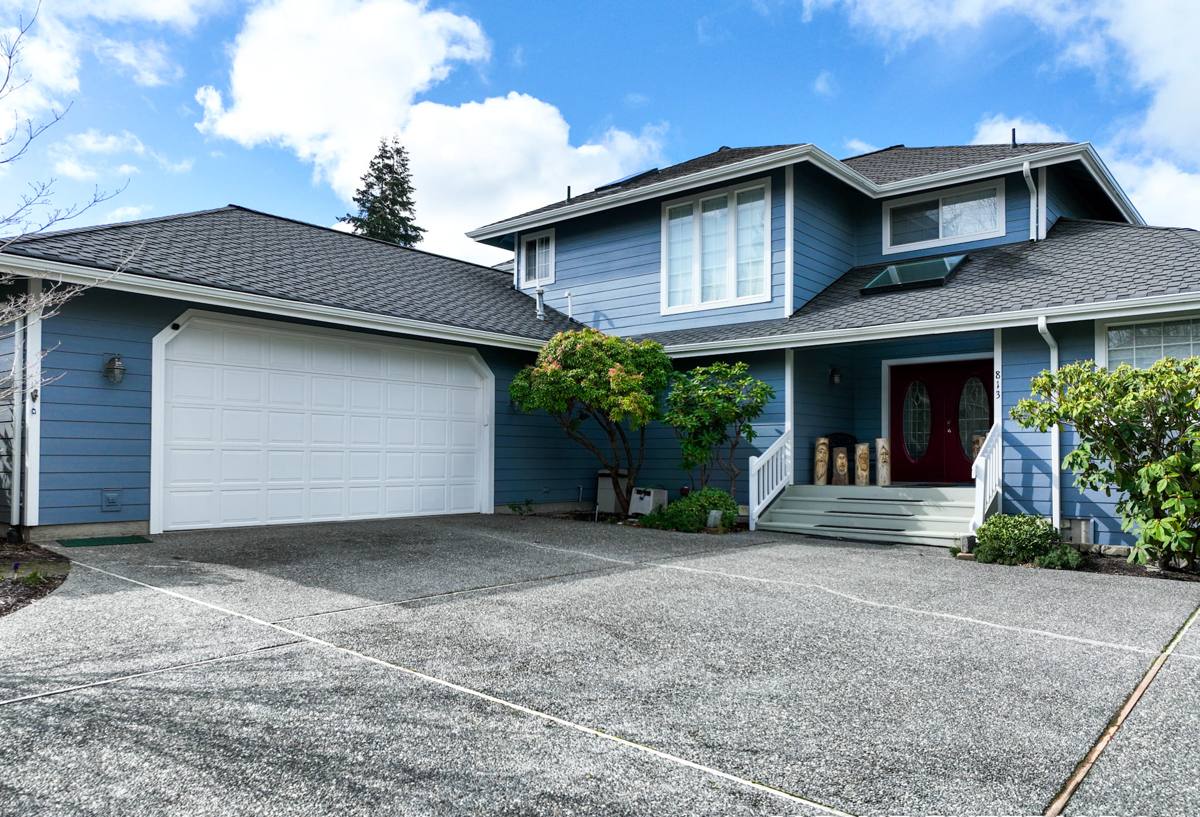
What Whatcom County's Climate Actually Does to a Window
Salt Air and Metal Components
Being near the water means airborne salt settles on everything outdoors, including window hardware, cladding, and screen frames. Cheaper aluminum components and unprotected fasteners corrode faster here than they would inland. Over time that shows up as pitted or chalky metal, stuck locks, and screens that no longer sit flush.
Driving Rain and Wind-Driven Water
Rain that comes in at an angle, pushed by wind off open water or across a clearing, tests a window's flashing and sealant far more than a straight-down rain does. A window that's fine in a calm rain can still leak during a windstorm if the flashing wasn't lapped correctly or the sill pan wasn't sloped to drain.
Shade, Moss, and Sustained Moisture
Trees around many Alger properties mean less direct sun on siding and window trim, which means less drying time after every rain. That extended dampness is what feeds moss and algae growth on sills, trim, and nearby siding, and it's also what accelerates wood rot at window openings that aren't properly flashed or caulked.
Temperature Swings and Condensation
Cool, damp air outside against a warm, humid house inside is a recipe for condensation on glass and, in older or poorly sealed units, inside the wall cavity around the window. Persistent condensation is one of the earliest signs that a window's seal or insulation has failed.
Signs an Alger Home's Windows Need Replacing, Not Just Repair
- Fogging or moisture trapped between the panes of a double-pane window — the seal has failed and can't be fixed, only replaced
- Soft, spongy, or discolored wood at the sill or the corners of the frame
- Windows that are difficult to open, close, or lock, especially after damp weather
- Visible daylight or a noticeable draft around the frame when it's shut
- Paint or finish that's peeling specifically around the window opening, even when the rest of the wall looks fine
- A musty smell or visible mold near the window trim, inside or out
- Rising energy bills with no other explanation, especially heating costs in winter
What a Correct Installation Involves Here
The window unit itself matters, but in this climate the installation detail matters just as much, sometimes more. A high-end window installed with poor flashing will leak. A mid-range window installed correctly, with attention to water management, will outlast it.
Removal and Opening Inspection
Before a new window goes in, the old one comes out and the opening gets inspected — sill, framing, and sheathing — for rot or hidden water damage. This is often where problems from the original build or a prior installation surface. Any soft or damaged wood gets addressed before the new window goes in, not covered over.
Sill Pan and Flashing
A sloped sill pan directs any water that gets past the window itself back outside instead of letting it sit against the framing. Flashing tape and building paper get layered so that water sheds downward and outward at every seam, shingle-style, which is what actually holds up against wind-driven rain rather than a straight-down shower.
Sealing and Insulation
Low-expansion foam or backer rod and sealant fill the gap between the window frame and the rough opening, closing air leaks without bowing the frame out of square. The exterior gets sealed with a caulk rated for the material and for sustained wet exposure, not a general-purpose product that will crack and let water in within a couple of seasons.
Exterior Trim and Finish
Trim gets caulked and, where wood trim is used, primed and painted on all sides — including the back, which is often skipped and is exactly where rot starts in a shaded, damp lot.
Choosing Materials That Hold Up to This Climate
| Frame Material | How It Holds Up Locally | Maintenance |
|---|---|---|
| Vinyl | Doesn't rot or corrode; performs well in salt air and moisture; can be more prone to expansion/contraction with big temperature swings | Low — occasional cleaning |
| Fiberglass | Very stable dimensionally, resists moisture and corrosion well, holds paint if a custom color is wanted | Low |
| Aluminum | Strong and slim-profile, but more prone to corrosion in salt air unless it's a marine-grade or well-finished product | Moderate — watch for pitting near the coast |
| Wood or Wood-Clad | Attractive, especially for older or character homes, but the exposed wood needs consistent upkeep in a wet, shaded lot or it will rot at joints and sills | Higher — regular inspection and refinishing |
We don't push wood-frame windows on shaded, damp Alger lots as a default. It's not that wood windows are a bad product — it's that in sustained moisture and low sun exposure, they demand a maintenance schedule most homeowners don't keep up, and a missed year or two of refinishing shows up as rot at the joints. If a homeowner wants the wood look and understands the upkeep, we'll install it correctly and explain what it needs going forward. Otherwise, vinyl or fiberglass is the more honest recommendation for this specific climate.
Glass Package Considerations
Low-E coatings help manage heat loss through the long, cool, overcast stretch of the year that's typical for this part of Washington. Double-pane is standard; triple-pane adds cost and weight for a marginal gain unless the home is in an especially exposed, windy spot or the owner has a specific noise or efficiency goal. Argon or krypton gas fill between panes adds a modest efficiency boost for a modest cost — worth discussing but not essential on every job.
Why a Crew That Already Works Alger and Sudden Valley Matters
Window replacement is one of those jobs where local experience shows up in the details a homeowner can't easily check themselves. A crew that regularly works this stretch of Whatcom County already knows which flashing details actually stand up to driving rain off the water, which fastener and hardware finishes resist the salt air instead of corroding within a few years, and how much extra drying time to plan for around a job when the weather doesn't cooperate — which, in this area, is often.
That local pattern recognition also means fewer surprises once the old window comes out. Homes in this area built or added onto across different decades tend to share certain quirks — non-standard rough openings, older flashing methods that don't meet current water-management practice, or trim details that need to be matched rather than replaced with something generic. A crew that's opened up a lot of these walls before knows what to expect and how to fix it correctly the first time, without treating it as a surprise change order.
Our Process for an Alger Window Replacement
- On-site assessment — we look at each window opening, check for rot, drafts, and failed seals, and measure accurately rather than estimating
- Material and glass recommendation — based on the home's exposure, shade, and the homeowner's budget and priorities, not a one-size-fits-all pitch
- Written estimate — clear pricing and scope, including any framing repair the opening needs
- Scheduling around the weather — we plan installation days with realistic dry windows in mind so openings aren't left exposed longer than necessary
- Installation — removal, opening inspection and repair as needed, sill pan and flashing, window set, insulation, sealing, and trim
- Final walkthrough — operation check on every window, sealant inspection, and a clean site when we leave
Cost Factors Worth Understanding Before You Budget
| Factor | Why It Moves the Price |
|---|---|
| Number and size of windows | Larger openings and more units mean more material and labor |
| Frame material chosen | Vinyl is typically the most budget-friendly; fiberglass and wood-clad cost more upfront |
| Hidden rot or framing repair | Discovered once the old window is out; adds labor and material but is far cheaper to fix now than later |
| Glass package | Low-E coatings, gas fill, and triple-pane all add incremental cost for incremental performance |
| Access and site conditions | Second-story windows, tight access, or extensive trim work add labor time |
We'll always flag likely cost drivers — like suspected rot around an opening — before we start, not after, so there are no surprises mid-project.
Maintaining New Windows in This Climate
- Rinse salt residue and grime off exterior frames and hardware a couple of times a year, more often if the home is closer to the water
- Check and clear weep holes on vinyl and aluminum frames so water can drain out instead of pooling
- Inspect exterior caulking annually and touch up any cracked or separated sealant before the wet season sets in
- Keep nearby trees and shrubs trimmed back so sun and air can reach the window and dry it out between rains
- Wipe down interior sills after heavy condensation to prevent mold from taking hold
If your windows in Alger are drafty, fogged, hard to operate, or just original to a home that's due for an upgrade, we're happy to take a look and give you a straightforward, no-pressure estimate. Use the form below to get started.