 Sudden Valley Roofing
 What Barkley's Climate Actually Does to a Deck
Barkley sits in one of the wetter corners of Whatcom County, and that shows up fast on an outdoor deck. Driving rain off the Salish Sea pushes moisture sideways under railings and through board gaps, not just straight down. Add a long stretch of gray, low-sun months every fall and winter, and you get the ingredient list moss and algae need to take hold: shade, standing moisture, and organic debris that never fully dries out. Salt-tinged marine air moving inland adds a slower, steadier problem — it accelerates corrosion on fasteners, brackets, and any hardware that isn't rated for it.
None of this is unique to one house. It's the baseline every deck in this part of Sudden Valley has to deal with, and it's why the same deck design that works fine in a drier inland climate can fail early here if it's not built with this weather in mind.
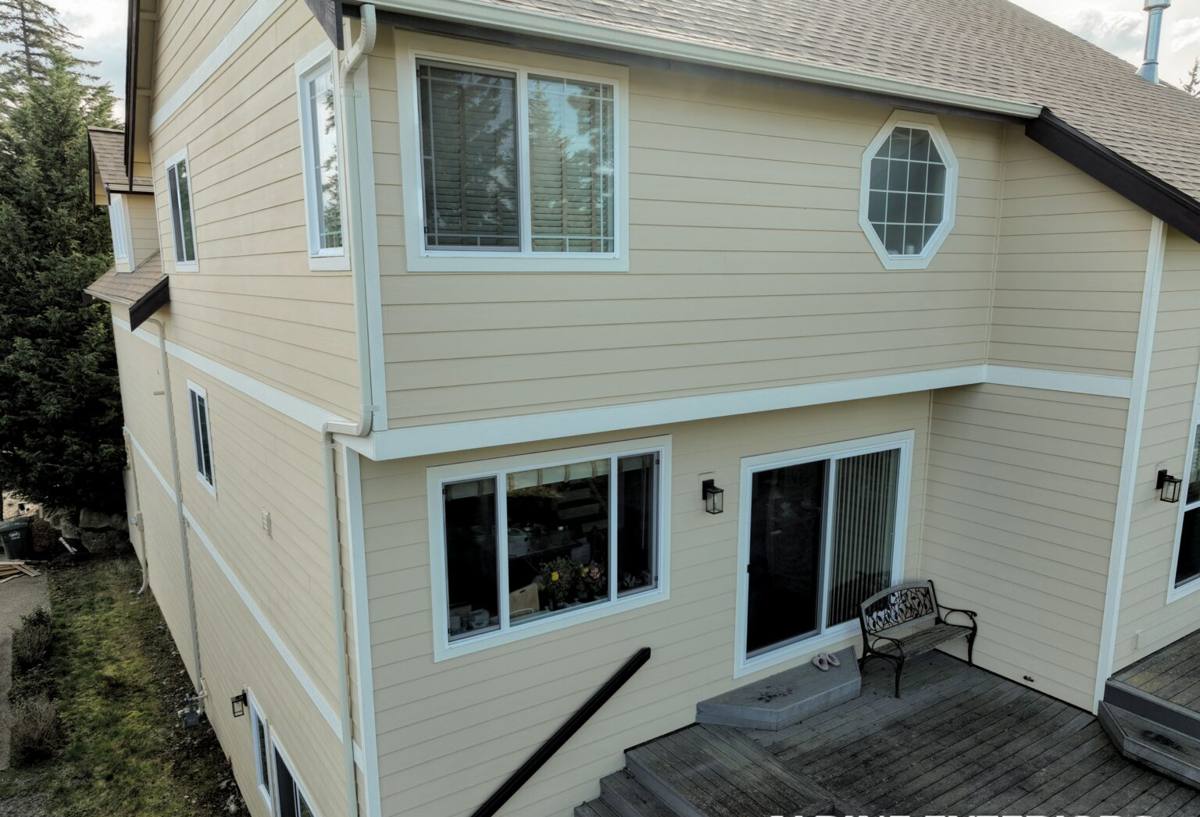
Why Composite Holds Up Better Here Than Traditional Wood
Wood decking isn't a bad product — it's just a high-maintenance one in a climate like this. Untreated or under-maintained wood soaks up moisture during the wet season, swells, and then dries and shrinks again come summer. That cycle opens up cracks and splinters, and cracked wood fiber is exactly where moss spores and mildew get a foothold. Keeping a wood deck ahead of that means annual cleaning, sealing, and touch-up staining — real, recurring work.
Composite decking is manufactured from a blend of wood fiber and plastic, and most boards sold today are "capped" with a protective polymer shell on all four sides. That cap is what actually does the work in a place like this: it sheds water instead of absorbing it, resists staining from tannins and organic buildup, and doesn't provide the same food source for mold and mildew that raw wood fiber does. It won't rot, and it won't need to be sanded or refinished. Composite still gets dirty and can still grow a surface film of algae if it's shaded and never cleaned — no decking material is immune to moss in this climate — but the cleanup is a scrub-and-rinse job, not a structural repair.
What a Correctly Built Composite Deck Requires in This Climate
Substructure and Drainage
The composite boards get the attention because they're what you see, but the framing underneath is what determines whether the deck lasts. In a high-rainfall area, the substructure needs pressure-treated or naturally durable framing lumber, joist tape or flashing over every joist to keep water off the wood, and enough slope and gap spacing that water actually sheds off the deck surface instead of pooling on it or in the framing below.
Fasteners and Flashing
Fastener choice matters more here than in a dry climate. Hardware needs to be rated for treated lumber and coastal-adjacent, salt-influenced air — stainless steel or heavy-coated fasteners at minimum. Ledger board flashing where the deck attaches to the house is one of the most common failure points we see on older decks; if that flashing is missing or was installed wrong, water gets behind the siding and rot starts where nobody can see it until it's advanced.
Ventilation Underneath
Low decks built tight to the ground with no airflow underneath trap moisture and become a magnet for moss creep and insect activity. Proper builds leave enough clearance, or add ventilation gaps, so air can move and the ground underneath the deck can dry between rain events.
Composite vs. Wood vs. PVC for a Barkley Deck
| Material | Moisture / Moss Resistance | Maintenance | Typical Lifespan | Relative Cost |
|---|---|---|---|---|
| Pressure-treated wood | Absorbs water, prone to moss and mildew if not sealed regularly | Annual cleaning, sealing, occasional board replacement | 10-15 years | Lowest upfront |
| Capped composite | Sheds water, resists staining and mildew growth on the surface | Periodic wash-down, no sealing or staining | 25-30+ years | Mid to upper-mid |
| PVC decking | Fully synthetic, highly moisture-resistant | Low; occasional cleaning | 25-30+ years | Highest |
Composite hits the middle ground most Barkley homeowners are actually looking for: a real reduction in the maintenance wood demands, without the top-end price of full PVC. The right choice still depends on budget, how much upkeep you're willing to do, and what look you want — this table is a starting point for that conversation, not a verdict.
What Drives the Cost of a Composite Deck Here
| Cost Factor | Why It Matters |
|---|---|
| Deck size and shape | Square footage plus corners, curves, or multiple levels increase board cuts and labor time |
| Condition of existing substructure | Reusable framing lowers cost; rotted or undersized joists need replacement before decking goes down |
| Board tier | Composite lines range from entry-level to premium; higher tiers add color depth, texture, and longer warranty coverage |
| Railing and stair systems | Composite or metal railing, plus any stairs, adds material and labor beyond the deck surface itself |
| Height and access | Elevated decks or difficult site access add framing complexity and time |
We won't quote a number without seeing the site — anyone who does is guessing. But these are the real variables, and we'll walk through each one with you so the estimate makes sense instead of arriving as a mystery figure.
Our Process, Start to Finish
- On-site assessment. We look at the existing deck or build site, check drainage and sun exposure, and talk through how you actually use the space.
- Design and material selection. We help you pick a board tier, color, and railing system that fits the budget and the way rain and shade hit that part of the property.
- Demolition and prep, if needed. Old decking and any compromised framing come out before new work starts — we don't build over rot.
- Framing and flashing. Treated framing goes in with proper joist protection and ledger flashing at the house connection.
- Decking installation. Boards are laid with correct gapping for drainage and expansion, using hidden fastener systems where the product calls for it.
- Railing, stairs, and finishing details. Fascia, post caps, and trim get buttoned up to match the rest of the deck.
- Final walkthrough. We go over the finished deck with you, including basic care so it stays looking right through the wet months.
Keeping Moss and Mildew Off a Composite Deck
Composite doesn't rot, but it isn't a self-cleaning surface, and in a climate with this much rain and shade, buildup on the surface is normal, not a sign of a bad install. A simple seasonal routine keeps it from becoming a slip hazard or a stain problem:
- Sweep debris off the boards regularly, especially fir needles and leaves that trap moisture against the surface
- Rinse with a garden hose and scrub with a soft-bristle brush and mild soap a couple of times a year, more often in shaded areas
- Avoid pressure washers on high settings — they can damage the protective cap on composite boards
- Trim back overhanging branches or shrubs that keep sections of the deck shaded and slow to dry
- Check railing posts and stair connections once a year for any movement, since that's usually the first sign of a fastener or flashing issue underneath
Signs an Existing Deck Needs Attention
- Soft or spongy spots underfoot, especially near the house connection
- Persistent green or black staining that comes right back after cleaning
- Rust streaks running down from fasteners or brackets
- Gaps or movement where railings meet posts
- Water pooling on the surface instead of draining off after rain
Any one of these is worth a look before it turns into a full rebuild. Caught early, most of these issues are a repair; left alone through another wet season, they usually aren't.
Why a Crew That Already Works Barkley Matters
A lot of deck problems in this area trace back to a build that was designed for a different climate — not enough drainage slope, the wrong fastener grade, or flashing details that get skipped when a crew is used to drier conditions. A crew that regularly works in and around Sudden Valley already knows what this weather does to a deck over time, because we've seen it on the decks we've repaired and rebuilt, not just the ones we've installed new. That local track record shapes how we frame, flash, and fasten every deck we build here, before problems have a chance to start.
If you're weighing a new composite deck for a Barkley property, or trying to figure out whether an existing deck needs repair or a full rebuild, we're glad to take a look and give you a straight answer. Use the form below to request a free, no-pressure estimate.