 Sudden Valley Roofing
 Why New Roof Installation in Bellingham Is Different From a Textbook Job
A new roof is a new roof anywhere in the country, in the sense that the same basic layers go down: deck, underlayment, flashing, covering, ventilation. What changes is how much margin for error the local climate allows, and around Bellingham and Sudden Valley, that margin is thin. This part of Whatcom County sits close enough to the water to get salt-laden air, far enough into the Pacific storm track to take driving, wind-pushed rain most of the year, and shaded and damp enough for moss to be a year-round tenant rather than a seasonal nuisance. A roof designed for a drier, calmer region will show its weaknesses here faster than the manufacturer's warranty paperwork suggests it should.
Salt Air and Coastal Exposure
Homes closer to Bellingham Bay and the surrounding shoreline deal with airborne salt that accelerates corrosion on exposed metal — nail heads, flashing, vent stacks, gutter hardware. It's not the dramatic surf-front exposure you'd see right on the beach, but it's steady, and steady is what wears fasteners and flashing down over a couple of decades. Material choices and fastener specs matter more here than they would fifty miles inland.
Driving Rain and Wind-Driven Water
Whatcom County doesn't just get a lot of rain — it gets a lot of rain moving sideways during winter storm systems. Wind-driven rain doesn't behave like rain falling straight down; it finds its way up under shingle tabs, sideways into vent flashing, and through any seam that was cut a little short. A new roof installed here has to assume water will be pushed uphill and sideways at some point during its life, not just downhill.
Moss, Shade, and the Long Wet Season
Between the tree cover common in and around Sudden Valley and the number of overcast, damp days each year, moss and algae growth is close to guaranteed on a roof that isn't built to resist it. Moss holds moisture against the roofing material, lifts shingle edges as it grows, and works its way into fastener penetrations. A roof installed without moss resistance in mind will need more attention, sooner, than one that accounts for it from day one.
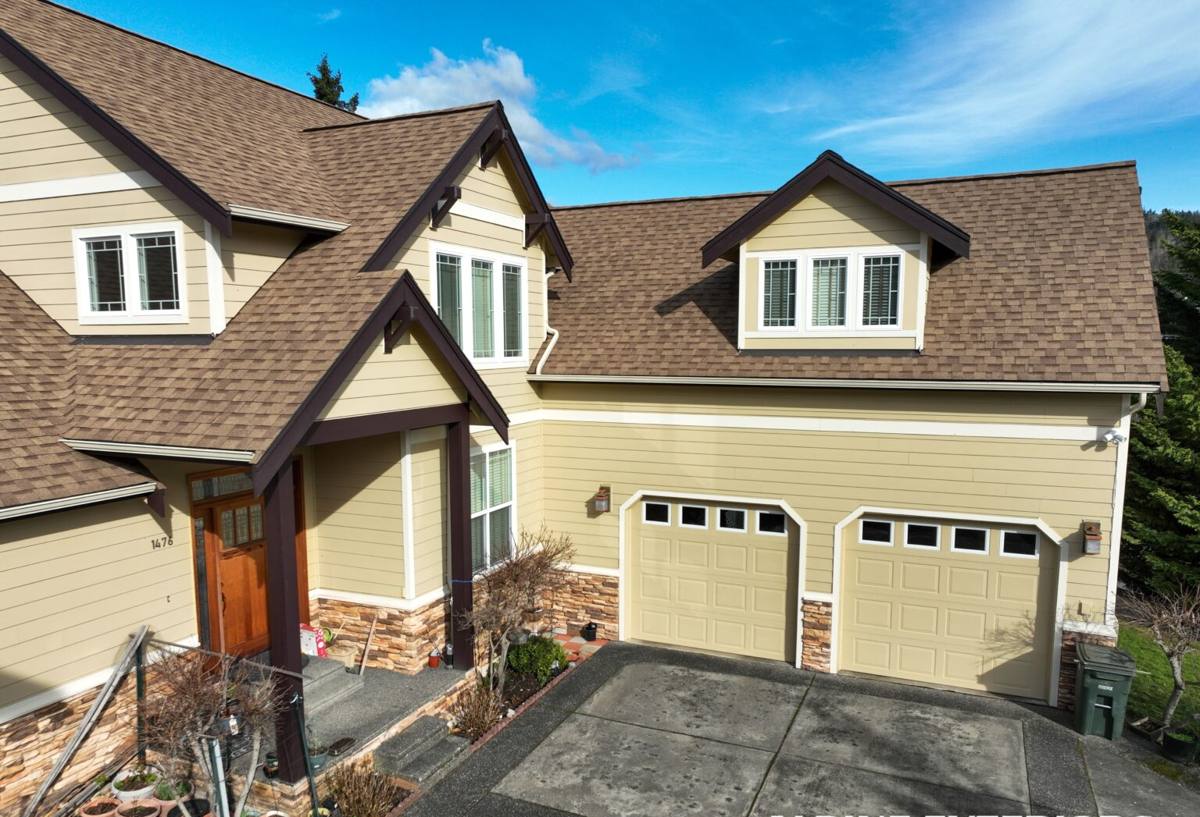
What a Correct New Roof Installation Actually Involves
The visible shingles or panels get all the attention, but the layers underneath are what determine whether a roof performs for its full expected lifespan in this climate.
Tear-Off and Deck Inspection
A proper installation starts with a full tear-off down to the deck, not a layover. That's the only way to actually see the plywood or OSB underneath — soft spots, delamination, or old water staining that a layover would just bury under a new roof. Any damaged decking gets replaced before anything else goes down; skipping this step is the single most common shortcut that causes early failures.
Underlayment and Water Protection
Synthetic underlayment across the full deck is standard, with self-adhering ice-and-water membrane at the vulnerable points — eaves, valleys, around penetrations, and low-slope transitions. Given how much wind-driven rain this area sees, this layer is doing real work, not just satisfying a code minimum.
Flashing at Every Transition
Chimneys, skylights, dormers, sidewalls, and valleys are where roofs actually leak. Step flashing, counter-flashing, and valley metal need to be formed and installed correctly, not just caulked and hoped for. Caulk is a short-term patch, not a flashing detail, and it fails faster in a marine climate than most homeowners expect.
Ventilation That Matches the Climate
Balanced intake and exhaust ventilation keeps the attic dry and temperature-regulated, which matters for two reasons here: it reduces condensation buildup during the wet months, and it helps prevent the ice-dam-adjacent moisture problems that can show up during cold snaps. A roof can be installed with correct materials and still underperform if the attic underneath it is trapping moisture.
Choosing a Roofing Material for Bellingham Conditions
There's no single "best" roofing material — there are trade-offs, and which ones matter most depends on the home, the budget, and how much maintenance the owner wants to take on.
| Material | Moss/Algae Resistance | Wind-Driven Rain Performance | Maintenance | Typical Lifespan |
|---|---|---|---|---|
| Standard asphalt composition shingle | Moderate — algae-resistant granule options help | Good when properly installed and sealed | Periodic moss treatment recommended | 20–30 years |
| Impact/algae-resistant composition shingle | Better — copper or zinc granules resist growth longer | Good | Lower than standard shingle | 25–30+ years |
| Standing seam metal | High — little surface for moss to grip | Excellent when seams and fasteners are correct | Low, but coastal fasteners need attention over decades | 40–60 years |
| Cedar shake | Low without regular treatment — holds moisture | Fair — sensitive to installation quality | High; requires regular upkeep in this climate | 20–30 years with maintenance |
We'll walk through these trade-offs honestly during an estimate. Cedar shake, for example, can look excellent, but in a shaded, damp environment like Sudden Valley it demands a maintenance commitment a lot of homeowners underestimate when they choose it. That's not a knock on the material — it's a fit question, and we'd rather tell you that upfront than sell you something that becomes a headache in five years.
Our New Roof Installation Process
- On-site inspection and estimate. We look at the existing roof, deck condition where visible, ventilation setup, and any problem areas, then walk you through material options and a written cost range.
- Material selection. We help you weigh moss resistance, appearance, budget, and long-term maintenance against each other rather than just upselling the most expensive option.
- Scheduling around weather. Given how much of the year sees rain here, we plan installs for realistic weather windows and stage materials so a partially opened roof isn't left exposed longer than necessary.
- Tear-off and deck repair. Full removal of the old roofing, deck inspection, and replacement of any compromised sheathing before new materials go down.
- Underlayment, flashing, and ventilation installation. This is where the roof's actual water resistance is built — done carefully, not rushed to get to the visible layer.
- New roofing material installation. Installed to manufacturer specifications and to the fastening patterns appropriate for wind exposure in this area.
- Cleanup and final walkthrough. Magnetic sweep for stray fasteners, debris removal, and a walkthrough so you understand what was done and what maintenance to expect going forward.
Signs a Bellingham Home Needs Replacement, Not Repair
Not every roof problem calls for full replacement, but there's a point where patching becomes a way of postponing an inevitable bigger job. Some signs worth taking seriously:
- Shingles that are curling, cracking, or losing granules across large sections rather than one isolated spot
- Heavy, persistent moss growth that keeps returning shortly after cleaning
- Visible daylight through the roof deck from inside the attic
- Soft or spongy spots when walking the roof, indicating deck damage underneath
- Recurring leaks in different locations rather than the same one repeatedly
- A roof approaching or past the upper end of its material's expected lifespan combined with any of the above
- Multiple existing roofing layers already in place, which limits repair options and often requires full tear-off anyway
What Drives the Cost of a New Roof Installation
Every estimate is specific to the house, but the same handful of factors move the price up or down on most Bellingham-area projects.
| Factor | Why It Matters |
|---|---|
| Roof size and complexity | More valleys, dormers, and roof planes mean more flashing work and labor time |
| Pitch and access | Steeper roofs and homes with limited access take longer and require more safety setup |
| Existing layers to remove | Multiple old layers add tear-off time and disposal cost |
| Deck condition | Rotted or delaminated sheathing found during tear-off adds material and labor |
| Material choice | Asphalt shingle, metal, and cedar carry very different material and installation costs |
| Ventilation upgrades | Adding or correcting intake/exhaust venting is sometimes needed and adds to scope |
We give a written estimate that breaks these out rather than a single lump number, so you can see what you're actually paying for.
Why Hiring a Crew That Already Works in Bellingham Matters
A roofing crew that regularly works Sudden Valley and the surrounding Bellingham area has already seen how the local conditions play out over years, not just at install day. That means knowing which flashing details tend to fail first in wind-driven rain, which slopes and tree-cover combinations lead to the worst moss buildup, and how to plan a tear-off around a stretch of Whatcom County weather without leaving a house exposed. It also means being reachable afterward — for warranty questions, storm damage, or a maintenance check — rather than being a crew that passed through once and moved on.
Maintaining a New Roof Through the Wet Season
A well-installed roof still benefits from basic upkeep in this climate. Keeping gutters clear so water isn't backing up under the eaves, having moss treated before it establishes heavily rather than after, keeping overhanging branches trimmed back to reduce shade and debris, and doing a visual check after major windstorms all go a long way toward getting the full lifespan out of the investment. None of this replaces a correct installation — it just protects it.
If you're weighing a new roof for a home in Bellingham or Sudden Valley, we're happy to take a look and put together a straightforward, no-pressure estimate — just fill out the form below.