 Sudden Valley Roofing
 Why Bellingham's Climate Is Hard on Siding
Bellingham sits where the Salish Sea meets thick evergreen cover, and that combination is tough on exterior siding. Salt-laden air moves in off the water and settles on fasteners, trim, and any exposed wood or metal, accelerating corrosion and finish breakdown over the years. Add Whatcom County's long stretch of driving rain — often coming in sideways during fall and winter storms — and siding here takes on moisture loads that drier inland areas never see. Then there's moss. Between shade cover, humidity, and a rainy season that can run eight months or more, north- and west-facing walls collect moss and algae almost continuously, and that growth holds moisture directly against the siding surface.
None of this means siding fails quickly — it means siding that isn't detailed correctly, or made from a material poorly suited to sustained moisture exposure, shows problems years before it should. Repair work in this area is rarely just cosmetic. Most of the calls we get involve some combination of trapped moisture, failed caulking, and growth that's been sitting against the wall long enough to start doing damage underneath.
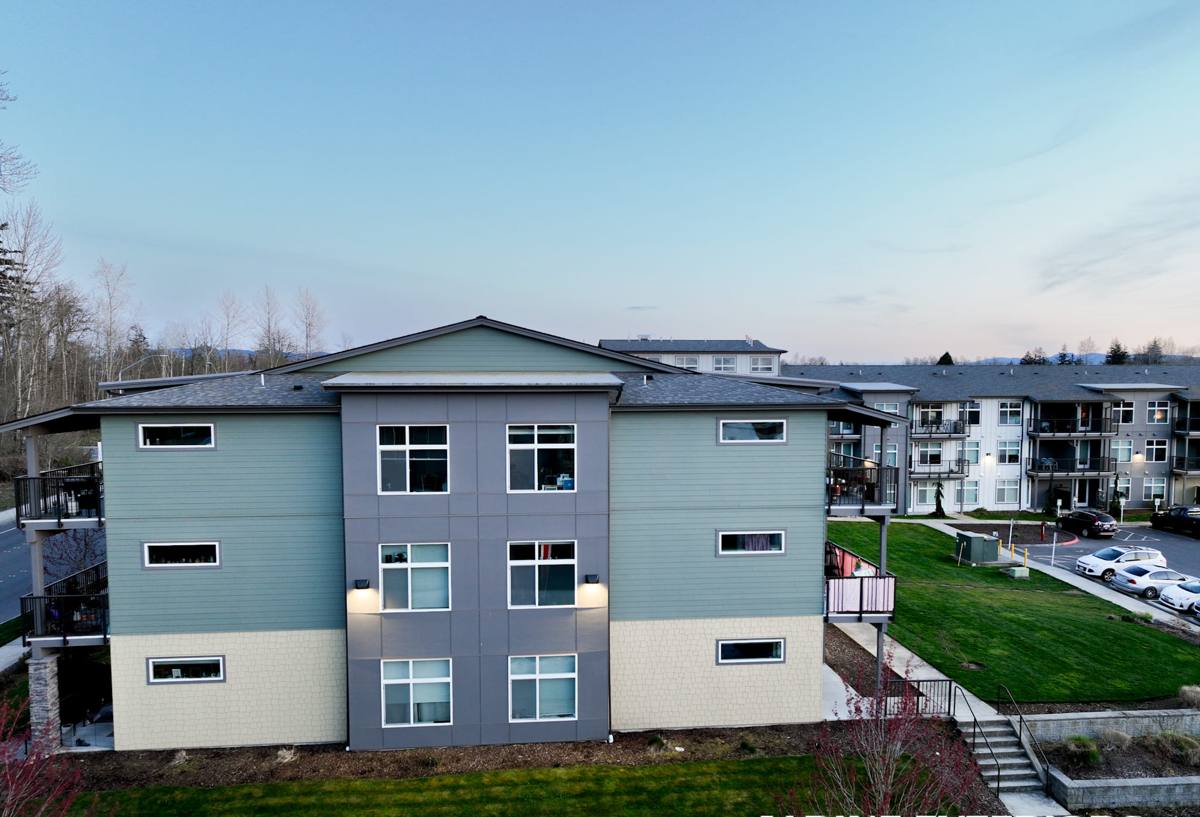
Signs Your Siding Needs Repair
Catching problems early is the difference between a repair that costs a few hundred dollars and one that turns into replacing sheathing and framing. Walk your exterior a couple of times a year — especially after the first hard fall storms — and look for:
- Soft or spongy spots when you press on a panel, especially near the bottom courses or under windows
- Visible cracking, splitting, or buckling in individual boards or panels
- Paint that's peeling, bubbling, or chalking heavily in one area but not others
- Dark streaking, persistent moss, or algae that keeps coming back even after cleaning
- Gaps where caulking has shrunk, cracked, or pulled away from trim and window edges
- Rust streaks below fasteners or trim, a sign salt air is working on exposed metal
- Musty smells or visible staining on interior walls that back up to exterior siding
Any one of these on its own might be minor. Several showing up in the same area, especially on a wall that takes the worst of the weather, usually means moisture has been getting behind the siding for a while.
What a Correct Siding Repair Job Involves
Diagnosing What's Behind the Panel
The mistake we see most often — from both DIY patch jobs and rushed contractor visits — is treating the visible damage as the whole problem. A cracked board or a soft spot is usually a symptom. Before we replace anything, we pull the damaged section and look at what's underneath: the weather-resistant barrier, the sheathing, the flashing details around windows and penetrations. If water has been getting behind the siding, patching over the surface without addressing the entry point just buys a year or two before the same spot fails again.
Matching Existing Siding
Once we know the extent of the damage, the repair itself needs to blend in, not just function. That means matching board profile and exposure, keeping fastener patterns consistent, and — when the siding is James Hardie with a factory ColorPlus finish — sourcing replacement boards in a matching color rather than field-painting a patch that will weather differently than the rest of the wall over time.
Repair or Replace? How We Decide
What Drives the Cost of a Repair
A few things determine what a given repair actually costs: how much of the wall is affected, how accessible that section is, whether matching material is readily available, and — the variable nobody can quote over the phone — what we find once the damaged section is opened up. A clean, isolated repair with sound sheathing underneath is a straightforward job. One where moisture has been sitting for a season or two, and framing needs attention, is a different scope entirely. We won't guess at that difference; we'll show you what we find before we quote the fix.
Not every damaged section needs a full re-side, and we don't push replacement when a targeted repair will hold up. The decision usually comes down to a few factors:
| Factor | Leans Toward Repair | Leans Toward Replacement |
|---|---|---|
| Extent of damage | Isolated to one or two wall sections | Recurring across multiple elevations |
| Age of siding | Well within its expected service life | Near or past the end of its expected life |
| Condition behind the siding | Sheathing and barrier are sound | Rot or moisture damage found in framing |
| Material | Hardie or another durable material in otherwise good shape | Original material was poorly suited to this climate |
| Typical cost range | Often a few hundred to a few thousand dollars, depending on scope | A larger investment, but resets the clock on the whole exterior |
We'll always give you the honest read on which side of that table your house falls on before we recommend a direction.
Why We Repair — and Install — Only James Hardie Fiber Cement
When we do need to replace a damaged section, or when repair after repair signals it's time to talk about a fuller re-side, we work exclusively in James Hardie fiber cement. We don't install vinyl, LP SmartSide, or cedar, and it's not a marketing position — it's a practical one, shaped by exactly the kind of repair calls this climate generates.
Vinyl siding can crack in cold snaps and distort under direct sun exposure, and once a panel is damaged it's often discontinued or faded relative to the rest of the wall, making an invisible repair difficult. Wood products like cedar or primed spruce look good going up, but in a climate with this much sustained moisture and moss pressure, they demand a maintenance schedule — recaulking, repainting, checking for rot — that most homeowners underestimate until they're facing a bigger repair. Engineered wood products like LP SmartSide perform reasonably when detailed and maintained precisely to spec, but they're more sensitive to moisture intrusion at cut edges and fastener penetrations than fiber cement, which matters a lot where wind-driven rain finds every gap.
James Hardie fiber cement doesn't rot, doesn't feed moss the way wood-based products can, and holds its factory ColorPlus finish for years without the repainting cycle other materials need. It's noncombustible, which increasingly matters for insurance and building code reasons. And because Hardie's HZ product lines are engineered for specific climate zones, including the wet Pacific Northwest, what goes on a Bellingham home is built for exactly the conditions it's going to face. When we do a repair, we want the patched section to perform as long as the rest of the wall — Hardie is what makes that realistic.
Our Siding Repair Process in Bellingham
- On-site inspection of the damaged area and a check of the surrounding wall for related issues, not just the obvious spot
- Where warranted, opening up the damaged section to inspect the barrier, sheathing, and flashing underneath
- A clear explanation of what we found and a straight recommendation — repair, or something more — with reasoning you can follow
- Sourcing matching material, including color-matched Hardie boards where the existing siding is ColorPlus finished
- Correct installation: proper fastening, clearances, flashing, and sealant detailing so the repair doesn't just look right, it sheds water right
- Cleanup and a final walk-through so you know exactly what was done and why
Why Hiring a Crew That Already Works in Bellingham Matters
Siding repair is one of those jobs where local experience shows up in details you'd never think to ask about. A crew that works Whatcom County regularly knows which wall orientations take the worst of the driving rain, how aggressively moss establishes itself on shaded elevations here compared to drier parts of the state, and how salt air affects fastener choice and trim details over time. That knowledge changes how a repair gets detailed — not just patched to look fine today, but built to hold up through another wet season.
It also matters for something more basic: availability. A contractor based elsewhere who occasionally takes a Bellingham job may not prioritize a callback if something needs adjusting after the fact. A crew that's already working in the area has a reason to get it right the first time and to stand behind it, and it's easier to check on a repair a year or two later without scheduling a special trip.
Keeping Repaired Siding in Good Shape
A good repair should be close to maintenance-free, but a little attention keeps it — and the rest of your siding — performing well through Bellingham's wet stretch:
- Keep gutters clear so overflow doesn't run down the wall face and feed moss growth
- Trim back vegetation and tree cover that keeps a wall shaded and damp longer than it needs to be
- Rinse moss and algae off with a soft wash rather than a pressure washer, which can force water behind panels and joints
- Check caulking at trim, windows, and penetrations once a year and have gaps resealed before winter rains set in
- Have any soft spots or recurring stains looked at promptly — small repairs stay small when they're caught early
If you're seeing damage, staining, or persistent moss on your siding and want a straight read on what it actually needs, we're happy to take a look. Reach out for a free, no-pressure estimate — we'll tell you honestly whether it's a repair or something bigger, using the form below.