 Sudden Valley Roofing
 Why Columbia Homes Need Windows Built for This Climate
Columbia sits among the wooded, lake-adjacent streets of Sudden Valley, tucked into Whatcom County's mild but relentlessly wet weather pattern. Homes here don't deal with extreme heat or hard freezes very often — the real enemy is moisture that never fully lets up. Marine air moving inland off Puget Sound keeps humidity high most of the year, and the tree cover that makes this area so livable also keeps roofs, siding, and window frames shaded and slow to dry out after a storm. That combination — driving rain, salt-tinged air, and shade — is exactly what feeds a long moss season on anything with a horizontal surface, including window sills and trim.
None of that is a reason to over-build or over-spend on windows. It's a reason to get the basics right: correct flashing, the right frame material for a damp climate, and glass that won't fog or sweat when temperatures swing between a cold morning and a warmer afternoon. A window that's a good fit for a dry inland climate isn't automatically a good fit for Columbia.
What "Custom" Actually Means for This Job
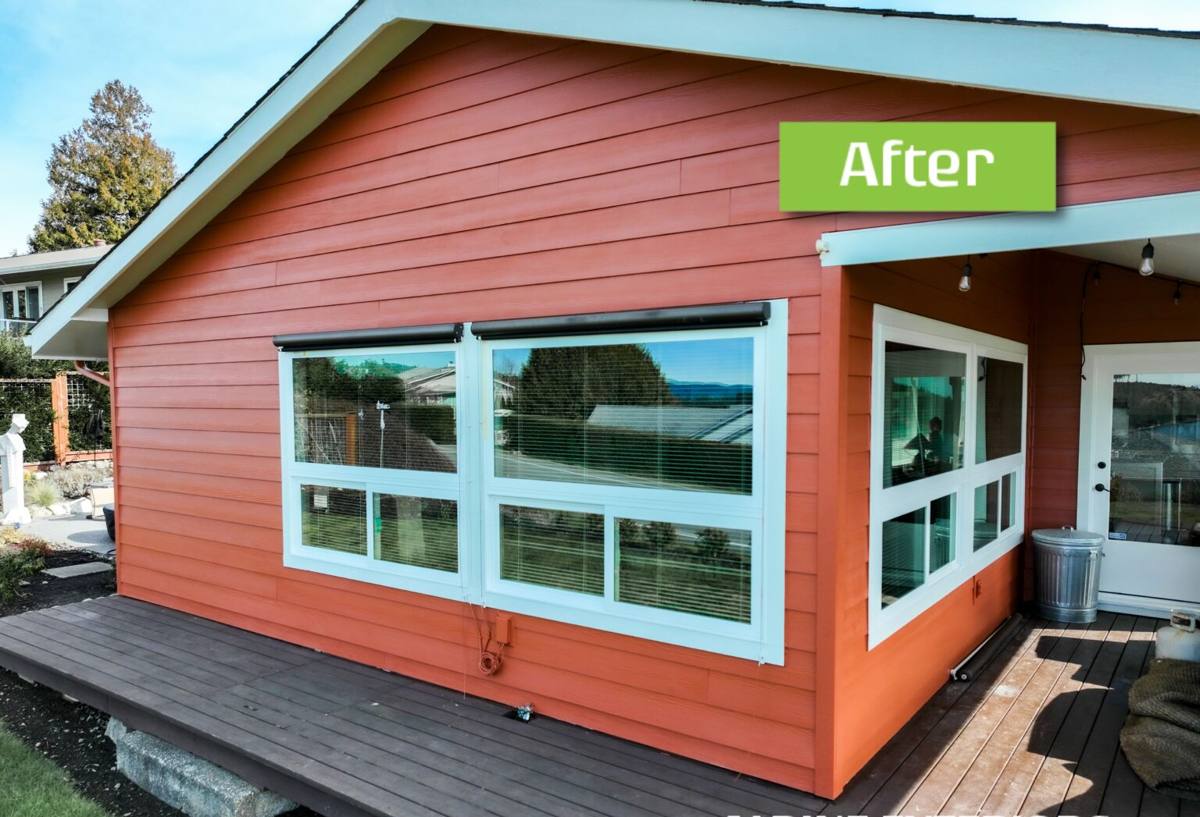
"Custom windows" doesn't have to mean unusual shapes or high-end architectural glass, though we do that work too. For most Columbia homes it means windows built to the exact rough opening in your wall instead of forcing your house to fit a stock size. Older Sudden Valley homes in particular were often framed before manufacturers standardized opening sizes, so a true custom or made-to-order unit avoids the shims, filler panels, and gaps that cause leaks down the road.
Retrofit vs. Full-Frame Replacement
There are two honest approaches to replacing a window, and which one is right depends on the condition of what's already in the wall:
- Retrofit (insert) replacement — the new window is built to fit inside the existing frame. Faster, less disruptive to siding and trim, and usually less expensive. Only appropriate when the existing frame is still solid and square.
- Full-frame replacement — the old frame comes out entirely, down to the rough opening, so we can inspect and replace flashing and sheathing. Takes longer and costs more, but it's the only correct option when there's rot, soft framing, or evidence of past water intrusion.
A contractor who tells you every job is a quick insert replacement, sight unseen, isn't being straight with you. We inspect the opening before we quote which approach your home actually needs.
Frame Material: What Holds Up in a Wet Climate
Frame material matters more here than in drier parts of the state, because the frame is what's absorbing rain and humidity day after day for years. Here's how the common options actually perform in a Whatcom County climate, in plain terms:
| Material | Moisture Behavior | Maintenance | General Cost Tier |
|---|---|---|---|
| Vinyl | Won't rot or corrode; seams can loosen over decades | Low — occasional cleaning | Lower |
| Fiberglass | Excellent — dimensionally stable, doesn't expand/contract much with moisture or temperature | Low | Mid to higher |
| Wood-clad | Good if cladding is intact; exposed wood edges are vulnerable | Higher — finish and seals need periodic attention | Higher |
| Aluminum | Doesn't rot, but conducts cold and can condense/sweat without a thermal break | Low, but condensation issues need monitoring | Mid |
We don't push wood-frame windows on homes in this climate unless the homeowner specifically wants the look and understands the upkeep involved. It's not that wood windows are bad — it's that in a climate with this much sustained moisture, any gap in the finish or a cracked seal gives water a way in, and that's a maintenance commitment more than most people want to sign up for. Vinyl and fiberglass are our standard recommendations for Columbia because they hold up with the least ongoing attention.
Glass Packages That Make Sense Here
Whatcom County's mild temperature swings mean you're not fighting extreme heat, so glass choice here is more about condensation control and comfort than raw insulation numbers:
- Double-pane with Low-E coating and argon fill — the standard choice for most Columbia homes. Cuts down on interior condensation and keeps rooms comfortable without a big price jump.
- Triple-pane — worth it for north-facing rooms, homes right along the lake with more wind exposure, or anyone prioritizing quiet and lower heating bills. Adds cost and weight, which matters for larger openings.
- Tempered glass — required by code near doors, stairs, and low sills — we'll flag where it applies during the estimate.
Signs Your Current Windows Are Losing the Battle
Because moisture damage in this climate is gradual, a lot of homeowners live with a failing window for years before addressing it. Worth checking for:
- Fogging or a permanent haze between panes — the seal has failed and the gas fill is gone
- Soft or discolored wood at the sill or bottom corners of the frame
- Visible moss or dark streaking building up on the sill or in the frame's drainage track
- Drafts you can feel even when the window is latched shut
- Difficulty opening, closing, or locking — frames can swell or warp with sustained moisture exposure
- Paint or finish bubbling and peeling on interior trim near the window
Any one of these on its own isn't an emergency. Several together, especially soft wood or persistent moss buildup, usually means water is getting past the exterior seal and it's worth having someone look at it before it spreads into the wall framing.
How We Approach a Columbia Window Job
Inspection and Prep
Before we quote anything, we look at the existing opening — is the framing solid, is there evidence of past leaks, is the siding around it in good shape. This tells us honestly whether a retrofit or full-frame job is appropriate, instead of guessing from a photo or a phone call.
Flashing and Moisture Management
This is the step that actually determines whether a window leaks in five years, and it's also the step that's easiest to rush. Proper flashing tape and a correctly lapped weather-resistive barrier direct water down and out and around the opening rather than behind it. In a climate that sees this much sustained rain, we treat this step as non-negotiable, not an upsell.
Setting and Sealing
The window gets shimmed level and square, fastened per manufacturer spec, and sealed with backer rod and sealant rated for exterior exposure — not just a bead of caulk around the trim. Interior insulation around the frame gets filled properly so there's no gap for condensation to form inside the wall cavity.
Finish and Walkthrough
Trim goes back on, everything gets cleaned up, and we walk the job with you — opening and closing every window, checking locks, and pointing out anything worth knowing for future maintenance.
Why a Crew That Already Works This Neighborhood Matters
Sudden Valley's lake-community layout — private roads, mature tree cover, homes set back from the street — isn't something every contractor is used to working around. A crew that's already done jobs in Columbia knows how to stage material and equipment without tearing up a yard, understands typical access points, and isn't learning the neighborhood's quirks on your dime. We're also familiar with the kind of window failures that show up repeatedly on homes with this much shade and moisture exposure, which means less time spent diagnosing and more time spent fixing it correctly the first time.
What Affects the Cost of a Window Project
| Factor | How It Affects Price |
|---|---|
| Retrofit vs. full-frame | Full-frame costs more due to added labor, trim, and sometimes siding repair |
| Frame material | Vinyl is typically the most affordable; fiberglass and wood-clad run higher |
| Glass package | Triple-pane and specialty coatings add cost over standard double-pane Low-E |
| Number and size of openings | Larger units and multi-window jobs benefit from some economy of scale |
| Access and site conditions | Upper-story windows, tight lot access, or extensive prep add labor time |
| Existing damage found | Rot or soft framing discovered during removal requires repair before the new window goes in |
We won't quote a firm number without seeing the openings — anyone who does is either guessing or leaving room to change the price later. What we can promise is a written estimate that breaks these factors out so you know what you're actually paying for.
Living With Your Windows Afterward
New windows in this climate still need a little seasonal attention. Keeping sills and drainage tracks clear of moss and debris, checking that exterior sealant hasn't cracked after a few winters, and trimming back branches that keep a window in constant shade all go a long way toward getting the full lifespan out of the investment. None of it is demanding — it's the same kind of upkeep this climate asks of a roof or siding, just on a smaller scale.
If your Columbia-area home has windows that are fogging, sticking, drafting, or showing moss and soft wood at the sills, we're happy to take a look and give you an honest read on whether it's a repair, a partial replacement, or a full job — no pressure either way. Reach out for a free estimate using the form below.