 Sudden Valley Roofing
 Siding Replacement in Columbia: Why Local Conditions Change the Job
Columbia sits within the broader Sudden Valley area of Whatcom County, in the kind of setting that looks great on a home but is genuinely hard on exterior materials. Between the tree cover, the proximity to water, and the long stretch of wet months that define a Pacific Northwest year, siding here works harder than siding in a drier inland climate. A replacement job that ignores those conditions - and just repeats whatever went up the first time - tends to disappoint homeowners years sooner than it should.
This page is about one thing: doing siding replacement correctly on a Columbia home, given what the local climate actually does to a building envelope. We'll walk through what causes siding to fail here, what a correct installation involves, how our process works, and why local experience matters as much as the material itself.
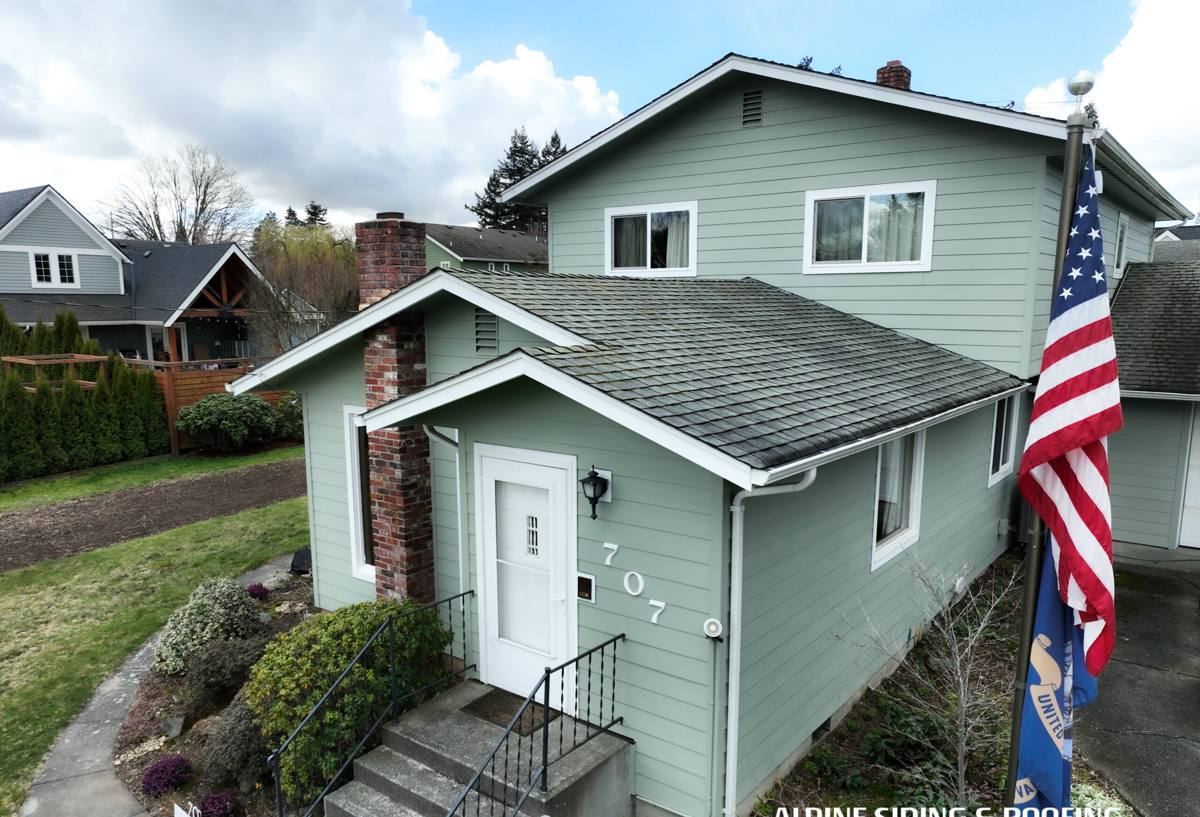
What Local Climate Does to Siding Over Time
Three factors show up again and again when we inspect siding failures on homes in this part of Whatcom County: salt-tinged air, wind-driven rain, and an extended moss season. None of them are dramatic on their own, but stacked together year after year, they explain most of the premature siding problems we find.
Salt Air and Coastal Exposure
Air moving inland off Puget Sound and the surrounding waterways carries salt content that accelerates corrosion on fasteners, flashing, and trim, and it slowly breaks down paint films and caulking faster than a purely inland climate would. Siding materials and finishes that aren't formulated to handle that exposure tend to chalk, fade, or lose their seal years ahead of schedule.
Wind-Driven Rain
Rain in this region rarely falls straight down. Storms push moisture sideways and upward under laps, around trim, and into any gap that wasn't sealed or flashed correctly. Siding systems depend on a layered defense - the water-resistive barrier, the flashing, and the siding itself all working together - and driving rain is what exposes any shortcut taken in that layering.
The Long Moss Season
Heavy tree cover and consistent shade keep surfaces damp for months at a time, which is exactly what moss, algae, and mildew need to take hold. On siding, that means constant moisture sitting against the material's surface, and on wood-based products in particular, that sustained dampness is what drives rot from the outside in.
Signs Your Columbia Home May Need Siding Replacement
Not every siding problem calls for full replacement, but several signs indicate the material or the underlying installation has reached the point where patching won't hold:
- Soft or spongy spots when you press on the siding, especially near the bottom courses or under windows
- Persistent moss, algae, or dark staining that returns within weeks of cleaning
- Visible warping, cupping, or separation at seams and panel joints
- Paint that's peeling or bubbling rather than just fading
- Cracked or crumbling caulking around trim, windows, and corners
- Interior signs like peeling paint, musty smells, or damp drywall on exterior-facing walls
- Siding that's original to a home built more than 20-25 years ago, particularly wood-based products
If you're seeing two or more of these, it's worth having the siding and the sheathing behind it inspected before deciding between repair and replacement.
What a Correct Siding Replacement Job Actually Involves
Siding replacement is not just swapping old panels for new ones. The materials you can see are the last step in a system that has to work as a whole, and skipping any part of it is exactly how a home ends up with the same problems five or ten years later.
Tear-Off and Sheathing Inspection
Old siding comes off down to the sheathing, which then gets inspected for rot, soft spots, or water damage that's been hidden for years. Any compromised sheathing gets repaired or replaced before anything new goes back on - covering damaged sheathing with new siding just seals the problem in.
Water-Resistive Barrier and Flashing
A new weather-resistive barrier goes on correctly lapped, shingle-style, so water is directed down and out rather than trapped. Flashing gets installed at every horizontal trim piece, window, door, and penetration - this is the detail work that determines whether driving rain stays out or works its way behind the siding over time.
Fastening and Gaps to Manufacturer Spec
Fiber cement siding has specific fastener types, spacing, and gap requirements between panels, trim, and adjoining surfaces. These details exist for a reason: proper gaps let the material handle moisture and temperature movement without cracking or trapping water, and correct fastening keeps panels secure through wind events without splitting the material.
Finish and Detailing
The finish coat - whether factory-applied or field-painted - is your first line of defense against salt air and UV. Corners, butt joints, and trim transitions get sealed with the right products, not whatever caulk happens to be on the truck.
Why We Install Only James Hardie Fiber Cement
We don't install vinyl siding, LP SmartSide, Cemplank, Allura, primed spruce, or cedar. That's a deliberate standard, not a lack of options. Given what this climate does to a building envelope, we've found that James Hardie fiber cement is the product that consistently holds up to salt air, sustained moisture, and the area's moss and mildew pressure without the maintenance burden or moisture vulnerabilities that come with the alternatives.
| Factor | James Hardie Fiber Cement | Vinyl | Engineered Wood (LP SmartSide) | Cedar |
|---|---|---|---|---|
| Moisture/rot resistance | Non-organic, doesn't rot | Won't rot, but can trap moisture behind panels | Wood-based core, vulnerable if the finish fails | Natural wood, rot-prone without diligent upkeep |
| Moss/mildew resistance | Resists surface growth; cleans up well | Can host mildew in seams and laps | Susceptible where moisture sits | Prone to moss and algae in shaded, damp settings |
| Salt air / coastal durability | Formulated for climate exposure (HZ product lines) | Can become brittle and fade with UV/salt over time | Finish and edges are the weak point | Weathers and grays; needs regular sealing |
| Fire resistance | Non-combustible | Combustible, can melt/warp | Combustible | Combustible |
| Ongoing maintenance | Low; factory finish holds color for years | Low, but repairs are visible and color-matching is hard | Moderate to high; finish upkeep is critical | High; regular staining/sealing required |
| Warranty | Strong, transferable material warranty | Varies widely by manufacturer/grade | Manufacturer warranty, moisture exclusions common | Typically no manufacturer warranty |
Every product in that table has legitimate uses somewhere. We simply don't think they hold up as well as Hardie's fiber cement does against the specific combination of salt air, driving rain, and moss that Whatcom County homes deal with year after year.
Our Siding Replacement Process in Columbia
- Inspection and estimate. We walk the exterior, check for soft spots and moisture damage, and give you an honest read on whether you need full replacement or targeted repair.
- Tear-off and sheathing assessment. Old siding comes off, sheathing gets inspected, and any damage is addressed before we move forward - no surprises added mid-project without a conversation first.
- Water management installation. Weather-resistive barrier and flashing go in first, sequenced to shed water the way this climate demands.
- Hardie installation to spec. Panels go up with the correct fastener schedule, gaps, and clearances, following both the manufacturer's requirements and what we've learned works in this specific climate.
- Trim, finish, and detail work. Corners, joints, and penetrations get properly sealed and finished so the system works as a whole, not just panel by panel.
- Final walkthrough and warranty registration. We review the finished work with you and make sure your material warranty is properly on file.
Cost Factors for Siding Replacement in This Area
| Factor | Why It Affects Cost |
|---|---|
| Home size and number of stories | More square footage and taller walls mean more material and labor, plus equipment for higher work |
| Condition of existing sheathing | Rot discovered during tear-off has to be repaired before new siding goes on |
| Siding profile and trim complexity | Multiple trim details, corner boards, and accent bands take more time than a simple lap pattern |
| Site access | Tree cover, slopes, and tight setbacks near the lake can slow staging and material handling |
| Finish choice | Factory-applied ColorPlus finishes versus field painting affect both cost and long-term maintenance |
We won't quote a firm number without seeing the home, but these are the variables that move a project's price up or down - and we'll walk through each one with you during the estimate.
Why Hiring a Crew That Already Works in Columbia and Sudden Valley Matters
Siding installation is largely the same trade everywhere, but the details that matter change with the climate. A crew that regularly works in this part of Whatcom County already knows how far to keep fastener spacing on the safe side for sustained moisture, where moss tends to build up fastest on a given exposure, and how driving rain off the water tends to find weak flashing details before anything else does.
Many homes in planned communities like Sudden Valley also fall under community association guidelines for exterior changes, so it's worth working with a contractor who's used to that approval process rather than learning it for the first time on your project. Local experience shortens the learning curve and reduces the chance of doing something twice.
Get a Straight Answer on Your Siding
If your Columbia home is showing moss, soft spots, or paint that won't hold up, it's worth having someone take a real look before you decide what to do next. We offer free, no-pressure estimates - use the form below to get started.