 Sudden Valley Roofing
 Deck Building Built for Cordata's Coastal Climate
Cordata sits close enough to Bellingham Bay that salt-laden air is part of daily life, and close enough to the foothills that rain settles in for weeks at a time. A deck built to a generic spec sheet — the kind sold in most home center project guides — is not built for that combination. It's built for a drier, less corrosive climate somewhere else. When we build a deck in Cordata, or anywhere in Whatcom County, we start from the actual conditions the structure will live in, not from a national average.
That matters more with decks than almost any other exterior project, because a deck's structural integrity depends on framing members and fasteners that are mostly hidden after the final board goes down. A deck can look finished and clean for a season or two even when it was built wrong. The problems show up later, underneath, where nobody checks until there's a soft spot or a rust stain bleeding through the decking.
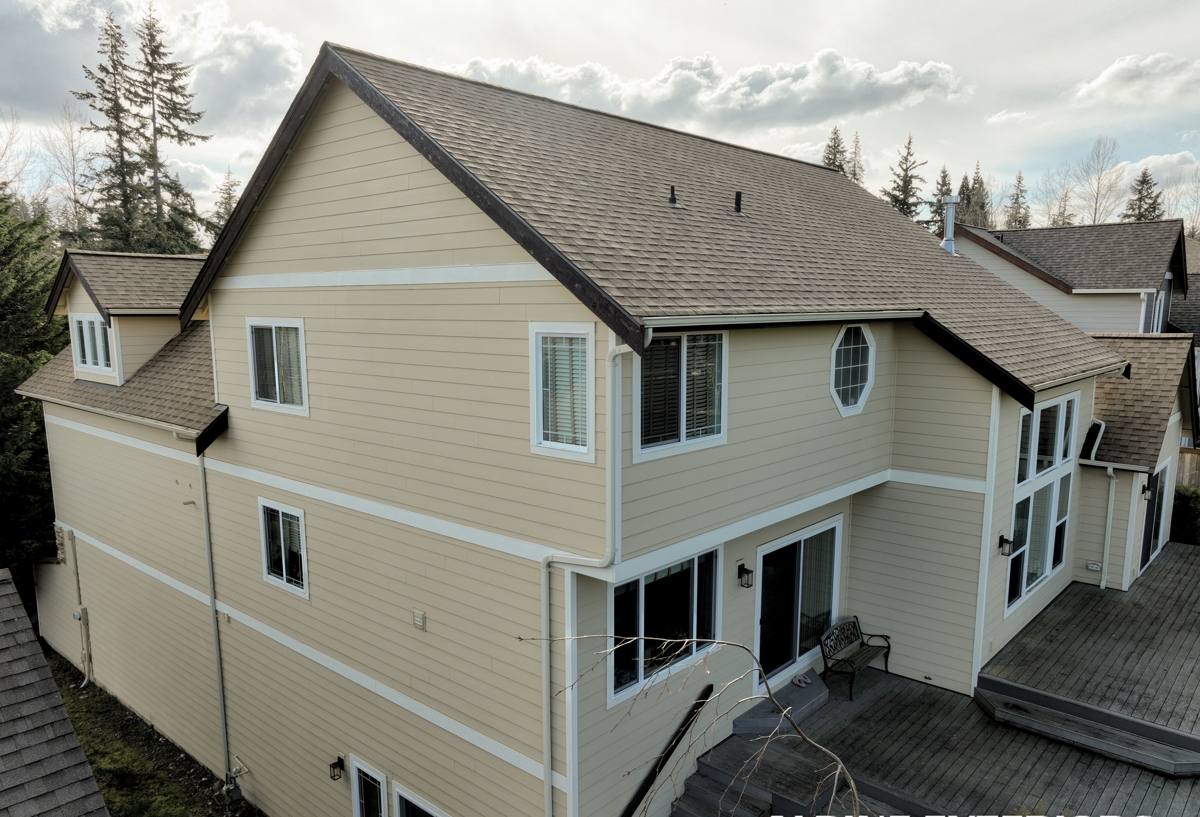
What Local Weather Does to a Deck Built the Wrong Way
Driving Rain and Water Intrusion
Western Washington rain doesn't fall straight down very often — wind-driven rain gets pushed sideways into ledger connections, under flashing, and into any gap a builder didn't seal. On a deck, the ledger board (the piece bolted to the house that carries much of the structure's weight) is the single most common point of hidden rot, because water works its way behind it and has nowhere to go. A deck that looks fine from the yard can have a soaked, decaying ledger connection that's quietly losing its grip on the house.
Salt Air and Metal Corrosion
Every deck depends on metal — joist hangers, structural screws, bolts, post bases — to hold it together. Salt air accelerates corrosion on hardware that isn't rated for it, and the effect is cumulative. A fastener that would last decades inland can start failing years early this close to the water. Corrosion doesn't announce itself; it works from the inside of a connection outward, so by the time you see rust stains on the decking above, the hardware underneath has usually been compromised for a while.
The Long Moss Season
Whatcom County's wet, mild stretch from fall through spring is exactly what moss needs to establish itself. On a deck, moss isn't just cosmetic — it holds moisture against the board surface long after the rain stops, which shortens the life of the wood underneath and turns the deck into a slip hazard on wet mornings. Decks with poor airflow underneath, tight board spacing, or shaded, north-facing exposure are the ones that green up fastest.
What a Correctly Built Deck Needs Here
None of the weather problems above are unsolvable — they just require building to the actual site conditions instead of the minimum. A deck built correctly for Cordata's climate includes:
- Proper ledger flashing that directs water away from the house wall instead of behind it
- Corrosion-resistant fasteners and connectors rated for the exposure, not just the load
- Board spacing and joist layout that allow water to drain and air to move underneath
- A slight slope away from the house on any solid-surface areas or under-deck drainage systems
- Decking material chosen for how it actually performs wet, not just how it looks dry
Skipping any one of these doesn't usually cause an immediate problem. It causes a slow one — which is worse, because it's already progressed by the time it's visible.
Choosing the Right Decking Material
There's no single "best" decking material — there's a best material for your budget, your maintenance appetite, and how much shade and moisture the deck will see. Here's how the common options actually compare in this climate:
| Material | Moisture Behavior Here | Maintenance | Typical Lifespan |
|---|---|---|---|
| Pressure-treated pine | Resists rot with proper sealing; can cup or check if left unsealed | Needs re-sealing every 1-2 years in this climate | 15-20 years, less if maintenance lapses |
| Cedar | Naturally rot- and insect-resistant; still needs finish to control graying and moisture uptake | Re-finish every 2-3 years | 20-25 years with upkeep |
| Composite decking | Doesn't rot or absorb water like wood, but can trap moss and mildew on the surface if not cleaned | Periodic cleaning, no sealing/staining | 25-30+ years, backed by manufacturer warranty |
| PVC decking | Fully synthetic, essentially immune to rot; performs well in wet, shaded spots | Lowest maintenance of the group | 25-30+ years, backed by manufacturer warranty |
We'll talk through these honestly during a consult rather than pushing whatever has the best margin. A shaded, north-facing deck under trees is a poor candidate for a low-end pressure-treated board that needs annual attention; a sunny, open deck can do fine with cedar if the owner is willing to keep up the finish schedule.
Framing, Footings, and Structure
The framing is where a deck's real lifespan gets decided, and it's also the part homeowners have the least ability to inspect once the decking is installed. Footings need to be sized and set to local code and soil conditions, not eyeballed. Joists need to be spaced correctly for the decking material chosen — composite and PVC boards often have different span requirements than solid wood, and using wood-rated spacing with composite decking is a common shortcut that leads to bounce and premature sagging.
Post-to-beam and beam-to-joist connections should use structural hardware rated for the load, not just toenailed framing. This is a place where it's tempting to save a little labor time, and it's also a place where the failure, when it happens, is sudden rather than gradual.
Fasteners and Hardware: The Detail Most Crews Skip
This is worth its own section because it's the single most common corner cut in deck building near salt air, and it's completely invisible once the deck is finished. Standard electro-galvanized screws and connectors are fine in a dry inland climate. They are not the right choice here. We use stainless steel or heavy hot-dip galvanized fasteners and connectors rated for exterior, coastal-adjacent exposure on every deck we build in this area, including for the joist hangers, ledger bolts, and any hardware in direct contact with treated lumber (which is chemically corrosive to lower-grade metal on its own, independent of the salt air).
The cost difference between standard and corrosion-rated hardware on a typical deck is a small fraction of the total project cost. The cost difference in repair bills ten years out, when the cheap hardware has failed and the decking has to come up to replace it, is not small.
Preventing Moss, Mildew, and Slip Hazards
A deck that's designed for airflow and drainage from the start needs far less moss management later. We build in board spacing appropriate to the material, keep the structure high enough off grade for air to circulate underneath where the site allows, and avoid design choices — like solid skirting that seals off airflow completely — that turn the underside of a deck into a damp, dark environment moss and mildew thrive in.
Even a well-built deck will get some moss and algae growth in a Whatcom County winter; that's just the climate. The difference is how easily it comes off and how much damage it does while it's there. A deck with good drainage and the right surface material can usually be cleaned with a stiff brush and a mild cleaner; one that holds water will need more aggressive cleaning more often, and pressure-washing the wrong material or at the wrong pressure can do real damage to the wood fibers or composite surface.
Our Deck Building Process
- On-site consult: we look at your specific lot — sun exposure, drainage, grade, and how the deck will connect to the house — before recommending a material or layout.
- Design and honest pricing: you get a clear scope and a price built around your actual site, not a generic package.
- Permitting: we handle the local permit process so the structure is inspected and compliant, which also protects you when you sell the house later.
- Build: footings, framing, flashing, and decking, in that order, with the structural work inspected before it's ever covered up.
- Final walkthrough: we go over the finished deck with you, including what maintenance it actually needs and on what schedule.
Homeowner Maintenance Checklist
A well-built deck still needs some seasonal attention in this climate. A short checklist that catches most problems early:
- Sweep debris out of board gaps before it packs down and holds moisture
- Check the ledger board area for any staining, soft spots, or gaps where it meets the house
- Inspect railings and stair connections for looseness at least once a year
- Clean moss and algae buildup before it gets thick, using a method appropriate to your decking material
- Re-seal or re-stain wood decking on the schedule appropriate to that species
- Look underneath the deck occasionally for standing water, blocked drainage, or hardware corrosion
Why a Crew That Already Works Cordata Matters
Deck building isn't exotic work, but building one that holds up in this specific climate takes judgment that comes from doing it here repeatedly — knowing which fastener grade actually holds up near the water, which decking materials handle a shaded, moss-prone yard well, and how the local permitting and inspection process runs. A crew that mostly works drier inland areas isn't wrong about deck building in general; they're just building to a different set of conditions than the ones your deck will actually face.
We're based in Sudden Valley and do this work throughout Whatcom County, including Cordata, so the material and hardware choices above aren't theoretical — they're what we specify because we've seen what holds up and what doesn't in this exact climate.
If you're planning a new deck or replacing one that's showing its age, we're happy to take a look and give you a straightforward, no-pressure estimate using the form below.