 Sudden Valley Roofing
 Deming Decks Face a Different Set of Problems
Deming sits in the foothills east of Bellingham, wrapped in fir and cedar canopy along the Nooksack River corridor, not far from Sudden Valley. That setting is beautiful, but it's tough on an outdoor structure. Heavy tree cover keeps decks shaded and damp long after a storm passes. Add in the driving rain that moves through Whatcom County off the marine air, and a deck here spends a lot more of the year wet than a deck in a drier, more open part of the state. Moss season runs long — often most of fall through spring — and once moss and algae get a foothold on decking, they hold moisture against the wood or composite surface around the clock.
None of this means a deck can't last in Deming. It means the build has to account for shade, drainage, and prolonged dampness from day one, not as an afterthought. A deck framed and decked the same way you'd build one on a dry, sunny lot will show problems here years before it should — soft spots, slick moss growth, fastener corrosion, and boards that cup or crown from uneven moisture exposure.
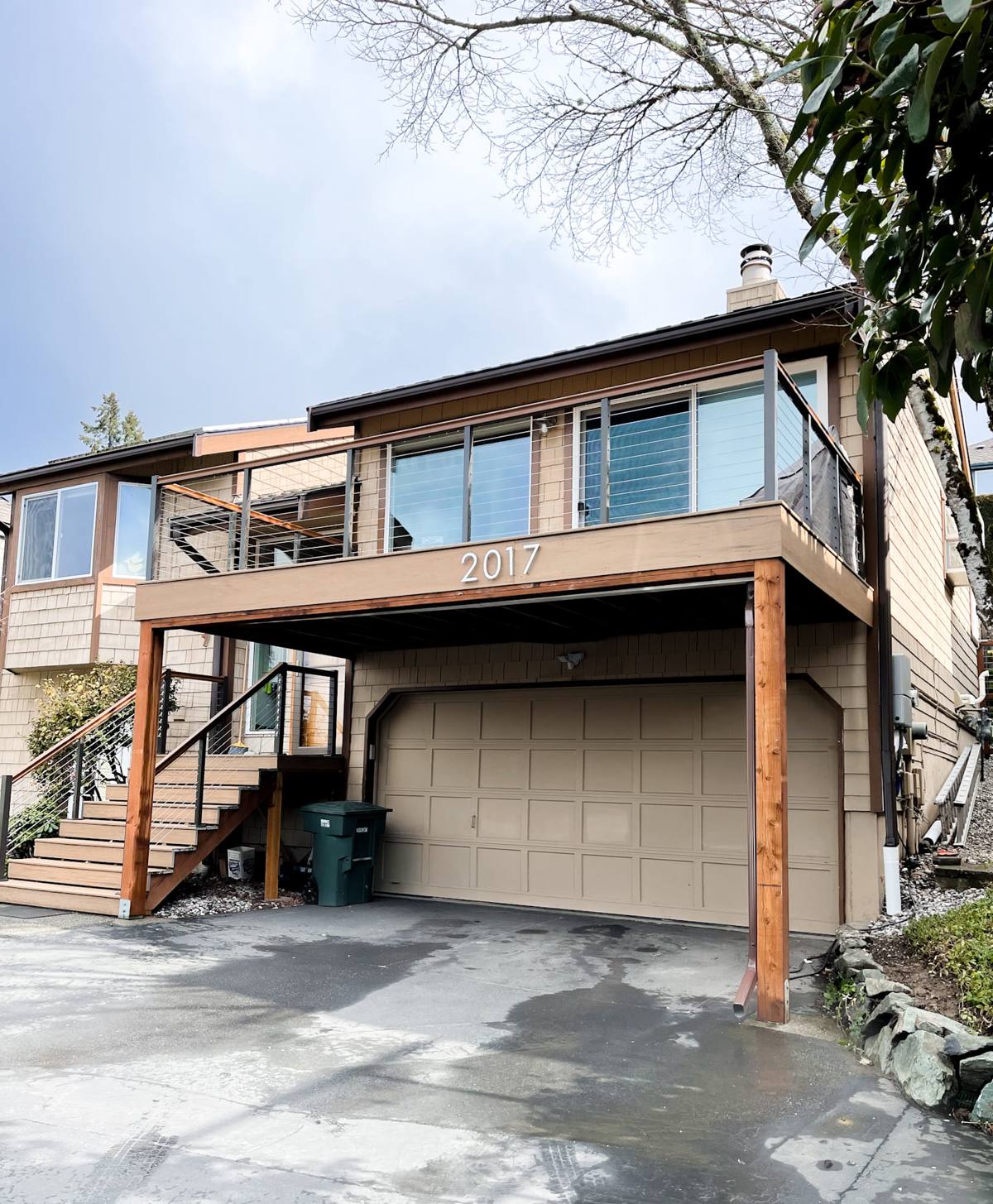
What Constant Moisture Actually Does to a Deck
Wood Decking and Framing
Wood is hygroscopic — it takes on and releases moisture with the weather. In a shaded, damp spot, that cycle rarely finishes before the next rain starts. The wood stays swollen more than it dries, which is when rot organisms and moss spores get their best chance to establish. Framing lumber buried under a deck surface is especially vulnerable because it gets even less sun and airflow than the decking above it.
Composite and PVC Decking
Composite and PVC boards don't rot, but they aren't immune to the climate either. Moss and algae grow on the surface of any decking material if it stays damp and shaded long enough — composite is not an exception, and grooved-edge boards with hidden fastener channels can trap grit and organic debris that feeds growth if they're never cleaned. The advantage of composite in a spot like Deming isn't that it resists moss growing on top of it; it's that the board itself won't rot or splinter while that surface growth is dealt with.
Metal Fasteners and Hardware
Driving rain finds every gap. Screws, joist hangers, and structural connectors that aren't rated for exterior, wet-climate use will corrode from the inside of the framing out, long before anything looks wrong on the surface. This is one of the most common shortcuts we see on older decks in this area — the visible decking looks fine while the hardware holding it together is failing underneath.
Choosing Decking Material for a Shaded, Wet Lot
There's no single "best" decking material — there's a best fit for a given lot, budget, and how much upkeep you want to do. Here's how the common options actually compare for a Deming-style setting.
| Material | How it handles shade & moisture | Moss/algae behavior | Maintenance |
|---|---|---|---|
| Pressure-treated lumber | Treated for ground contact and rot resistance, but still swells/shrinks with moisture cycles | Grows moss readily if not cleaned; rougher grain holds spores | Needs periodic cleaning and re-sealing to keep performing |
| Cedar | Naturally rot- and insect-resistant, but softer and more prone to surface wear in constant damp | Moderate — natural oils slow growth somewhat, but shade still wins out over time | Regular cleaning, oiling or staining every couple of years |
| Capped composite | Core resists moisture absorption; won't rot or splinter | Still grows moss/algae on the surface if shaded and damp — needs washing | Low — occasional cleaning, no sealing or staining |
| PVC decking | Fully synthetic, essentially unaffected by moisture absorption | Same surface growth risk as composite in heavy shade | Low — cleaning only |
The honest takeaway: in a heavily shaded, damp lot, no decking material is "moss-proof." What changes between materials is how much the moisture itself costs you structurally over time, and how much routine upkeep you're signing up for.
Why We Don't Push One Product Over Another
We'll tell you plainly what a given material trades off — cedar looks and feels the way a lot of homeowners want a deck to feel, but it asks for more attention. Composite and PVC cost more up front and save you re-staining, but they still need washing in a shaded spot. We'd rather set that expectation before the build than let you find out the hard way after a few damp Whatcom County winters.
Getting the Structure Right — Where Roofing Experience Actually Helps
Deck building and roofing solve the same basic problem from different angles: keeping water from sitting where it can do damage. That overlap shows up in how we frame and flash a deck.
- Ledger board flashing: where a deck attaches to the house, the ledger needs proper flashing and a water-resistant barrier behind it — the same principle as roof-to-wall flashing, and one of the most common failure points on older decks we've inspected.
- Joist protection: capping or taping the tops of joists keeps standing water from soaking into end grain and fastener holes, slowing rot at the points that carry the most load.
- Board spacing and drainage: consistent gaps between boards let water shed instead of pooling, which matters even more under heavy tree canopy where boards dry slowly between rains.
- Corrosion-rated fasteners and hardware: stainless or coated screws, hangers, and structural connectors rated for ground contact and wet exposure, not general-purpose hardware.
- Footings set to proper depth: footings that don't heave or settle with the seasonal moisture swings common to this area.
None of this is exotic. It's just the difference between a deck built to a minimum standard and one built to actually hold up under Deming's specific conditions.
Permits and Local Requirements
Most new decks and deck rebuilds in Whatcom County require a building permit, and requirements can vary based on deck height, size, and proximity to property lines or the Nooksack River corridor's setback rules. We don't guess on this — we pull the specifics for your lot before design work starts, so the deck you get approved matches the deck you actually want, and so you're not stuck reworking a finished structure to satisfy an inspection.
If your property has well or septic infrastructure, or sits on a slope, that can also affect footing placement and drainage planning. We flag those issues during the site visit, not after footings are already poured.
How We Approach a Deck Build in Deming
1. Site Visit and Assessment
We look at sun exposure, tree cover, drainage patterns, and how the ground handles water after a heavy rain — all of which shape material and framing decisions before design even starts.
2. Design and Material Selection
We walk through the material comparison honestly, based on your budget and how much upkeep you want, and design the layout — including board direction and gaps — around how water will actually move across the deck.
3. Permitting
We handle the permit application and make sure the design meets Whatcom County requirements for your specific lot before construction begins.
4. Framing and Flashing
This is where the structural work happens — ledger flashing, joist protection, proper footing depth, and corrosion-rated hardware, all built to hold up through repeated wet seasons, not just pass inspection once.
5. Decking, Railing, and Finish
Decking goes down with consistent spacing for drainage, followed by railing and any finish work — staining or sealing for wood, or simply a final clean for composite and PVC.
6. Walkthrough
We go over basic maintenance with you before we leave — what to watch for, and a realistic cleaning schedule for your specific amount of shade and tree cover.
Keeping a Deming Deck Ahead of Moss and Moisture
A well-built deck still needs some upkeep in a climate like this — the goal is to keep small maintenance from turning into a rebuild. A simple seasonal routine goes a long way:
- Sweep leaves, needles, and debris off the deck surface regularly — organic matter trapped in gaps or board grooves feeds moss and holds moisture.
- Wash the surface at least once or twice a year with a deck-safe cleaner to break up moss and algae before it gets a strong hold.
- Check railing posts and stair connections for movement or soft spots, especially after a hard winter.
- Keep gutters and downspouts near the deck clear so runoff isn't dumping extra water onto or under the structure.
- For wood decking, re-stain or re-seal on the schedule your material calls for — don't wait until it's visibly graying or absorbing water.
- Trim back overhanging branches where practical to give the deck a bit more sun and airflow between rains.
Why a Crew That Already Works Deming Matters
A lot of deck problems in this area trace back to a build that was designed for a different climate — enough drainage, enough flashing, and hardware rated for a drier or sunnier lot than the one it ended up on. A crew that already works in and around Deming and Sudden Valley knows what heavy canopy and prolonged dampness do to a structure over a few years, not just what a spec sheet says on paper. That shows up in small decisions — how tight to run board gaps, which fasteners are worth the extra cost, where flashing details actually earn their keep — that don't show up as line items on a quote but do show up in how long the deck lasts.
It also matters for logistics. Wooded, sloped lots and gravel or shared access roads common around Deming affect how materials get delivered and staged, and a crew unfamiliar with the area can lose real time figuring that out on your dime.
Get a Straight Answer on Your Deck
If you're planning a new deck or replacing one that's showing its age, we're happy to take a look and give you a straightforward, no-pressure estimate — including an honest read on what material and framing approach makes sense for your specific lot. Use the form below to get started.