 Sudden Valley Roofing
 New Roof Installation for Deming Homes
Deming sits back in the trees along the Nooksack River corridor, close enough to Sudden Valley and the rest of Whatcom County that homes here face the same roofing problems every year: heavy fall and winter rain, long stretches of overcast damp weather that never quite let a roof dry out, and moss that finds a foothold in shaded, tree-covered lots faster than almost anywhere else in the state. A new roof out here isn't just about picking a shingle color. It's about building an assembly that sheds water fast, breathes properly, and doesn't give moss and moisture a place to sit.
We install new roofs on homes throughout the Deming and Sudden Valley area, and the patterns repeat: lots with heavy tree cover, roofs that stay shaded most of the day, and driveways or access points that aren't always simple. None of that is unusual to us. It's the normal job around here, and it changes some of the decisions we make on material, ventilation, and detailing compared to a roof going in somewhere drier and more open.
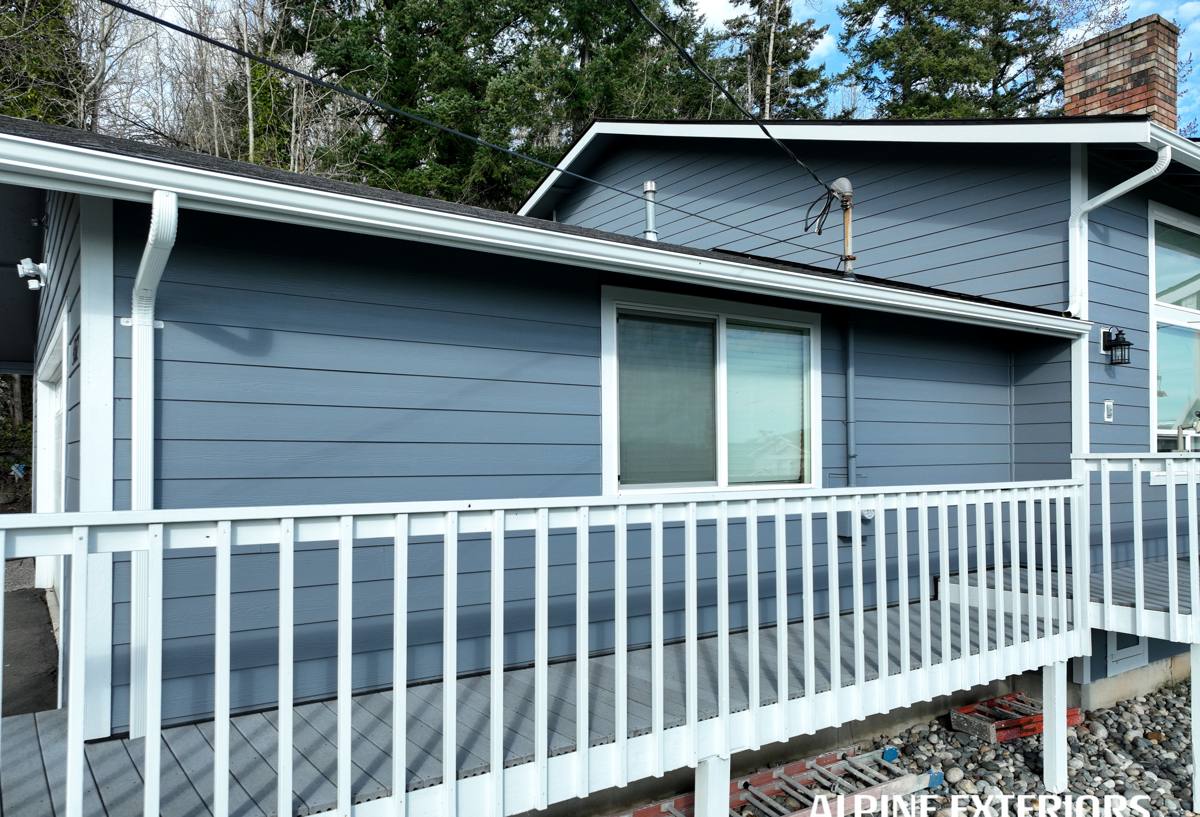
What This Climate Actually Does to a Roof
Whatcom County doesn't get the most total rainfall in the state, but it gets a lot of low-intensity, long-duration rain, plus wind-driven rain during fall and winter storms that pushes water sideways under flashing and up under shingle tabs if the details underneath aren't right. Add in the marine air that moves inland off the Sound and the Strait, and you get a slow, steady dampness that keeps roof surfaces wet for days at a time rather than drying out between rain events.
On a shaded, tree-covered lot like a lot of Deming properties, that dampness turns into moss and algae growth within a few years on a roof that isn't detailed for it. Moss isn't just cosmetic — it holds moisture against the roofing material, works its way under shingle edges as it grows, and can lift tabs enough to let wind-driven rain in underneath. A roof installed correctly for this area accounts for all of that from day one, instead of leaving it as a maintenance problem for the homeowner to fight every year.
The Three Things That Matter Most Here
- Drainage speed — steep enough slopes, clean valleys, and properly lapped underlayment so water moves off the roof instead of sitting on it.
- Ventilation — balanced intake and exhaust airflow so the underside of the roof deck stays dry, which slows moss and rot from the inside out.
- Moss resistance at the surface — material choice and, where it makes sense, zinc or copper strips that discourage regrowth after installation.
What a Correct New Roof Installation Involves
A new roof is more than laying new shingles over what's there. Done right, it's a full system, and skipping steps in that system is exactly how a roof ends up leaking in year three instead of holding up for its full service life.
Tear-Off and Deck Inspection
We remove the old roofing down to the deck rather than layering over it. That lets us actually see the plywood or plank decking underneath — which, on an older Deming home with a history of moss and slow leaks, sometimes has soft or delaminated spots that need to be replaced before anything new goes down. Installing new roofing over a compromised deck just hides the problem under a fresh layer of material.
Underlayment and Ice-and-Water Protection
Given how much of our rain arrives sideways in a storm, underlayment coverage matters more here than in drier climates. We run synthetic underlayment across the full roof and add self-adhering ice-and-water shield at the eaves, valleys, around penetrations, and anywhere water is likely to back up or pool — the areas that take the most punishment over a Whatcom County winter.
Flashing
Flashing around chimneys, skylights, walls, and roof-to-roof transitions is where most leaks actually start, not in the field of the shingles themselves. We install new step flashing, counter-flashing, and valley metal rather than reusing old, worn flashing just because it's still technically in place.
Ventilation
We check and correct intake (soffit) and exhaust (ridge or roof vents) ventilation as part of the install, not as an afterthought. Balanced airflow keeps the attic and roof deck drier year-round, which directly slows moss growth and helps the roofing material reach its expected lifespan.
Field Material Installation
Whatever the chosen roofing material, it goes down to manufacturer specification — correct nailing pattern, correct exposure, correct starter course and cap detail. This is also where we integrate any moss-prevention strips if the homeowner wants that added protection.
Material Options for a Deming Roof
There's no single "best" roofing material — the right choice depends on budget, roof slope, how shaded the lot is, and how much long-term maintenance the homeowner wants to take on. Here's how the common options stack up for a shaded, damp, moss-prone property like most of what we see around Deming and Sudden Valley.
| Material | Moss/Moisture Behavior | Typical Lifespan | Maintenance Burden |
|---|---|---|---|
| Architectural asphalt shingle | Good with proper ventilation and algae-resistant granules; still benefits from occasional cleaning on heavily shaded roofs | 25–30 years | Low to moderate |
| Standing seam metal | Excellent — smooth surface sheds moisture fast and gives moss little to grip | 40–50+ years | Low |
| Cedar shake/shingle | Requires diligent maintenance in a damp, shaded climate; absorbs and holds moisture more than other options | 20–30 years with upkeep | High |
| Synthetic/composite shingle | Good — engineered to resist moisture absorption, doesn't feed moss growth the way wood does | 40–50 years | Low |
For most Deming homes we recommend architectural asphalt or standing seam metal as the practical middle ground — both perform well under heavy tree cover as long as ventilation and flashing are done correctly. We'll walk through the honest trade-offs for your specific roof rather than pushing one product across every job.
Our Installation Process
- On-site evaluation — we look at the existing roof, deck condition, ventilation, tree cover, and drainage paths specific to your property.
- Written estimate — clear scope, material options, and pricing before any work starts. No surprise add-ons buried in fine print.
- Material order and scheduling — we plan around the weather window as much as we can control it; roofing in this climate means working with the forecast, not against it.
- Tear-off and deck repair — old roofing removed, deck inspected, and any damaged sections replaced before anything new goes down.
- Underlayment, flashing, and ventilation correction — the parts of the job that determine whether the roof actually performs in our climate.
- Field installation — new roofing material installed to spec, with attention to valleys, penetrations, and edges.
- Cleanup and final walkthrough — site cleared of debris and nails, and we go over the finished roof with you before we consider the job done.
Timeline and What to Expect
Most single-family roof replacements in the Deming area take one to three days of active work once tear-off begins, depending on roof size, pitch, and complexity. Weather is the biggest variable — we don't install roofing material during active rain, and a wet fall or winter stretch can push a schedule out. We'll be straightforward with you about timing rather than promising a date we can't control once we're watching the same forecast you are.
Access is also worth planning for on some Deming properties — longer driveways, tree clearance for dumpsters or material delivery, and septic or well locations that need to stay clear of equipment. We sort this out during the estimate walkthrough so there are no surprises on install day.
What Drives the Cost
| Factor | Why It Matters |
|---|---|
| Roof size and pitch | More square footage and steeper slopes mean more material and labor time |
| Deck condition | Rot or delamination found at tear-off adds repair cost that can't always be quoted sight-unseen |
| Material choice | Asphalt, metal, and synthetic products carry different material and installation costs |
| Number of penetrations | Chimneys, skylights, and vents each require flashing work that adds time |
| Ventilation upgrades | Adding or correcting intake/exhaust venting is worth the added cost for moss and moisture control |
| Access and site conditions | Tree cover, driveway length, and roof height affect staging and labor |
We won't give a real number without seeing the roof, but a straightforward asphalt shingle replacement on an average Deming home typically lands in the broad range most homeowners expect for a full tear-off and reinstall — metal and synthetic options run higher up front but lower over the life of the roof given how little upkeep they need in this climate.
Why a Crew That Already Works Deming Matters
Roofing crews that mostly work drier, more open parts of the state don't always default to the ventilation and moisture details that matter here. A crew that regularly works Deming and the greater Sudden Valley area already knows to check soffit venting on shaded lots, already carries the right underlayment for a wind-driven-rain climate, and already understands how tree cover changes both the install and the long-term maintenance conversation. That local familiarity shows up in fewer callbacks and a roof that's actually built for the weather it has to survive, not a generic install dropped into a different climate.
It also matters for scheduling. We know how our weather windows behave through fall and winter in this part of Whatcom County, and we plan tear-offs and installs around that instead of guessing.
Before You Commit: A Homeowner's Checklist
- Get a written estimate that itemizes tear-off, deck repair allowance, underlayment, flashing, ventilation, and material separately.
- Ask what happens if rotten decking is found once tear-off starts, and how that's priced.
- Confirm whether ventilation will be inspected and corrected, not just left as-is.
- Ask which underlayment and ice-and-water shield products are being used and where they'll be applied.
- Check that flashing is being replaced, not reused, at chimneys, skylights, and valleys.
- Get the warranty terms in writing — both manufacturer material warranty and the contractor's workmanship warranty.
- Ask about moss-prevention options (zinc/copper strips) if your lot is heavily shaded.
After Installation: Keeping the Roof Performing
A correctly installed roof in this climate still benefits from basic upkeep. Keep gutters clear so water isn't backing up under the eaves, trim back overhanging branches where practical to cut down on shade and debris, and have the roof looked at every couple of years so any early moss growth or flashing issue gets caught before it becomes a leak. None of this is heavy maintenance — it's the difference between a roof that reaches its full expected lifespan and one that needs early attention because small problems went unnoticed.
If you're planning a new roof for a Deming or Sudden Valley property, we're glad to come take a look and walk you through what your specific roof needs — no pressure, no obligation. Reach out using the form below to set up a free estimate.