 Sudden Valley Roofing
 Storm Damage Roof Repair in Deming: What Makes It Different Here
Deming sits in one of the wetter, more wind-exposed corners of Whatcom County, tucked against the foothills that lead up toward Mount Baker. That location means two things for roofs: storms tend to arrive with more force by the time they reach the valley, and the heavy tree cover that makes the area attractive also puts limbs, cones, and whole branches on a collision course with your roof during high wind. Add in the marine-influenced weather systems that move through this part of the county — driving rain that gets pushed sideways under normal wind loads — and you have a climate that finds every weak point in a roof faster than a drier region would.
We've repaired storm damage across this stretch of the county long enough to know that the failures we see in Deming aren't always the same as what shows up on a roof in town. Wind funneling down the river valley can lift shingles in patterns you wouldn't expect on a more open, unshaded lot. Moss that builds up under a thick conifer canopy holds moisture against the roof deck year-round, so a storm doesn't just damage a roof — it exposes rot that was already forming underneath.
Why the Setting Adds Risk
Larger wooded lots and longer driveways are part of what people like about living out here, but they also mean storm damage can go unnoticed longer. A missing shingle or a cracked ridge cap on a roof you don't walk past every day, on a house set back from the road, can sit through two or three more storms before anyone spots it from the ground. By then, water has usually found its way into the decking.
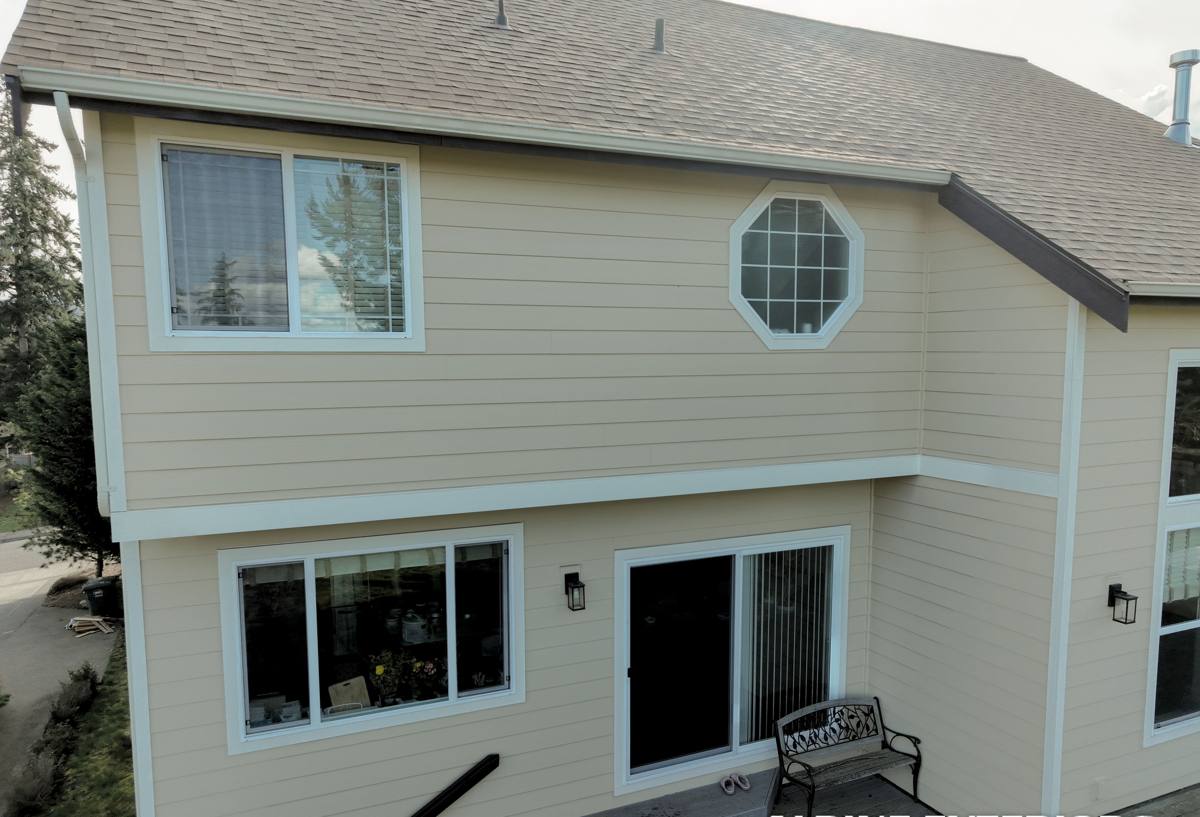
Recognizing Storm Damage Before It Gets Worse
Most storm damage doesn't announce itself with a hole in the roof. It shows up as small, easy-to-miss signs first — and catching it early is the difference between a repair and a much bigger job.
Signs From the Ground
- Shingles that look lifted, curled, or out of alignment with the rest of the field
- Granules collecting in gutters or at the base of downspouts after a storm
- Bent or missing flashing around chimneys, vents, or valleys
- Visible dents or cracks on ridge caps after a branch strike
- Dark, damp-looking patches where moss has thickened and is holding water
Signs Inside the House
A water stain on a ceiling is the obvious one, but a musty smell in an attic or upper closet, insulation that feels damp to the touch, or a slight sag in a ceiling line are all worth walking up and checking after any wind event strong enough to move patio furniture. Attic checks matter more here than in drier climates, because the same moss and standing moisture that damages shingles from above can be doing the same thing to the decking from below, out of sight.
What a Correct Storm Repair Actually Involves
A storm repair done right isn't just replacing the shingles that are visibly gone. It starts with the deck underneath — because if wind or impact damage let water in, the plywood or OSB sheathing may already be softening, and no amount of new shingle on top fixes that. We check fastening patterns, underlayment condition, and flashing detail at every valley, penetration, and edge near the damaged area, not just the spot that looks broken.
Matching materials matters too. A patch using a slightly different shingle profile, weight, or color might pass a quick glance but will telegraph as a visible seam for years and can create a shorter life-span mismatch right in the middle of an otherwise sound roof. Where an exact match isn't available anymore, we'll tell you honestly and lay out the trade-offs rather than pretend a mismatched patch is invisible.
Patch vs. Proper Repair
| Approach | What It Covers | Risk If Skipped |
|---|---|---|
| Surface-only patch | Replaces visible missing/damaged shingles | Leaves compromised decking, moss, or flashing untouched — often fails again next storm season |
| Full storm repair | Deck inspection, underlayment check, flashing repair, matched shingle replacement | Minimal — the repair addresses the cause, not just the symptom |
| Localized re-roof section | Replaces an entire slope when damage or moss/rot is widespread | Used only when spot repair won't restore a watertight, uniform surface |
Cost Factors on a Storm Repair
Every storm repair is priced around the same handful of variables. Knowing them ahead of time makes the estimate conversation faster and helps you understand why two repairs on similar-looking roofs can cost differently.
| Factor | Why It Matters |
|---|---|
| Extent of decking damage | Rotted or soft sheathing has to be cut out and replaced before new shingles go on |
| Roof pitch and access | Steeper slopes and limited driveway/staging space on wooded lots add labor time |
| Shingle availability/match | Discontinued or older shingle lines may require a wider replacement area |
| Flashing and valley condition | Compromised flashing is often the real point of failure, not just the shingle |
| Moss and moisture buildup | Roofs with heavy moss cover typically need cleaning and treatment as part of the repair, not after it |
How Our Repair Process Works
We keep the process the same whether it's a single lifted ridge cap or a full slope of wind damage, because skipping steps is how small storm damage turns into a larger claim later.
- Inspection first. We get on the roof, not just look at it from the ground, and check the decking, flashing, and surrounding shingles — not only the obviously damaged spot.
- Document everything. Photos and notes on the damage, useful whether you're filing an insurance claim or just want a record of what was found and fixed.
- Temporary protection if needed. If there's an active leak or exposed decking, we get it covered before we ever start talking about scheduling the full repair.
- Repair using matched materials. Deck repairs, flashing corrections, and shingle replacement done to blend with the surrounding roof, not just cover the hole.
- Final walk-through. We show you what was found and what was done — no surprises buried in a line-item invoice.
Materials We Use, and Why
For storm repairs in a climate like this one, we lean toward shingle products and underlayment systems with a track record of handling sustained moisture exposure well, rather than whatever is cheapest to source. That's a professional standard, not a knock on every other product on the market — some lower-cost options are simply more sensitive to installation conditions or hold moisture longer under moss growth, which shortens their working life in a wet, tree-covered setting like Deming's. We'll walk you through what we're recommending and why, including the maintenance expectations that come with it, so you're choosing with full information rather than just a price point.
Moss Treatment as Part of the Repair
Because moss is one of the biggest long-term threats to roofs in this part of Whatcom County, we treat active moss growth as part of a storm repair whenever it's contributing to the damage — not as an upsell tacked on afterward. Leaving it in place after a repair just sets up the same failure again.
Insurance Claims: What to Expect
Most storm damage repairs in this area do get filed as insurance claims, and the documentation step in our process exists largely to support that. We're not a public adjuster and can't promise how any specific carrier will rule on a claim, but we can give you a clear, itemized account of what storm-related damage we found and what it will take to correct it, which is what most adjusters ask for. If your policy or adjuster has specific requirements for documentation, let us know before we start and we'll work around them.
Why a Crew That Already Works Deming Matters
Storm response is partly about skill and partly about logistics. A crew that already works this part of Whatcom County knows which slopes tend to take the brunt of southwest wind coming up the valley, understands how tree cover and moss interact with roof age out here, and isn't guessing at drive times or access on the longer, sometimes gravel driveways common on Deming properties. That familiarity shows up in faster, more accurate inspections and fewer surprises once a repair is underway.
It also matters for follow-up. Storm damage repair isn't always a one-visit job — sometimes there's a secondary check needed after the next heavy rain, or a moss treatment that needs a follow-up application. A local crew can get back out to a Deming property without it turning into a half-day round trip.
After the Storm: A Quick Checklist
- Walk the interior — attic, top-floor ceilings, closets — for damp spots or musty smell
- Check gutters and downspout bases for granule buildup
- Look for branches or debris resting on the roof, even small ones
- Note the date and general conditions of the storm for your own records
- Avoid climbing onto the roof yourself after a storm — wet, moss-covered surfaces are dangerous
- Call for an inspection before the next heavy rain, not after
If you're dealing with storm damage on a Deming roof, or just want a second opinion on something you noticed after the last windstorm, we're happy to take a look. Fill out the form below for a free, no-pressure estimate — there's no obligation, and we'll tell you honestly what we find.