 Sudden Valley Roofing
 Why Fairhaven's Location Is Hard on Exterior Siding
Fairhaven sits close to Bellingham Bay, which means homes here deal with a combination of stresses that inland Whatcom County properties don't see nearly as often. Salt-laden air off the water accelerates corrosion of fasteners and metal trim, driving rain off the Sound drives moisture sideways into seams and laps, and the region's long, damp winters set up ideal conditions for moss and algae to colonize any siding surface that doesn't drain and dry properly. None of this is unique to any one house — it's just what waterfront and near-waterfront exposure in this part of Washington does to a building envelope, year after year.
Siding that isn't built or installed for this environment shows it early: swelling at the bottom edge of boards, dark streaking under gutters and downspouts, green-black growth on north-facing walls that never get direct sun, and paint or coating failure well before the interval a manufacturer would consider normal. The siding itself matters, but so does how it's installed — gaps, flashing details, and fastener choices decide whether a marine climate is a minor nuisance or a slow, expensive problem.
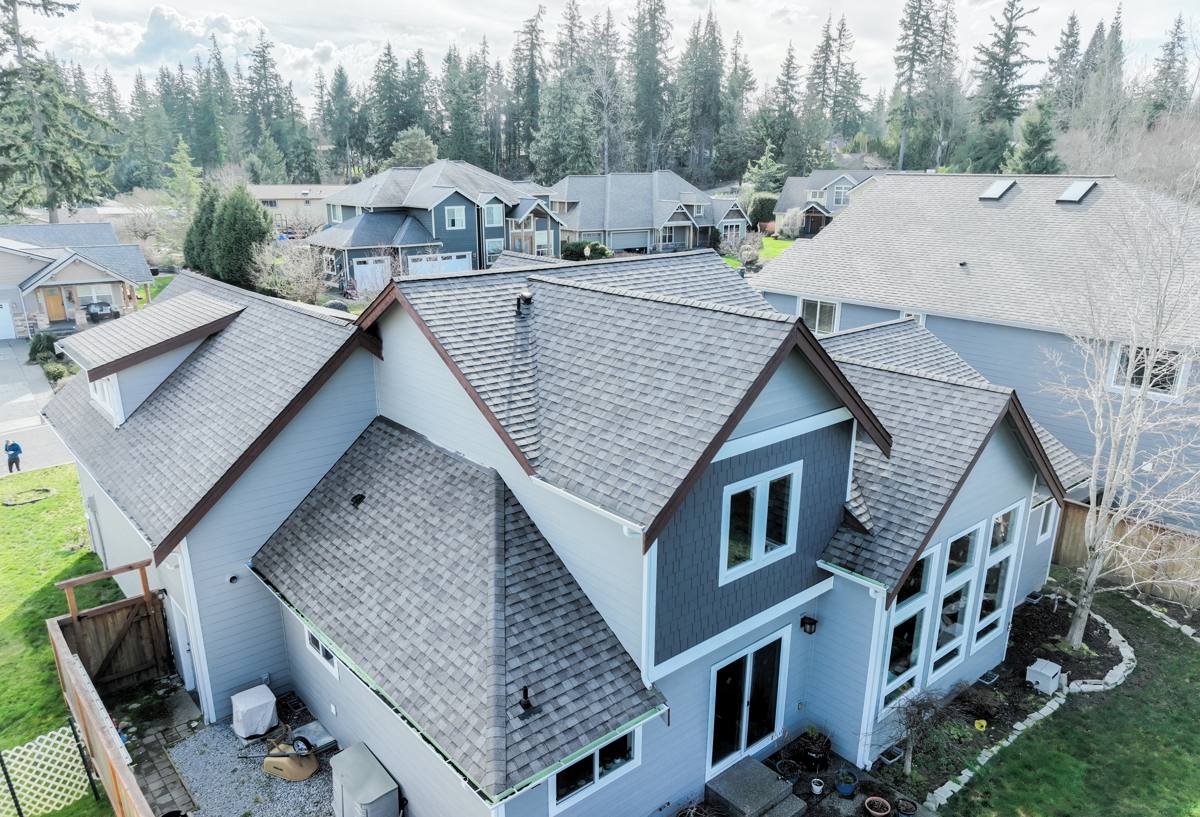
Why We Install James Hardie and Nothing Else
We standardized on James Hardie fiber cement siding across every job we take, including in Fairhaven, and we don't install vinyl, LP SmartSide, primed wood, or other fiber cement brands. That's not a marketing position — it's a practical one built around what holds up in this climate with the least long-term maintenance.
- Non-combustible core: Hardie siding is fiber cement, not wood-based, so it doesn't burn, rot from within, or feed insects the way engineered wood products can.
- Moisture-managed by design: Fiber cement doesn't swell and delaminate at cut edges the way wood-based composite siding can if a joint is left exposed or improperly sealed.
- Factory-applied ColorPlus finish: The color is baked on in a controlled environment rather than field-painted, which matters a lot when the siding is going to sit in salt air and rain for years before its first repaint.
- Climate-specific product engineering: Hardie makes its HZ5 product line specifically for regions like ours, with formulation aimed at damp, freeze-thaw-adjacent Pacific Northwest conditions rather than a one-size-fits-all national spec.
We're not going to tell you competing products are junk — vinyl is inexpensive and low-maintenance in mild climates, and engineered wood siding has real fans. But we've made a professional call that on Whatcom County exteriors exposed to salt air and sustained rain, fiber cement installed correctly outperforms the alternatives over the life of the siding, and we'd rather install one product well than several products adequately.
What Fairhaven Homes Specifically Need From Their Siding
Drainage and Ventilation Behind the Cladding
In a marine climate, what happens behind the siding matters as much as the siding itself. A correctly installed rain-screen or drainage gap lets any moisture that does get past the cladding find its way back out instead of sitting against the sheathing. Skipping this step is one of the most common shortcuts in siding work, and it's the one that causes the most damage you can't see until it's already expensive.
Moss and Algae Resistance
Fairhaven's tree cover and consistent moisture mean north- and west-facing walls in particular stay damp longer through the fall and winter. ColorPlus finishes resist the kind of surface staining that field-applied paint is prone to, but no finish stops growth entirely on a wall that never dries — proper flashing, gutter placement, and vegetation clearance around the house all play a role alongside the siding itself.
Salt-Air Hardware
Fasteners and flashing exposed to salt air corrode faster than the same materials would inland. We use fastener and flashing specifications suited to coastal exposure, not just whatever is cheapest to source, because a rusting fastener head eventually stains the siding and can compromise the fastening itself.
What a Correct Hardie Installation Actually Involves
A lot of what determines whether Hardie siding performs for its full service life happens before the first board goes up. This is where jobs succeed or fail, and it's largely invisible once the siding is on.
- Removing old siding and inspecting the sheathing and framing underneath for existing moisture damage or rot before anything new goes up.
- Repairing any compromised sheathing rather than covering it — new siding over a wet wall just hides the problem longer.
- Installing a weather-resistant barrier correctly lapped, shingle-style, so water sheds outward at every seam.
- Flashing all windows, doors, and penetrations so water is directed out and away, not trapped behind trim.
- Maintaining Hardie's specified clearances — ground clearance, roofline clearance, and gaps at butt joints — per the manufacturer's installation instructions for our climate zone.
- Fastening with corrosion-resistant fasteners at the correct spacing and depth; over- or under-driven fasteners are a common source of premature failure.
- Caulking and sealing only where Hardie's specifications call for it — sealing joints that are supposed to be gapped can trap moisture instead of shedding it.
Skipping or rushing any one of these steps doesn't usually show up as a problem on day one. It shows up two, five, or ten years later as a soft spot, a stain, or a section of siding that fails well ahead of the rest of the wall.
Product Options for a Fairhaven Home
James Hardie's product line gives us several ways to match a home's existing style, and the right choice depends on the house's age, exposure, and the look the owner wants.
| Product | Profile | Best Suited For |
|---|---|---|
| HardiePlank lap siding | Horizontal boards, several width and texture options | Traditional homes; the most common choice in this area |
| HardiePanel vertical siding | Large-format vertical sheets | Accent walls, gables, and more contemporary designs |
| HardieShingle siding | Staggered or straight-edge shingle profile | Craftsman and cottage-style homes common in older neighborhoods |
| HardieTrim boards | Corner boards, fascia, and window/door trim | Finishing details that match or contrast the field siding |
All of these are available in Hardie's ColorPlus finish palette, or in a primed finish for homeowners who want to choose their own paint color later. For coastal-adjacent exposure like Fairhaven, we generally steer people toward ColorPlus for the reduced repainting burden alone.
What Drives Cost on a Job Like This
We don't publish blanket per-square-foot pricing because it genuinely depends on the condition of what's underneath your current siding, not just the size of the house. These are the factors that move a quote up or down:
| Factor | Why It Matters |
|---|---|
| Condition of existing sheathing | Hidden rot or moisture damage found during tear-off adds repair scope before new siding can go on |
| Home height and access | Multi-story sections, steep grades, and tight side yards affect equipment and labor time |
| Trim and detail complexity | Multiple gables, dormers, and window trim increase cutting, fitting, and flashing work |
| Product selection | Lap width, texture, and ColorPlus vs. primed finish all affect material cost |
| Full replacement vs. partial repair | Partial repairs on an otherwise sound wall cost less but need a careful color and profile match |
We walk every one of these factors with the homeowner during the estimate, so there are no surprises once the crew starts.
Our Process for a Fairhaven Project
Working repeatedly in the same coastal microclimate means we've refined a process around what actually causes problems here, not a generic checklist written for a drier region.
- On-site assessment: We inspect current siding, trim, and visible moisture indicators before quoting, and flag anything that likely needs sheathing repair.
- Written scope and estimate: You get a clear breakdown of product, prep work, and labor before any tear-off begins — no vague allowances.
- Weather-aware scheduling: We plan tear-off and weather-barrier installation around forecasted dry windows so open walls aren't exposed to driving rain longer than necessary.
- Installation to Hardie's published specifications: Clearances, fastening, and flashing follow the manufacturer's instructions for our climate zone, not shortcuts.
- Final walkthrough: We review the finished job with the homeowner and confirm trim, caulking, and touch-up details before calling it complete.
Why Hiring a Crew That Already Works This Area Matters
Siding installation quality varies enormously between crews, and the details that matter most in Fairhaven — drainage behind the cladding, salt-air-appropriate hardware, moss-conscious flashing — are exactly the details a crew from a drier inland region might not think to prioritize. A crew that regularly works Whatcom County's coastal-adjacent neighborhoods has already seen what fails here and builds around it by default.
Before hiring anyone for a siding project in this area, it's worth checking a few things:
- Are they a James Hardie-trained or preferred installer, and can they explain the manufacturer's clearance and fastening specs without hesitation?
- Do they inspect and repair sheathing as part of the job, or just cover whatever is already on the wall?
- Will you get a written scope that specifies product line, finish, and trim details before work starts?
- Do they carry proper insurance and can they provide it in writing?
- Have they worked on homes with similar exposure — near water, heavy tree cover, or persistent shade — in this county before?
If a contractor can't answer these plainly, that's worth noticing before you sign anything.
Ready to Talk About Your Siding?
If your Fairhaven home's siding is showing staining, soft spots, or failing paint, or you're planning ahead for a full replacement, we're happy to take a look and walk you through what we'd recommend and why. Reach out for a free, no-pressure estimate — there's no obligation, and you'll get a straight answer about what your home actually needs.