 Sudden Valley Roofing
 New-Construction Windows Are a Different Job Than Replacements
When a home is being framed from the ground up, windows go in before the siding, before the interior finishes, and often before the roof is fully dried in. That timing changes everything about how the job should be done. A new-construction window has a nailing flange built into the frame, and that flange is meant to be integrated directly into the wall's weather-resistive barrier (WRB) — the house wrap or building paper — in a specific shingled sequence. Get that sequence wrong, or skip a step because the framing crew is in a hurry to move on, and you've built a leak path into the wall that won't show up as a stain for a few years.
This is different from replacing an old window in an existing wall, where the siding and trim are already in place and the installer is working around them. New construction is actually the easier scenario to get right the first time — the wall is open, everything is accessible — but only if the person installing the window understands flashing sequence, not just how to set a window plumb, level, and square.
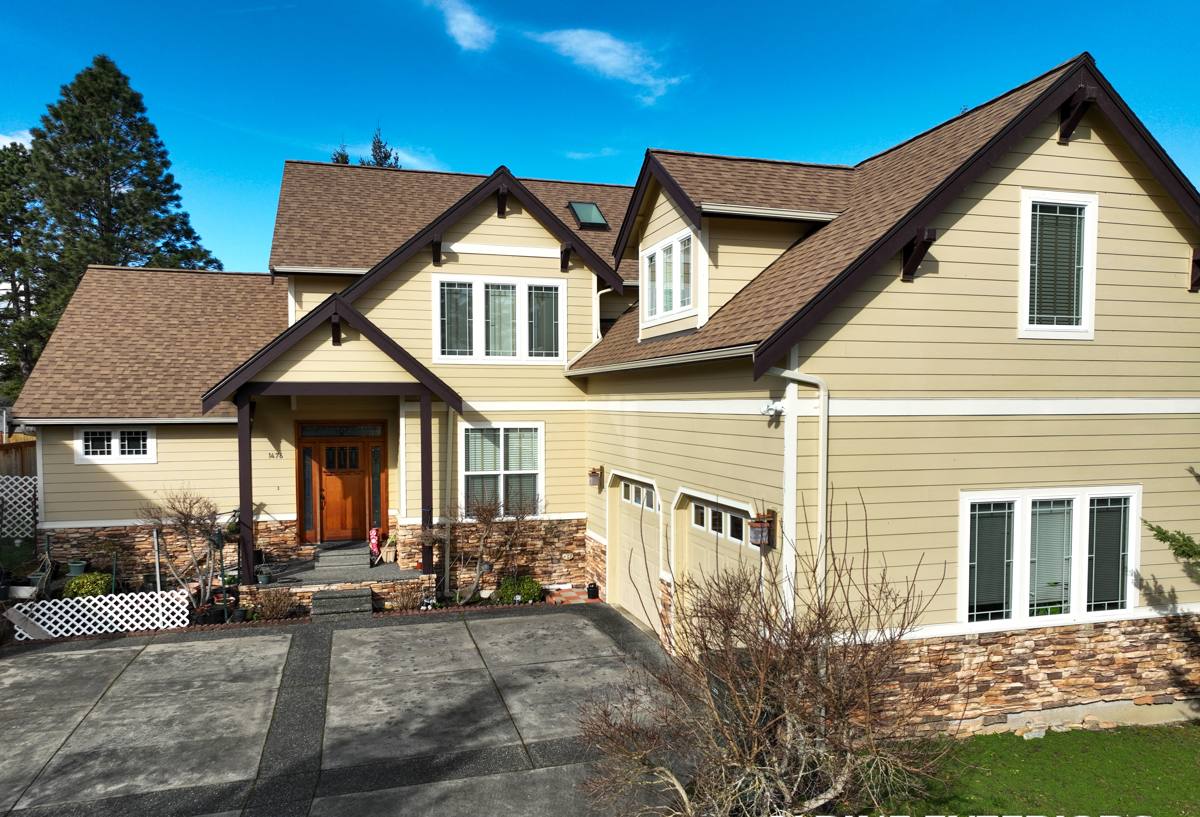
What Ferndale's Climate Actually Demands
Ferndale sits close enough to Bellingham Bay and the Strait of Georgia that salt-laden air is a real factor on window hardware and unprotected metal, not just a coastal talking point. Combine that with the driving, wind-driven rain events that come through Whatcom County off the water, and a new-construction window install has to handle water intrusion from more directions than a calm, inland site would.
Then there's the moss. Whatcom County's wet season runs long, and anywhere moisture sits — window sills, the tops of trim boards, north-facing walls that don't get much sun — grows moss and algae if it isn't detailed to shed water and dry out. None of this means Ferndale needs exotic materials. It means the ordinary things — sill pan flashing, correct lap order, corrosion-resistant fasteners, and a frame material that tolerates damp, salty air without degrading — have to actually be done, every time, not just on the walls that face the weather.
The Three Climate Factors That Drive Our Decisions
- Salt air: pushes us toward corrosion-resistant frame materials and stainless or coated fasteners and hardware, especially on window walls facing the water side of the property.
- Driving rain: makes sill pan flashing with a back dam, and correct head flashing, non-negotiable — gravity alone won't keep wind-driven water out of a rough opening.
- Long moss season: means sills, trim, and drainage planes need to be detailed to shed water fully rather than hold a damp film through the fall and winter.
Choosing a Frame Material for a Coastal Whatcom County Build
There's no single "correct" window brand for a new build — what matters is matching the frame material to how exposed the elevation is and being honest about the maintenance that comes with each option. Here's how the common choices stack up for a site like Ferndale:
| Frame Material | Salt-Air / Corrosion Behavior | Maintenance | Typical Fit |
|---|---|---|---|
| Vinyl | Does not corrode; UV-stable in modern formulations | Low — occasional cleaning | Most rooms, most elevations, best value |
| Fiberglass | Excellent — dimensionally stable, no corrosion risk | Low | Water-facing or heavily exposed walls, larger openings |
| Aluminum-clad wood | Cladding resists weather, but exposed fasteners/hardware need corrosion-rated hardware near salt air | Moderate — wood interior still needs normal upkeep | Interior-facing rooms where the wood look matters most |
| Bare aluminum | Prone to pitting and corrosion in salt air over time unless marine-grade and well-finished | Higher near the coast | We steer most Ferndale clients away from this on exposed walls |
We're not against any manufacturer's product line — the honest trade-off is that any frame material with exposed, unprotected metal hardware will show its age faster a few miles from saltwater than it would forty miles inland. We'll tell you plainly which option makes sense for a given wall instead of selling the same spec on every elevation.
The Flashing Sequence That Actually Keeps Water Out
This is the part of a new-construction window install that a homeowner never sees once the siding goes on, and it's the part that determines whether the window performs for twenty years or starts leaking in five. There's no shortcut version of this that holds up under Whatcom County rain.
The Order Matters
- Rough opening is checked for square, size, and structural soundness before the window ever shows up on site.
- A sill pan flashing is formed or installed with a back dam, so any water that gets past the window has somewhere to drain — outward, not into the wall cavity.
- The window's nailing flange is set into the pan, then side flashing is applied over the flange, shingle-style.
- Head flashing goes on last, lapping over the top of the side flashing and tucking behind the WRB above the opening — the same principle as roof flashing, gravity and lap order doing the work.
- The WRB is taped and integrated back over all of it before siding goes on, so the drainage plane behind the cladding is continuous.
Skipping the back dam, taping in the wrong order, or relying on caulk instead of proper lapped flashing are the most common shortcuts we see on new builds that later show up as rot or interior staining — usually well after the framing crew and original installer are long gone.
Our Process, From Framing to Final Trim
On a new-construction project we're typically brought in by the builder, the general contractor, or the homeowner acting as their own GC. Either way, the process looks the same:
1. Plan Review and Product Selection
We look at the plans, the elevations, and which walls face the water and the prevailing weather, and help select frame material, glass package, and hardware finish accordingly — not a single spec for the whole house regardless of exposure.
2. Rough Opening Verification
Before installation day, we confirm rough openings match the ordered window sizes and that the framing is square and structurally ready. Catching a sizing issue here is far cheaper than catching it after the window arrives.
3. Flashing and Installation
We install per the manufacturer's published instructions — this isn't optional if you want the manufacturer's warranty to hold. Sill pans, back dams, shingled flashing, and WRB integration happen in the correct order, on every opening, not just the visible ones.
4. Coordination With Siding and Trim Crews
We communicate directly with whoever is installing siding and trim next, so the drainage plane stays continuous and nobody covers up flashing incorrectly or caulks over a detail that was supposed to shed water by lap order alone.
5. Final Walkthrough
Before we call a job finished, we check operation, weatherstripping, hardware function, and that every opening was flashed to the same standard — not just the ones easiest to reach.
Mistakes We Find When We're Called In to Fix a New Build
Not every new-construction window job we see started with us, and the recurring problems are consistent enough to name:
- No back dam on the sill pan, so water that gets past the window sash has nowhere to go but into the wall.
- Flashing taped out of order (head flashing under the side flashing instead of over it), which reverses the shingle effect and lets water in instead of out.
- Standard fasteners used on water-facing walls instead of stainless or coated hardware, leading to early corrosion and staining.
- Caulk used as the primary seal instead of proper flashing — caulk fails and needs maintenance; a correctly lapped flashing plane doesn't depend on a bead of sealant staying intact for twenty years.
- Window sizing that doesn't match the rough opening, forcing shims and gaps that were never properly insulated or sealed.
New-Construction Window Installation Checklist
If you're a homeowner acting as your own GC, or you just want to know what to ask your builder, this is what a correct install includes:
- Rough opening confirmed square and correctly sized before the window arrives
- Sill pan flashing with a back dam, not just a bead of caulk along the bottom
- Flashing applied in shingle order: sill, then sides, then head
- WRB (house wrap) taped and integrated back over the flashing, maintaining a continuous drainage plane
- Corrosion-resistant fasteners and hardware on water-facing and coastal-exposed elevations
- Window shimmed plumb, level, and square, with the gap around the frame insulated per manufacturer instructions
- Installation method documented as matching the manufacturer's instructions, to preserve the warranty
- Sills and trim detailed to shed water fully rather than trap a damp film through the wet season
When to Bring Us In During the Build
The earlier the better. Ideally we're looped in during plan review, before rough openings are framed, so sizing and product selection are settled ahead of time. At minimum, we need to be on site before siding starts — once cladding goes on over incorrect flashing, fixing it means removing finished work. If you're mid-build and something already feels off — an opening that doesn't look flashed correctly, or a builder who can't describe their sill pan method — it's worth a second set of eyes before the walls get closed in.
Why a Crew That Already Works Ferndale Matters
Whatcom County has a range of microclimates inside a fairly small area — a lot ten minutes from the water sees different wind-driven rain exposure and salt air than one further inland. A crew that regularly works Ferndale builds already knows which elevations need the extra attention to hardware and flashing detail and which don't, instead of applying one generic spec to every wall on every job. That local pattern recognition is the difference between a window install that's technically installed and one that's actually built for the site it sits on.
If you're planning a new build or an addition in Ferndale or elsewhere around Sudden Valley, we're happy to walk through your plans and give you a straight answer on frame material, flashing approach, and timing — with no pressure to sign anything on the spot. Use the form below to request a free estimate.