 Sudden Valley Roofing
 Siding Replacement Built for Geneva's Lake-and-Rain Climate
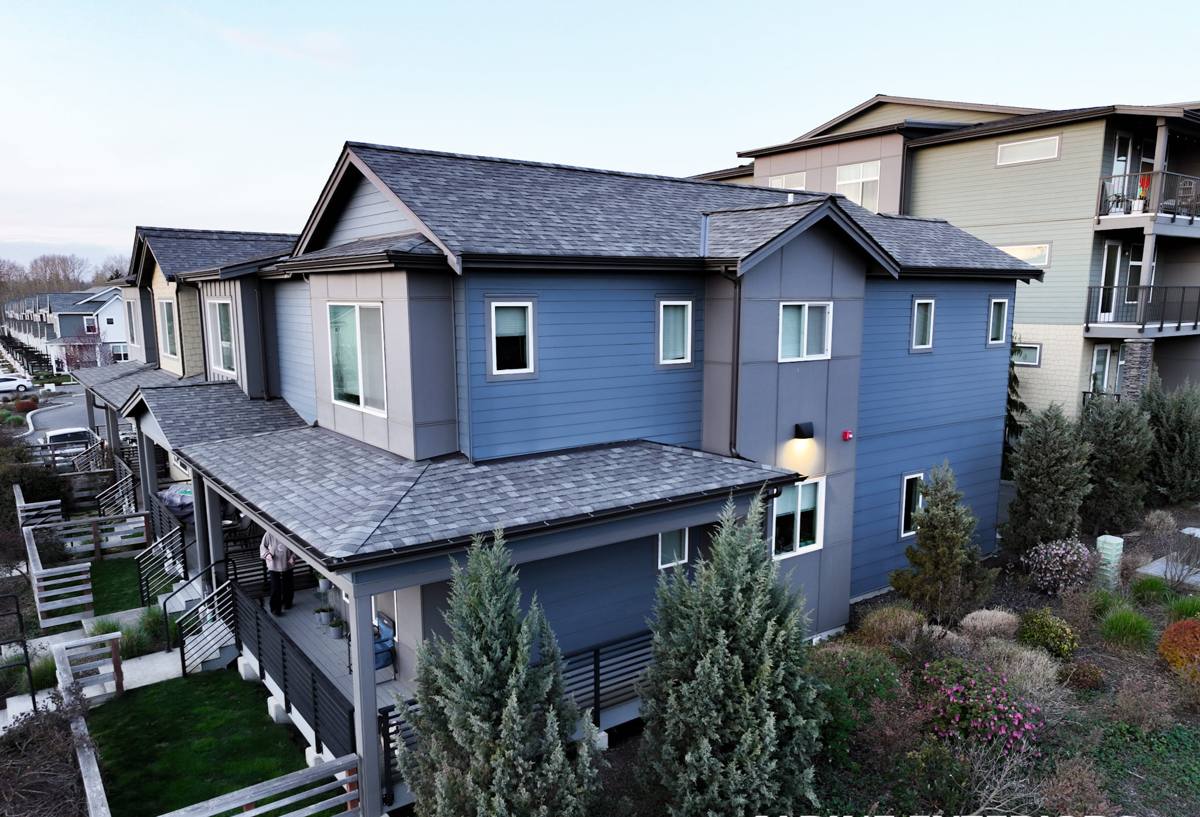
Homes along the Geneva shoreline and up into Sudden Valley sit right where Whatcom County's weather does the most damage to exterior siding: heavy tree cover, a long wet season, driving rain off the water, and salt-tinged marine air working its way inland from Puget Sound. That combination doesn't just make siding look tired faster than it would in a drier part of the state — it changes what "correct installation" actually requires. Siding that's rated for a dry climate, or installed the way it would be in eastern Washington, tends to fail early here. It's not one dramatic storm that does the damage. It's years of moisture cycling in and out of the material, moss and algae holding dampness against the wall, and UV exposure breaking down anything that isn't built to hold a finish.
This page is about one job, done right, in one area: replacing siding on a Geneva or Sudden Valley home with a system engineered for exactly this kind of exposure.
Signs Your Siding Has Reached the End of Its Useful Life
Most homeowners don't wake up one day and decide they need new siding — they notice a handful of small things that add up. If you're seeing two or more of the items below, it's worth a professional look before winter's driving rain gets behind the wall.
- Soft, spongy, or bubbling spots when you press on the siding, especially near the bottom courses or under windows
- Paint that won't hold — repainted within the last few years but already peeling, chalking, or flaking again
- Dark streaking, green or black staining, or a fuzzy moss texture that keeps coming back after cleaning
- Visible warping, cupping, or boards separating at the seams
- Gaps opening up around trim, window casings, or corner boards
- A noticeable rise in heating bills without any other explanation, suggesting the wall assembly is no longer sealing properly
- Cracks running through individual panels or planks, particularly after a hard freeze
What a Correct Siding Replacement Actually Involves
Tear-Off and a Real Look at What's Underneath
Removing old siding isn't just demolition — it's the only chance to see the sheathing before it gets covered up again. In a climate like Geneva's, we're specifically checking for soft or delaminated sheathing, rot at window and door openings, and any spots where moisture has clearly been getting behind the old cladding. Skipping this step is one of the most common ways a siding job fails within a few years, no matter how good the new material is.
Weather-Resistive Barrier and Flashing
The siding itself is the least important layer for keeping water out of the wall — the housewrap, flashing at every window and door, and properly lapped seams are what actually do that job. Siding's role is to shed the bulk of the water and protect that barrier from UV and physical wear. A house with new siding over old, damaged flashing hasn't actually solved its water problem; it's just hidden it again.
Installing to the Manufacturer's Climate Specification
Fiber cement, in particular, has specific nailing patterns, gaps, and clearances that change based on climate exposure. Installing it like it's going up in a dry inland region — tight to the ground, minimal clearance, standard fastening — is exactly how you shorten its life in a wet, wooded, lake-adjacent setting. It has to be installed to the wetter-climate spec, every time, on every wall.
Trim, Caulking, and Finish Work
The last stage is where a lot of the long-term performance and curb appeal actually gets decided: consistent trim reveals, correctly sealed joints, and touch-up paint on any field-cut edges. Rushed trim work is one of the more common reasons a siding job looks fine on day one and shows problems within a couple of years.
Why We Install Only James Hardie Fiber Cement
We made a decision, as a company, to install one siding system and stand behind it: James Hardie fiber cement. That's not a marketing preference — it's a response to what actually holds up on homes in this part of Whatcom County. Fiber cement doesn't absorb and swell with moisture the way wood-based products can, it's non-combustible, and Hardie's ColorPlus factory finish is baked on under controlled conditions rather than field-applied, which matters enormously in a climate that gets weeks of rain between dry stretches. Hardie also engineers specific product lines — its HZ5 line, for example — for wetter, cooler climates like the Pacific Northwest, with formulations meant to resist moisture-driven damage and to hold paint and caulk longer than a general-purpose product would.
We don't install vinyl, LP SmartSide, Cemplank, Allura, or unprimed cedar or spruce siding, and we're upfront about why: each of those products has real strengths, but each also comes with a trade-off — moisture sensitivity, a shorter finish life, more maintenance, or an installation process that's less forgiving of the mistakes that happen on real job sites — that we're not willing to put our name behind in this climate. Fiber cement, installed correctly, is the option we've found holds up the longest with the least callback risk for homeowners in a place that stays wet for months at a stretch.
Comparing Siding Materials in a Wet, Mossy Climate
| Material | How It Handles Moisture & Moss | Ongoing Maintenance | Our Take |
|---|---|---|---|
| Vinyl siding | Doesn't rot, but panels can warp or buckle with temperature swings and moisture behind the wall goes unnoticed longer | Low, but repairs are visible and color fades over time | Not installed by our crews |
| Cedar or spruce (unprimed) | Handles moisture well when properly finished, but is a natural wood product that will absorb water at cuts, joints, and unfinished backs | High — repainting or restaining every few years is typical in this climate | Not installed by our crews |
| LP SmartSide (engineered wood) | Better moisture resistance than raw wood, but still wood-based and dependent on field-applied caulking and paint staying intact | Moderate — finish and joint maintenance matter more here than in drier climates | Not installed by our crews |
| James Hardie fiber cement | Non-combustible, dimensionally stable, and formulated in climate-specific lines for wet regions | Low — factory ColorPlus finish holds significantly longer than field-applied paint | Our standard on every job |
Our Siding Replacement Process, Start to Finish
- On-site assessment — we walk the exterior, check for soft spots, moss buildup, and problem areas, and talk through what you're seeing from inside the house
- Sheathing and moisture check — once tear-off begins, we confirm what's underneath before anything new goes up
- Material order — Hardie panels, trim, and color are ordered to spec; lead times vary by product line and season
- Full tear-off and disposal — old siding removed and hauled off, job site kept clean and safe
- Housewrap and flashing installed or repaired — every window, door, and penetration gets proper flashing before siding goes on
- Hardie siding installed to climate spec — correct nailing pattern, clearances, and gapping for this region's exposure
- Trim, caulking, and touch-up — joints sealed, edges finished, factory finish matched at cut points
- Final walk-through — we go over the finished work with you before calling the job complete
Cost Factors for Siding Replacement in Geneva and Sudden Valley
Every home is different, so we don't quote a number without seeing the house — but these are the factors that consistently move a siding job's cost up or down in this area.
| Cost Factor | Why It Matters |
|---|---|
| Home size and wall complexity | More square footage, dormers, and wall breaks mean more material and labor |
| Condition of the existing sheathing | Rot or moisture damage found during tear-off has to be repaired before new siding goes on |
| Amount of trim and architectural detail | Corner boards, window trim, and decorative elements add labor time |
| Color and finish selection | Standard ColorPlus colors versus premium or custom-match options affect material cost |
| Site access and lake-side conditions | Steep driveways, limited staging space, and homes close to Lake Whatcom's shoreline can affect crew logistics and scheduling |
Why Hiring a Crew That Already Works in Geneva and Sudden Valley Matters
Sudden Valley is a private, HOA-governed community, and homes here often have design guidelines that affect approved siding colors and materials — something worth checking before you finalize a selection. A crew that's already worked in the area knows to ask about that up front rather than discovering it mid-project. Local experience also means understanding how the tree canopy and lake proximity affect drying time between rain events, which shapes how we sequence a tear-off so a wall isn't left exposed longer than necessary. None of that is complicated, but it's the kind of local knowledge that keeps a project on schedule instead of running into avoidable surprises.
Keeping New Siding Looking Right After Installation
Fiber cement is low-maintenance, not no-maintenance. In a moss-prone climate like this one, a few simple habits go a long way:
- Rinse the siding down once or twice a year to keep organic growth from taking hold, especially on shaded, north-facing walls
- Keep gutters clear so overflow doesn't run down the siding face
- Trim back vegetation and tree branches that hold moisture against the wall or block airflow and sun
- Address any caulk cracking or trim damage promptly — small gaps are easy to fix and become bigger problems if left through a wet season
If your siding in Geneva or Sudden Valley is showing its age, we're happy to come take a look and give you an honest read on what it needs — whether that's full replacement or something less. Reach out for a free, no-pressure estimate using the form below.