 Sudden Valley Roofing
 Deck Replacement in Happy Valley: Why This Job Is Different Here
Happy Valley sits in the same stretch of Whatcom County as Sudden Valley, and homes here deal with the same combination of moisture, shade, and shifting weather that wears down a deck faster than most homeowners expect. A deck replacement in this area isn't the same job as a deck replacement in a dry inland climate. The wood, the fasteners, the flashing details, and even the gap spacing between boards all have to account for a place where things stay damp longer than they dry out. We replace decks for homes in and around Happy Valley and Sudden Valley on a regular basis, and the standards we build to come directly from what we've seen fail here — not from a generic install manual.
This page is specifically about full deck replacement — tearing out a deck that's past the point of patching and rebuilding it correctly from the ground up. If your deck just needs a few boards swapped or a railing tightened, that's a repair, not a replacement, and it's worth having someone look at the difference before you spend money on the bigger job.
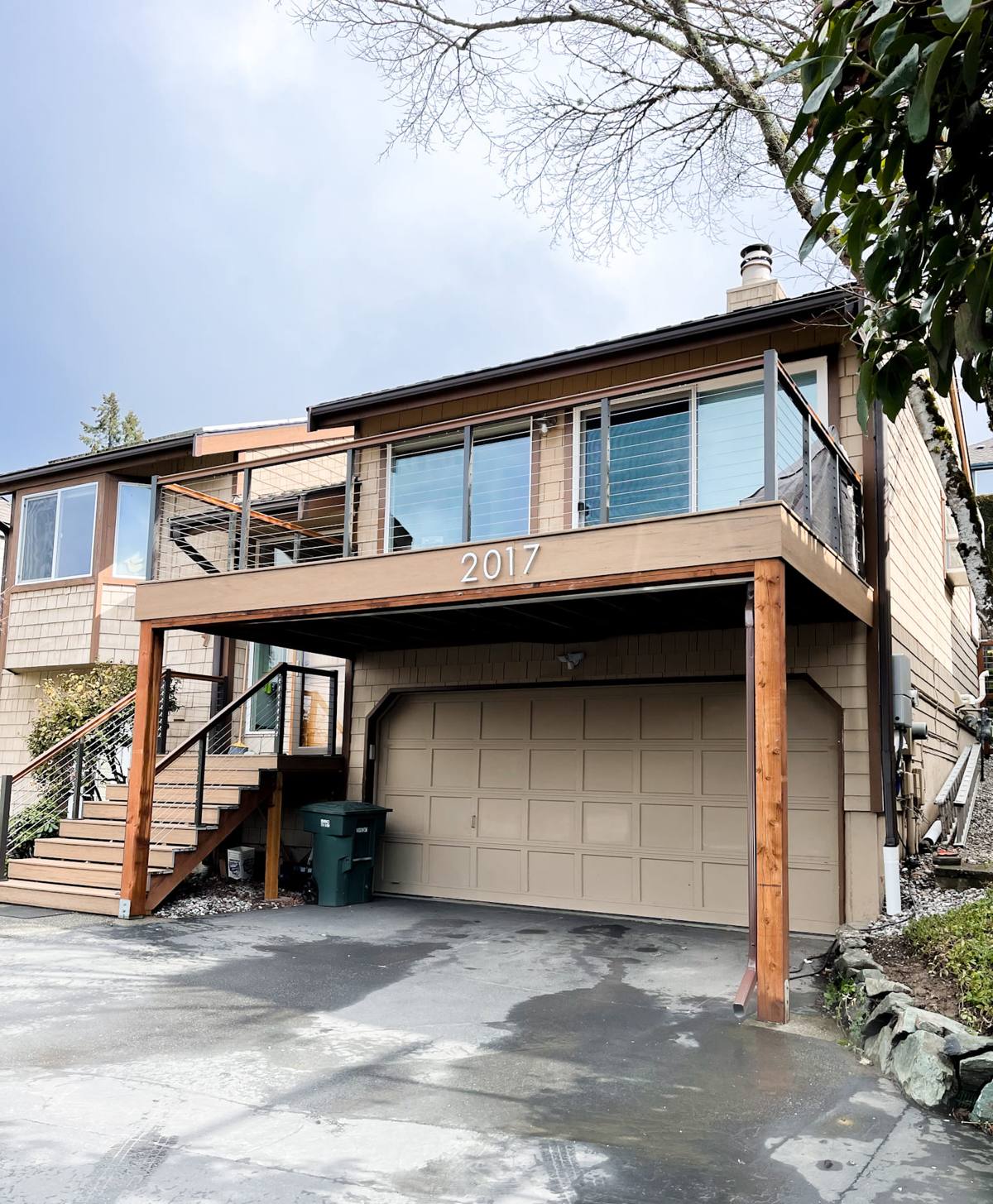
What Salt Air, Rain, and Moss Actually Do to a Deck
Moisture That Never Fully Leaves
Whatcom County gets long stretches of driving rain, and homes near the water pick up salt-laden air on top of that. Together, those two things keep deck lumber and fasteners damp far more of the year than in most parts of the country. Wood that stays wet swells, then dries and shrinks, over and over across a season. That cycle is what eventually cups boards, loosens fasteners, and opens gaps at the ledger board where the deck meets the house.
Moss and Algae on Deck Surfaces
A long moss season isn't just a cosmetic problem. Moss and algae hold moisture directly against the deck surface, which accelerates rot in wood decking and can make composite and vinyl surfaces dangerously slippery when wet. On horizontal deck boards, moss tends to build up in the fastener grooves and the gaps between boards first, which is often where you'll see the earliest signs of decay if you know where to look.
Salt Air and Metal Hardware
Salt-laden air speeds up corrosion on anything metal — nails, screws, joist hangers, and railing brackets. A deck built with the wrong grade of fastener can look fine on the surface while the hardware holding it together is quietly rusting away underneath. This is one of the most common reasons we see decks that look salvageable from a distance turn out to need full replacement once we get underneath them.
Signs Your Deck Has Crossed From Repair Into Replacement
Not every deck problem means starting over. But there's a point where patching individual boards is just delaying a bigger cost, and it usually shows up as more than one of these at once.
- Soft, spongy spots in the decking that give slightly underfoot, especially near the house or stairs
- A screwdriver or awl sinks easily into the ledger board, joists, or posts with light pressure
- Visible gaps, rot, or staining where the deck framing meets the house siding or foundation
- Railings or stair stringers that flex, wobble, or have come loose from their connection points
- Persistent moss or dark staining that returns within weeks of cleaning
- Fasteners that are rusted, backed out, or missing their heads
- More than a handful of individual boards already replaced over the years, patchwork-style
- The deck is original to a home more than 20-25 years old and has never been rebuilt
If you're only seeing one or two of these and the framing underneath is still solid, a repair or partial rebuild may be the honest answer. We'll tell you that directly rather than sell a full replacement a deck doesn't need yet.
What a Correct Deck Replacement Actually Involves
Starting With the Substructure, Not the Boards
The decking boards are the part everyone sees, but the framing underneath — the ledger board, joists, beams, and posts — is what determines whether the deck lasts. A replacement that just swaps out the visible boards and reuses old framing is a repair wearing a replacement's price tag. A correct job means inspecting every structural member, replacing anything with rot or insect damage, and confirming post footings are still sound before a single new board goes down.
Ledger Board and Flashing
The ledger board, where the deck attaches to the house, is the single most common failure point on decks in wet climates. Water that gets behind an improperly flashed ledger board doesn't just rot the deck — it can work its way into the house's rim joist and wall framing. A correct replacement uses proper flashing, a water-resistant barrier behind the ledger, and code-compliant fasteners rated for exterior and ground-contact use, not standard interior hardware.
Fastener and Hardware Selection
Given how hard salt air is on metal, we use fasteners and structural hardware rated for coastal or wet-climate exposure — typically hot-dip galvanized or stainless connectors, and coated deck screws rated for ground contact where applicable. Mismatched hardware, like standard-grade screws paired with treated lumber that calls for a different coating, sets up a chemical reaction that accelerates corrosion. This is a detail that's invisible once the deck is finished, which is exactly why it matters that it's done right the first time.
Spacing, Drainage, and Airflow
Board spacing matters more here than in a dry climate. Gaps that are too tight trap moisture and moss between boards; gaps that are too wide create a tripping and drainage problem. We also pay attention to airflow underneath the deck — ground clearance, venting, and grading so water moves away from the structure instead of pooling under it.
Permits and Code Compliance
Deck replacements involving structural changes typically require a permit and inspection under Whatcom County building code, and railing height, guard spacing, and stair requirements are not optional details — they're safety code. We handle the permitting on jobs that require it rather than leaving that step to the homeowner, and we build to current code even when a like-for-like replacement might not strictly require it.
Decking Material Options for a Wet, Shaded Climate
There's no single "best" decking material for every home — it depends on budget, how much shade and moisture the deck actually sits in, and how much upkeep you want to take on. Here's how the common options actually perform in this climate:
| Material | Moisture & Moss Behavior | Maintenance | Typical Lifespan Here |
|---|---|---|---|
| Pressure-treated wood | Prone to moss and staining in shaded, damp spots; needs sealing to resist swelling | Annual cleaning and resealing recommended | 10-15 years before major repair or replacement |
| Cedar | Naturally rot-resistant but still needs finish maintenance to fight moss and graying | Periodic cleaning and refinishing | 15-20 years with upkeep |
| Composite decking | Won't rot, but moss and algae can still grow on the surface film if not cleaned | Occasional washing; no sealing or staining | 25-30+ years, warranty-backed |
| PVC / capstock decking | Fully moisture-resistant surface; best resistance to staining and moss adhesion | Lowest maintenance; occasional rinse | 25-30+ years, warranty-backed |
Wood decking costs less up front but asks for more of your time every year to keep moss and moisture from getting ahead of it. Composite and PVC systems cost more initially but are built specifically to resist the conditions that cause the most damage here. We'll walk through the honest trade-offs for your specific deck rather than push whichever material happens to be easiest to install.
Framing: Treated Lumber vs. Reinforced Options
Most deck framing is still pressure-treated lumber, and that's a reasonable, code-accepted choice when it's detailed correctly with the right fasteners and flashing. On decks with heavy shade, ground contact, or a history of framing rot, we'll sometimes discuss composite or steel-reinforced components for specific high-moisture areas like ledger connections or posts near grade. It's not the right call for every deck, and we won't recommend upgrading framing materials unless there's a real moisture problem the standard approach won't solve.
Our Deck Replacement Process
- On-site assessment. We inspect the existing deck from the framing up — not just the visible boards — to confirm replacement is the right call and identify any hidden rot or drainage issues.
- Written estimate. You get a clear scope of work and pricing before anything is torn out, including material options and what's driving the cost.
- Permitting. For any job requiring a permit, we handle the application and coordinate the required inspections.
- Demolition and disposal. The old deck comes out, including any framing that doesn't meet current standards, and debris is hauled off site.
- Framing and structural work. New or repaired ledger, joists, beams, and posts go in first, with proper flashing and code-rated hardware.
- Decking, railing, and stairs. Your chosen decking material is installed with correct spacing, followed by railings and stairs built to current guard and stair code.
- Final walkthrough. We go over the finished deck with you, cover maintenance recommendations specific to your material choice, and confirm everything matches what was agreed to in the estimate.
What Drives the Cost of a Deck Replacement
We're not going to quote a price without seeing the deck, but these are the factors that actually move the number, so you know what you're paying for and why:
| Factor | Why It Matters |
|---|---|
| Deck size and shape | Square footage and complexity (multiple levels, angles, curves) directly affect material and labor |
| Decking material chosen | Pressure-treated wood costs less up front than composite or PVC systems, which cost more but need far less upkeep |
| Condition of the framing | Rotted joists, posts, or a failed ledger connection add structural work beyond a straight decking swap |
| Height and stairs | Elevated decks with stairs and taller railings require more structural work and code compliance |
| Permitting requirements | Structural changes typically require permits and inspections, which add time but aren't optional |
| Site access | Decks with difficult access for equipment or material delivery can add labor time |
Why Hiring a Crew That Already Works Happy Valley Matters
Deck problems in this area follow patterns that aren't always obvious from a generic inspection. A crew that regularly works Happy Valley and the wider Sudden Valley area already knows where moss tends to build up fastest, which ledger connections are prone to trapping water given the local rain patterns, and how much shade a given lot typically holds through the year. That local familiarity shows up in small decisions — fastener choice, drainage detailing, where to add extra ventilation underneath the deck — that a crew unfamiliar with this specific climate might not think to prioritize.
It also matters for accountability. A local crew that plans to keep working in this community has a direct interest in the deck holding up, not just passing a final walkthrough. If something does need attention down the road, you're not chasing down a company that only worked in the area for one job.
Maintaining a New Deck in This Climate
Whatever material you choose, a few habits go a long way toward getting the full lifespan out of a new deck in a climate like this:
- Sweep leaves and debris off the deck surface regularly, especially in fall — trapped organic material feeds moss growth
- Clean the deck surface at least once a year to knock back moss and algae before it takes hold
- Check that gutters and downspouts near the deck are directing water away, not onto the deck or framing below
- Reseal or restain wood decking on the manufacturer's recommended schedule rather than waiting until it visibly needs it
- Keep an eye on the ledger board connection and framing underneath once a year, particularly after a hard winter
If your deck in Happy Valley or the surrounding Sudden Valley area is showing signs it's past the point of patching, we're glad to take a look and give you a straight answer on repair versus replacement. Reach out for a free, no-pressure estimate using the form below.