 Sudden Valley Roofing
 Building a Deck That Actually Holds Up in Silver Beach
A deck in Silver Beach lives a different life than a deck built somewhere dry and inland. Between the salt-laden air coming off the water, long stretches of driving rain, and a moss season that can run most of the year, the structure under your feet is under constant low-grade attack. Most of the deck failures we get called out to fix didn't happen because the homeowner did anything wrong — they happened because the deck was built to a generic spec instead of to this specific climate.
This page is about one thing: what it actually takes to build a custom deck in Silver Beach that stays solid, safe, and good-looking for decades instead of needing major repair inside ten years. That means talking about material choice, fastener selection, framing details, and drainage — not just the finished look.
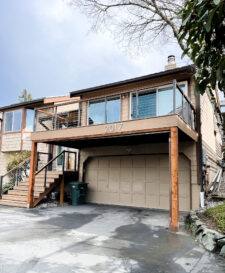
What This Climate Actually Does to a Deck
Before we talk about how we build, it helps to understand what we're building against.
Moisture That Never Fully Leaves
Whatcom County doesn't get brutal winters, but it gets long, low-intensity rain that soaks into wood fiber slowly and doesn't dry out quickly between storms. Wood that's constantly damp but rarely bone-dry is exactly the condition that feeds rot fungus and lets moss and algae take hold on horizontal surfaces.
Salt Air and Metal Fatigue
Homes closer to the water deal with salt-laden air that accelerates corrosion on anything metal — fasteners, brackets, railing hardware. A screw or joist hanger that would last decades in a dry inland climate can start rusting and losing holding strength much sooner here if it isn't rated for the exposure.
Moss as a Structural Problem, Not Just a Cosmetic One
Moss on a deck isn't just slippery and unattractive — it holds moisture against the wood surface, keeps boards from drying between rains, and works into any seam or fastener hole it can find. A deck with poor drainage or tight board spacing will grow moss faster and hold it longer than one built with airflow and drainage in mind from the start.
Choosing the Right Decking Material for Silver Beach
There's no single "best" decking material for every home — it depends on budget, how much upkeep you want to do, and how close you are to the water. Here's how the common options actually compare in this specific climate, not in a showroom.
| Material | How It Handles This Climate | Maintenance | Typical Lifespan Here |
|---|---|---|---|
| Pressure-treated fir/hem-fir | Needs regular sealing to resist the rain/moss cycle; prone to splitting and graying without upkeep | High — annual cleaning and periodic sealing | 10-20 years with consistent care |
| Cedar | Naturally rot- and insect-resistant, but still needs sealing to resist moss and UV graying near the water | Moderate to high | 15-25 years with upkeep |
| Capped composite | Resists moisture absorption and moss staining far better than wood; the cap is the key detail | Low — periodic washing | 25-30+ years |
| PVC decking | Doesn't absorb moisture at all, very moss- and stain-resistant, but can feel and flex differently underfoot | Low | 25-30+ years |
We're honest with clients that composite and PVC cost more upfront than wood, but in a climate like this, the maintenance burden of uncapped wood — sanding, sealing, and re-staining every one to two years just to keep moss and rot at bay — is real money and real weekends over the life of the deck. For some homeowners that trade-off is fine; for others, the lower-maintenance materials pay for themselves. We'll walk through both honestly during your estimate rather than push one direction.
A Note on Uncapped Composite
Some early-generation composite products weren't capped on all sides, which let moisture wick into the core over time — a real problem in a wet climate like ours. As a matter of our own installation standard, we favor fully capped boards for anything going in near the water or in a shaded, damp spot, because the maintenance and moisture behavior are simply better suited to what Whatcom County weather does to a deck year-round.
Framing, Footings, and Drainage — Getting the Bones Right
The decking surface gets all the attention, but the framing underneath is what determines whether a deck is safe and long-lived. This is also where a lot of corner-cutting happens, because it's invisible once the boards go down.
Ledger Flashing
Where a deck attaches to the house, proper flashing keeps rain from working its way behind the ledger board and into the wall framing — one of the most common sources of hidden rot we find on older decks. In a climate with this much sustained rain, this detail is not optional.
Joist Protection
Joist tape or an equivalent moisture barrier over the top of each joist keeps water from sitting in the screw holes and end grain where deck boards attach — exactly the spots where rot typically starts first.
Footings Set to Local Frost Depth
Footings need to be set below the frost line called for by local code so the deck doesn't shift with ground movement. This is a code minimum, not an upgrade, but it's also one of the easiest things to shortcut on a bid that looks cheaper on paper.
Airflow and Drainage Under the Deck
Low decks with poor ventilation underneath trap moisture and accelerate both rot and moss growth. Board spacing, joist height, and any skirting design all affect how well air moves under the structure — worth discussing at the design stage, not after the deck is built.
Railings, Fasteners, and Hardware That Won't Corrode
Hardware failure is one of the quieter ways decks become unsafe. A deck can look structurally fine while the fasteners holding it together are corroding from the inside.
- Stainless steel or coated fasteners rated for exterior/coastal exposure, not standard interior-grade hardware
- Corrosion-resistant joist hangers and structural connectors sized correctly for the load
- Railing hardware and post connections rated for the same exposure as the fasteners
- Metal flashing and drip edges that won't degrade faster than the wood or decking around them
Cutting corners here is invisible on install day and expensive to fix later, since it usually means partially disassembling finished decking to get at failed connectors underneath.
Our Process, Start to Finish
- On-site walk-through: We look at your specific lot — sun exposure, drainage, proximity to water and trees, existing structure if there's a deck to replace.
- Material and design discussion: We go over decking material trade-offs, layout, railing style, and any code or setback questions specific to your property.
- Written estimate: A clear scope and price before any work starts, no vague allowances buried in fine print.
- Permitting: We handle the permit process where required so the deck is built and signed off to code.
- Framing and inspection: Footings, framing, flashing, and joist protection go in first, with inspection at the appropriate stage.
- Decking, railings, and finish work: Surface material and railings go on last, followed by a final walk-through with you.
Maintenance Checklist for a Silver Beach Deck
Whatever material you choose, a little seasonal attention goes a long way in this climate. This is what we recommend to homeowners after every install:
- Sweep debris off the deck regularly — trapped leaves and needles hold moisture and feed moss growth
- Rinse or lightly scrub surfaces once or twice a year to knock back moss and algae before it establishes
- Check fastener heads and railing connections annually for early signs of rust or loosening
- Reseal or re-stain uncapped wood decking on the schedule the product actually needs, not "whenever it looks bad"
- Keep gutters and downspouts near the deck clear so runoff isn't dumping extra water onto the structure
- Confirm under-deck ventilation and drainage paths stay clear of stored items or built-up debris
Why Hire a Crew That Already Works in Silver Beach
A deck built to a generic national spec will often technically meet code and still perform poorly here, because code minimums don't account for how much moss pressure or salt exposure a specific neighborhood gets. Crews who work Silver Beach regularly already know which details matter most for homes in this pocket of Whatcom County — how close is too close to the water for certain hardware grades, which fastener specs actually hold up, and how local drainage and soil conditions affect footing work.
That local pattern-recognition is the difference between a deck that needs real attention again in eight years and one that's still solid at twenty-five, with nothing more than the maintenance every deck needs.
Getting Started
If you're planning a new custom deck or replacing one that's showing its age, we're happy to come take a look and walk you through honest options for your specific property — no pressure, no pushy upsell. Use the form below to request a free estimate and we'll get back to you to set up a time.